


Beginning Sounds Activities for Preschool: Listen First, Letters Later
Beginning sounds activities for preschool ages 3–4: one guided 20–30 minute listening session that teaches children to hear first sounds in spoken words — before they ever see a letter. A gentle, joyful listening session for 3–4-year-olds — stretching, sorting, spying and giggling with the first sounds of words. No letters, no flashcards, no pressure.
Beginning sounds activities teach preschoolers to hear the first sound in spoken words — like the sss in sun or the mmm in moon — before they ever see a letter. Stretch words slowly, isolate just the first sound, then play sorting, I-spy and mystery-bag games by ear. Fifteen to thirty minutes, two or three times a week, builds the listening foundation reading grows from.

The short version
- Beginning sounds activities build phonemic awareness: hearing first sounds in spoken words, with no letters involved.
- One guided session runs 10 teaching steps: listening warm-up, stretching first sounds, isolating them, sorting, I-spy, mystery bag, hopping, silly alliteration, and the child's own name.
- Use only familiar toys your child can already name confidently — unknown words break the game.
- Repeat 2–3 times a week with different toys; stop while it's still fun and let your child lead the pace.
- Age
- Ages 3–4
- Prep
- 5 min
- Mess
- Low
- Difficulty
- Easy
- Where
- Indoor
Why kids love this
There is nothing to get wrong. Nobody is asking them to read or perform — just to listen, stretch silly sounds, and hunt for toys. The games feel like mischief (whispering, hopping, shouting "mmm!"), and every round ends with the satisfying click of being right by ear alone.
What you'll need
- 8–10 familiar small toys with clear first sounds (ball, banana, sun, sock, spoon, moon, mouse, mitten, dog, fish)
- two small baskets or trays
- a cloth bag or pillowcase
- a rug or clear floor space
- Choose objects your child can already name — unknown words break the game.
Before you start
Gather the toys on a tray where your child can see them and push furniture back to open a little hopping space on the rug. That's the entire prep.
How to do it
-
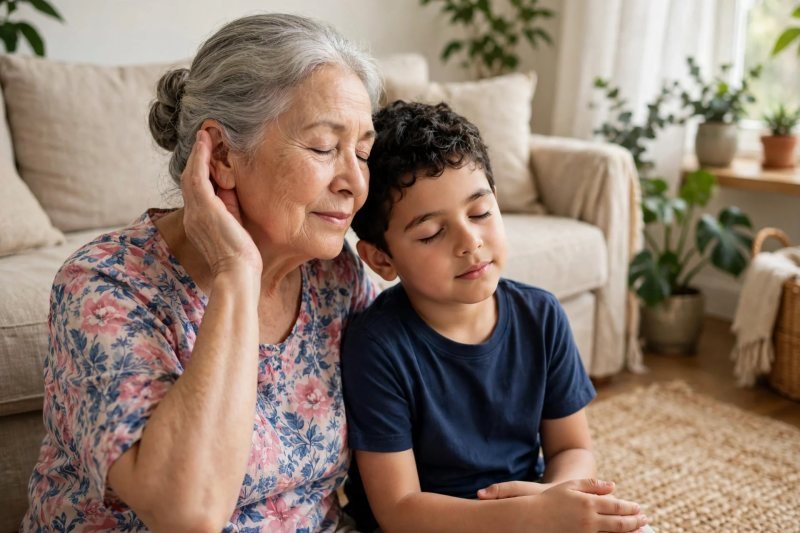
1. Wake up the ears. Sit together — no materials, just closeness. Say: "We're going to turn on our listening ears. Close your eyes — no peeking!" Both close your eyes for 20–30 seconds and listen. Then take turns naming sounds: "I hear the fridge humming. What do you hear?" Accept every answer with delight.
-
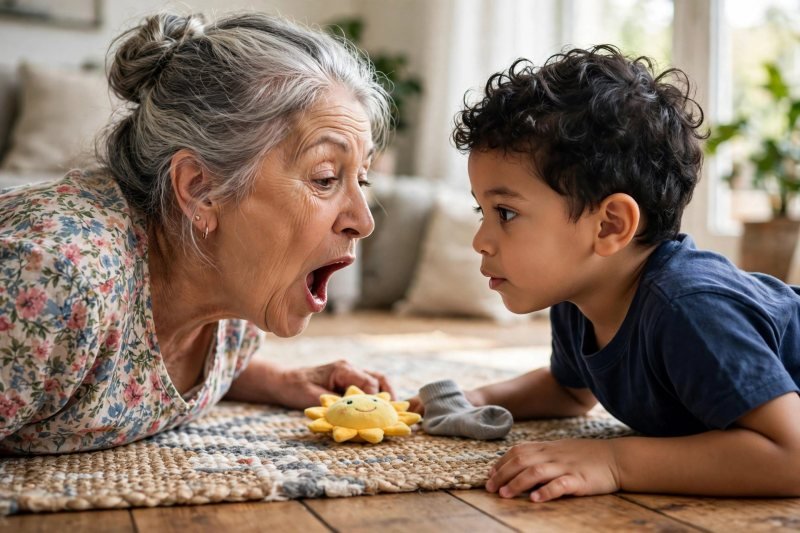
2. Stretch the first sound — you model first. Put 4–5 toys on a tray. Pick up the sun and stretch only its first sound: "Ssssun. Did you hear how it starts with sss?" Do the same with two more. Your child echoes your stretched words. Don't correct their pronunciation of the rest — the stretched beginning is the whole lesson.
-
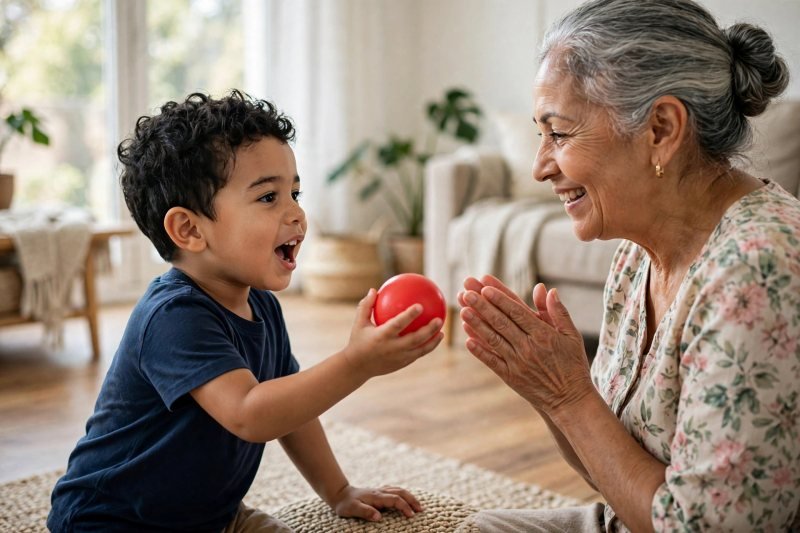
3. Your child stretches it back. Say the plain word and hand them the stretching job: "Ball. Now YOU stretch it for me." They stretch it back: "B-b-baaall!" Cheer the effort. If they stretch the whole word, model again: "Now just the very first piece: b-b-b." Keep it to three or four toys.
-
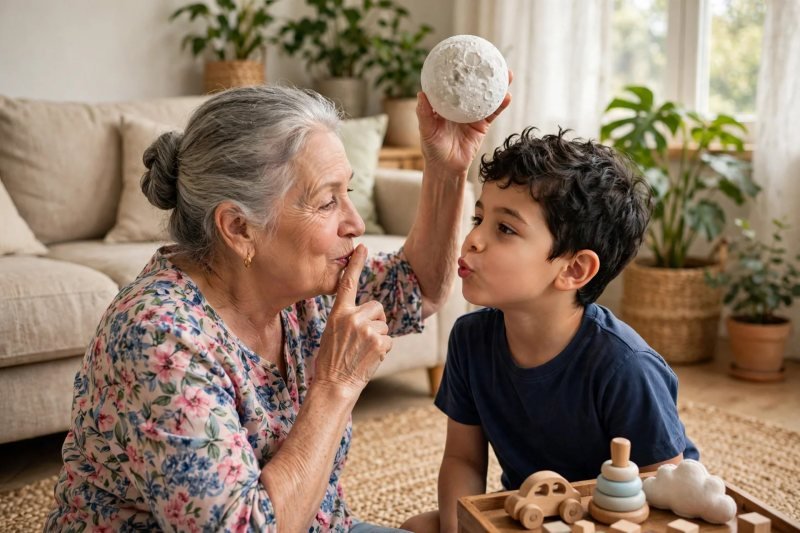
4. Just the first sound. Say: "Don't say the whole word — give me only the first sound. What does mmmmoon start with?" They answer: "Mmm!" If they blurt the whole word, say "Yes! Moon starts with mmm," and let them try the sound alone once more.
-
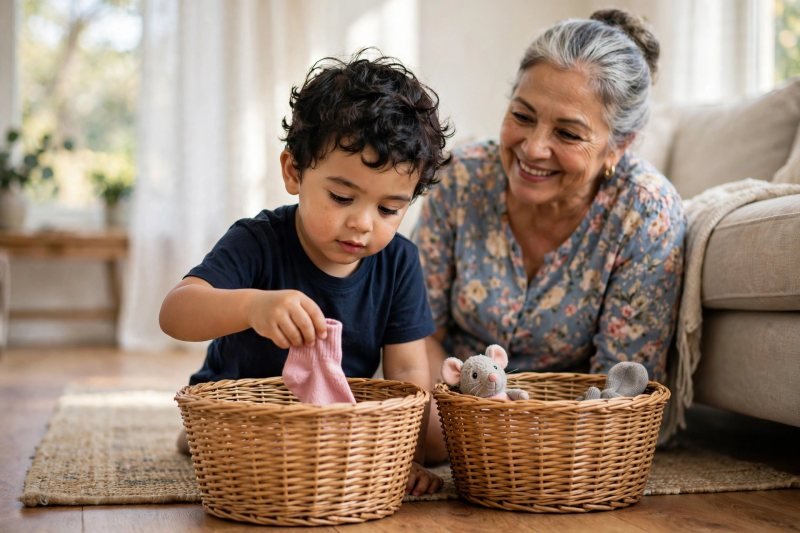
5. Sort toys by their first sound. Set out two baskets and a mixed tray: sock, spoon, sun (all /s/) and mouse, mitten, moon (all /m/). Say: "This basket is for the sss toys. Sock… sssock. Which basket, detective?" Your child picks up each toy, says its first sound, and drops it in the matching basket. No letters anywhere: ears only.
-
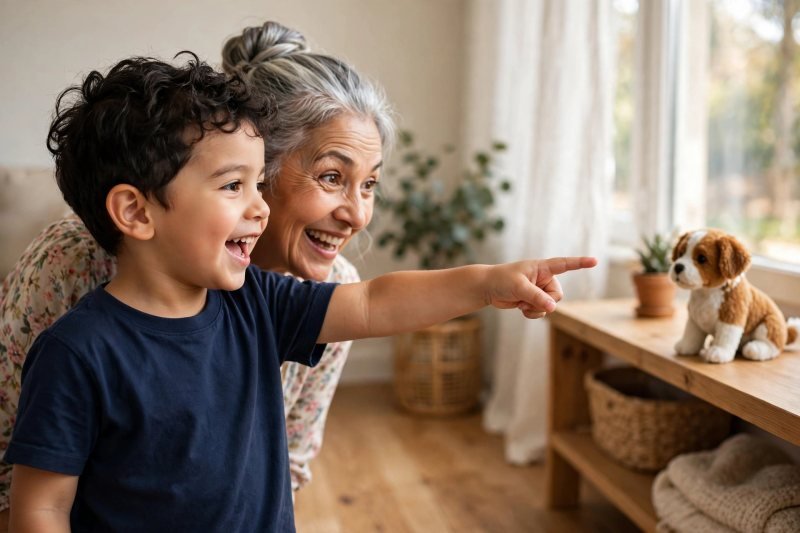
6. I-spy with your little ears. Say: "I spy with my little ears something that starts with d-d-d." Your child scans the room, points, and names it: "Dog!" Play five rounds, then swap roles — let them give YOU the sound clue.
-
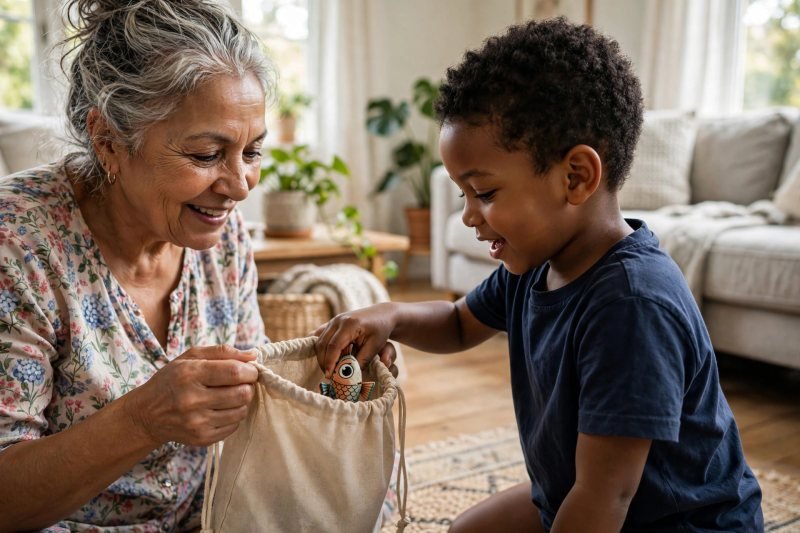
7. The mystery bag. Drop 6–8 familiar toys into a cloth bag. Say: "Reach in and feel one — but NO peeking! Before you tell me what it is, tell me its first sound." They feel, announce the sound — "F-f-f… fish!" — then pull it out to check. The reveal is the reward.
-
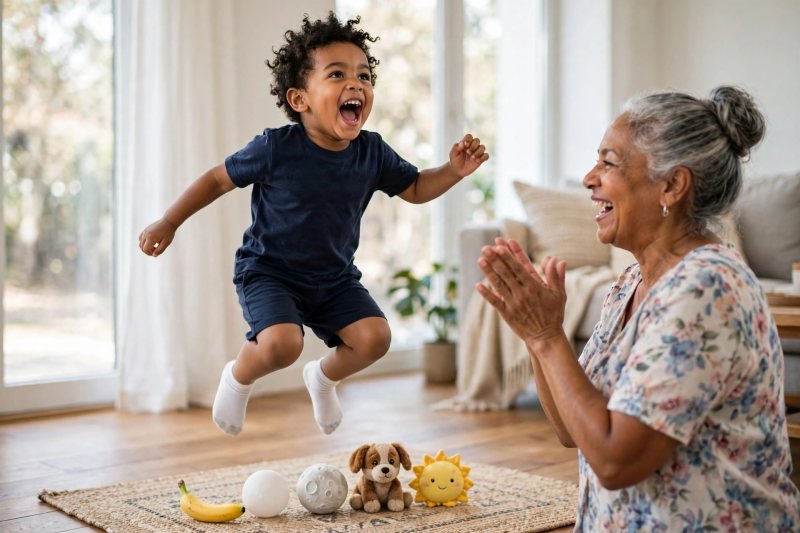
8. Hop on the first sound. Line up four toys: banana, moon, dog, sun. Say: "When I say the word, hop to the right toy and shout ONLY the first sound. Ready… moon!" Your child hops to the moon and shouts "Mmm!" Let them call the words for you to hop to.
-
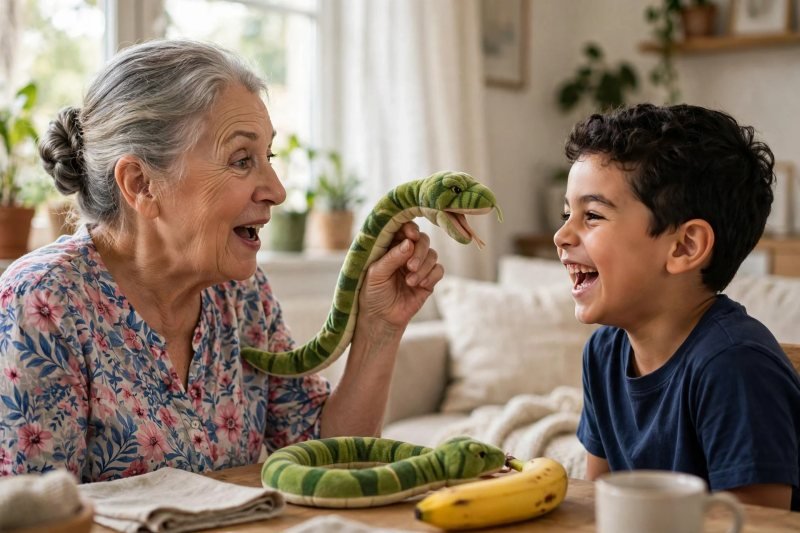
9. Silly alliteration soup. Say: "Listen: Silly Sam the sleepy snake! Everything starts with sss. Can you make a mmm sentence?" Offer a starter if they freeze: "Molly the… messy… mouse!" Your child invents gloriously absurd sentences.
-
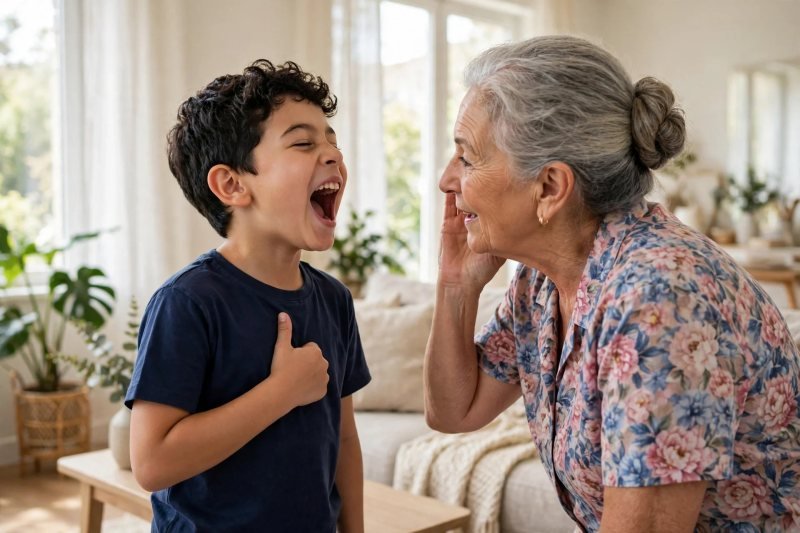
10. The first sound of YOUR name. Say: "Now the most important word of all: YOUR name. Stretch it — what is its very first sound?" Then play it with family names: "Grandma… g-g-g! Daddy… d-d-d!" End here: "Tomorrow you'll hear first sounds everywhere. You're the family's listening expert now."


Make it easier
Do every step alongside them the first time, narrating your own thinking: "Hmm, sssock… that sounds like sss." Offer two toys instead of six, accept approximations, and stop at the first sign of drift — fifteen brilliant minutes beats thirty restless ones.
Make it harder
Add a third sorting basket with a new sound (/d/ for dog, duck, door). Ask for the first sound of longer words ("what does 'sleepy' start with?"). Let your child run step 6 entirely — choosing the object, giving you the clue, judging your answer. Older 4s can try hearing the LAST sound of a word ("dog ends with… g-g-g") — but only after first sounds feel easy.
Other ways to play it
- Sound walk: Take steps 1 and 6 outside — list outdoor sounds, then I-spy first sounds around the park.
- Car game: "I hear with my little ears something that starts with b-b-b" — billboards, buses, birds.
- Bath-time version: Waterproof toys only; stretch first sounds over the splashing.
- Bedtime whisper round: Do step 9 in whispers — silly sentences are somehow funnier at low volume.
How it changes by age
- Younger 3s: keep it to steps 1–4, short and sensory — stretching sounds is plenty, and echoing your stretched words counts as success.
- Older 4s: run the full ten steps, add the third sorting basket, and let them lead steps 6 and 9. End while they still want more.
What they're learning
Phonemic awareness: hearing words as sequences of sounds, isolating initial phonemes, and grouping words by their first sound — the listening foundation reading is built on. Plus vocabulary, turn-taking, and the confidence of being right by ear.
Clearing up
Make tidy-up the final game: "Can all the sss toys jump back in the bag before I count to ten?" Two minutes, done.
Questions parents ask
How do you teach beginning sounds to a preschooler?
What is the difference between beginning sounds and letter sounds?
At what age should kids learn beginning sounds?
What are good beginning sound activities for 3-year-olds?
How long should a beginning sounds session last?
Repeat this session two or three times a week with different toys and it compounds fast — children who play first-sound games regularly start pointing out beginning sounds unprompted ("m-m-milk starts like m-m-moon!"). When that happens, they're ready for the next bridge: the letters those sounds belong to, in our phonics activities for preschoolers, plus playful alliteration games you invent together, and, a little later, blending sounds into their first words.
Try this next
-

Syllable Clapping Games: 10 Ways Preschoolers Can Feel the Beats in Words
Ages 3–4
-
Rhyming Books for Preschoolers: 15 Read-Alouds That Make Rhymes Stick
Ages 3–4
-
Wheels on the Bus Lyrics: Verses, Actions and Sound Words for 3-Year-Olds
Ages 3–4
-

Mary Had a Little Lamb Lyrics and the Rhyme Hunt Game
Ages 3–4


