


2nd Grade Sight Words List: All 46 Dolch Words
The complete 2nd grade sight words list — all 46 Dolch words in six practice groups — with a weekly routine that turns "I sort of know these" into instant, confident reading for ages 6–8.
The Dolch 2nd grade sight words are 46 high-frequency words — the full list is printed in this article. For ages 6–8, audit which words your child already knows, then teach one color-coded group per week with a say-spell-use routine, plus games like Book Hunt and Question Card Quiz. Recognizing all 46 instantly is what lets second graders read fast enough to follow chapter-book stories.

The short version
- The Dolch 2nd grade list is 46 words — the step up from 1st grade, with longer words, past-tense verbs, and a contraction (don't).
- Audit first: sort all 46 into "know it" and "still learning" so you only teach what's needed.
- Teach in six color-coded groups, one group per week, with a say-spell-use routine.
- Games use the words in the wild: Book Hunt, Question Card Quiz, Sentence Strings, and a real thank-you note.
- Teach tricky pairs (their/there, right/write, which/witch) by meaning difference, not just spelling.
- A weekly two-minute word-wall sweep keeps mastered words from rusting.
- Age
- Ages 6–8
- Prep
- 20 min
- Play time
- 10 min
- Mess
- None
- Difficulty
- Easy
- Where
- Indoor
Why kids love this
This is the grown-up list: 46 words, a contraction, past-tense verbs, and words like because and would that unlock real stories. You split it into six themed groups, and each finished group earns a badge on the word wall. The games use the words in the wild: hunting them in chapter books, writing real thank-you notes, building goofy sentences. A child who reads all 46 instantly reads library books faster.
What you'll need
- 46 index cards or paper slips, playing-card size
- Six colored dot stickers or colored markers (one color per group)
- One thick dark marker
- Two small boxes: "Know it" and "Still learning"
- A kitchen timer, poster paper or a cork board for the word wall, sticky notes
- 2–3 chapter books your child already owns (for the Book Hunt)
Before you start
1. Copy the 46-word list from the Additional notes below; check every spelling, including the apostrophe in don't. 2. Write one word per card, lowercase, big and clear. 3. Color-code the six groups with a dot on each card back (red Time Words, blue Question Words, green Action Words, yellow Describing Words, orange Connector Words, purple Story & Tricky Words). Pull groups out one at a time. 4. Set up the word wall where your child sees it daily, one row per group. 5. Pick a fixed slot: 10 minutes, four or five days a week.
How to do it
-
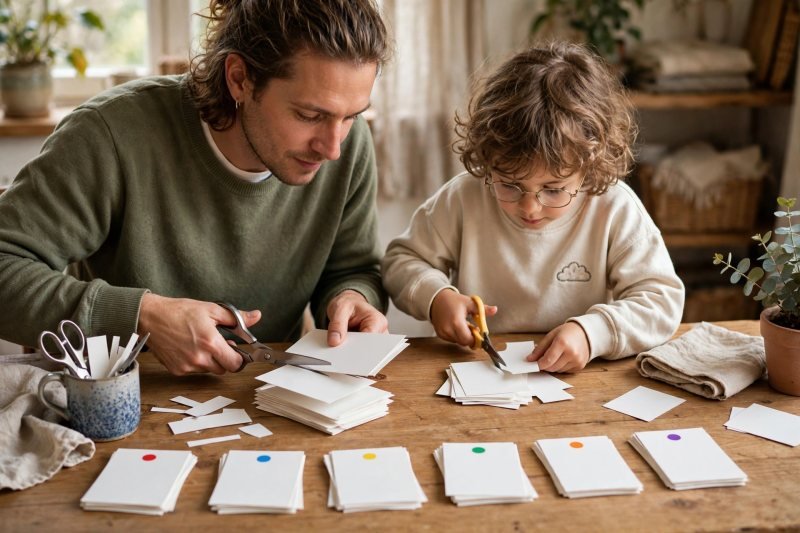
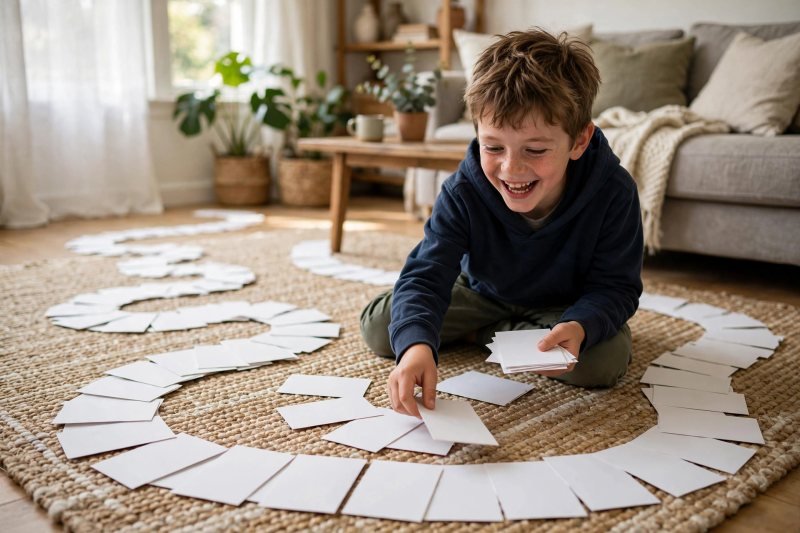
Build the 46-card deck in six color-coded groups. Make the cards together. Write each word once, big and lowercase, exactly as below. Sort by group, dot the backs, and say: "This is the whole second-grade list. You already know some of these — we're going to find out which." Keep one stack; pull groups out one at a time. The six groups are: Time Words (red) — always, before, first, fast, been, sleep; Question Words (blue) — why, which, does, or, would; Action Words (green) — buy, call, pull, read, sing, sit, tell, use, wash, wish, work, write, goes; Describing Words (yellow) — best, cold, five, green, many, very, right; Connector Words (orange) — because, upon, off, around, both; Story and Tricky Words (purple) — found, gave, made, don't, their, these, those, us, your, its.
-
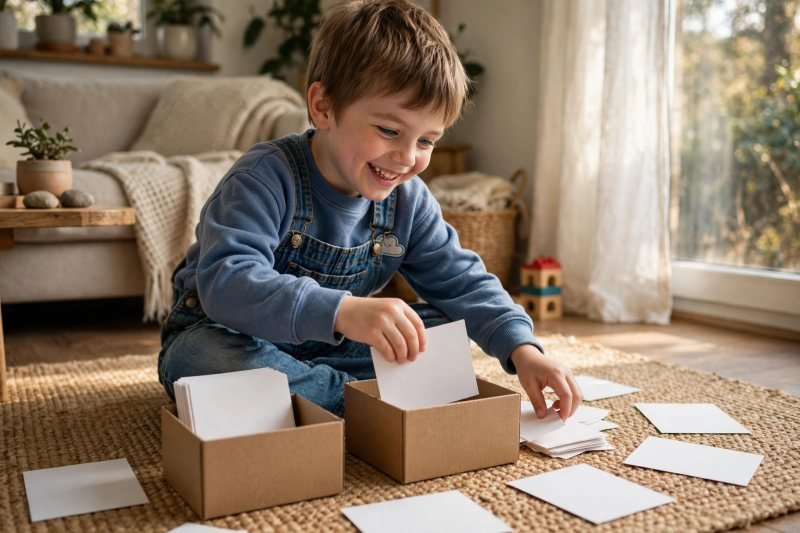
Audit first — sort into "know it" and "still learning". Fan through all 46 cards and have your child read each one. Instant reads go in the "Know it" box; hesitations in "Still learning." Most second graders already own 10–20 of these — watching the "Know it" box fill on day one is the confidence boost this list needs. If the audit finds big gaps, loop back to our kindergarten sight words list first.
-
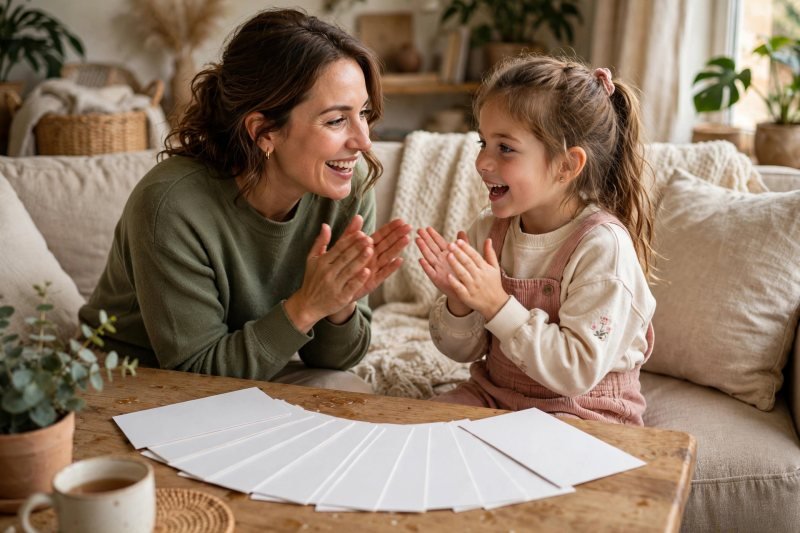
Teach one group a week with the say-spell-use routine. Pull out one group, starting with Time Words. For each new word: say it, spell it (chant the letter names), use it in a sentence your child invents — don't is hard as a flash card but easy in "I don't like broccoli." Add 4–6 words per session and graduate a word only when it's instant on two different days. For more ways to introduce new words, our how to teach sight words guide walks through the methods.
-
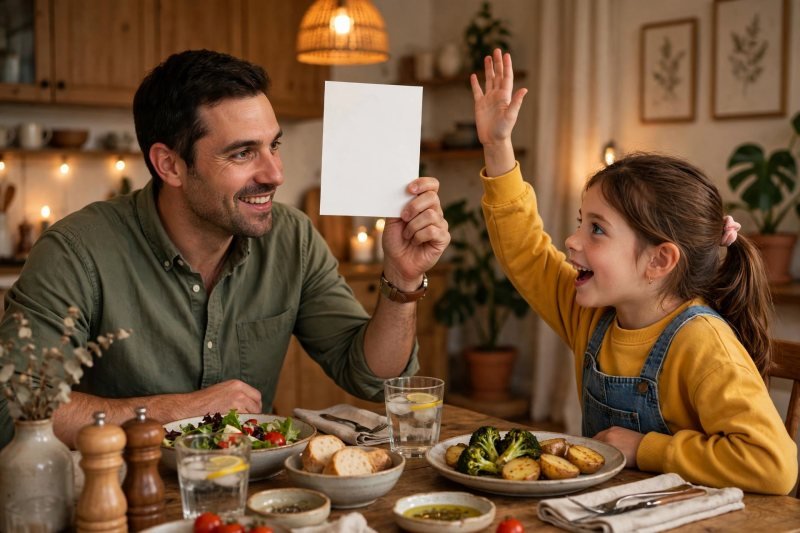
Play Question Card Quiz with the blue group. Hold up a blue card — say why — and your child asks you a real question starting with it: "Why is the sky blue?" You answer; they ask another. Missed reads cost nothing. Kids quietly learn which asks for a choice and does starts a yes-or-no question.
-
Build Sentence Strings with the green Action Words. Your child picks three Action Words and builds one long, silly sentence: "The pirate will buy a parrot, sing to it, and wash its feet." Read it back in a pirate voice, then rebuild with three new words.
-
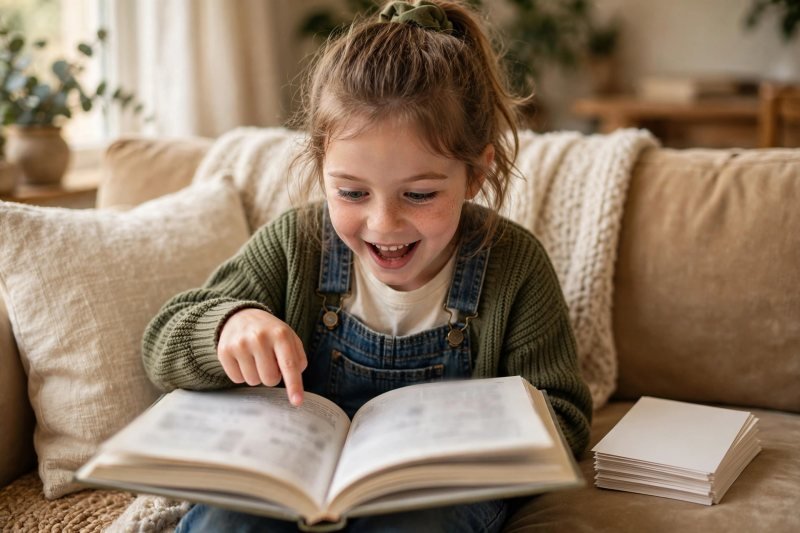
Run a Book Hunt in a real chapter book. Pick five current-group words and hunt for them inside a chapter book — your child points at each find ("There's because!"), then reads you the full sentence around one find. Hunt for Fry first 100 sight words too — most of them hide in the same books.
-
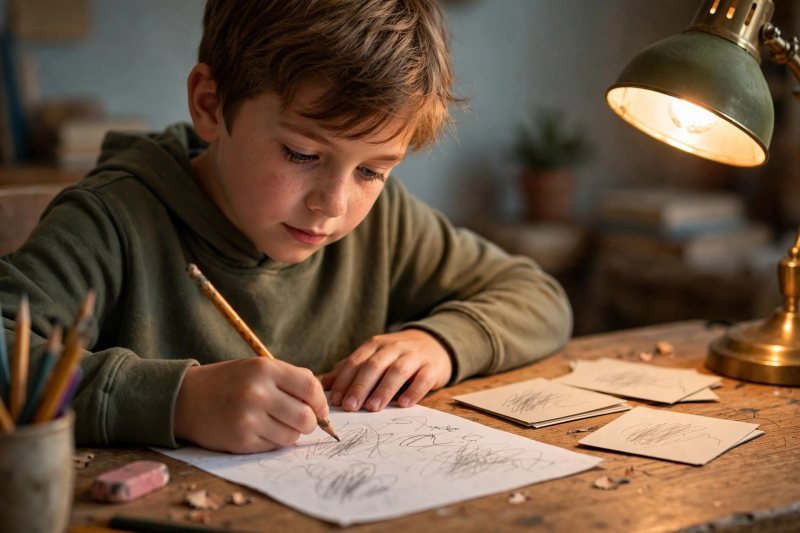
Write a real note with the list words. Have your child write a short thank-you note using at least five mastered words: "Thank you for the gift. It was the best. I was very happy." The note gets mailed — real writing for a real person.
-
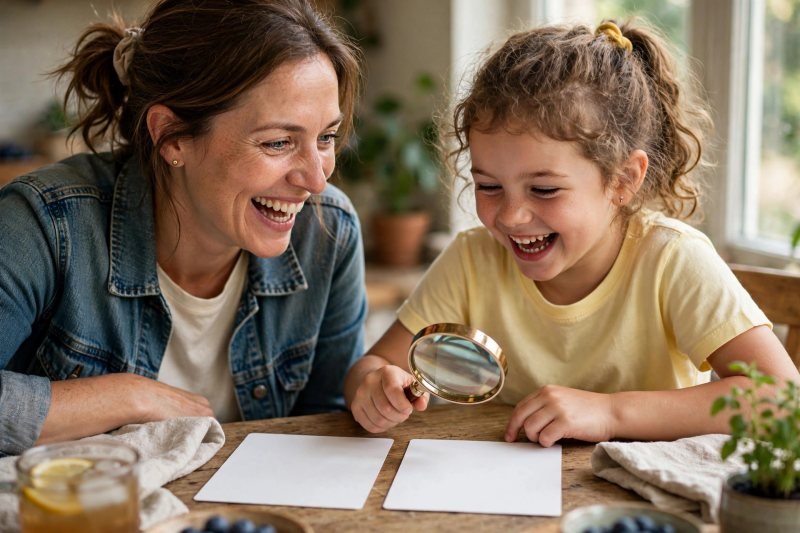
Spotlight the tricky pairs. Four pairs trip up nearly every second grader: their/there (their = belonging, "their dog"), right/write (sound alike), which/witch (which is the choice word), and to/two/too (only to is Dolch). Spend one session per pair: act out the meaning difference and invent a memory hook together. Meanings first, then sentences. Turn the tricky pairs into a game — our sight-word games bank has rounds that work with any list.
-
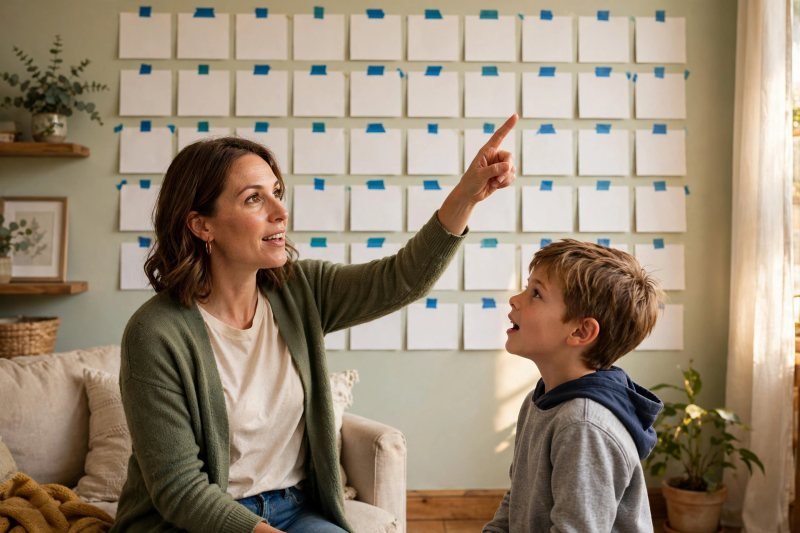
Refresh with a weekly word-wall check. Once a group is mastered, its cards move to the word wall with the group's badge. Every Sunday, point at wall words in random order and your child reads them. Wobbles go back into "Still learning" for the week.
-
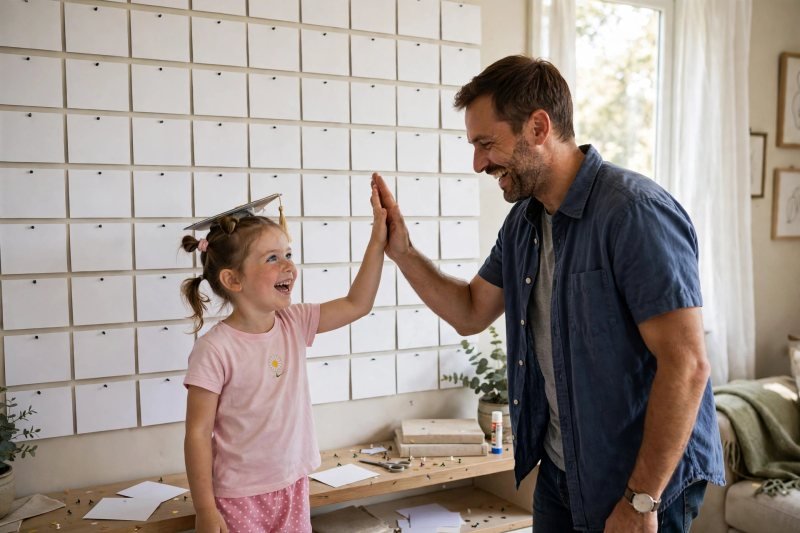
Finish all 46, then graduate to chapter-book reading. When the last badge goes up, celebrate: your child reads a full page of a chapter book aloud while you count the list words inside (usually a dozen or more). Ready for longer chapter books? Our how to teach your child to read guide shows the next step.


Make it easier
Start from the audit. If your child already owns 20 words, the list is really 26 new ones. Combine two groups at first. Teach Time + Describing Words as one set of 13, then open the rest. Skip the sentence on tired days. Say-spell alone is enough sometimes.
Make it harder
Timed word-wall sprints: read a mastered row as fast as possible. Beat-your-own-record only. Write the tricky pairs: fill-in-the-blank sentences with their/there and right/write. Story chain: five sentences, each with at least two list words.
Other ways to play it
- Sidewalk edition: chalk the current group's words on the driveway and read them on a walk-by.
- Car edition: keep the current group in the glove box — red-light reading at every stop.
- Sibling edition: an older sibling runs Question Card Quiz as quizmaster.
How it changes by age
- Younger sixes: audit first and teach only the "still learning" pile — often just 15–20 words. Ten minutes, four days a week.
- Solid seven-year-olds: the full six-group plan — one group per week, 5 new words a session, Book Hunts in books they read.
- Eights catching up: skip to groups 5 and 6 — the words older kids usually miss — and run the tricky-pairs spotlight weekly.
- Not quite ready? If the 1st grade Dolch 41 aren't solid, master those first.
What they're learning
Word automaticity: these 46 words recur constantly in grade-level text; instant recognition keeps reading fluent. Contractions and verb tenses: don't, found, gave, made introduce the grammar patterns second-grade books are full of. Meaning knowledge: the Question Words game and tricky-pairs spotlight teach what words mean — the bridge to comprehension. Self-assessment: the audit trains children to notice which words they own and which need work. Writing transfer: the thank-you note turns reading vocabulary into writing vocabulary.
Clearing up
The list is 46 words. Several lookalike lists online pad or trim it; the 46 above match the standard published set, cross-checked against five independent sources. "Sight words" doesn't mean "never sound them out." Many follow regular patterns (fast, best, green) — teach tricky ones by sight, regular ones with phonics. Don't start here if the 1st grade 41 aren't solid. The 2nd grade set assumes them. Forgetting between groups is normal. Week-one words will wobble by week four — that's why the weekly word-wall check exists.
Questions parents ask
What are the 46 Dolch 2nd grade sight words?
How are the 2nd grade words different from the 1st grade Dolch words?
Should my child know the 1st grade sight words first?
How do I help my child tell apart their/there, right/write, and which/witch?
Dolch or Fry words — which list should a 2nd grader use?
The six color-coded groups are a practice grouping for this article, not part of the official Dolch list. If your child already knows some of these from the Fry list, don't start over: run the audit in Step 2 and begin with the "still learning" pile. The 2nd grade sight words are the third set of the Dolch list, compiled by educator Edward William Dolch in the 1930s–40s from children's books. After pre-primer, primer, and first grade, this set adds 46 harder words: longer words like because, past-tense verbs like found, the contraction don't, and idea-carrying words like would. Recognizing them instantly lets a child read fast enough to follow a story. The complete Dolch 2nd grade list (all 46 words): always, around, because, been, before, best, both, buy, call, cold, does, don't, fast, first, five, found, gave, goes, green, its, made, many, off, or, pull, read, right, sing, sit, sleep, tell, their, these, those, upon, us, use, very, wash, which, why, wish, work, would, write, your

save it for later
Pin this for the next rainy afternoon
Keep it on a board so it is there when you need it, rather than when you happened to find it.
Save to Pinterest


