


Rhyming Books for Preschoolers: 15 Read-Alouds That Make Rhymes Stick
Fifteen beloved rhyming books for preschoolers, plus the simple pause-and-fill read-aloud trick that turns every rhyme into real learning for ages 3–4.
The best rhyming books for preschoolers pair strong rhythm with a read-aloud hook — try Hop on Pop, Room on the Broom, Llama Llama Red Pajama, Sheep in a Jeep, and Jamberry. Read each three times: first for fun, then pausing before the rhyme word so your child fills it in, then letting them lead.

The short version
- Rhyming books build phonological awareness — hearing shared sounds — a key pre-reading skill.
- Pause-and-fill turns any rhyming read-aloud into an active learning game.
- Read each book three times: fun first, then pauses, then let your child lead.
- Ages 3–4 are the sweet spot for predicting and shouting out rhymes.
- Keep 2–3 rhyming books in rotation; the library is free.
- Age
- Ages 3–4
- Prep
- 10 min
- Mess
- None
- Difficulty
- Easy
- Where
- Indoor
Why kids love this
Rhyming books for preschoolers feel like songs with a story attached. The rhythm is predictable and comforting, the words beg to be said out loud, and every rhyming pair is a guessing game. Kids shout the ending and "read" favorites back from memory — absorbing the sound patterns reading is built on.
What you'll need
- No purchases needed — the books are the materials, and your library has them all.
- Start with 2–3 titles from steps 5–9 below.
- A library card, a cozy spot, and ten unhurried minutes complete the kit.
Before you start
Pick books with strong, regular rhythm you can clap or bounce to. Skim each book once yourself first and note the best pause spots — the second line of each rhyming pair. Then learn pause-and-fill in step 1. Our how to read aloud to a toddler guide has more read-aloud tips.
How to do it
-
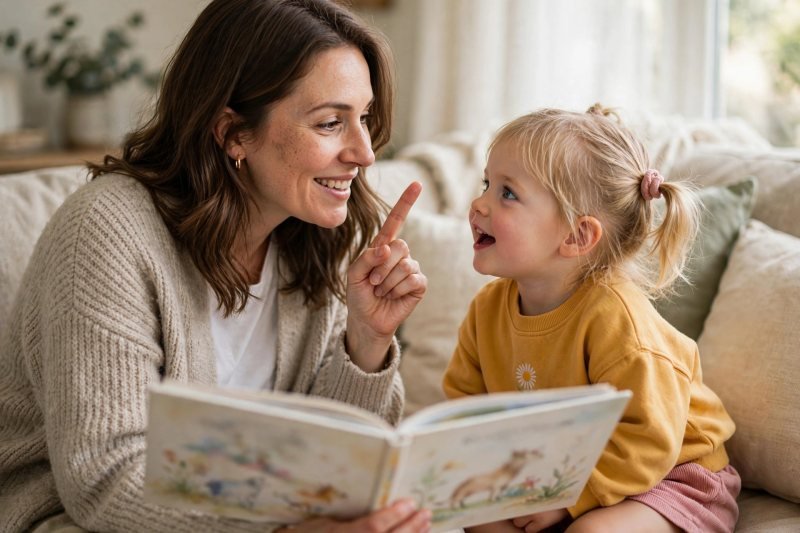
Learn pause-and-fill. Read a rhyming line, stop just before the rhyming word, and wait expectantly. When your child supplies the word, celebrate it.
-
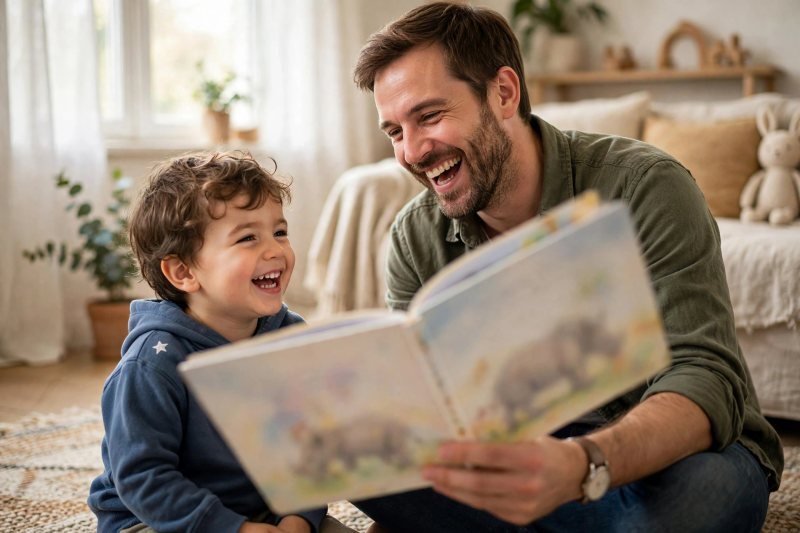
First read: enjoy the story. Read straight through with energy — no teaching, no pausing. Kids must love a book's rhythm before they'll play with its sounds.
-
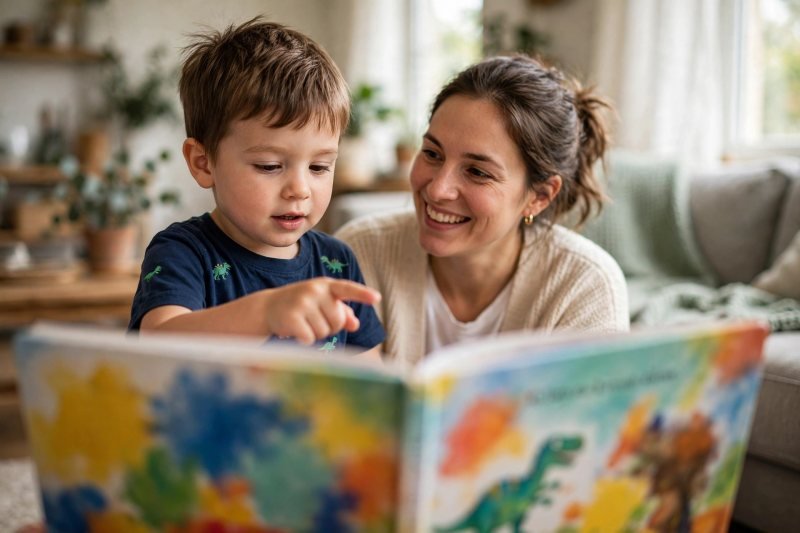
Second read: start pausing. Pause before the rhyming word on the easiest pairs. Most 3-year-olds blurt it out — follow their lead.
-
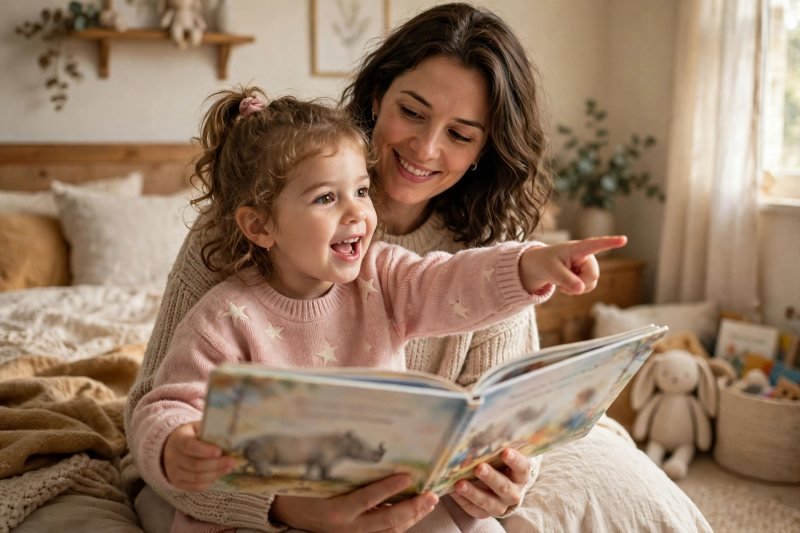
Third read: let them lead. You pause, they fill in — whole lines, not just words.
-
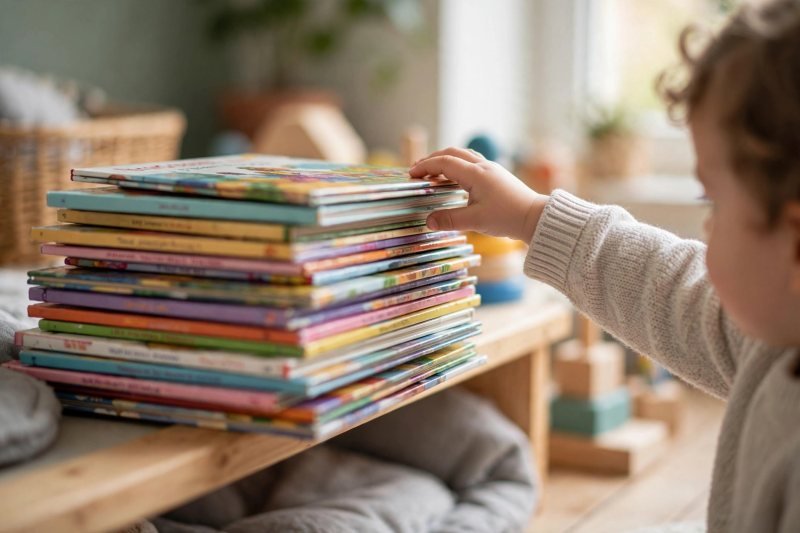
Bouncy read-alouds, part one. Read these loud and fast. Hop on Pop by Dr. Seuss is built from tiny rhyming word families — pop/hop, cup/pup — so read it bouncy and let your 3-year-old shout each pair's last word. Chicka Chicka Boom Boom by Bill Martin Jr. and John Archambault races the alphabet up a coconut tree — pause before "boom boom". Moo, Baa, La La La! by Sandra Boynton pairs animal sounds with surprise rhymes; the pigs say la la la, not oink.
-
Bouncy read-alouds, part two. Jamberry by Bruce Degen rolls a boy and a bear through a berry adventure in bouncing couplets. Hairy Maclary from Donaldson's Dairy by Lynley Dodd marches six dogs out in a drum-on-the-floor rhythm, each name rhyming with the next. Rhyming Dust Bunnies by Jan Thomas has one bunny always rhyming wrong.

-
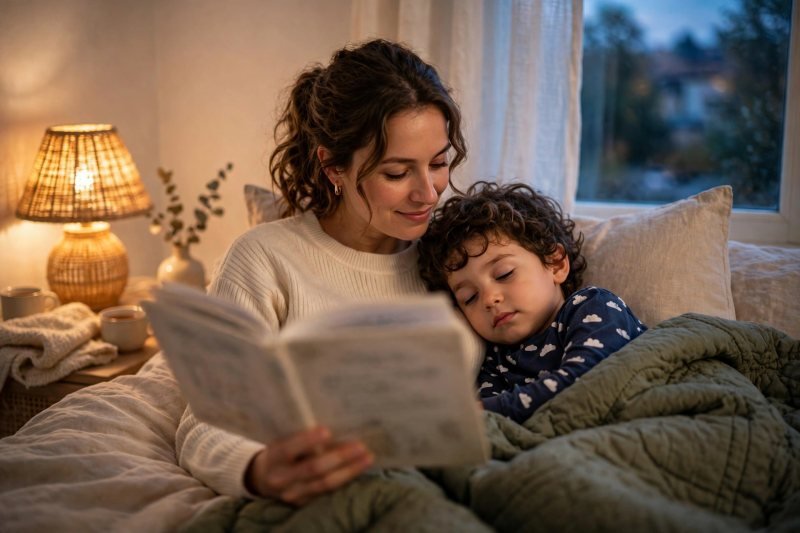
Gentle bedtime rhymers. Slow the tempo for these. Llama Llama Red Pajama by Anna Dewdney rocks a worried baby llama in gentle, calming rhymes. Is Your Mama a Llama? by Deborah Guarino has a baby llama ask every animal the title question in rhyme; kids guess each answer before the page turns. Brown Bear, Brown Bear, What Do You See? by Bill Martin Jr. repeats one rhyming question per animal — two reads and it's memorized.
-
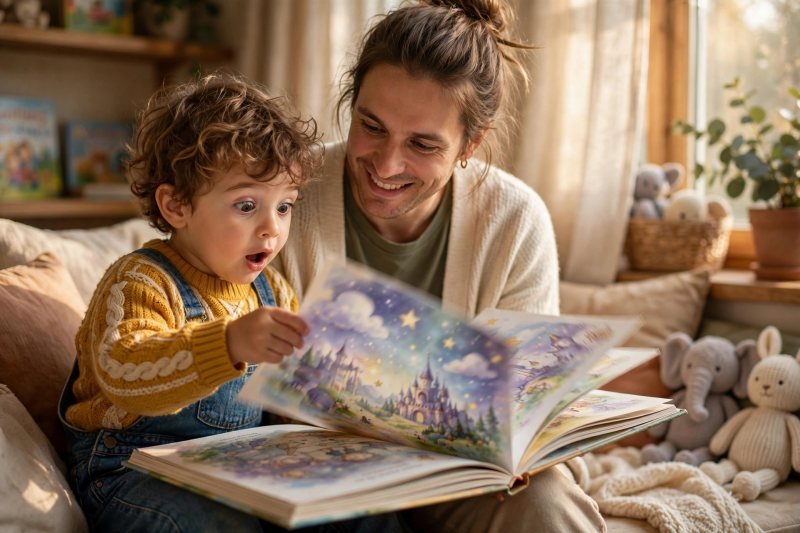
Magical storybook rhymers. Longer verse for 4-year-olds. Room on the Broom by Julia Donaldson pairs bouncy couplets with a chantable refrain. The Gruffalo, also by Donaldson, builds rhythmic suspense to the monster's reveal. Giraffes Can't Dance by Giles Andreae swings like jazz — sway and stomp along.
-
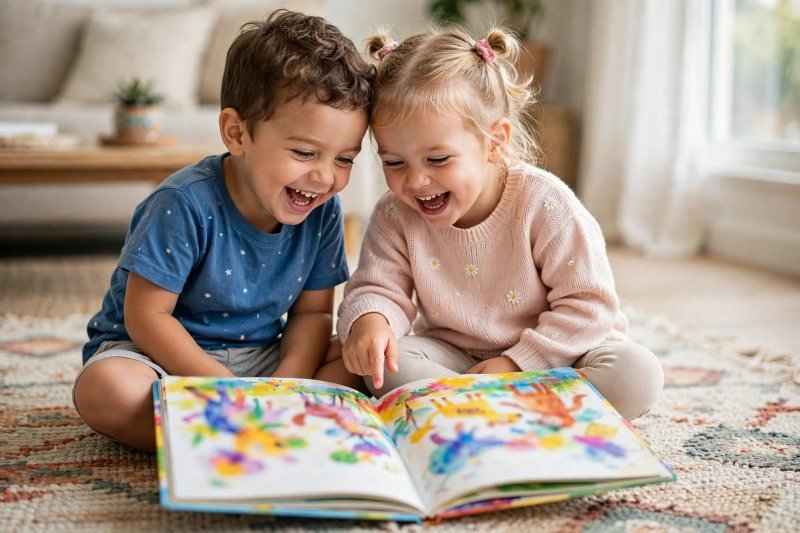
Playful rhymers. Each Peach Pear Plum by Janet and Allan Ahlberg is a gentle I-spy rhyme; hide-and-seek pictures let 3-year-olds savor each pair. Silly Sally by Audrey Wood begs to be acted out, piling verses toward a laugh-out-loud ending. Sheep in a Jeep by Nancy Shaw crashes five sheep through mud in crisp couplets — a five-minute read.
-
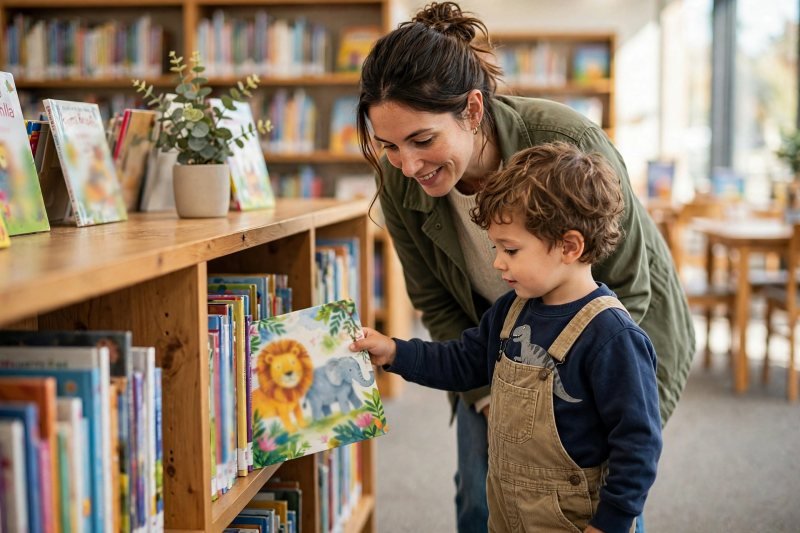
Library and rotation tips. Keep 2–3 rhyming books in rotation and swap one every week or two. Ask the children's librarian for "rhyming read-alouds for preschoolers." When your child demands the same book a tenth time, say yes — repetition is the mechanism.


Make it easier
Start with the shortest, most repetitive books — Moo, Baa, La La La!, Brown Bear, Brown Bear, and Is Your Mama a Llama? Pause on one or two rhymes per page, and supply the word yourself with a grin if your child stays quiet.
Make it harder
For 4-year-olds who nail the fill-ins, pause mid-line instead of at the end, or ask "what else rhymes with cat?" The Gruffalo and Room on the Broom suit ready-for-more readers.
Other ways to play it
- Turn any book into a movement game: stomp the rhymes in Giraffes Can't Dance, march to Hairy Maclary, bounce to Jamberry.
- Record your child "reading" a memorized favorite and play it back.
- Or sing the rhymes: nursery rhymes for toddlers turns favorite songs into movement games too.
How it changes by age
- This list is tuned for ages 3–4, when kids start predicting rhymes and shouting out endings.
- The board books' rhythm also suits younger twos.
- Split longer stories across two sittings if needed.
- Read about the benefits of nursery rhymes for reading for why repetition matters.
What they're learning
Rhyming books build phonological awareness — hearing that words share sounds — a strong foundation for learning to read. Kids also grow vocabulary, memory, listening stamina, and reading confidence. Pair reading with phonics activities for preschoolers and beginning sounds activities for preschool when they are ready for letter sounds.
Clearing up
Stack books spine-out on a low shelf or basket so covers face forward — kids choose with their eyes. Keep library books in one "library bag" by the door.
Questions parents ask
What are the best rhyming books for preschoolers?
How do rhyming books help preschoolers learn to read?
At what age should I start reading rhyming books to my child?
What should I do while reading a rhyming book aloud?
Where can I find rhyming books for preschoolers for free?
Many public libraries carry these titles — check your library catalog for the exact title and author before visiting. The descriptions here are original summaries of each book's rhyme style and read-aloud hook. Mix one familiar favorite with one new book each week. For the teaching method behind the games, see how to teach rhyming to preschoolers, and browse the phonics hub for more early reading activities.

save it for later
Pin this for the next rainy afternoon
Keep it on a board so it is there when you need it, rather than when you happened to find it.
Save to PinterestTry this next
-

Syllable Clapping Games: 10 Ways Preschoolers Can Feel the Beats in Words
Ages 3–4
-
Wheels on the Bus Lyrics: Verses, Actions and Sound Words for 3-Year-Olds
Ages 3–4
-

Mary Had a Little Lamb Lyrics and the Rhyme Hunt Game
Ages 3–4
-
Rhyming Activities for Preschool: 15 Hands-On Ideas Beyond Worksheets
Ages 3–4


