


How to Teach Rhyming to Preschoolers: A Simple 4-Step Method
Rhyming is one of the first building blocks of reading, and most preschoolers learn it through play, not lessons. This 4-step method goes from hearing rhymes to making your own — with 10–15 minute games you can play anywhere.
To teach rhyming, use four playful steps: hear rhymes in books and songs; play "odd one out"; pause before rhyming words in familiar books and let your child finish them; then invite your child to invent rhymes. Keep sessions to 10–15 minutes and celebrate every attempt.

The short version
- Rhyming is a core early-reading skill taught entirely through play — no worksheets needed.
- Teach it in order: hear rhymes, spot the odd one out, finish the rhyme, make your own.
- Short, silly daily sessions beat long lessons every time.
- Nonsense words count — the goal is hearing matching sounds, not real words.
- If your child gets stuck, drop back one step and model the answer with a smile.
- Age
- Ages 3–4
- Prep
- 5 min
- Play time
- 10 min
- Mess
- None
- Difficulty
- Easy
- Where
- Indoor
Why kids love this
There is something delicious about "cat" and "hat" clicking together — preschoolers gleefully shout "zat!" at rhyming pairs just for the giggle. This method never feels like a lesson: story time becomes puppet silliness, then games where your child is the boss of the rhymes.
Four stages, in order: Step 1: Hear rhymes (instructions 1–2), Step 2: Spot the odd one out (3–4), Step 3: Finish the rhyme (5–6), Step 4: Make your own rhymes (7–8). Steps 9–10 cover practice and getting unstuck.
What you'll need
- 1–2 rhyming picture books you already own (nursery rhymes, Dr. Seuss, any rhyming story). Our nursery rhymes for toddlers roundup has more book and song ideas.
- A sock puppet or stuffed animal — optional but highly recommended
- 4–6 pairs of toys whose names rhyme (cup and toy puppy, toy cat and hat, ball and doll, sock and block)
- A few blank index cards or plain paper pieces (kept blank or face down — no printed words needed)
Before you start
1. Collect 4–6 rhyming toy pairs in a basket or on a tray. 2. Pick a rhyming book your child knows well. 3. Grab a sock or stuffed animal to play the Rhyme Puppet.
How to do it
-
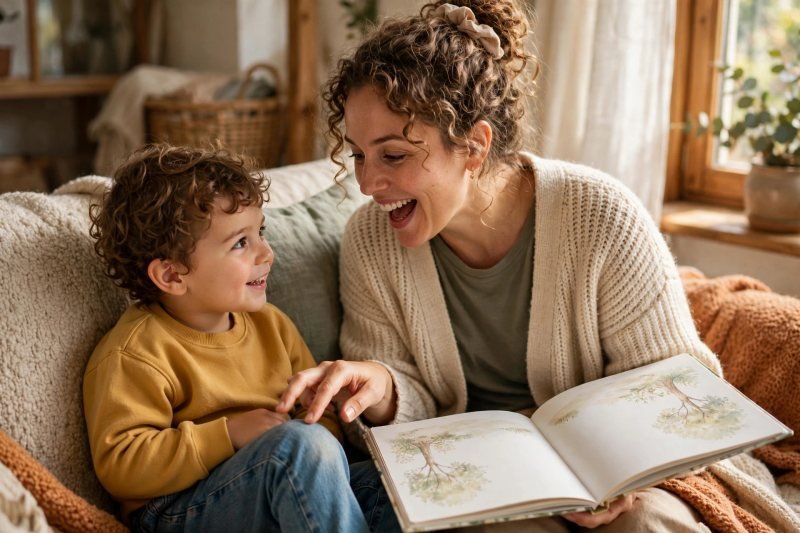
Read a rhyming book together. Read a rhyming book together, leaning into every rhyme with a sing-song voice. Play "Echo Rhyme": you read a line, your child echoes the last rhyming word.
-
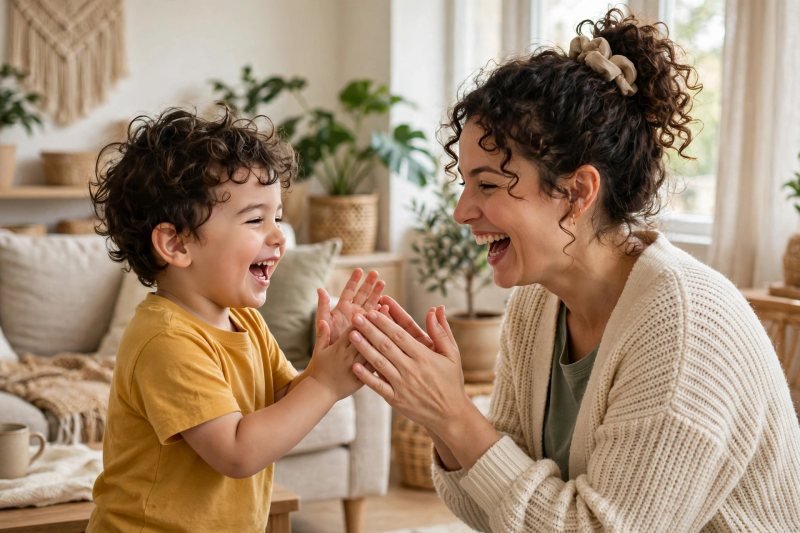
Sing a rhyming name song. Sing a rhyming name song like "Willaby Wallaby Woo," swapping in your child's name. Clap each rhyming pair — car, bath, anywhere. Repetition is the whole point of Step 1.
-
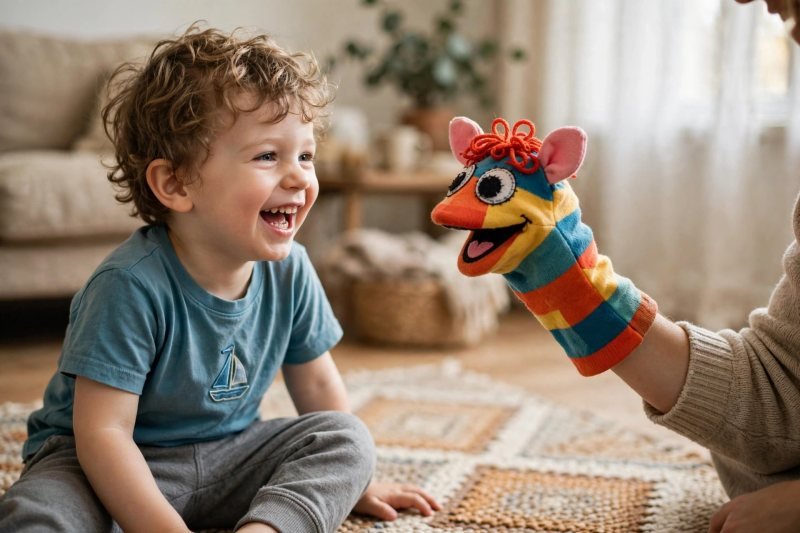
Meet the Rhyme Puppet. Meet the Rhyme Puppet, who loves rhymes but gets "very confused." It says "cat, hat, dog!" — and your child tells it which one does not belong. Cheer every correct catch.
-
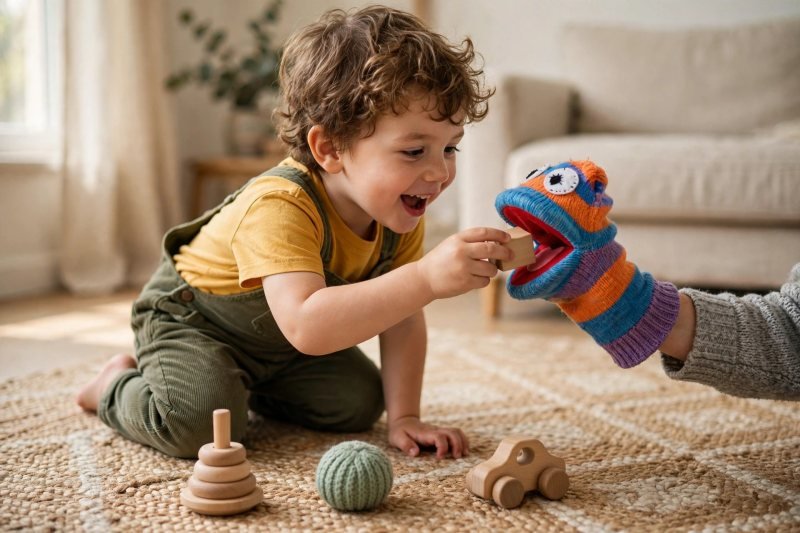
Feed the odd one out. Set out three toys — two that rhyme, one that does not. Your child feeds the odd one out to the puppet, who "eats" it dramatically. Start easy (cat–hat–dog), then go trickier (bee–tree–cup).
-
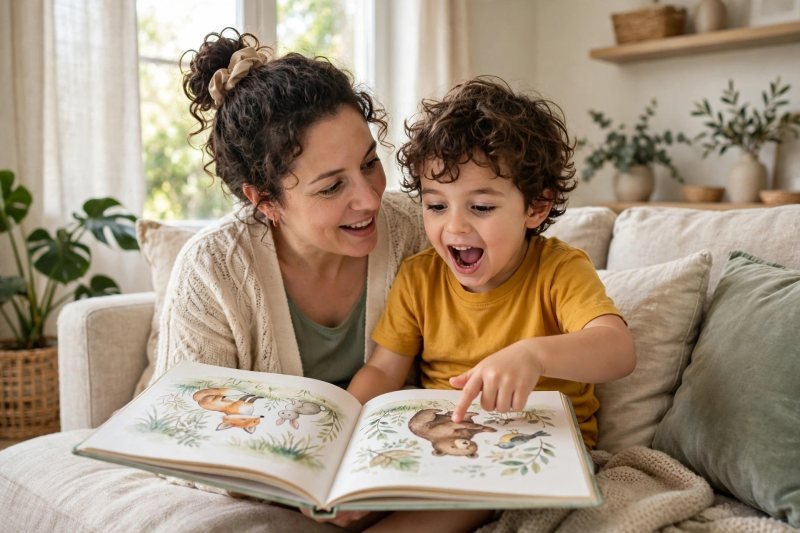
Pause before the rhyming word. In a familiar rhyming book, pause before the rhyming word — "The cat sat on the…" — and let your child fill it in. Hesitant? Whisper the word's first sound.
-
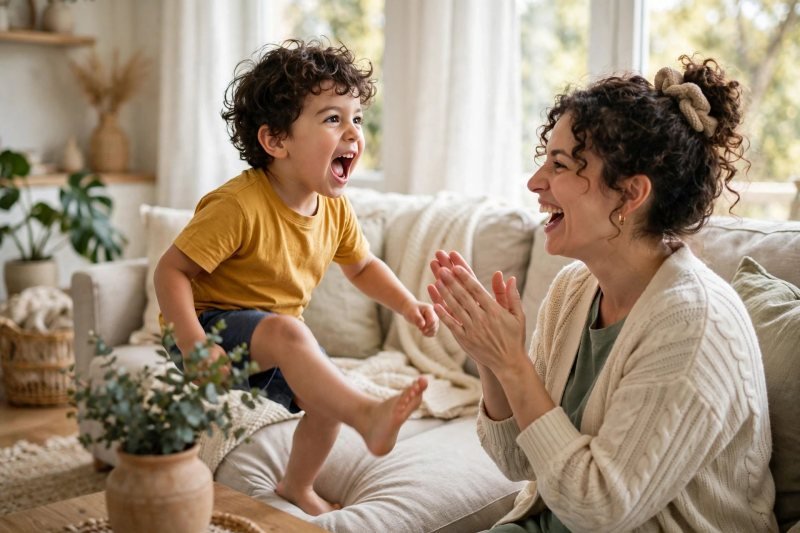
Silly-name game. Play the silly-name game: "My name is Mom, and I like to… stomp!" Take turns finishing each other's rhymes — nonsense endings are the best part.
-
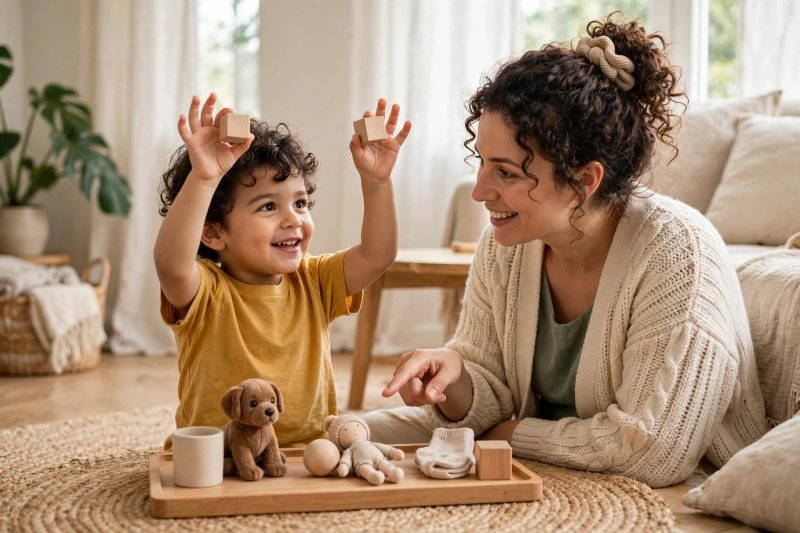
Match rhyming toy pairs. Match rhyming toy pairs — cup and puppy, ball and doll, sock and block — finding the ones that "sound the same at the end." Then the big challenge: "Can YOU rhyme with bee?" Matching pairs grow into word families for kindergarten.
-
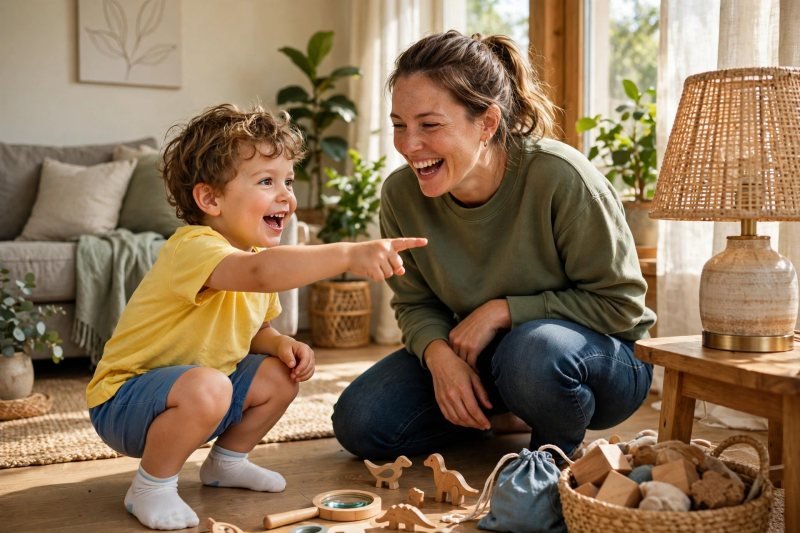
Rhyme-walk around the house. Rhyme-walk around the house: "I see a light! Light rhymes with… night!" "There's the door… door rhymes with… floor!" Celebrate every attempt, real word or not.
-
Rhyme Dance. End with a Rhyme Dance: clap and chant your child's best rhymes back while you both bounce around. Stop while it is still fun — 10–15 minutes is plenty.

-
Model it when stuck. If your child gets stuck, do not correct — model it: "Hmm, bee… tree! Bee and tree rhyme!" Then drop back one method step for a day or two.


Make it easier
Stick to one-syllable pairs at first: cat/hat, bee/tree. Let your child echo you instead of producing rhymes alone — echoing is real practice. Use the same 3–4 word pairs for several days before adding new ones.
Make it harder
Try two-syllable rhymes: puppy/guppy, table/cable. Build rhyme chains: how many can you stack? Cat, hat, bat, mat, sat, splat! Word patterns grow from here — see our digraphs for kids activities for the next sound pattern. Rhyme famously un-rhymable words like "orange" or "purple" — pure comedy.
Other ways to play it
- Rhyme Bath: call out words during bath time; your child rhymes back through the splashes.
- Car Rhymes: made for red lights and traffic jams; no materials needed.
How it changes by age
- Ages 2–3: stay in Method Steps 1–2. Hearing rhymes, echoing, and spotting the odd one out are exactly right — no pressure to produce original rhymes.
- Ages 3–4: work through all four steps at your child's pace — spotting the odd one out comes first; inventing rhymes often clicks closer to age 4.
- Ages 5+: if rhyming is still tricky, keep playing and mention it to their teacher or pediatrician.
What they're learning
Phonological awareness: hearing that words are made of sounds and some sounds match — the listening skill behind learning to read. Our phonics activities for preschoolers build the same listening skill, and our guide on how to teach a child to read shows where it leads. Vocabulary: rhyming games sneak in new words — doll, mat, guppy — through play instead of drills. Confidence with language: inventing rhymes, even silly ones, teaches kids that language is theirs to play with.
Questions parents ask
When should I start teaching rhyming to my preschooler?
How long does it take for a preschooler to learn rhyming?
What if my 4-year-old cannot rhyme yet?
Do nonsense words count as rhyming?
What are the easiest first rhyming words for preschoolers?
Can I teach rhyming without buying any special materials?
Nonsense rhymes count! The skill is hearing matching ending sounds, not knowing real words — "zat," "wug," and "flibberty-jib" all count. Rhyming in another language counts too — play the games in both languages if your family is bilingual.

save it for later
Pin this for the next rainy afternoon
Keep it on a board so it is there when you need it, rather than when you happened to find it.
Save to Pinterest

