


Rhyming Games for Preschoolers: 12 Playful Ways to Hear the Rhyme
12 rhyming games for preschoolers built on one skill: hearing the rhyme. Thumbs up or down, rhyme bells, a sleeping bear, and more — 10-minute listening games, no worksheets.
The best rhyming games for preschoolers are listening-first: give a thumbs up or down for word pairs, ring a bell when a rhyme appears in a word stream, wake a sleeping stuffed bear only for rhymes, and hop or freeze to rhyming calls. Keep sessions to 10 minutes, start with obvious pairs like cat and hat, and celebrate every correct catch.

The short version
- Rhyming starts with hearing, not saying — every game asks only "do these sound the same?"
- No worksheets: bells, tubes, stuffed animals, and a soft ball do the job.
- Play the ten games in order; each stretches the same skill in a new disguise.
- Ten playful minutes beat thirty drifting ones — stop while it's still fun.
- Repeating a favorite for days is how the skill sticks.
- Age
- Ages 3–4
- Prep
- 5 min
- Mess
- None
- Difficulty
- Easy
- Where
- Both
Why kids love this
Why do rhyming games for preschoolers start with listening? Before children can make up rhymes, they must hear them. The best rhyming games for preschoolers ask one tiny question twelve ways: do these two words sound the same at the end? No wrong answers — just listen and react. Kids ring bells, shout into tubes, wake a snoring bear, and toss soft balls. Every round ends in ten minutes, so they beg to play again tomorrow.
What you'll need
- Small bell, shaker, or wooden spoon and pot lid
- One stuffed animal (the "sleeping bear")
- Empty paper-towel tube
- Painter's tape
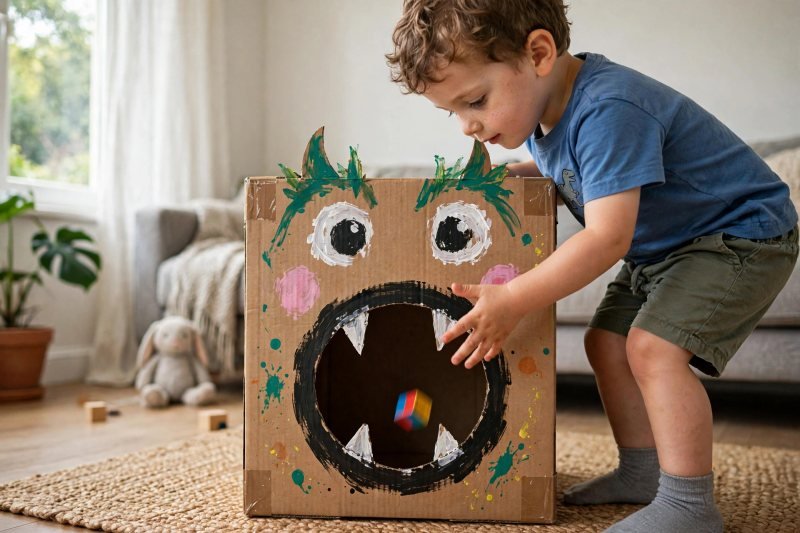
- Cardboard box with a mouth hole cut in one side
- Two stuffed animals or sock puppets
- Soft ball and laundry basket
- Bag with 8-10 small familiar objects (spoon, ball, toy car, sock, cup, block)
- Flashlight
Before you start
1. Gather the props in one basket — setup takes under a minute. 2. Cut a wide mouth hole in the cardboard box for the Rhyme Monster. 3. Lay a six-foot strip of painter's tape on the floor. 4. Pick 8 starting pairs — cat/hat, dog/frog, bee/tree, sun/fun plus cat/dog, hat/tree, frog/sun, bee/cup.
How to do it
-
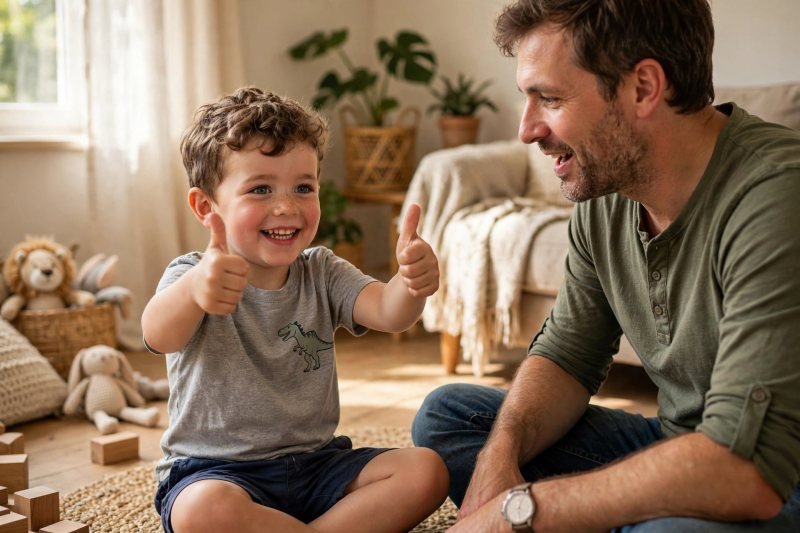
Thumbs Up, Thumbs Down. Play the games in order, one per session, starting with the simplest judgment: say two words slowly: "cat… hat." Rhymes get both thumbs up; non-rhymes ("cat… dog") get thumbs down. Start obvious, then try "bed… red." Gasp at every correct catch.
-
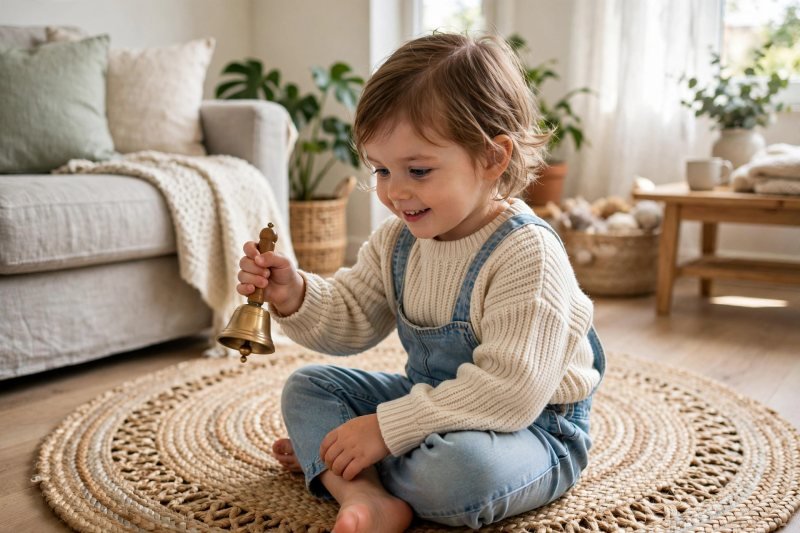
Ring the Rhyme Bell. "Ring every time you hear a word that rhymes with cat!" Call a slow stream — "dog… hat… sun… bat… mat" — and ring only on rhymes. Then swap roles; kids love catching your "mistakes."
-
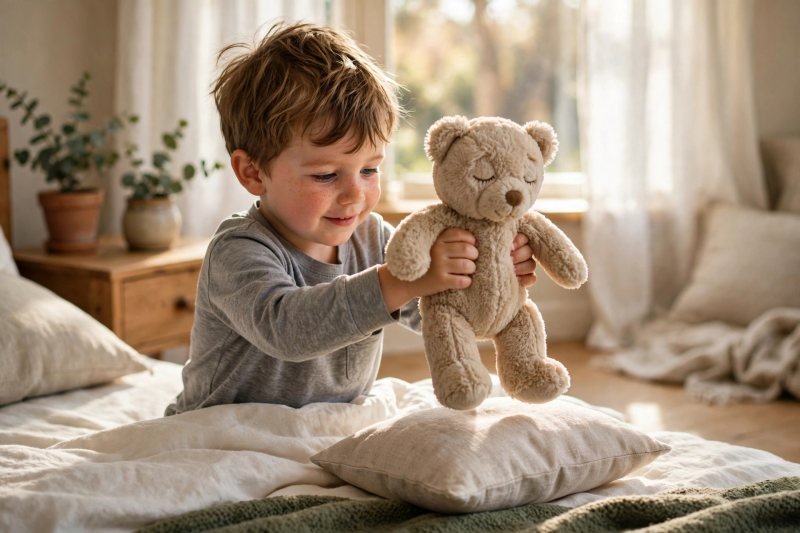
Wake the Sleeping Bear. The bear snores and wakes only for rhymes. "Dog… frog" — pop it upright: "Wake up, Bear!" For "dog… cup," tuck it back in: "shhh."
-
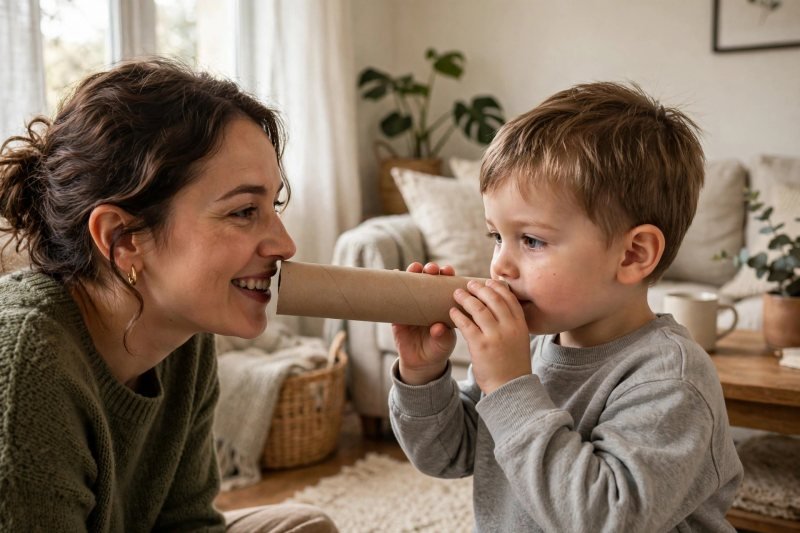
Whisper-Tube Yes or No. Whisper a pair through the tube — "bee… tree" — and your child shouts "YES!" for a rhyme, "NO!" if not. Try a robot voice on alternate rounds.
-
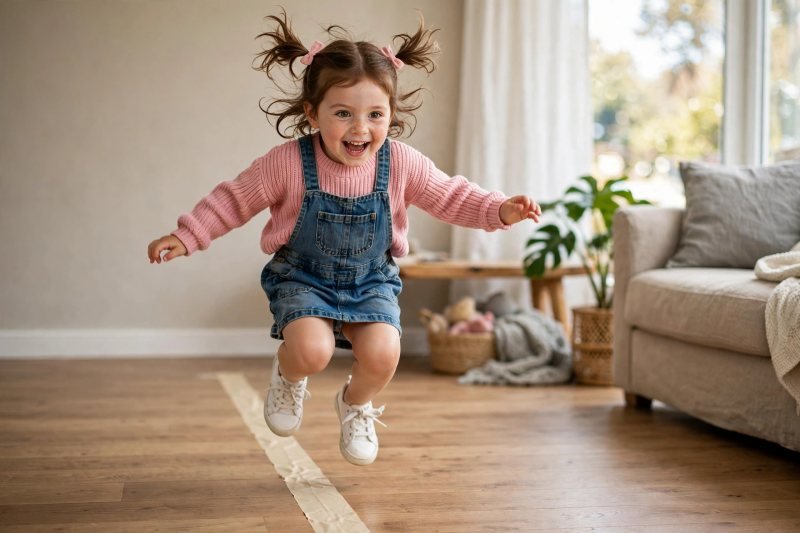
Hop or Stop. Call pairs: your child hops one hop forward for every rhyme and freezes for every non-rhyme. "Sun… fun" — hop! "Sun… hat" — freeze!
-
Feed the Rhyme Monster. The box monster eats only rhyming pairs. "Pig… wig" goes in with "NOM!"; "pig… car" gets tossed over the shoulder to "BLECH!"
-
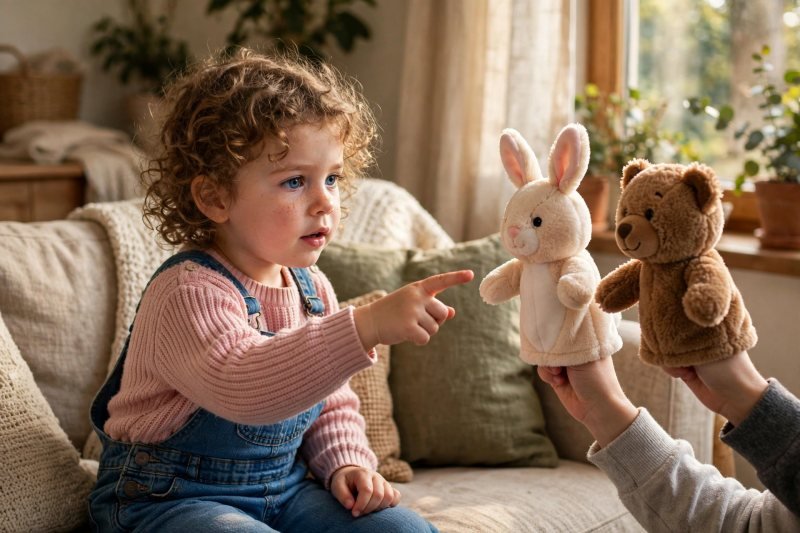
Which Puppets Match? Each stuffed animal gets a voice. Puppet One says "ball," Puppet Two says "tall" — "They match!" Then "ball" and "dog" — "No match!" Two "speakers" make the idea click.
-
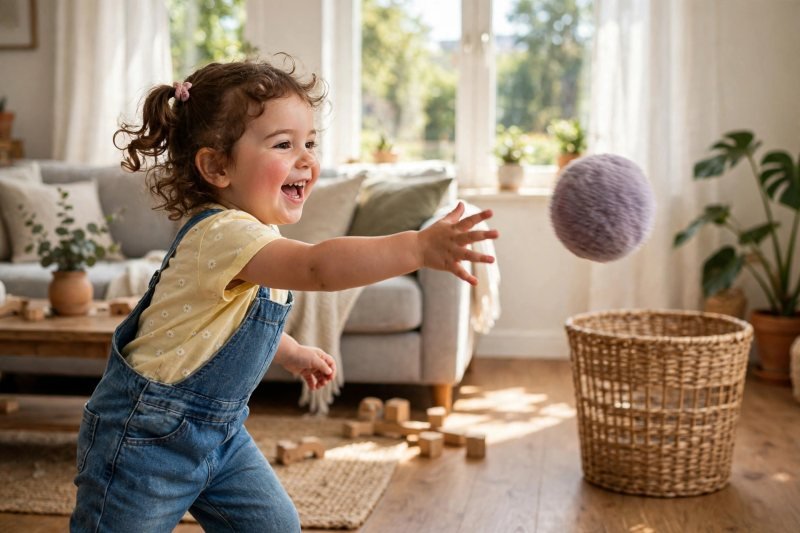
Rhyme Toss. Rhyming pairs ("fish… dish") mean take the shot at the basket; non-rhymes ("fish… car") mean hug the ball tight. Move the basket to tune the challenge.
-
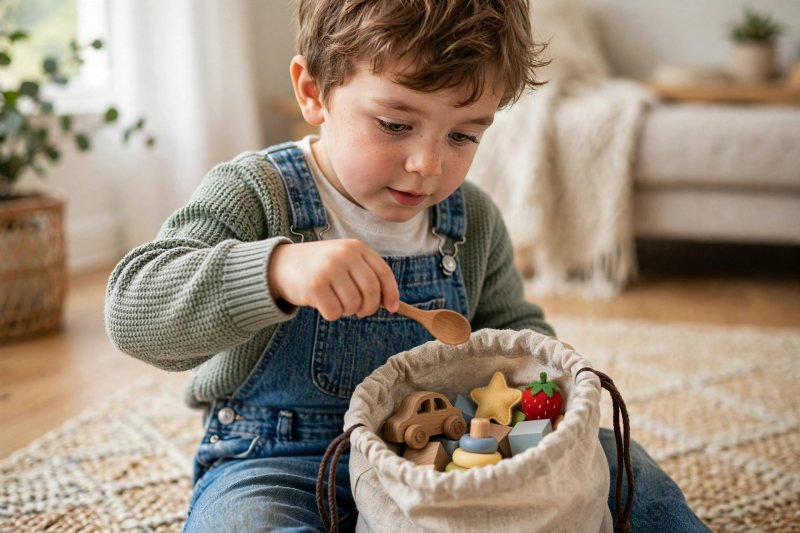
Mystery Box Pairs. Your child pulls two objects from the bag and names them: "spoon… moon — do they sound the same at the end?" Rhyming pairs join a victory row; the rest go back in.
-
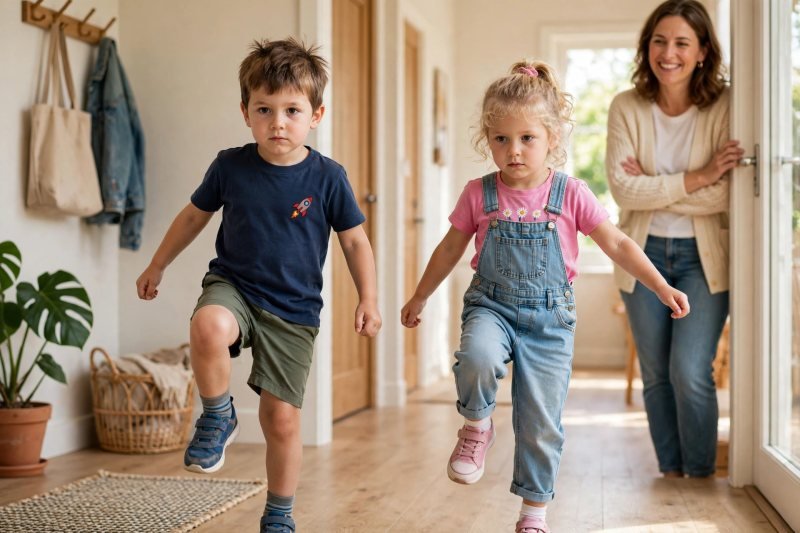
Red Light, Rhyme Light. The hallway finale. Your child walks toward you only while you call rhyming pairs — "car… star… boat… goat…" The instant a non-rhyme slips in ("boat… tree!"), red light: freeze!


Make it easier
Repeat the same 4-6 pairs for several days. Stretch the endings: "caaaat… haaaat." Let your child echo each pair before judging it.
Make it harder
Try two-syllable pairs: "puppy… guppy," "table… cable." Shorten the pause between words to normal talking speed. Add near-misses sharing a start but not the ending: "cat… car," "sun… sock."
Other ways to play it
- Two more games live outside the ten-step sequence, for bath time and bedtime.
- Bathtub Rhyme Splash. Call pairs over the splashing — rhymes earn one gentle splash, non-rhymes mean still hands.
- Flashlight Rhymes at Bedtime. Read a rhyming book in low light; your child flashes the page on every rhyming pair caught.
How it changes by age
- Ages 2-3: play only Thumbs Up, Thumbs Down; Ring the Rhyme Bell; and Wake the Sleeping Bear. Echoing and judging obvious pairs is exactly right.
- Ages 3-4: work through all ten in order. Most nail the first five quickly; Feed the Rhyme Monster through Red Light, Rhyme Light stretch the same skill in new disguises.
- Ages 5+: if hearing rhymes is still hard, keep it pressure-free and mention it to their teacher.
What they're learning
Phonological awareness: hearing that words are built from sounds and some share ending sounds — the listening foundation reading is built on. Attention and self-control: waiting for the rhyme before ringing, hopping, or throwing. Vocabulary: games sneak in words like "dish," "goat," and "guppy" through play. Showing what they hear: every game asks only for a yes or no, a ring, a hop, or a freeze, so a child who is not talking much yet can still show what their ears have caught.
Clearing up
Your child never has to produce a rhyme here — hearing the match is the whole skill. Nonsense pairs count: "wug… zug" rhymes, and catching it proves real sound-listening. Play the same games in your home language — rhyme hearing transfers across languages. Repeat favorites shamelessly. A requested-by-name game is a working game. Keep the listening play going: our phonics activities for preschoolers turn the same listening skill into new games; how to teach rhyming to preschoolers lays out a simple four-step method for the weeks ahead; and the word families guide shows how each rhyming pair belongs to a pattern. Younger siblings can join in with rhyming words for toddlers, while older preschoolers will enjoy the longer lists in rhyming words for preschoolers, and preschool learning activities at home offers more ten-minute ideas for the same age group.
Questions parents ask
When should preschoolers start playing rhyming games?
What if my child can't hear the rhymes yet?
Does my child need to say rhymes for these games to work?
How long should a rhyming game session last?
What are the easiest rhyming pairs to start with?
Do rhyming games really help with reading later?

save it for later
Pin this for the next rainy afternoon
Keep it on a board so it is there when you need it, rather than when you happened to find it.
Save to Pinterest


