


Phonics Screening Check Practice: Year 1 Word Lists (UK)
Calm, stress-free phonics screening check practice for Year 1 (ages 5–6): our own practice word lists of real words and invented alien words, plus a gentle 10-step home session and low-pressure games.
The phonics screening check is a short June activity where Year 1 children read 40 words — 20 real, 20 alien — to their teacher. Practise at home with ten calm minutes, your own word lists and silly games.

The short version
- A short, friendly reading activity in June of Year 1 — not a high-stakes exam.
- Ten calm minutes at a time, always finishing while it's still fun.
- Real words plus invented alien words; our lists are homemade, not official.
- Praise effort over accuracy; keep every session playful.
- Age
- Ages 5–6
- Prep
- 5 min
- Play time
- 10 min
- Mess
- None
- Difficulty
- Easy
- Where
- Indoor
Why kids love this
Reading "snurf" aloud to a toy monster is genuinely hilarious when you're five. Ten-minute sessions, silly alien-word games and big celebrations mean real reading success without ever feeling examined.
In June of Year 1, children in England read 40 words aloud to their teacher — 20 real words and 20 made-up "alien" words. It checks decoding: can your child sound out unfamiliar words? Nothing to fret about — it simply shows the teacher how their reading is coming along.
What you'll need
- Index cards or paper cut into cards, and a chunky marker pen
- A toy alien or monster (any cuddly toy will do)
- A small box for "posting" alien words
- A kitchen timer and stickers (optional)
Before you start
1. Write 10 real words on cards: cat, bed, fish, park, light, green, shop, frog, star, moon. 2. Write 10 invented alien words on cards: blim, snurf, trep, ploss, choin, thig, vozz, spran, quex, jurt. We made these up — not official check words. 3. Draw a little alien face on the back of each alien card.
How to do it
-
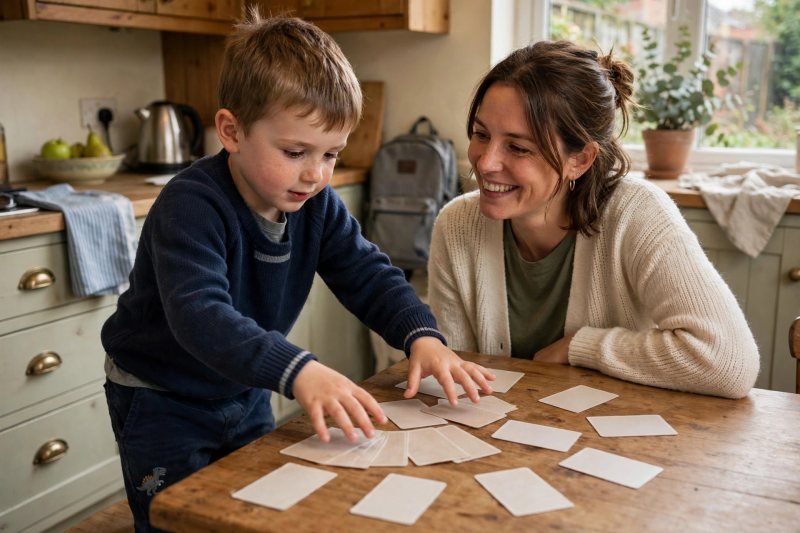
Pick the right moment. Ten calm minutes when your child is fed and rested — after school with a snack is ideal.
-
Warm up with robot sounds. Say sounds robot-style — "s–ee–d" — then blend fast. Two warm-ups wake up blending muscles.

-
You read first. Model stretch-and-blend: point under each letter, say the sounds slowly, squash them together — "f–i–sh… fish!"

-
Real words round. Your child reads five real words: cat, bed, fish, park, light. Hesitates? Model it again — no sighing, no rushing.

-
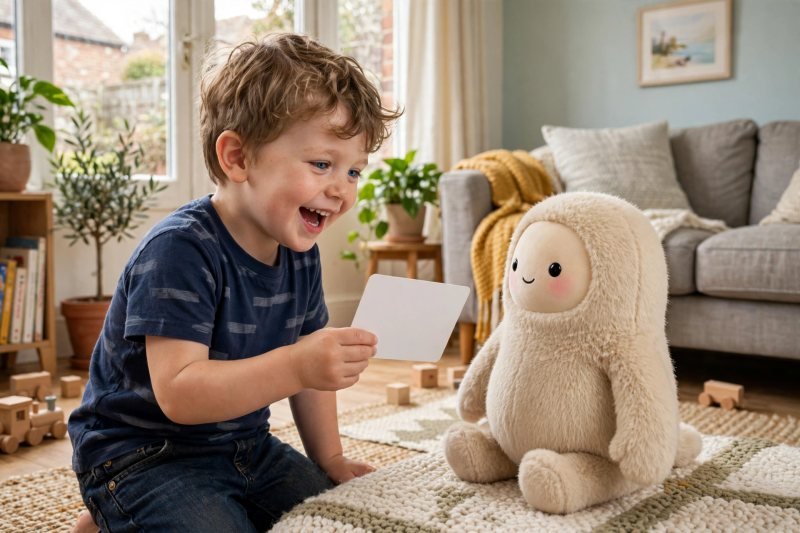
Meet the alien words. Bring out the toy monster: "These come from an alien planet — it only understands sounded-out words!"
-
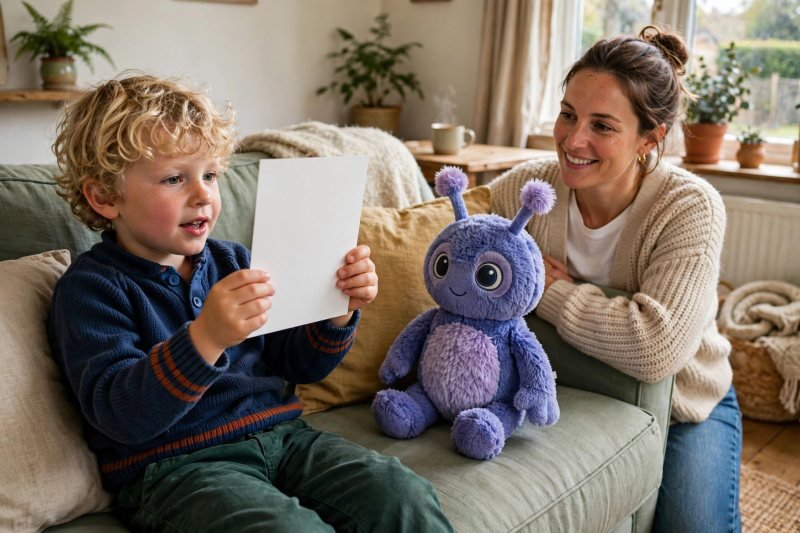
Read to the monster. Your child reads five alien words to the toy: blim, snurf, trep, ploss, choin. Giggle together.
-
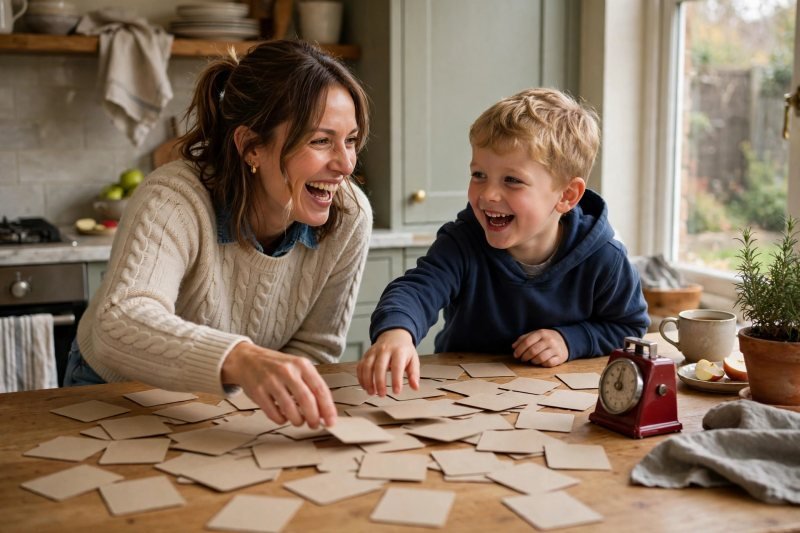
Speed-up game. Shuffle the cards, set a one-minute timer. How many can they read before it dings? Beat their own best.
-
Celebrate properly. Big high-five, a silly dance, a sticker — pick your ritual. End on a word they read brilliantly.

-
Play one practice game. Pick one from Variations below — alien postman and word fishing are firm favourites.
-
Finish while it's fun. Stop at ten minutes, even if they beg for more. Tidy the cards away together.


Make it easier
Use three real and three alien words per session, staying with steps 1–6 for a week or two. Let your child echo you before trying alone. Go back to how to teach letter sounds one sound at a time before returning to whole words.
Make it harder
Add longer alien words (spran, quex, jurt — many contain digraphs sh, ch, th and wh) and trickier real words (light, green, moon). Track a personal best in the speed-up round. More lists: our CVC words list.
For a bigger bank, try our 40 invented alien words to practise, grouped by sound.
Other ways to play it
- Rotate one of these games into each session:
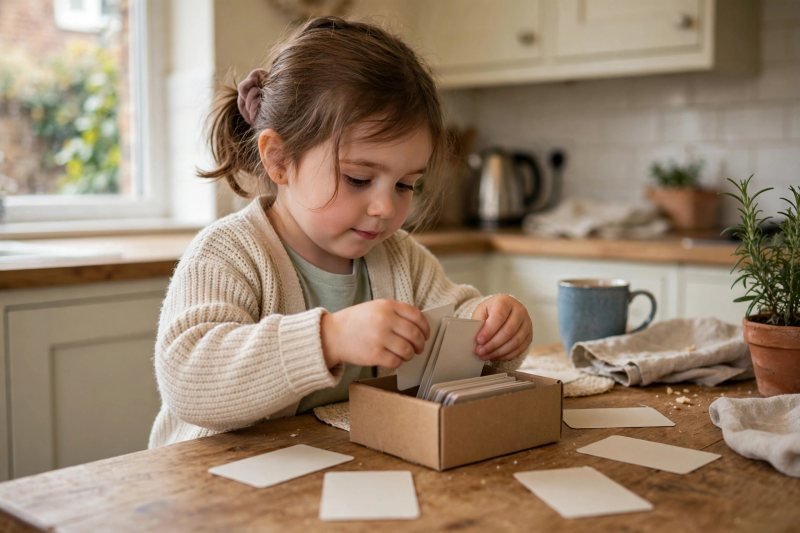
- Alien postman: post each alien card through a slot in a box to the hungry monster.
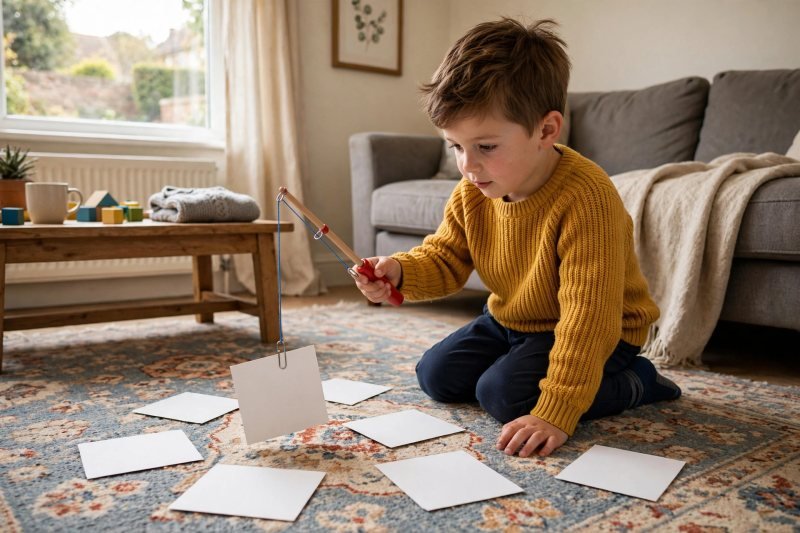
- Word fishing: paperclip the cards; fish for words with a toy rod or magnet on string.
- Stepping stones: cards on cushions — hop across, reading each one.
- Torch detective: hide cards round the room; hunt with a torch, reading each find.
- Snap pairs: two copies of five words as a matching game.
- Robot relay: one says the sounds robot-style; the other blends.
How it changes by age
- For ages 5–6, when most Year 1 children know letter sounds and are learning to blend. Not blending yet? Enjoy our phonics games first.
What they're learning
Decoding — turning letters into sounds and blending them into words, exactly what the check looks at. Alien words build the skill of reading unfamiliar words rather than guessing from memory. If blending itself is new, start with our blending sounds activities before the speed-up game.
Clearing up
Our word lists were written by us for home practice only — not official screening check words. Real check words are kept secure by schools; any decodable words build the same skills. If your child finds alien words hard, that is completely normal — alien words are unfamiliar on purpose. Stretch each sound extra slowly, then blend a touch faster. Mix in easy real words so every session ends in success. The week before and the day itself: keep sessions as usual the week before — no cramming. On the morning, treat it like any school day: breakfast, a calm chat, no last-minute quizzing.
Questions parents ask
What is the phonics screening check?
When does the Year 1 phonics screening check happen?
What are alien words in the phonics screening check?
How can I help my child practise for the phonics check?
What happens if my child doesn't meet the expected standard?
Are these practice word lists the official check words?

save it for later
Pin this for the next rainy afternoon
Keep it on a board so it is there when you need it, rather than when you happened to find it.
Save to Pinterest


