


Alien Words: 40 Nonsense Words to Practice for the Phonics Check (UK)
Alien words phonics practice for the Year 1 screening check: 40 invented nonsense words, a decode-together routine and games that make sounding out feel like a giggle, not a test.
Alien words are made-up words like "threp" and "zongle" that children sound out and blend, proving they can decode unfamiliar words. Practice with ten calm minutes, our 40-word bank of invented nonsense words, one grapheme group at a time, and silly games — always finishing while it's still fun.

The short version
- Alien words are invented nonsense words — children must sound them out.
- The Year 1 check pairs 20 alien words with 20 real words; they test decoding, not memory.
- Ten calm minutes a day, one grapheme group at a time, beats cramming.
- Age
- Ages 5–6
- Prep
- 10 min
- Play time
- 10 min
- Mess
- None
- Difficulty
- Easy
- Where
- Indoor
Why kids love this
Nobody can read an alien's language — except your child. Sounding out silly words like "shracken" for a plush alien visitor turns phonics into playtime: ten minutes, giggles, stickers, zero pressure. ## What are alien words, and why does the phonics check use them? Alien words are made-up words that look like real English — "threp", "snaid", "glorp" — but mean nothing. The Year 1 check pairs 20 with 20 real words, because nonsense words reveal true decoding: real words can be remembered, but alien words can only be sounded out. (Year 1 is the second year of primary school in England, ages 5–6. In the US the same skill is called nonsense-word fluency — it is what assessments like DIBELS Nonsense Word Fluency measure — so this practice transfers directly even where there is no official screening check.) ## How do you sound out an alien word with your child? Point under each letter or digraph, stretch each sound — "s–n–or–p–l" — then blend faster until it emerges: "snorple!" If blending is still new, our blending sounds activities make a lovely warm-up first. ## How many alien words should we practice in one session? Eight to twelve cards — about ten calm minutes. Three words decoded well teach more than twenty rushed. Mix in easy wins like "shob" so every session ends in success.
What you'll need
- 40 index cards or paper cut into cards, and a chunky marker pen
- A toy alien or monster (any cuddly toy will do)
- A small box with a slot cut in the top, stickers and paperclips
- A toy fishing rod, or a magnet tied to string
Before you start
Write one word per card — every word below is invented by us, not real English. Tell your child: "These are alien words — we just sound them out." Draw an alien face on each card back, cut the slot in the box, and practice one or two groups. All forty are invented nonsense words, checked against a full wordlist so none is real English — and none is an official check word, since the real ones are kept secure by schools. Practice one or two groups per session. sh: shob, shil, shrep, shracken ch: chup, chovver th: thip, thup, threp, thindle, thumple ng: ving, zang, nung, zongle ai: frain, staim, snaid ee: fleem, sneep, sneegle igh: frigh, smeigh, skight oa: croap, sloap, groap oo: shroop, smoom, throop, flooter ar: darp, snarp, blarkin or: thorb, zorn, glorp, snorple, morbly Two-syllable bonus: vopple
How to do it
-
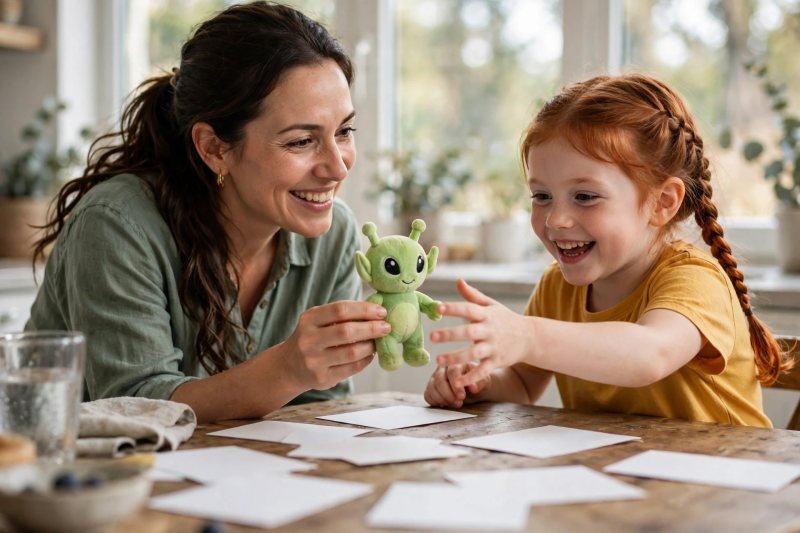
**Welcome the alien visitor.** Bring out the toy alien and introduce it: "This is Zib from Planet Blip. He only understands sounded-out words — no guessing allowed on his planet." Let your child hold Zib while you set out the cards.
-
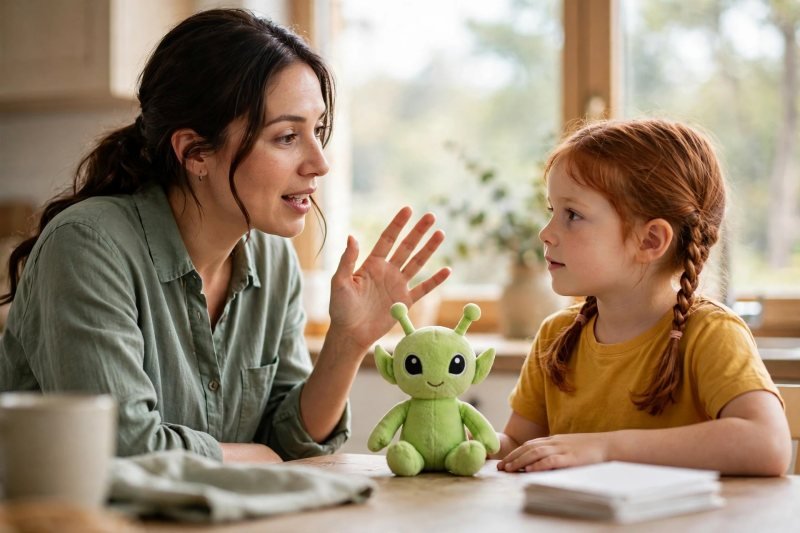
**Teach the alien rule.** Hold up one card and explain the one rule: alien words are made up and mean nothing, so there is nothing to remember and nothing to guess — we just read the sounds and blend them. Two or three practice cards is plenty before the routine starts.
-
**Warm up robot-style.** Pick two easy cards, like "shob" and "chup", and say the sounds robot-style — "sh–o–b" — then blend them fast: "shob!" Your child copies the robot voice; the silliness is the warm-up working.

-
**Model one full decode.** Point under each letter of "thip" left to right, stretch every sound — "th–i–p" — then squash them together: "thip!" Your finger under the letters keeps their eyes tracking in order.

-
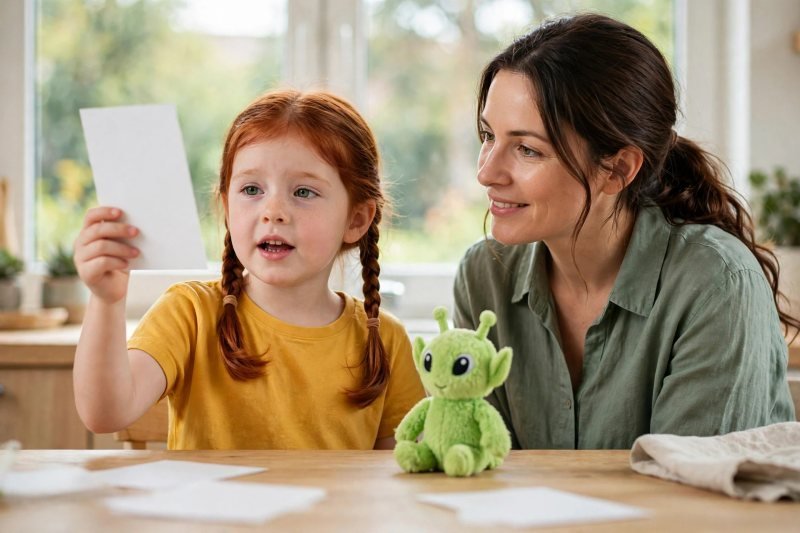
**Hand over the reading.** Let your child read three short cards — "ving", "fleem", "croap" — while you echo quietly alongside. Praise the blending, not the speed: sounding out is the whole skill.
-
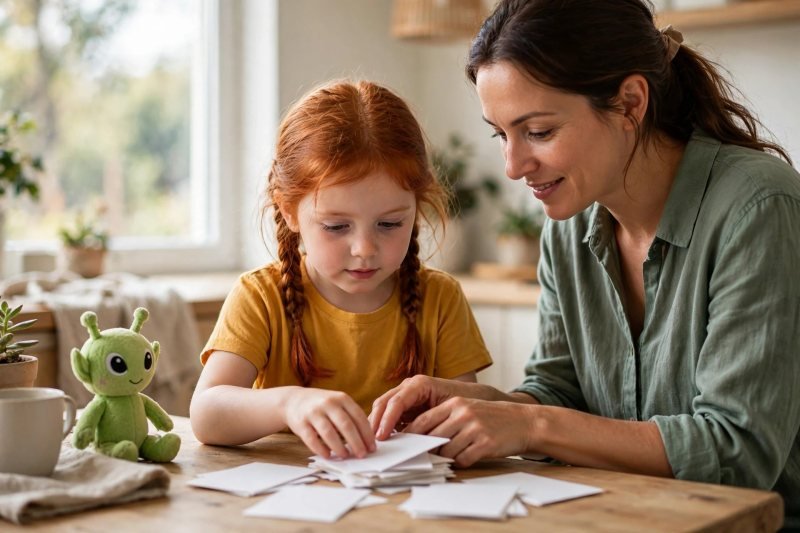
**Spotlight one grapheme group.** Pick a "sound of the day" — today **sh**, tomorrow **th** — and read that group's cards twice through. One group per session; the groups are listed in the practice bank in Preparation.
-
**Tackle two syllables together.** "Shracken", "zongle", "blarkin": clap the syllables first, decode each chunk, then join them — "shrack-en" becomes "shracken." Clapping keeps the chunks in order.

-
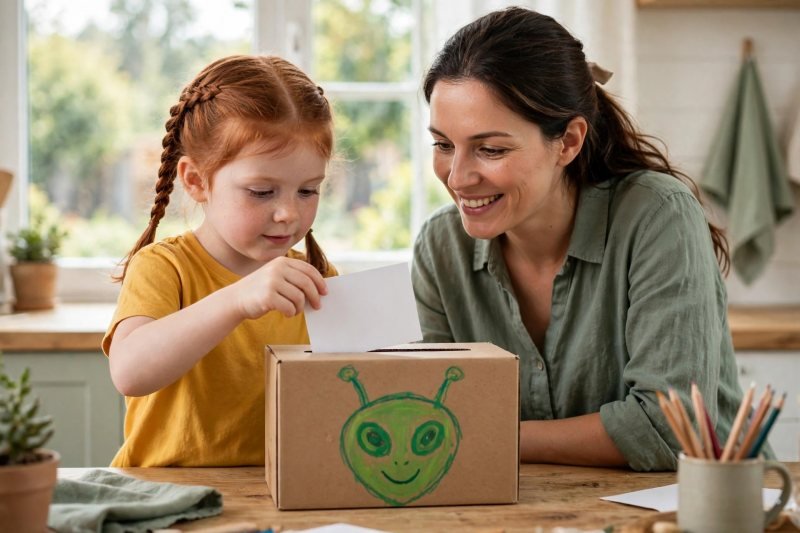
**Play alien postman.** Read each card aloud, then post it through the slot in the box. Zib only accepts sounded-out words — a guessed word gets handed back for another try.
-
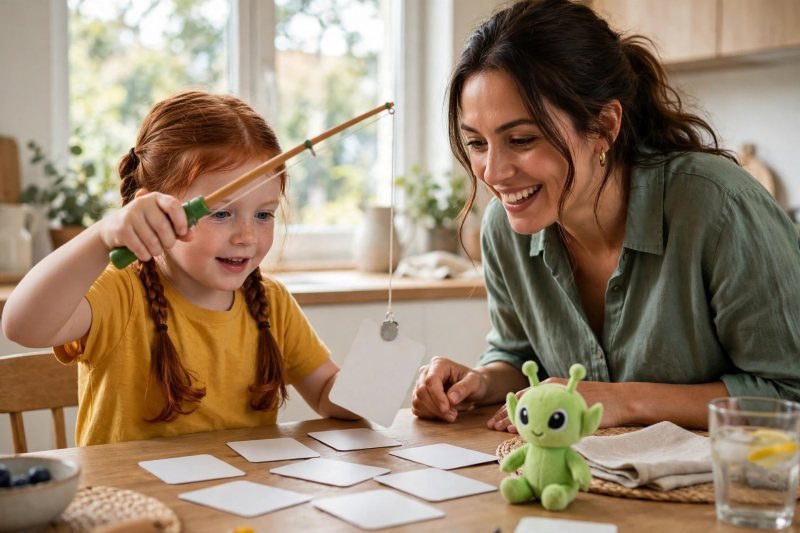
**Go word fishing.** Paperclip five cards, spread them face down, and fish with the magnet on its string. Every catch is read aloud before it joins the keep pile.
-
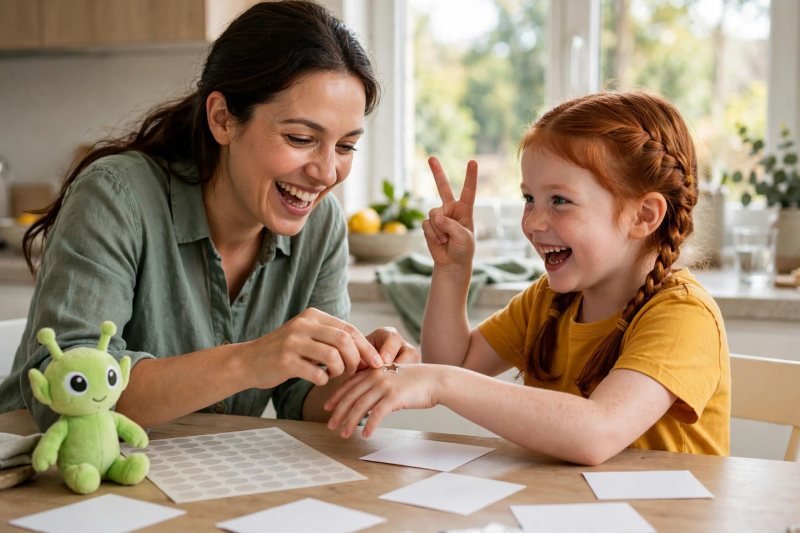
**Celebrate and finish happy.** A sticker for effort, a silly dance, then stop at ten minutes — even if they beg for more. Rotate the grapheme groups through the week; Friday is game day.


Make it easier
Use four cards — two known plus two new — and let them echo you before trying alone. Stick to one-syllable words and steps 1–6 for a week or two.
Make it harder
Add the two-syllable set and ask your child to spot the grapheme first ("find the **oo** in 'shroop'"). Try a one-minute speed round, or mix in real words from our CVC words list.
Other ways to play it
- Rotate one game into each session:
- **Alien postman:** read each card, then post it to the hungry alien.
- **Word fishing:** fish for paperclipped cards; every catch gets read aloud.
- **Stepping stones:** cards on cushions — hop across, reading each one.
- **Torch detective:** hide cards round the room; hunt and read each find.
How it changes by age
- For ages 5–6, when most Year 1 children know letter sounds and are learning to blend — echoing you counts. If sounding out is very new, try our phonics screening check practice first.
What they're learning
Decoding — turning letters into sounds and blending them, precisely what the check measures. Every word is invented, so children read unfamiliar words from scratch while the groups reinforce key digraphs and trigraphs.
Clearing up
The slot-cut box stores the whole card bank between sessions; retire any cards that get chewed by the magnet game. Keep the toy alien inside the box so the routine starts itself next time you open it.
Questions parents ask
What are alien words in phonics?
Why does the phonics screening check use nonsense words?
How can I practice alien words phonics at home?
Should I tell my child what alien words mean?
If your child invents their own alien words (and they will), write them down and add them to the bank — self-made words are the most motivating of all.

save it for later
Pin this for the next rainy afternoon
Keep it on a board so it is there when you need it, rather than when you happened to find it.
Save to Pinterest

