


Word Families for Kindergarten: at, an, ap and More
Nine kid-friendly word family lists (-at, -an, -ap and more) plus a 10-step, parent-led session with hands-on games: onset-rime sliders, word family houses, flip books and word fishing.
Word families are groups of words sharing an ending pattern — like -at in cat, hat and mat. Ages 5–6: blend the first sound with the chunk, then play — sliders, houses, sorting, flip books, fishing. Start with short-a families (-at, -an, -ap), one family per session.

The short version
- One shared ending + changing first sounds.
- Order: -at, -an, -ap, -et, -it, -ot, -ug, -en, -ig.
- One family per session; 9 lists included.
- Slider, house, sorting, flip book, fishing build blending.
- Move on after two confident days on the family.
- Age
- Ages 5–6
- Prep
- 10 min
- Play time
- 20 min
- Mess
- None
- Difficulty
- Easy
- Where
- Indoor
Why kids love this
In this word families kindergarten session, one pattern unlocks reading: master "-at" and your child reads cat, hat, mat, bat, sat, rat. The fishing game, flip book and word house feel like play, building real blending skill.
A word family (rime): an ending that stays put while the first letter changes. In word families kindergarten work, "-at" becomes cat, hat, mat, bat, sat, rat.
Words sharing one ending pattern: keep "-at," change the first sound. The first sound is the onset; the ending is the rime.
Short-a first; master one family before the next:
-at — cat, hat, mat, bat, sat, rat
-an — can, pan, man, ran, fan, van
-ap — cap, map, tap, nap, sap
-et — bet, pet, set, met, wet, vet
-it — sit, hit, bit, fit, kit
-ot — hot, pot, cot, not, dot, got
-ug — hug, bug, rug, mug, jug, tug
-en — pen, ten, hen, men, den
-ig — big, dig, pig, wig, fig, jig
One family, ten steps, about twenty-five minutes.
What you'll need
- Cardstock cards (about 20)
- Thick marker and scissors
- A large paper sheet (word family house)
- Crayons
- Letter tiles (optional)
- A clean bowl
- Stick, string, tape, magnet (fishing rod)
- A picture book
Before you start
1. Pick ONE family — "-at" first. 2. One big "at" card; six starter cards: c, h, m, b, s, r. 3. Draw a blank paper house; staple 4–6 cards into a flip book. 4. Fishing: card bowl (paperclip on each); magnet-on-string on a stick. 5. Clear a table or rug with the house in reach.
How to do it
-
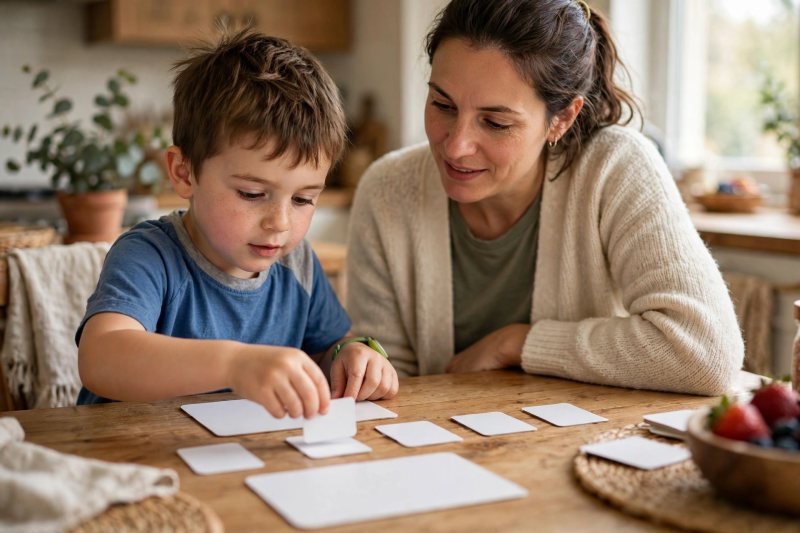
Build together. Set "-at" center-table; hand over starting letters one by one.
-
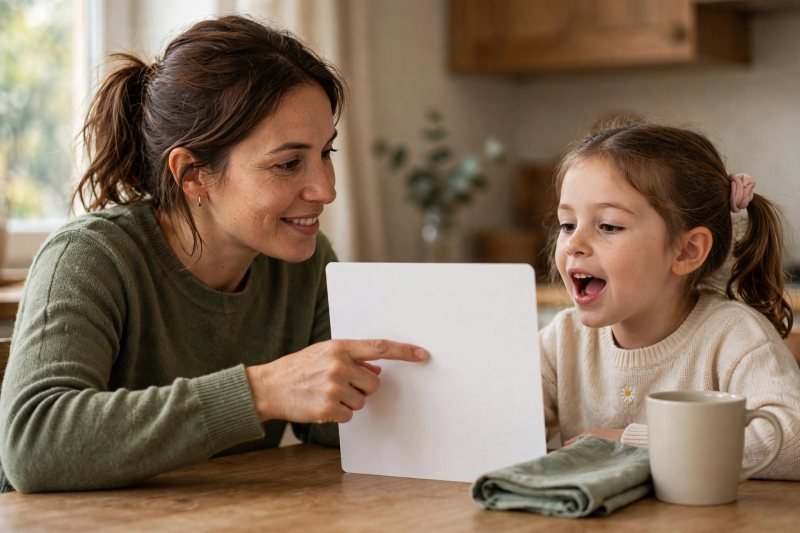
Meet the chunk. Point to "-at"; say "at" slowly. Your child echoes — whisper, shout, silly.
-
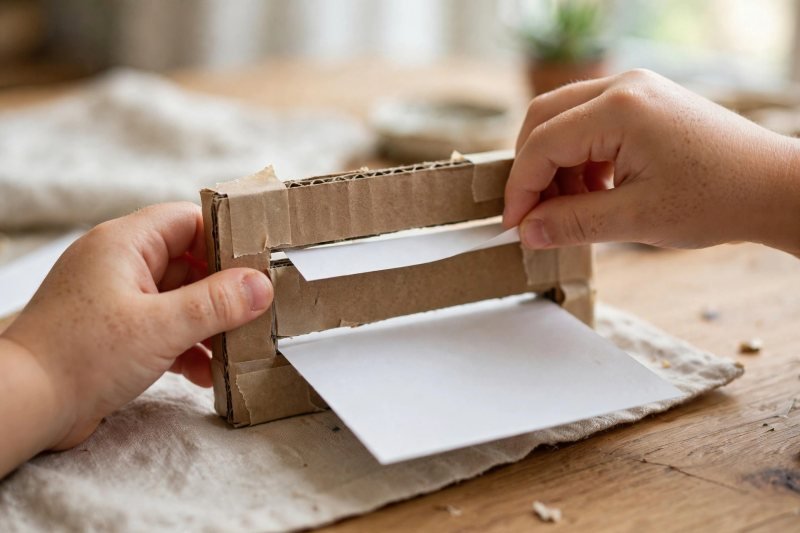
Blend the first word. Slide "c" to "-at"; model "/k/… at… cat," then read it naturally together.
-
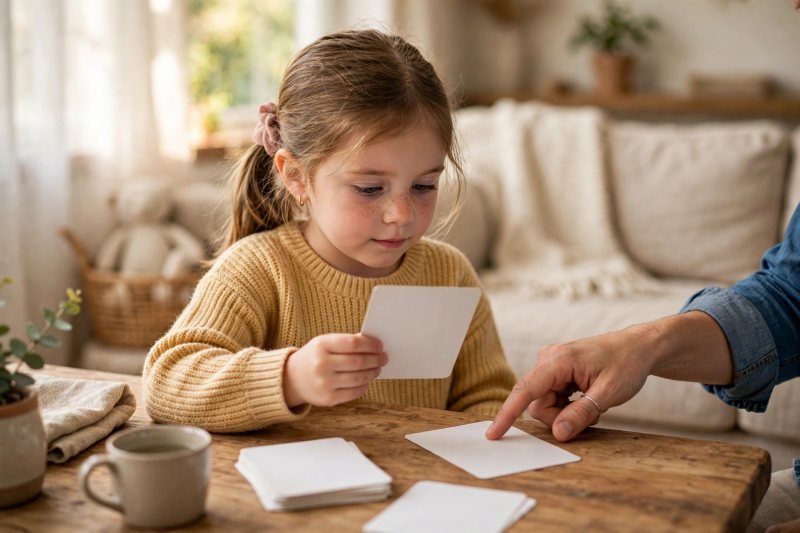
Read the rest. Slide in h, m, b, s, r; read each. Miss? Cover the ending, retry.
-
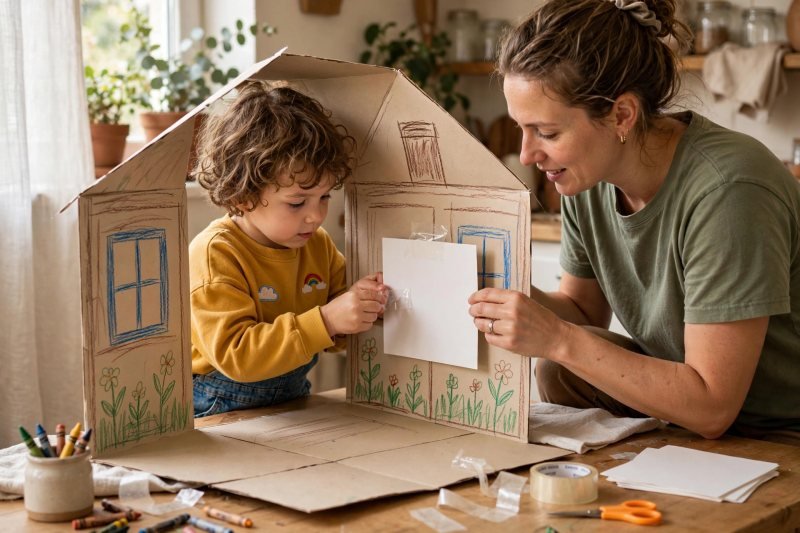
Fill the house. Read each card, then tape it in the house. Misses return to the pile.
-
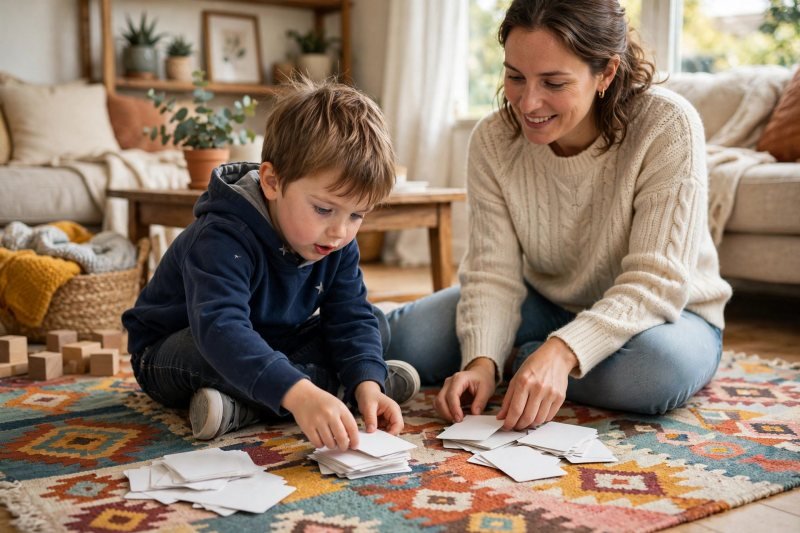
Sort by family. Mix -at and -an cards; sort two piles, reading each word first.
-
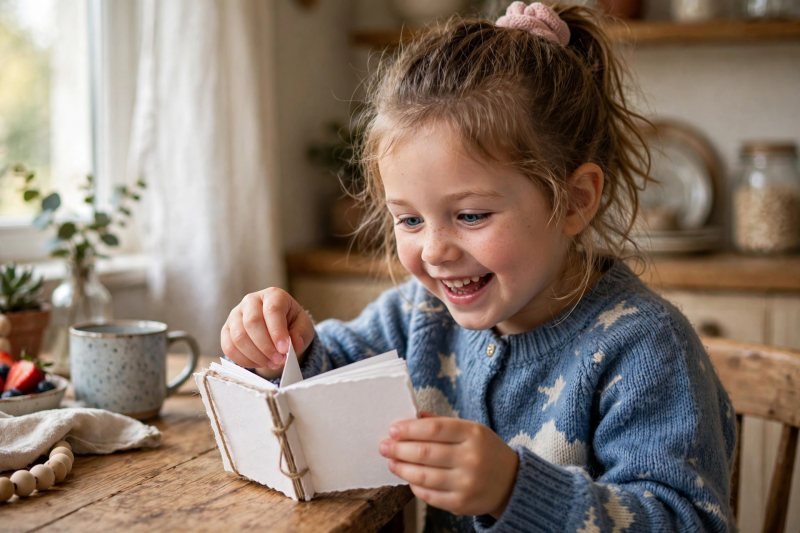
Flip and read. "-at" stays put; flip starting letters and read each new word.
-
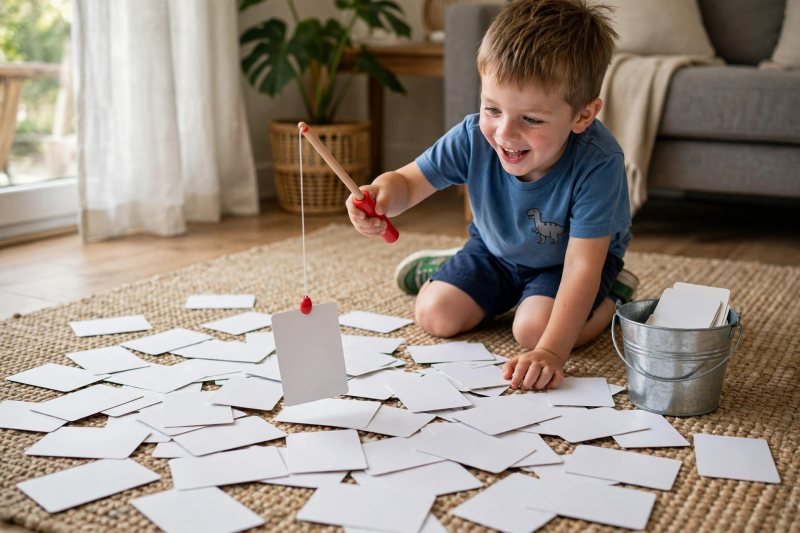
Fish for words. Cards are a rug "pond"; cast the rod, read each catch to keep it.
-
Read a sentence. Read slowly — "The cat sat on the mat" — your child takes family words.
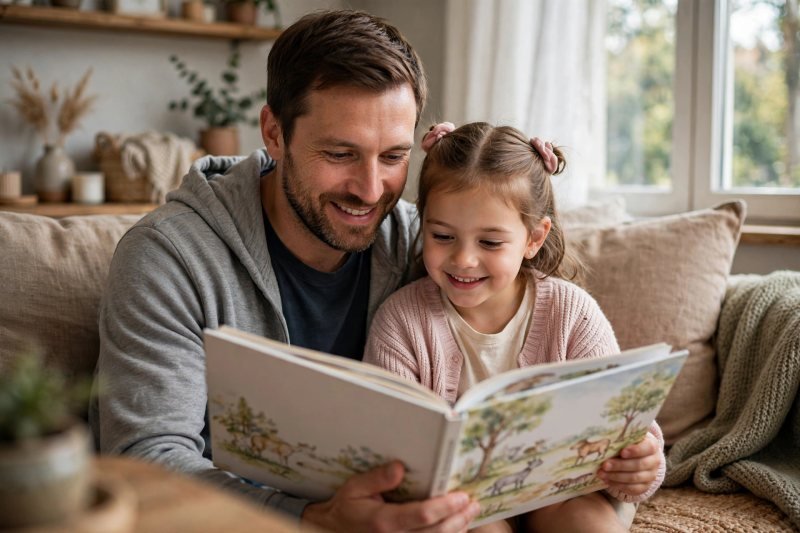
-
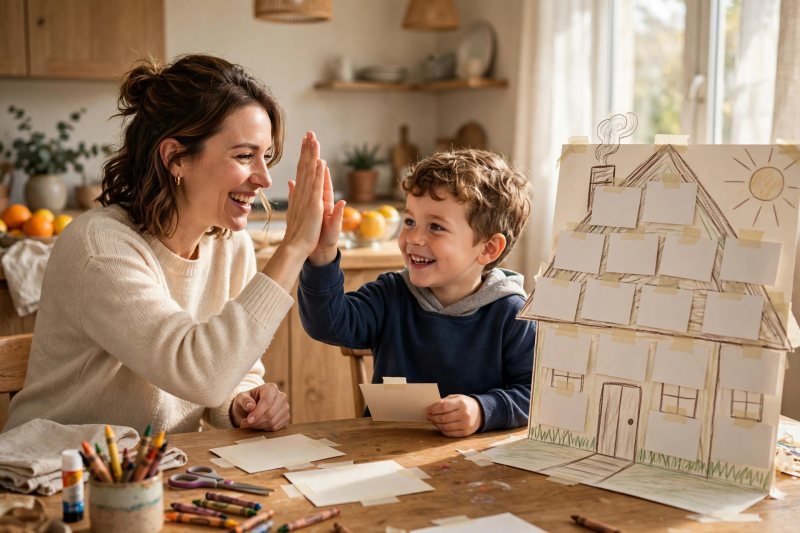
Celebrate. High five! Then: "-an or -ap next?" Date the house; hang it up.


Make it easier
Start with three words; add the rest over days. One family for a whole week — repetition is a feature. Blending stuck? Chant the chunk alone ("at… at… at") until automatic. For more sound-out practice, see our CVC words for kids guide.
Make it harder
Sort three or four mixed families; name each ending first. Have your child invent a word for the house. Then try kindergarten sight words, memorized not sounded out.
Other ways to play it
- Word family wheel: spin letters around a center chunk; read results.
- Sticky-note hunt: hide cards to find, read, sort.
- Sidewalk words: chalk the chunk; add starters in a second color.
- Bath-time fishing: fish foam letters from the tub.
- Build-a-word race: build family words with tiles.
- Family poetry: invent a rhyming line from the new words.
How it changes by age
- Sweet spot is 5–6: most know letter sounds and are starting to blend. Younger ones can watch and echo; older ones can warm up with families. After word families, the next spelling pattern is digraphs — see our digraphs for kids activities guide.
What they're learning
Onset-rime: hearing first sound + ending chunk. Blending: joining sounds into words. Pattern recognition: shared endings speed new-word reading. Reading confidence: repeated wins build independence. Spelling: sounds mapped to letters.
Clearing up
Rhyming? Not quite: rhyming is sound; a family is the spelling pattern kids read. Memorize the lists? No — they're practice, not a test. First-letter guessing? Normal. Cover the first letter, read the chunk, uncover and blend. When to move on? When most words are read easily on two separate days.
Questions parents ask
What is a word family in kindergarten?
When should my child start learning word families?
What are the best word families to teach first?
How many words are in a word family list for kindergarten?
What is the difference between CVC words and word families?
How do I help my child who keeps guessing words instead of sounding them out?
One family per session; twenty playful minutes beat tired drilling. Revisit old families — flip last week's house before a new one. Blending stalled for weeks? Ask the teacher about phonemic-awareness play.

save it for later
Pin this for the next rainy afternoon
Keep it on a board so it is there when you need it, rather than when you happened to find it.
Save to Pinterest


