


Homeschool Kindergarten Curriculum: The 12 Best Programs Compared
A parent-to-parent comparison of 12 homeschool kindergarten curriculum programs for ages 5–6 — phonics, math, handwriting, and full-year options — with honest trade-offs for each and a five-step choosing process.
The best homeschool kindergarten curriculum depends on your child: All About Reading suits step-by-step early readers, RightStart and Math-U-See suit hands-on math learners, My Father's World and Memoria Press suit Christian families wanting a full plan, and Time4Learning suits screen-comfortable kids. Most families combine a phonics program, a math program, and daily read-alouds. Try free samples for a week before buying.

The short version
- No single best program exists — match approach, format, and faith content to your child and your week.
- Most kindergarten years run on three things: a phonics program, a math program, and daily read-alouds.
- Filter by faith-based vs. secular first — it is the hardest thing to work around later.
- Budget your time before your money: scripted and game-based programs need you daily.
- Try free samples at your real teaching time for a week; allow six to eight weeks of trial before you judge.
- Age
- Ages 5–6
- Mess
- None
- Difficulty
- Easy
- Where
- Indoor
Why kids love this
Kids this age don't love the word "curriculum" — they love what's inside a good one: fifteen minutes of games with letter tiles, counting real buttons into an egg carton, painting after the read-aloud, the proud moment of reading a whole sentence alone. The best homeschool kindergarten curriculum programs are built for short attention spans and big feelings: tiny wins, hands-on materials, and a parent close by. Children love the rhythm most of all — the same cozy start, and a finish line they can see. Short, playful practice like these preschool learning activities at home is what makes any program stick.
The 12 best homeschool kindergarten curriculum programs:
All About Reading (Pre-reading / Level 1). A secular, multisensory phonics program built on Orton-Gillingham principles: letter tiles, flashcards, and fully decodable readers, taught in short daily lessons you lead. Best for: careful, step-by-step early readers who thrive on review. Trade-off: fully parent-led, and the tiles and readers take up shelf space.
Logic of English Foundations (Level A). Phonics, handwriting, and spelling taught as one connected system for ages 4–7, with tactile letters, games, and short lessons. Best for: kids who click when reading, writing, and spelling connect. Trade-off: many pieces to organize, and it asks real weekly prep from you.
Teach Your Child to Read in 100 Easy Lessons. Engelmann's classic: 100 scripted 20-minute phonics lessons (DISTAR method) in a single book you read aloud as the script. Best for: parents wanting a complete, low-cost phonics path who don't mind following a script word for word. Trade-off: dry by design — plan to add your own games and warmth around it.
Explode the Code (Levels A–C / Book 1). Secular phonics workbooks with short half-page lessons that build decoding practice page by page. Best for: children who like workbook routines and semi-independent practice. Trade-off: it is practice, not teaching — pair it with read-alouds and a program that introduces sounds first.
Math-U-See Primer. Mastery math taught with interlocking manipulative blocks: a short video lesson, then workbook pages that stay on one topic until it is solid. Best for: kids who need math made concrete before it goes abstract. Trade-off: the mastery pace can feel slow; add real-world counting and games alongside it.
RightStart Mathematics (Level A). Abacus-based math taught through card games, with very little worksheet time. Best for: active kids who learn through play. Trade-off: the games need you present for the whole session — the most parent-intensive math here.
Singapore Math Earlybird Kindergarten. The concrete-pictorial-abstract mastery approach Singapore is known for, emphasizing deep understanding over speed. Best for: mathematically curious kids ready for gentle challenge and visual thinking. Trade-off: it assumes a confident teacher — you do the explaining, the books do the practice.
Learning Without Tears (My First School Book). Multisensory handwriting for pre-writers: wood pieces for building letters, chalkboards, songs, and short workbook pages. Best for: five-year-olds building fine-motor strength and letter formation. Trade-off: handwriting only — you will pair it with separate reading and math.
Memoria Press Junior Kindergarten. A gentle classical Christian program: short daily lessons in phonics and numbers, plus enrichment — art, music, read-alouds, and recitation. Best for: Christian families wanting a calm, structured start with a classical flavor. Trade-off: faith content is woven through the day, and the pace assumes a child who can sit for short lessons.
My Father's World Kindergarten. A Christian boxed curriculum weaving Bible, phonics, math, science, and social studies into themed units across the year. Best for: families who want one box, one plan, and a faith-centered year. Trade-off: a full-package commitment — harder to swap out a single subject you don't love.
Abeka K5. Traditional Christian kindergarten built on phonics-first worktexts: clear daily lessons in reading, numbers, and Bible, with lots of workbook practice. Best for: children who thrive on predictable routines and visible page-by-page progress. Trade-off: workbook-heavy and teacher-directed; balance it with hands-on play.
Time4Learning. A secular online subscription with animated, self-paced lessons across subjects, automated grading, and progress reports. Best for: screen-comfortable kids and families wanting structure with less daily prep. Trade-off: it is screen time by design — stay nearby, and add offline reading, writing, and play around it.
How do the 12 homeschool kindergarten programs compare at a glance?
Approach: multisensory phonics (All About Reading, Logic of English, 100 Easy Lessons, Explode the Code); mastery math with manipulatives (Math-U-See, RightStart, Singapore Earlybird); handwriting-first (Learning Without Tears); classical Christian (Memoria Press); traditional workbook (Abeka); themed boxed curriculum (My Father's World); online and self-paced (Time4Learning). Subjects covered: the phonics activities for preschoolers, counting to 20 activities, and handwriting programs each teach one subject well — most families combine two or three. Memoria Press Junior Kindergarten, My Father's World, Abeka K5, and Time4Learning each aim to cover the whole kindergarten year. Format: eleven of the twelve are physical — books, tiles, blocks, and workbooks you hold in your hands. Time4Learning is the fully online option; several of the others offer optional digital supplements. Parent time needed: highest for RightStart (daily games need you), Logic of English (weekly prep), and 100 Easy Lessons (daily scripted lessons); middle for All About Reading, Math-U-See, and My Father's World (short daily teaching); most independent are Explode the Code pages and Time4Learning lessons — though no five-year-old should learn entirely solo. Faith-based vs. secular: Memoria Press, My Father's World, and Abeka are Christian programs with faith content woven into lessons. The other nine are secular or faith-neutral. Filter here first — this is the one thing you can't easily work around.
What you'll need
- For choosing: nothing but this guide and an honest look at your week. For teaching, most kindergarten programs assume basics you likely own: picture books, crayons, pencils, paper, scissors, counting objects (beans, buttons, shells), wooden blocks, and outdoor access. Single-subject programs add their own books or manipulatives; full boxed programs ship most of what you need.
Before you start
1. Watch your five- or six-year-old for a week. Does she sound out words on signs, or is she still soaking up read-alouds? Does he count everything in sight, or avoid numbers? 2. Decide your non-negotiables first: secular or faith-based content, online or offline, one subject or a full plan. 3. Be honest about your daily teaching time — 20 minutes of phonics plus 15 of math is a full kindergarten day at home. 4. Check your state's homeschool rules so you know what is actually required (usually less than parents fear). 5. Shortlist three programs, not twelve, and request their free samples before spending anything.
How to do it
-
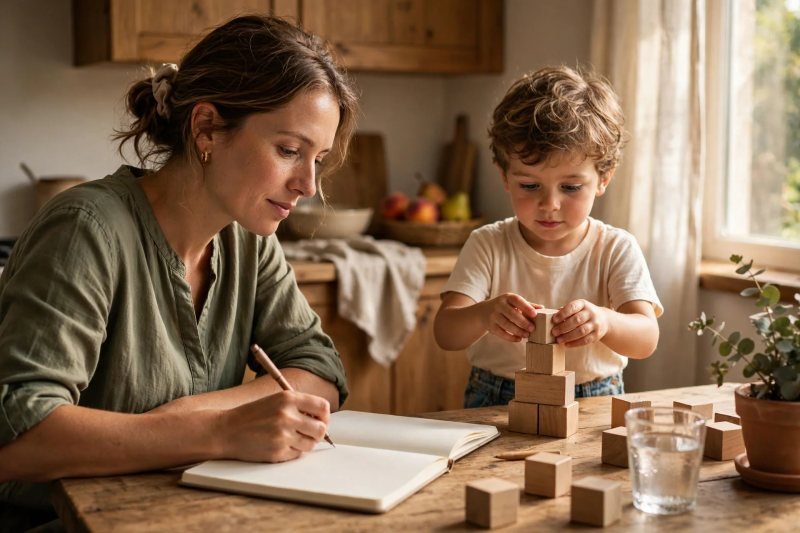
Name your goals for the kindergarten year. For most families it comes down to three: steady phonics progress toward reading, solid number sense to 20 and beyond, and the habits of sitting, listening, and finishing. Write yours down — one sentence each — and judge every program against them.
-
Match the approach to your child. A wiggly game-lover thrives with card games and an abacus; a careful, order-loving child blossoms with letter tiles and workbooks; a story-hungry child needs a literature-rich plan. The program that worked for your friend's child may bore or frustrate yours.

-
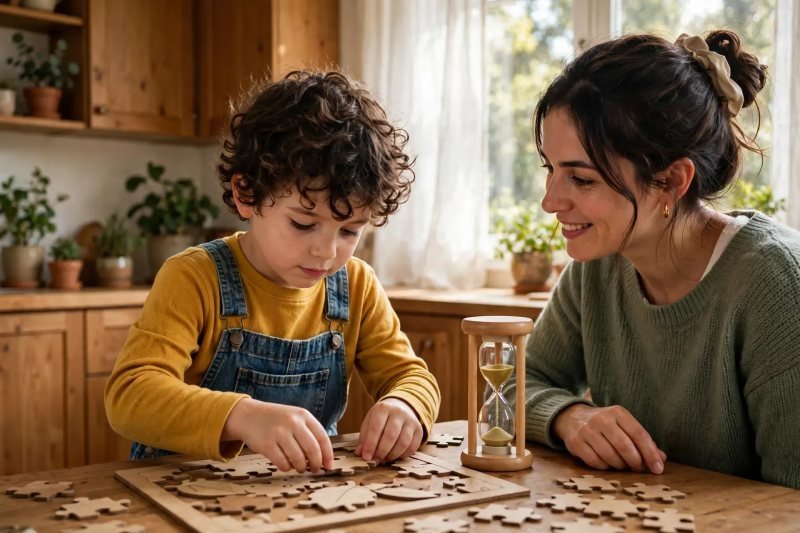
Assess your teaching time honestly. Scripted phonics needs you daily for 15–20 minutes; game-based math needs you for the whole game; workbook pages buy the only independent minutes a kindergartner can manage. Choose what fits your worst Tuesday, not your best Monday.
-
Try samples for real. Run the free sample lessons at the actual time of day you'd teach, for at least a week. If you have to fight your child to start, that is the program telling you something.

-
Plan a trial period, then commit or switch. Give your pick six to eight weeks — new routines always wobble at first. If lessons still end in tears in week seven, the program is the problem, not your child. Switching early is cheaper than finishing a bad fit.



Make it easier
Start with just one subject — usually phonics — and add math once the reading routine feels easy. Nobody needs all twelve programs; most families use two or three. Use your library before your wallet: 100 Easy Lessons, sample lessons, and the read-aloud backbone of any plan can all be previewed free. Keep the lesson table tiny and the same every day: same seat, same pencil cup, same start song. Routine does half the teaching.
Make it harder
Add a second session later in the day: a math game after lunch, or a nature-notebook walk. Let your child "teach" a stuffed animal the letter or number of the day — explaining is the deepest practice. Keep a one-line journal: date, what you did, one thing they said. It becomes your proof of progress on hard weeks.
Other ways to play it
- Secular single-subject stack: All About Reading + Singapore Earlybird + Learning Without Tears — three focused programs, no faith content.
- Christian boxed year: My Father's World or Memoria Press Junior Kindergarten as the spine, with Explode the Code for extra phonics practice.
- Minimalist: 100 Easy Lessons from the library + a math game a day + read-alouds. Genuinely enough for many kindergartners.
- Online-led: Time4Learning for structure, plus offline handwriting and read-alouds to keep little hands and eyes off screens.
How it changes by age
- Age 5: 10–20 minute lessons, one or two a day. Stop while it is still fun; repetition across days beats long sessions.
- Age 6: 15–30 minute lessons work for most six-year-olds, with short movement breaks. If focus collapses, shorten the lesson, not the expectation.
- Check what teachers actually look for with our kindergarten readiness checklist before you judge a program by its lesson count.
What they're learning
Phonics and decoding through systematic letter-sound practice; number sense, counting, and early operations through concrete math; letter formation and fine-motor control through handwriting practice and fine motor activities for preschoolers; vocabulary and comprehension through daily read-alouds; attention, sequencing, and persistence through short finished lessons; curiosity through the nature and art woven around the academics.
Clearing up
"My kindergartner needs a full curriculum or they'll fall behind." Most don't. A solid phonics program, a solid math program, and daily read-alouds cover the year. If your child is younger, start with our homeschool preschool curriculum comparison instead. Full boxed programs are convenience, not necessity. "The more expensive program teaches more." At this age, your consistency teaches more than any price tag. Library books and one good phonics book have launched plenty of readers. "We have to finish every lesson in order." You don't. Skip, repeat, or reorder — the program serves the child, not the other way around. "Screen-based programs don't count as real homeschooling." They count as one tool. Pair online lessons with offline reading and play and they're a legitimate part of the day.
Questions parents ask
What is the best homeschool kindergarten curriculum?
What should a kindergarten homeschool curriculum include?
Does my kindergartner need a full boxed curriculum?
How much time should homeschool kindergarten take each day?
How do I choose between faith-based and secular kindergarten curriculum?
Can I mix and match kindergarten curriculum programs?

save it for later
Pin this for the next rainy afternoon
Keep it on a board so it is there when you need it, rather than when you happened to find it.
Save to Pinterest

