


'Og' Family Words: 15 Words (Dog, Frog, Log) Kids Love to Read
Teach the -og word family with 15 real words — dog, frog, log and more — through a frog-log pond hop, a word ladder, and silly sentences for early readers.
Og family words are fifteen real words that all end in the -og sound: dog, log, hog, fog, jog, bog, cog, plus stretch words frog, blog, clog, flog, smog, grog, slog, and tog. Kids learn them by sounding out the -og chunk, then swapping the first letter. A pretend pond, word ladders, and silly sentences make the pattern stick fast.

The short version
- The -og chunk is the family name — every word ends with it.
- Anchor on dog first, then slide new letters in front: log, hog, fog.
- Seven common words come first; eight stretch words follow.
- Hop-the-pond games turn reading practice into physical play.
- Silly sentences ("the dog sat on the log") cement the pattern through laughter.
- Age
- Ages 4–5
- Prep
- 5 min
- Play time
- 30 min
- Mess
- None
- Difficulty
- Easy
- Where
- Both
Why kids love this
At four and five, kids crack the code that makes reading click: one little chunk unlocks a whole family of words. Og family words are perfect for this age because the family starts with a word they already adore — dog. Once a child can read "dog," they are one tiny slide away from "log," "hog," and "fog," and nothing beats that feeling of "wait — I just READ that!" The pond-hop game makes each win physical: they hop onto a lily pad, sound out a word, and rescue the dog.
What you'll need
- A stuffed dog or toy dog
- A real stick, cardboard tube, or rolled-up brown paper (the log)
- 6–8 green paper plates or green paper circles (lily pads)
- A blue blanket or sheet (the pond)
- 15 blank index cards or sticky notes (write one -og word per card — keep cards face down until used)
- A marker
- A small basket or bucket (the word pond)
Before you start
1. Write the seven common words (dog, log, hog, fog, jog, bog, cog) on cards, one word per card. 2. Write the eight stretch words (frog, blog, clog, flog, smog, grog, slog, tog) on cards and keep them in a separate pile. 3. Lay the blue blanket on the floor as the pond, scatter the green plates as lily pads, and set the stuffed dog by the log. 4. Keep all cards face down until used — a fresh flip makes each word feel like a discovery.
How to do it
-
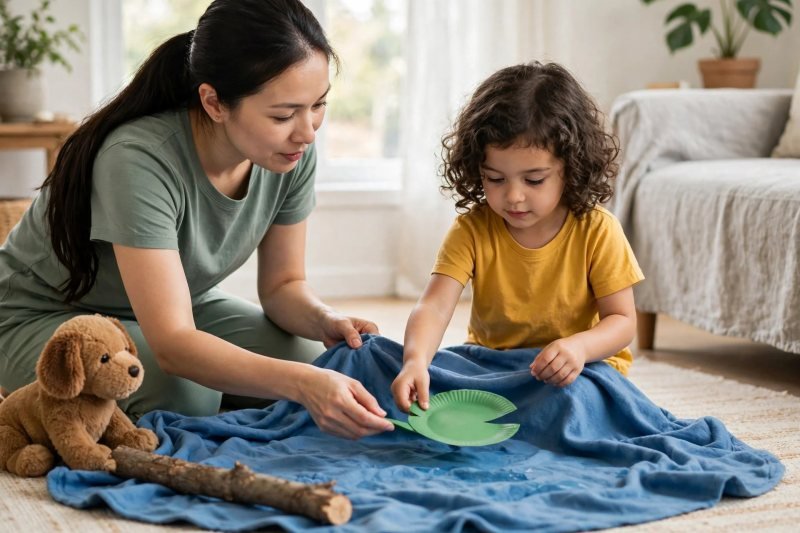
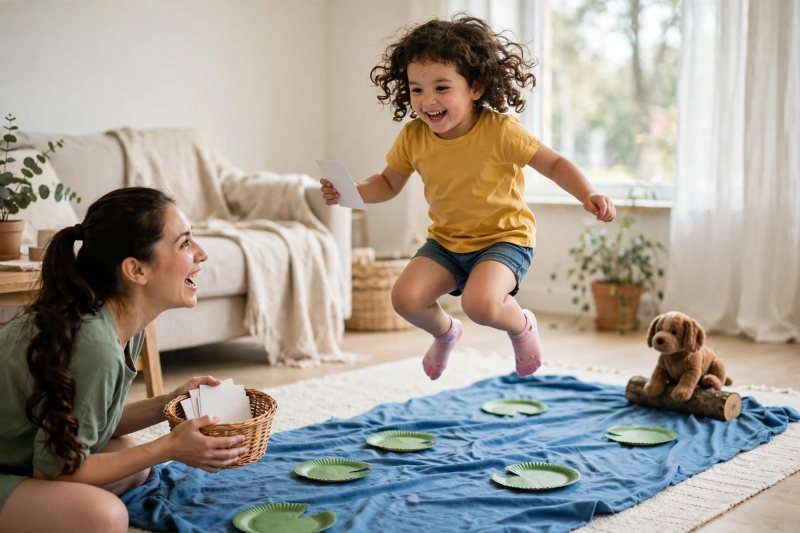
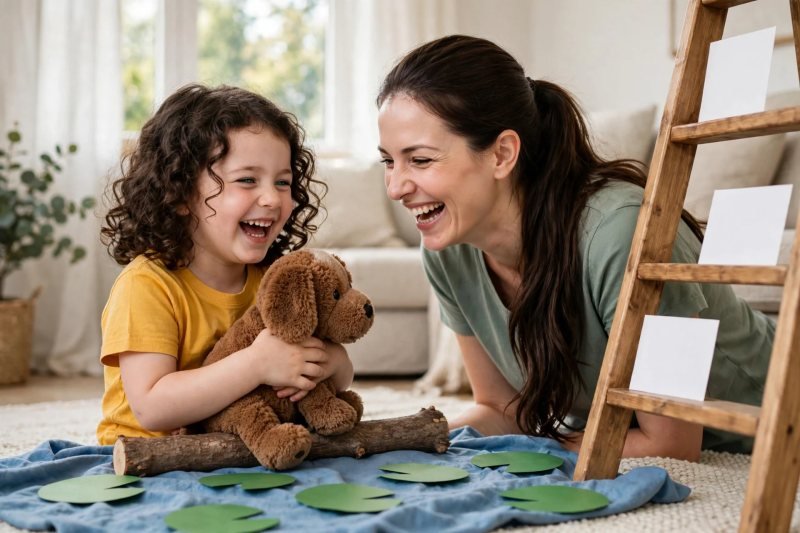
Set up the pretend pond and introduce the "dog family." Lay the blue blanket down, scatter the green lily pads, and put the log across one corner with the stuffed dog beside it. Say: "Today we meet the dog family — words that end just like 'dog' sounds."
-
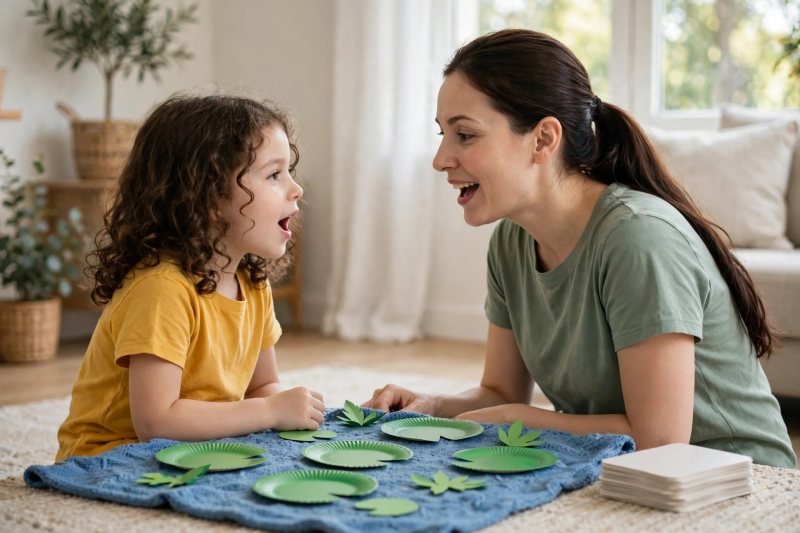
Teach the "-og" chunk first. Say "og" slowly together: ogg, ogg. Tell them this chunk is the family name, and every word they meet today ends with it.
-
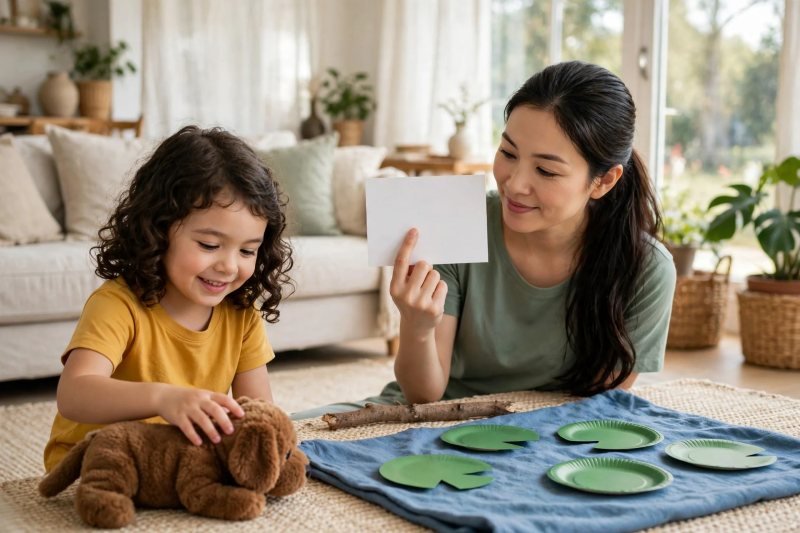
Read the first word: dog. Hold up the card, cover the "d" with your finger, and slide: "d…og…dog!" Let your child pet the stuffed dog as a reward.
-
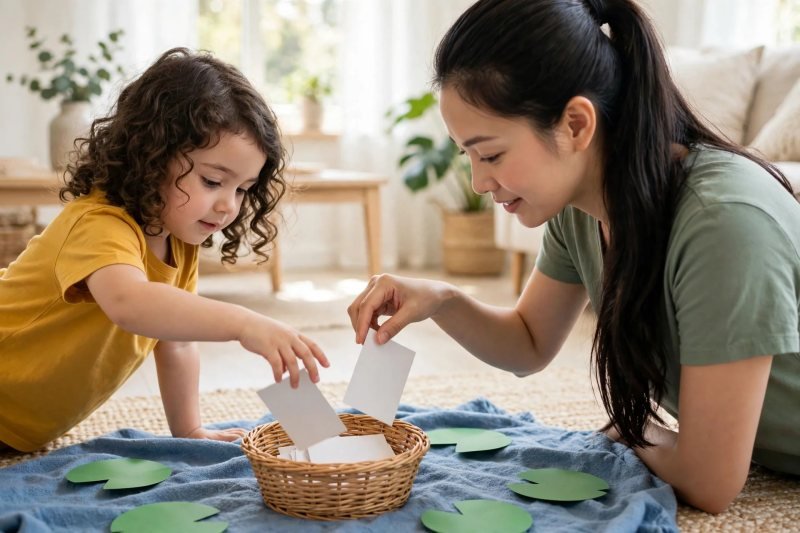
Introduce the seven common words, one at a time. Flip a new card, sound it out with the cover-the-first-letter trick, and drop it into the basket "word pond": log, hog, fog, jog, bog, cog.
-
Hop the frog-log pond. Put the dog on the log across the pond. Your child hops from lily pad to lily pad, pulling one card from the basket and reading it aloud at each pad. When all seven common words are read, the dog is rescued.
-
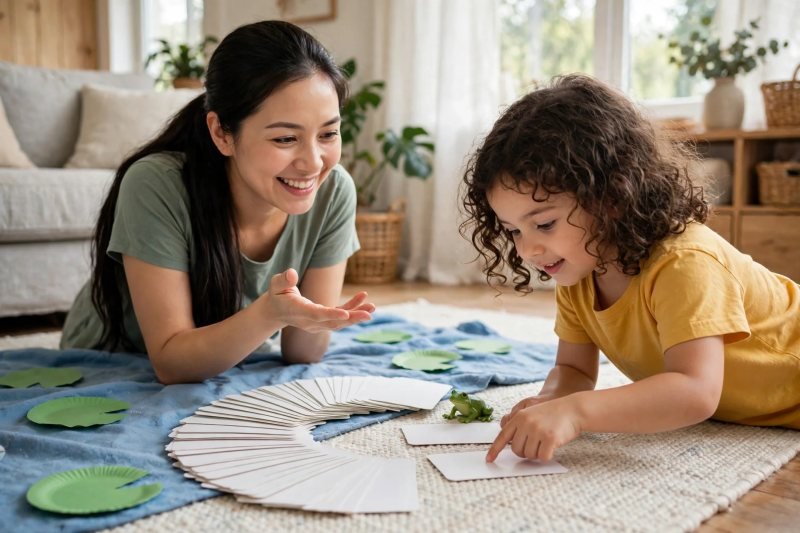
Meet the stretch words. Bring out the second pile — these are longer but still end in -og: frog, blog, clog, flog, smog. Sound out each one together, with a quick meaning: a frog is a green hopper, a blog is writing on the internet, a clog is a wooden shoe.
-
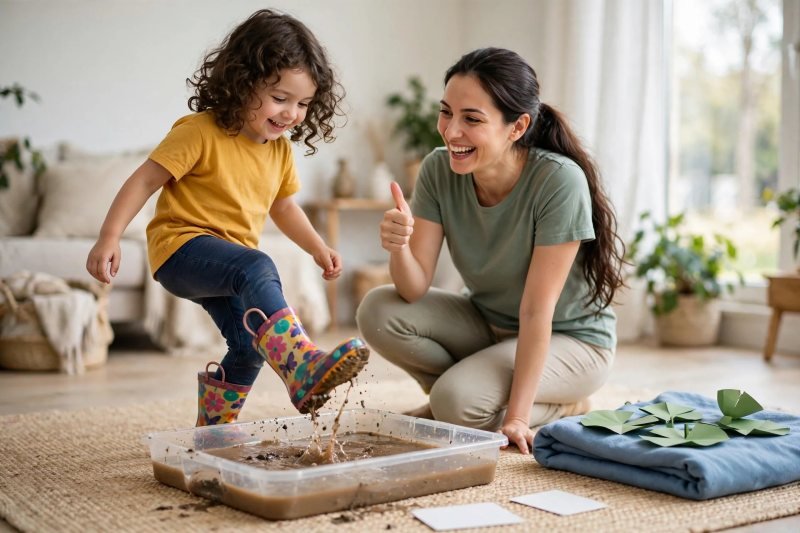
Try the trickiest three: grog, slog, tog. Slog means to walk slowly through mud; tog is an old word for a piece of clothing. Keep it playful: "Even grown-ups stumble on these — you are so smart for reading them."
-
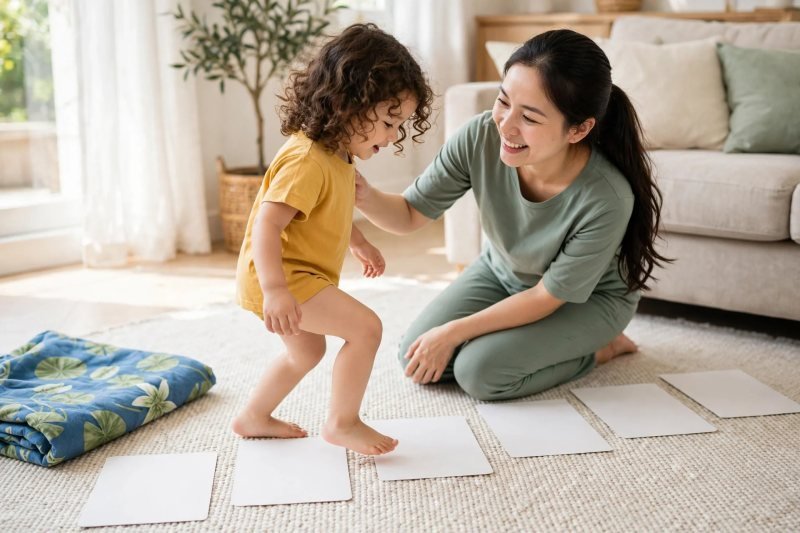
Build a word ladder. Line up five cards like steps: dog, log, frog, fog, jog. Your child climbs the ladder, reading each word as they step up, then scrambles the order and climbs down. Each climb gets faster.
-
Make silly sentences with the stuffed dog. Say: "The dog sat on the log!" Then let your child swap words: "The hog jogged in the fog!" "The frog flogged the smog!" The sillier, the better — giggles glue words into memory.
-
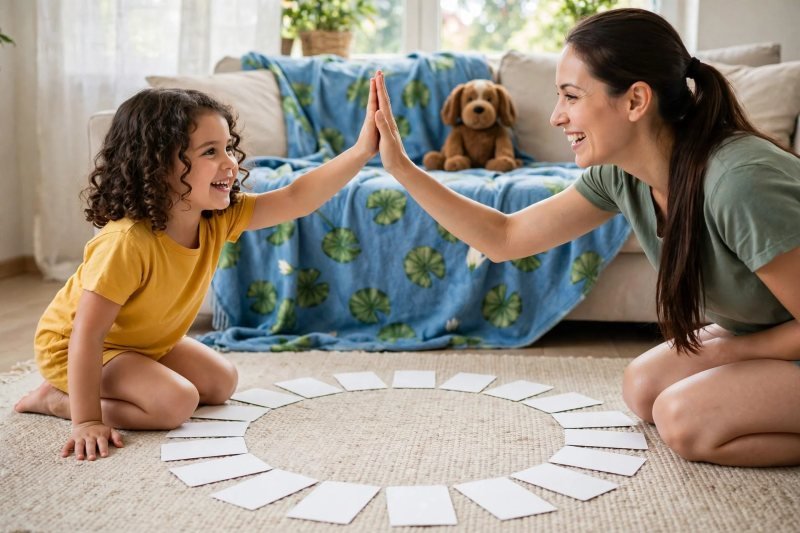
Read the whole family as a victory lap. Lay all fifteen cards in a big circle. Your child walks the circle and reads every word, with a clap for each one. Seasonal bonus: near the holidays, add a 16th card — eggnog — as the "surprise guest."


Make it easier
Start with just dog, log, and hog on day one. Add one new word per day. Say the whole word for them and ask them to repeat it, instead of asking them to sound it out alone. Use only the common seven until those feel easy. Keep the word ladder at three rungs (dog, log, fog).
Make it harder
Skip the cover-the-first-letter trick and let your child read each word cold. Build two-step ladders where they must change one letter at a time (dog → log → hog → fog). Ask them to use each stretch word in their own sentence. Let them write three of the words on their own cards. Mix in rhyming review from another word family they know — our -at family words and -an family words use the same swap-the-first-letter trick.
Other ways to play it
- Frog-log pond hop outdoors: use sidewalk chalk lily pads on the driveway and read words from a bucket.
- Kitchen table version: hide the cards under seven upside-down cups; lift one and read the word.
- Bath version: write the words on foam letters that stick to the tub wall; read each one to "rescue" the dog.
- Story version: string all fifteen words into one bedtime story: "The dog met a frog on a log in the fog..."
How it changes by age
- This activity is built for ages 4–5, when kids are learning that word families unlock many words at once. Younger threes can play the pond hop with just dog and frog as a listening game — no reading expected. Older fives and sixes should read the stretch words cold and try the ladder without help.
What they're learning
Decoding: blending an onset with a rime (d + og) — the single most useful early reading strategy. Phonemic awareness: hearing that 15 different words share the same ending sound. Print concepts: that longer words (smog, clog, flog) still follow the same pattern. Vocabulary: genuine meanings for words like bog, cog, smog, and grog. Confidence: every correct read builds the self-belief that early readers run on.
Clearing up
Tape the lily pads in a path wide enough for safe hopping. Stack the two card piles face down so the next word stays a surprise. Keep the stuffed dog visible as the "prize" at the far end of the pond. Toss stray paper in recycling; no washing needed for a no-mess activity.
Questions parents ask
How do you teach og family words to preschoolers?
What are the 15 og family words?
What is a word family in kindergarten?
How does a word ladder help kids read og words?
Are words like smog and flog real words for kids?
The -og family is a great starter family because the anchor word, dog, is already in every four-year-old's heart. If your child gets stuck on a stretch word like flog or smog, cover everything but "-og," read the chunk first, then slide the front letters in. Resist the urge to correct mid-hop: let them finish the pond, then gently replay the one tricky word together. The -og family sits inside our word families for kindergarten guide, and our CVC words list has 160 three-letter words for more sounding-out practice. If your child is still building blending confidence, our short a CVC words routine is the gentlest place to start.

save it for later
Pin this for the next rainy afternoon
Keep it on a board so it is there when you need it, rather than when you happened to find it.
Save to Pinterest


