


Kids Rash Guards: UPF 50+ Sun Protection Guide
Kids rash guards cover more skin than sunscreen alone, and the best ones carry the highest sun-protection rating, commonly labeled UPF 50+. This buying guide shows how to check the rating, fit, seams, and closures before swim day.
Choose kids rash guards with the highest sun-protection rating on the label, commonly labeled UPF 50+, in a snug, smooth fit with flat seams and coverage that overlaps the swim bottoms. Long sleeves cover the most skin. Pair the shirt with sunscreen on uncovered skin, shade breaks, a hat, and constant close supervision around water.

The short version
- Rating first: choose the highest stated rating, commonly labeled UPF 50+; skip unrated swim shirts.
- Fit snug and smooth — no riding up, billowing, or digging — with a little growth room only.
- Flat seams and a comfortable higher neckline prevent the rubs that end swim days early.
- The shirt covers its skin; sunscreen covers the rest, reapplied after swimming or toweling off.
- Rinse after every swim, dry flat in shade, and replace when fabric thins or stretch fails.
- A rash guard is sun protection only — never flotation, never a substitute for supervision.
- Age
- Ages 3–4
- Prep
- 15 min
- Play time
- 2 min
- Mess
- Low
- Difficulty
- Easy
- Where
- Outdoor
Why kids love this
A rash guard feels like a superhero top: it pulls on fast, never needs reapplying on the shoulders it covers, and lets kids cannonball, dig, and splash without a slippery sunscreen wrestle every hour. Pick a color they love and most 3- and 4-year-olds will ask for it by name.
What you'll need
- A kids rash guard with the highest sun-protection rating on its label, commonly labeled UPF 50+
- Your child's usual swim bottoms or a matching swim set
- Broad-spectrum sunscreen for the skin the shirt does not cover
- A wide-brim hat for out-of-water play
- A shaded spot — umbrella, canopy, or tree — for breaks
- A towel, a change of dry clothes, and a wet bag for the trip home
- Drinking water for regular shade-and-sip breaks
Before you start
1. Measure or note your child's height and usual clothing size before you shop; rash guards fit by body size, not by age alone. 2. Decide your coverage preference now — long sleeves cover more, short sleeves suit kids who overheat fast — so the store does not decide for you. 3. Plan the first try-on at home, dry and unhurried, with tags still on so exchanges stay easy. 4. Remember the rule that frames this whole guide: a rash guard is one layer of sun protection, alongside shade, sunscreen on exposed skin, hats, and supervision — never instead of them.
How to do it
-
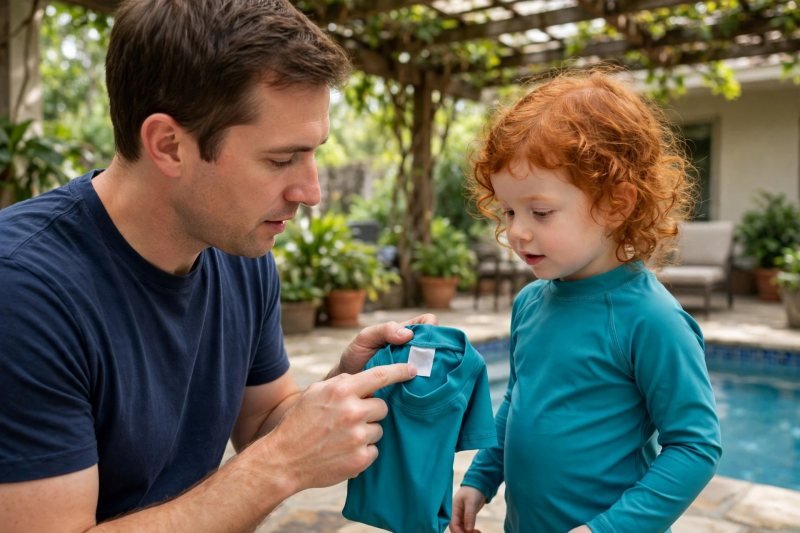
Check the sun-protection rating first. Before color, before price, find the garment's sun-protection rating on its tag or packaging and choose the highest rating offered, commonly labeled UPF 50+. UPF rates fabric; SPF rates sunscreen — the two numbers measure different things, so a high UPF shirt never replaces sunscreen on bare skin. Say to yourself: "The rating is the reason this shirt exists — everything else is tailoring." Skin under the shirt stays covered without sunscreen on that skin, as long as the shirt stays in place and the fabric is in good condition, which is why the covered shoulders and back are the rash guard's strong point. Skip any swim shirt with no rating stated; an ordinary t-shirt is not a substitute, especially wet. Rating confirmed, the next check decides whether your child will actually keep the shirt on: the fit.
-
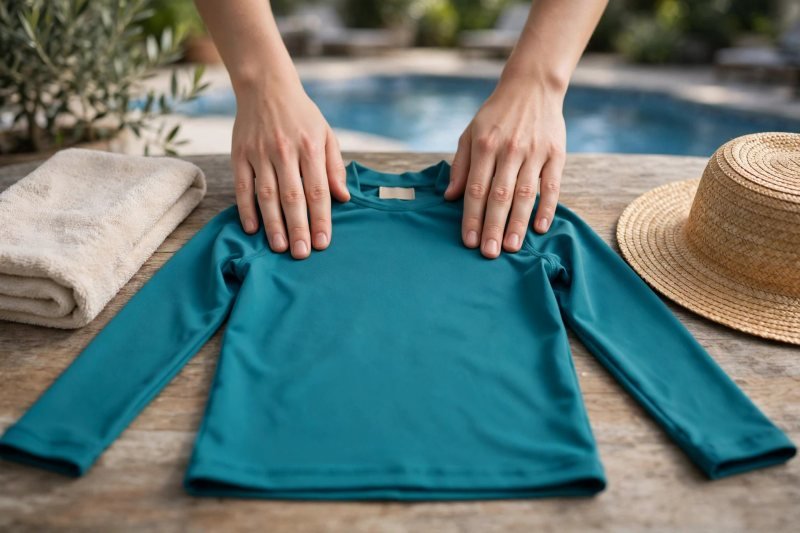
Fit it snug, smooth, and comfortable. A rash guard should lie smooth against the body — snug enough that it does not billow, balloon with water, or ride up, with a little stretch room to grow into across the season. Say at the try-on: "It should hug like a cozy second skin, not squeeze like a wetsuit." Have your child raise both arms overhead, twist, and bend; the hem should stay near the hips and nothing should dig at the armpits. Too loose and the shirt drags and chafes in the water; too tight and dressing becomes a daily fight. A fit that passes the wiggle test earns the next inspection: the neckline and seams.
-
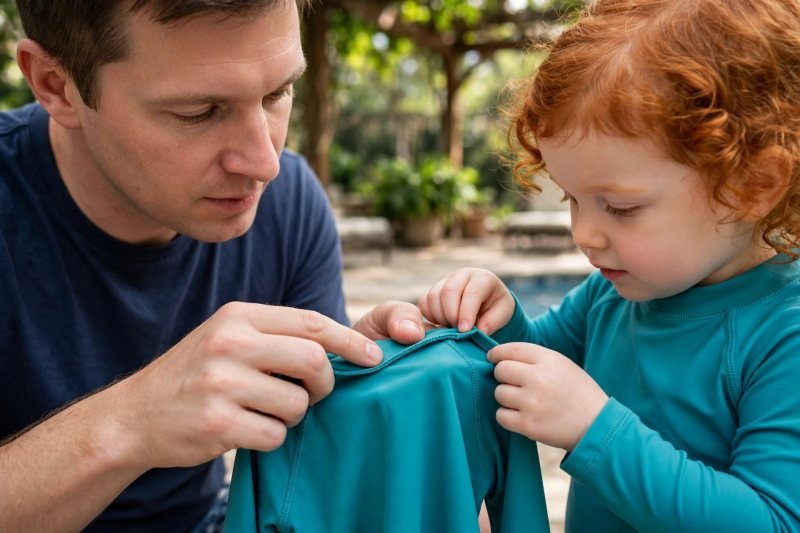
Check the neckline and seams. Choose a neckline that sits comfortably high — the chest and the back of the neck burn fast — without choking or gaping when your child looks down. Say: "High enough to cover, soft enough to forget." Run your fingers along the inside seams: you want flat, smooth seams that lie flush, because raised or rough seams can rub wet skin raw over a long swim. Check the stitching at the shoulders and underarms, the hardest-working points, for even, secure rows with no loose threads. Smooth inside and out, the shirt is ready for the coverage check: sleeves and length.
-
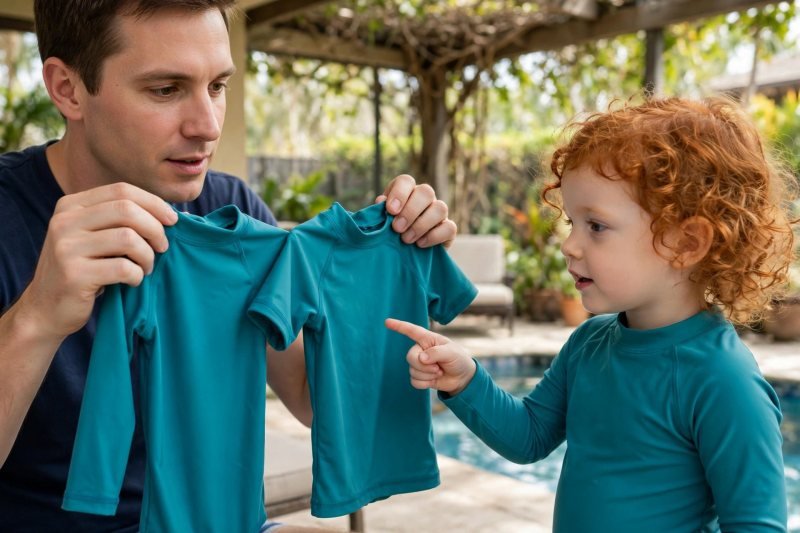
Choose sleeve and body coverage. Long sleeves cover the most skin and are the simplest choice for fair, sun-sensitive, or all-day-outdoor kids; short sleeves suit short swims and children who run hot. Say: "More covered skin means less sunscreen to chase." Whichever sleeve you pick, check the body length: the shirt should overlap the swim bottoms at the waist even when arms are up, so no strip of lower back ever flashes in the sun while digging or reaching. If you choose a two-piece set, that overlap matters even more, because tops ride and bottoms slide. The same overlap rule shows up in cold-weather layering — see preschool winter outfits for the winter version of the stack. Coverage chosen, test the part parents wrestle twice a day: getting it on and off.
-
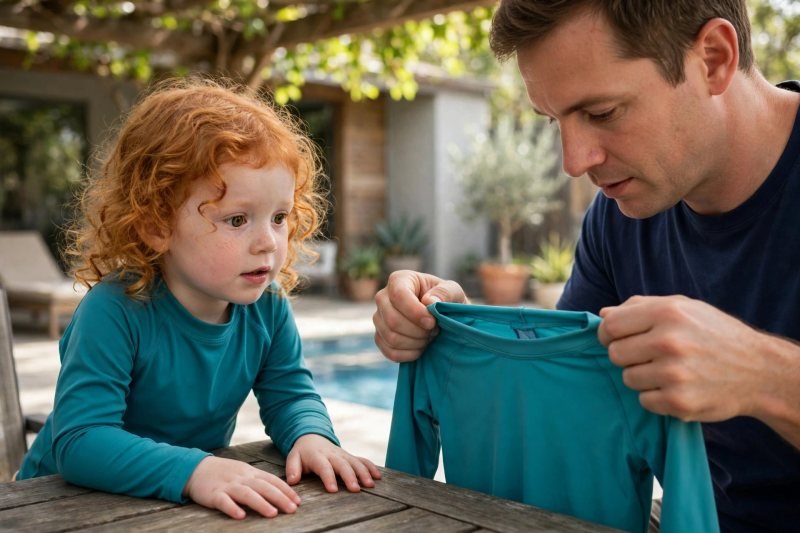
Test the closure and the wet exit. Pull-on styles with good stretch are the preschool standard; some shirts add a short zipper or snaps at the neck, which can help larger heads but adds a pinch and snag point to check carefully. Set yourself a simple pass mark: if you cannot peel it off a wet, wiggly kid quickly and without a struggle, it fails the test. Practice once at home: on over the head, off over the head, ideally with your child damp from a bath so the fabric behaves like swim day. A closure that sticks, a neck that fights, or fabric with no give will turn every swim into a negotiation. Passing the wet-exit test, the shirt joins the rest of the sun team for a full dress rehearsal.
-
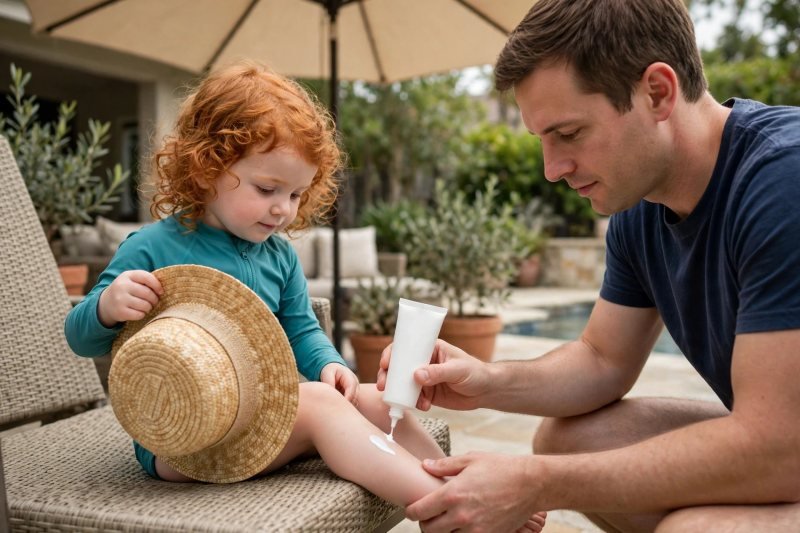
Team it with sunscreen and shade. Dress your child in the rash guard, then apply sunscreen to everything the shirt does not cover: face; ears; neck if exposed; arms below short sleeves; legs; tops of feet. Say: "The shirt covers its part — the cream covers the rest, and the shade covers us all on breaks." Reapply sunscreen after swimming, heavy sweating, or towel drying, following the sunscreen's own label directions, and call regular shade-and-water breaks rather than waiting for pink shoulders to announce themselves. Protection layered, it is time for the honest test every new garment deserves: water.
-
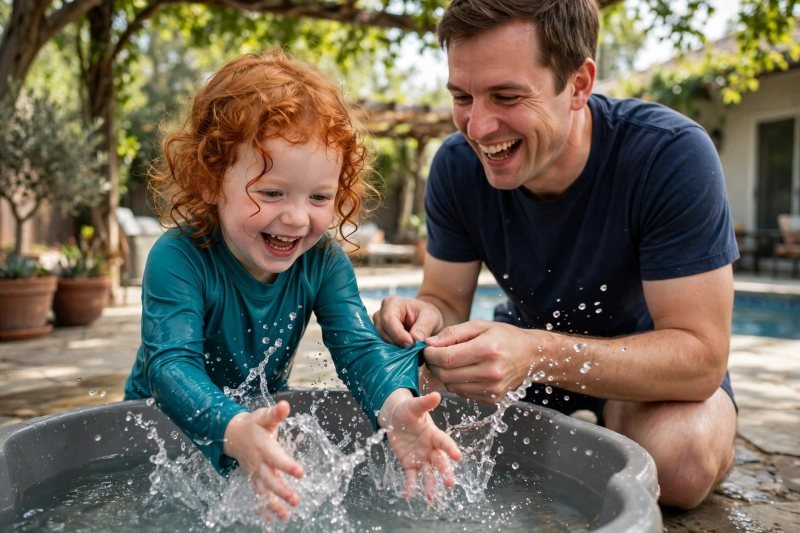
Run a home water test. Before the first real outing, let your child wear the rash guard in a bath, shower, or backyard splash session. Tell your child the plan plainly: jump, splash, and report anything that rubs. Watch for the real-world tells: hem riding up, sleeves twisting, seams itching once wet, fabric growing saggy. A shirt that annoys in ten home minutes will ruin a beach day. A keeper passes quietly and comes off without a battle, wet, when play ends. Tested and trusted, two small habits protect both the shirt and the next swim: rinse and dry.
-
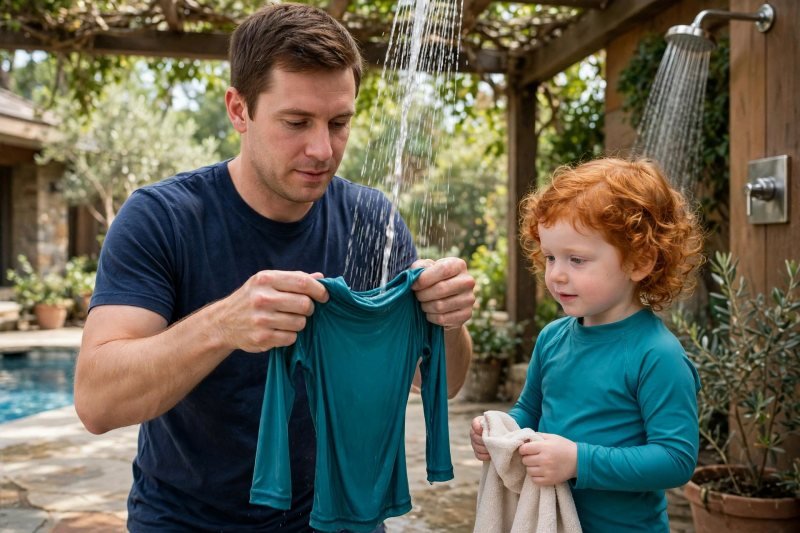
Rinse it after every swim. Chlorine, salt, and sunscreen residue wear fabric out and can weaken its protection over time, so rinse the rash guard in clean, cool water as soon as the swim ends. Say: "We rinse the shirt the way we rinse ourselves — swim stuff stays at the pool." Squeeze gently rather than wringing hard, which stresses seams and stretch. If the care label allows a gentle wash, follow it; skip harsh detergents and fabric softeners, which can coat fibers. Rinsed and squeezed, the shirt needs one more thing before it goes away: a proper dry.
-
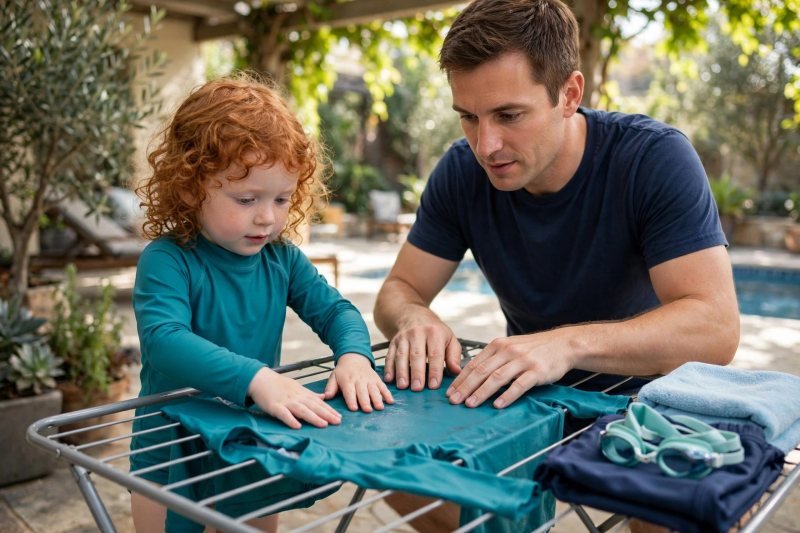
Dry it flat, store it ready. Lay the rash guard flat or drape it over a rack in shade to dry — prolonged baking in direct sun is hard on stretch fibers, and a damp shirt stuffed in a bag will smell by morning. Flat and shady is the rule, then folded in the swim bag so tomorrow's outing starts easy. Once fully dry, fold it with the swim bottoms, hat, and towel so the whole kit grabs in one motion on the next sunny morning. Replace the shirt when the fabric thins, the stretch gives out, or last season's size fails the wiggle test — protection and fit both retire with the garment. Kit ready, every swim starts calm.


Make it easier
Buy one long-sleeve, highest-rated shirt in your child's favorite color and stop shopping — one keeper beats three maybes. Dress at home before you leave, so sunscreen and the shirt happen without pool-deck wrestling. Keep the whole swim kit in one bag, the grab-and-go system that makes sunny mornings simple, much like the layer-ready outfits in these toddler winter outfit ideas make cold mornings simple.
Make it harder
Let your child run the coverage check on you: they point to every patch of skin a swim outfit misses, learning sun smarts by teaching. Add a hat-and-shade routine to every break until your child calls break time themselves. Build the full skin-protection habit stack — shirt, sunscreen, washing, and moisturizer — alongside a gentle kids' skincare routine.
Other ways to play it
- Long-sleeve surf style: maximum coverage for fair skin, long beach days, and kids who hate sunscreen on their arms.
- Short-sleeve splash style: cooler for short swims, splash pads, and hot-natured kids — with extra sunscreen duty on the arms. Pair either sleeve length with a look from the kids' summer outfits guide, and the same sleeve thinking applies to the littlest swimmers in toddler summer outfits.
- Zip-front style: easier on-and-off for big heads and independent dressers, with a careful pinch-check at the neck every wear.
How it changes by age
- Ages 3–4: the focus of this guide. They can wiggle-test a fit, report rubbing honestly, and learn the shirt-sunscreen-shade chant. Dressing help is still yours, especially the wet exit — practice it at home, not at the pool gate.
- Ages 2 and under: coverage matters even more and shade matters most of all; very young children belong in shade with protective clothing and hats, with sunscreen used as their clinician advises. Fit checks are entirely the adult's job, and water supervision is arm's-reach, always.
- Ages 5–6: most can dress themselves in a pull-on style and report fit problems clearly. Give them the rating habit for life: check the label, choose the highest rating, and never assume a plain shirt protects like a rated one.
What they're learning
Sun safety habits: covered skin, creamed skin, shade breaks — a three-part rule they can recite at the pool gate. The habit sticks best when it starts early — see when kids should start a skincare routine. Body awareness: reporting rubs, pinches, and ride-ups teaches kids their comfort signals matter. Independence: pull-on dressing, rinse help, and kit packing build real self-care skills. Care for belongings: rinsing, drying flat, and storing ready shows tools last when you look after them.
Clearing up
"A wet t-shirt protects just as well." No — it carries no stated rating, and wet cotton is a poor shield. "UPF 50+ means skip sunscreen." Covered skin is covered — faces, legs, and feet still need sunscreen and shade breaks. "Size up twice so it lasts." A baggy shirt rides up and chafes; snug and smooth is the protective fit. "The rating washes out." Cared-for rated fabric keeps its stated protection while it stays in good condition — replace it when it thins or loses stretch.
Questions parents ask
What UPF rating should a kids rash guard have?
Should a kids rash guard be tight or loose?
Do kids still need sunscreen with a rash guard?
How do I wash and care for a kids rash guard?
Are long sleeves better than short sleeves for kids?
Pack the swim bag the night before: rash guard, swim bottoms, hat, sunscreen, towel, dry clothes, and a wet bag for the trip home. If swim days are new to your family, start with short sessions and build up — the shirt, the sunscreen, and the shade breaks all work better as a routine than as a rescue.

save it for later
Pin this for the next rainy afternoon
Keep it on a board so it is there when you need it, rather than when you happened to find it.
Save to Pinterest


