


High Frequency Words for Reception: The First 45 Words (UK List)
A UK guide to high frequency words for Reception: the first 45 words in five sets of nine, with playful games for ages 4–5.
High frequency words for Reception are the common words four- and five-year-olds meet constantly — like the, said and was — many of which can't be sounded out. A 45-word set, in the teaching order in this guide, is the one used here; it is not an official DfE document. Introduce three to five a week through word hunts, snap, bingo, sticky-note walls and rainbow writing.

The short version
- Many high frequency words (said, was) can't be sounded out — learned by sight.
- Taught alongside phonics in Reception: a companion, never a replacement.
- A 45-word set in five groups of nine (not an official DfE document), in the teaching order used in this guide.
- Three to five new words a week; retire cards after three instant reads.
- Age
- Ages 4–5
- Prep
- 5 min
- Play time
- 10 min
- Mess
- None
- Difficulty
- Easy
- Where
- Indoor
Why kids love this
Learning high frequency words for Reception builds early reading: these are the words your four- or five-year-old meets on nearly every page — the, and, said, was — and many can't be sounded out. These words appear on nearly every picture-book page, so recognising them frees attention for sounding out new words.
In many Reception classrooms, they are taught alongside phonics from the first term: phonics for sounding out, high frequency words for the constant ones.
These words unlock real reading fast — and the "I read that all by myself!" moment is magic at four or five. The games turn practice into treasure hunts.
They are the words that appear most often in written English — the is one of the commonest words in English. Many break phonics rules ("tricky words" like said and was), learned by sight through play, not drilling.
Compare the US starting point, the first 40 sight words for kindergarten, which overlaps this list but groups and orders the words differently.
This 45-word set, in the teaching order below, is the one used in this guide; it is not an official DfE document. Set 1: the, and, a, to, said, in, he, I, of. Set 2: it, was, you, they, on, she, is, for, at. Set 3: his, but, that, with, all, we, can, are, up. Set 4: had, my, her, what, there, out, this, have, went. Set 5: be, like, some, so, not, then, were, go, little.
Three to five a week suits most four- and five-year-olds. Introduce them at the week's start and add more only when the current ones are recognised instantly. Retire a card after instant recognition on three different days.
What you'll need
- Word cards (index cards and a marker pen), crayons and sticky notes
- A favourite picture book and stickers
Before you start
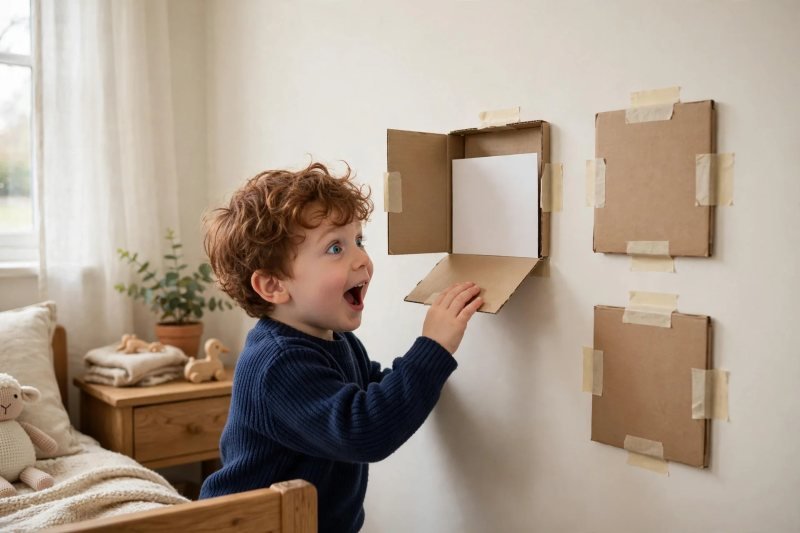
1. Start with Set 1; make cards for three to five new words in clear lowercase. 2. Display the cards where your child sees them daily, like the fridge door. 3. Make five tricky-word windows: fold a card flap over five tricky words so your child can flip each window open to reveal the word.
How to do it
-
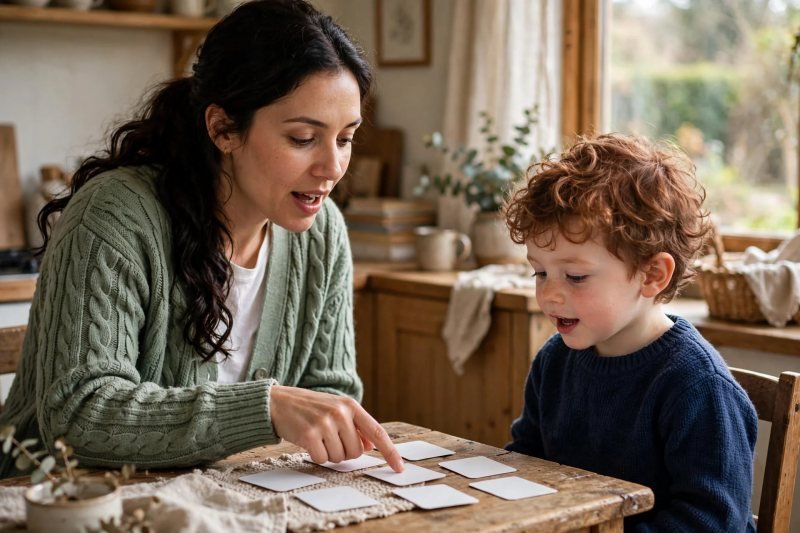
Say and echo this week's cards. Lay this week's three to five new word cards face up on the table, in Set order, and say each word aloud slowly while your child watches. Say: "Your turn — say it with me." Echo each word together twice, pointing to the card as you say it, then let your child point and say each one alone. Keep the pace unhurried and the praise immediate; this first look is about hearing and seeing the word together, not testing it. Once every card has been said and echoed, move straight to writing it.
-
Rainbow-write each word three times. Hand your child three crayons in three colours and let them choose the order. Say: "Write it in red, then blue, then green — say it every time." Trace or write each word three times, once in each colour, saying the word aloud with every tracing. The layered colours show exactly where the hand wobbles, and the repetition fixes the shape without drilling. When every word has three colours, gather the cards for the hunt.

-
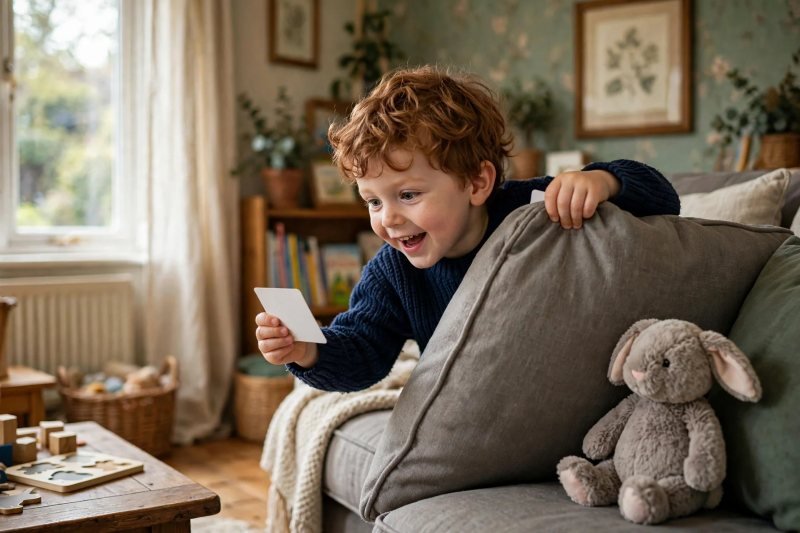
Hunt for hidden cards. While your child closes their eyes, hide this week's cards around the room — behind a sofa cushion, under a book, beside a toy. Say: "Hunters, go! Read every word you find." Your child finds each card and reads it aloud before the next hiding place is revealed; celebrate every find by name. The game turns recognition into a treasure hunt, and the moving about keeps a four-year-old's attention. Once all the cards are found, bring them back to the table for snap.
-
Play snap with two matching sets. Make two matching sets of this week's cards and deal them face down. Say: "Shout the word when the pair lands!" Players take turns turning cards over; when two matching words appear, the first to shout the word wins the pair. Keep the game short and silly, and let your child win often enough to want another round. When the pairs are all claimed, build the bingo grid from the same cards.

-
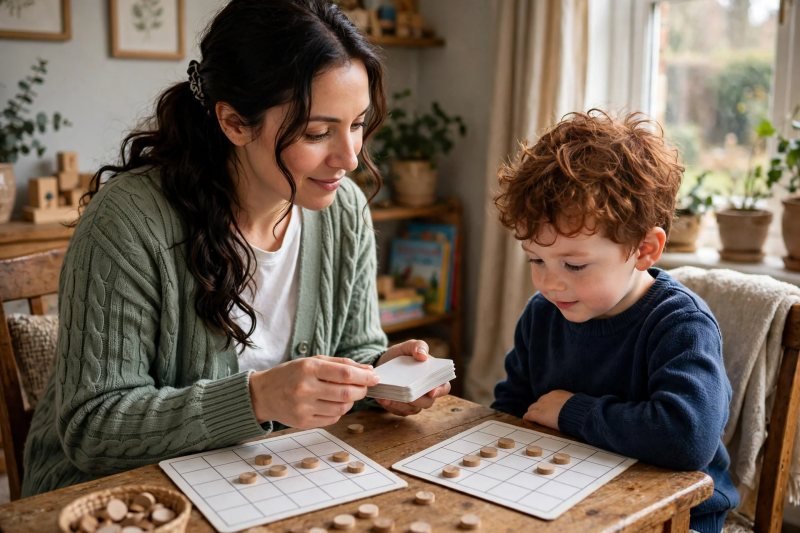
Play word bingo. Build a bingo grid from old and new words, one word in each square, and call the words one at a time. Say: "Cover it when you hear it — shout bingo when your row is full!" Your child listens, finds and covers each called word, and the game ends with a proper celebration for the winner. Mixing old words with new ones keeps earlier sets alive while the new set settles. When bingo is won, stick this week's words where they will be seen every day.
-
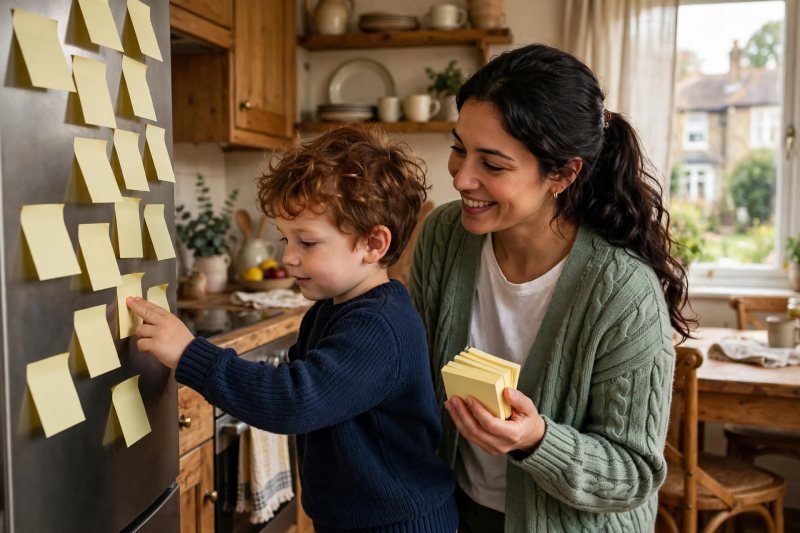
Build the sticky-note wall. Write each of this week's words on a sticky note and let your child stick them on the fridge door or a mirror at their height. Say: "Read it as you stick it." Read every word together as it goes up, then leave the wall displayed where your child sees the words daily, just as the preparation planned. A quick read of the wall at breakfast or bath time keeps the words warm between sessions. Once the wall is up, take the favourite picture book down for spotting.
-
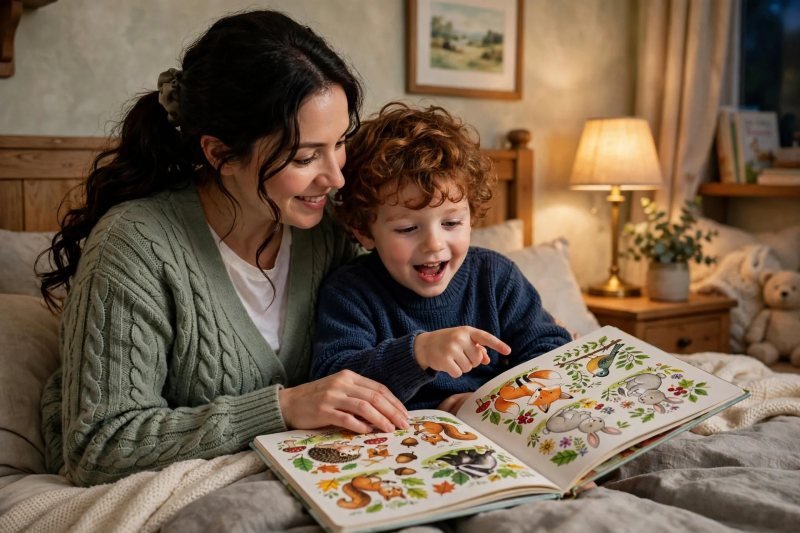
Spot words in a book. Open your child's favourite picture book together and hunt for this week's words on its pages. Say: "You read that one — it is yours!" Let your child "read" each spotted word aloud, pointing to it with a finger, and pause to celebrate the moment of recognition. Book spotting proves the words live outside the card deck, on real pages. When the book is finished, bring out the tricky-word windows.
-
Open the tricky-word windows. Take the five tricky-word windows made in preparation, with a card flap folded over each tricky word. Say: "Flip it open — what is hiding?" Your child flips each window open one by one and reads the revealed word, learning that some words cannot be sounded out and must be recognised by sight. Go slowly, one window at a time, and praise the reading, not the speed. When every window is open, sort last week's cards into their piles.
-
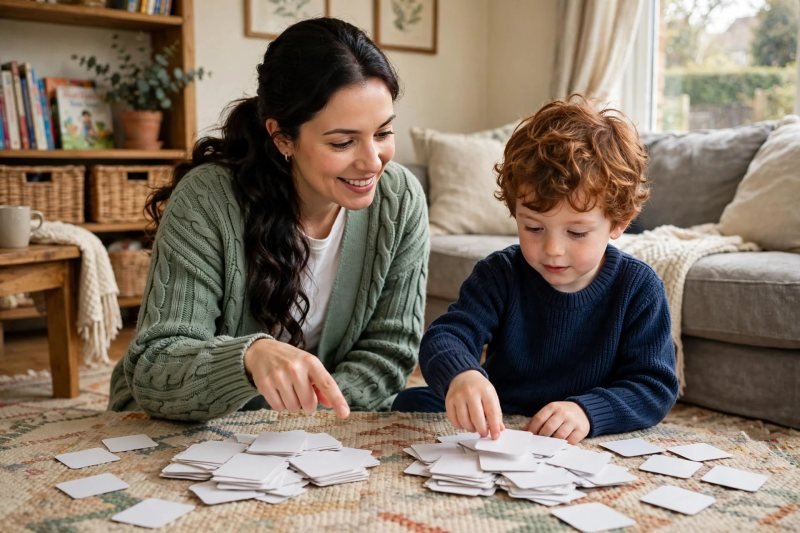
Sort into know-it and try-again piles. Spread last week's cards on the rug and read each one together. Say: "Know it, or try again?" Your child sorts each card into the "know it" pile or the "try again" pile, with no rush and no penalty for either pile. The try-again pile comes back into play next session, because forgetting is normal and cycling a word back is how memory is built. Once the sorting is done, end the session with the sticker celebration.
-
Celebrate with a sticker and tidy away. End while it is still fun: name one word your child read instantly today and say it back together. Say: "That one was instant — sticker time!" Give a sticker for each word read instantly, stick it on the card or your child's cheek, and tidy the cards away together into their box. Stop at ten minutes even if they beg for more; a session that ends happy is a session they will want again tomorrow.



Make it easier
Start with just the and to; add more when both feel easy. Use oversized cards; pair each word with a silly action — clap for and, march for go. Read the words aloud yourself; let your child simply point.
Make it harder
Mix two sets into one deck; race your child's own best time, self-paced. Ask for a spoken sentence with each word, or read short card sentences: "He went up." Hide cards around the garden and time the hunt.
Other ways to play it
- Word hopscotch: chalk a grid outdoors; read the word in each square before hopping on.
- Silly sentences: take turns building the daftest sentence from the cards.
- Bedtime round: one card by the toothbrush.
- Rotate in more sight word games through the week to keep the set fresh.
How it changes by age
- For ages 4–5, the Reception year. Confident threes who know some letter sounds can try Set 1; Year 1 children who missed these words can start at Set 3.
- Year 1 children ready for more can move on to the 52-word Dolch kindergarten sight words list.
What they're learning
Instant word recognition: familiar words free up brainpower for new ones. Tricky words: some can't be sounded out; they're learned by heart. Confidence: familiar words build courage for unfamiliar ones.
Questions parents ask
What are high frequency words for Reception?
How many high frequency words should my Reception child know?
What are the first high frequency words to teach?
Why does my child keep forgetting high frequency words?
Should high frequency words be taught before phonics?
Phonics first. Most words are best sounded out; these 45 cover the constant ones, including "tricky" rule-breakers. Pair with our guide to the Jolly Phonics sounds in order.
For sounding-out practice alongside these words, use our CVC words list.
No official DfE list of 45 exists; this 45-word set, in the teaching order in this guide, is the one used here; it is not an official DfE document.
Forgetting is normal — cycle the word back into play. If your child cannot yet blend, practise blending sounds activities first; sight words are a companion to phonics, not a replacement.
You can practise high frequency words without worksheets: everyday life is the best worksheet. Point out "the" on a cereal box, spot "was" in a bedtime story, and keep a gentle routine of a few new words at the week's start and one game a day.

save it for later
Pin this for the next rainy afternoon
Keep it on a board so it is there when you need it, rather than when you happened to find it.
Save to Pinterest


