


School Readiness Checklist UK: Is Your Child Ready for Reception?
A UK school readiness checklist for Reception starters aged 4–5: uniform skills, lunch-hall confidence, lining up and the EYFS foundations teachers look for — plus a tick-box checklist to track progress together.
For Reception in England, a school readiness checklist should cover uniform independence, stamina for the full school day, lunch-hall skills, lining up and carpet time, plus EYFS foundations like listening, early phonics and counting — not reading. Teachers value self-care and confidence far above academics, which schools teach from scratch.

The short version
- English schools expect independence and confidence on day one, not reading or writing — phonics and maths are taught from scratch.
- The full school day is the biggest adjustment: practise morning routines, earlier bedtimes and lunch-hall skills over the summer.
- Uniform mastery matters enormously — buttons, zips, Velcro shoes and independent PE-kit changes.
- The EYFS describes seven areas of learning; it is a framework for teachers, not a pre-school test.
- Every skill here can be practised through ordinary play and routines — no worksheets or tutoring needed.
- Age
- Ages 4–5
- Prep
- 15 min
- Mess
- None
- Difficulty
- Easy
- Where
- Both
Why kids love this
This one runs on a brilliant motivator: being a "big school kid". Children adore rehearsing the real rituals — shrugging on a cardigan like the Year 6s, carrying a book bag, lining up smartly. Framing every skill as a big-school job turns the checklist into a summer of proud firsts.
What "ready for Reception" really means. If you've been searching for a school readiness checklist uk parents can actually use, here's the reassuring truth: English schools don't expect your four-year-old to read, write or do sums — Reception teachers teach all of that from scratch. What they hope for is independence, stamina for the full day, and the confidence to ask for help.
The checklist below is organised around the EYFS areas of learning in plain parent language — the framework every nursery and Reception class in England follows. Tick items as "got it", "getting there" or "not yet", and practise the "getting there" ones through ordinary summer life.
"Does my child need to read before starting Reception?" No — this is the most misunderstood part of UK school readiness. Phonics is taught from scratch in the first weeks of Reception, starting with hearing sounds, not reading words. A child who loves stories and joins in with rhymes is better placed than one drilled on letter names. Read together daily and let the school handle the rest.
"What self-care skills does a Reception child need?" This is the category teachers quietly care about most — and it's all about the uniform. ☐ Goes to the loo completely alone: wipes, flushes, washes hands with soap ☐ Fastens their own coat — zip or buttons, slowly is fine ☐ Puts on school shoes independently (Velcro is the September hero) ☐ Manages shirt and cardigan buttons with a bit of effort ☐ Changes into PE kit — T-shirt, shorts, plimsolls — and back into uniform ☐ Blows their own nose and bins the tissue ☐ Asks a grown-up for help clearly instead of dissolving Practise the uniform above all: a class that can dress itself gives the teacher time to actually teach.
"How does the lunch hall work in English primary schools?" For many four-year-olds, the lunch hall is the biggest culture shock of Reception: trays, queues and noise. Rehearse the mechanics at home, whether yours has hot dinners or a packed lunch. ☐ Carries a tray with a plate and cup without spilling ☐ Queues patiently and says please and thank you ☐ Opens every part of a packed lunch: packets, cartons, yoghurt pots ☐ Uses a knife and fork well enough for a hot dinner ☐ Eats within a reasonable time — tables get cleared on a schedule ☐ Knows to stay seated and put a hand up if they need something A kitchen-table lunch hall with a tray and a timer makes this genuinely fun — invite a teddy as the dinner lady.
"What should my child know about phonics before Reception?" Sounds, not letter names — that distinction matters in England. Reception phonics begins with hearing that c-a-t makes "cat". Your job this summer is ears, not eyes. ☐ Joins in with favourite nursery rhymes from memory ☐ Spots rhyming pairs: cat/hat, dog/frog ☐ Hears the first sound in a word: "s-s-sun" ☐ Claps out syllables: el-e-phant has three ☐ Listens to a whole picture book and talks about what happened ☐ Holds a book the right way up and turns pages one at a time ☐ Recognises their own first name on their peg and book bag Bedtime stories plus "I spy with sounds" is the entire phonics preparation programme. No flashcards required.
"What early maths should a 4-year-old know before Reception?" In the UK we say maths, and at this age it lives in the real world — not on worksheets. ☐ Counts aloud to 20 (a wobble at 15 is perfectly normal) ☐ Recognises numbers 1–10 on doors, buses and birthday cards ☐ Counts small groups of objects one by one, pointing at each ☐ Understands "more" and "less" with real things at snack time ☐ Sorts objects by colour, size or shape ☐ Names basic shapes: circle, square, triangle, rectangle Stair counting, shopping counting, counting dogs on the walk to the park — that's the curriculum.
"How can my child get used to lining up and carpet time?" Reception runs on two rituals that baffle newcomers: lining up in the playground and sitting on the carpet. Both are learned behaviours, and both are easy to rehearse. ☐ Lines up behind another child and stands reasonably still ☐ Sits cross-legged on the floor for a whole story ☐ Listens without interrupting for about ten minutes ☐ Answers to their name at "register" time ☐ Follows two-step instructions: "hang up your coat, then sit on the carpet" Play "school" with siblings or teddies taking turns as teacher — the child who has rehearsed lining up walks in on day one like they own the place.
"Is my summer-born child ready for Reception?" Summer-born children — those turning four between April and August — start Reception just after their fourth birthday, nearly a full year younger than September-born classmates. That gap looks enormous at four and invisible by seven, and schools are entirely used to it. If you're seriously worried, talk to the school — in England parents can discuss options including deferred entry, but for most children the right move is a confident start with a teacher who knows their birthday.
What you'll need
- This checklist, printed or on a screen
- A pen or highlighter for ticking things off
- Their school uniform and shoes (or similar clothes to practise with)
- A book bag, water bottle and lunchbox
- A tray, plate and cup for lunch-hall rehearsals
- Things you already own: crayons, picture books, a ball, building blocks, child-safe scissors
Before you start
Read through the checklist yourself first, ideally with a cup of tea and no child in earshot. Spend a fortnight just noticing: can they manage their buttons? Sit through a whole story? Then circle two or three skills to practise this week. Never march through the whole list as a quiz — readiness grows through play and routine, not testing. Work through the focuses one at a time, in the order of the sequence below — from stamina and uniform skills to the trial run.
How to do it
-
Build stamina for the full school day. Reception is a proper full day, much longer than nursery sessions. For the last few weeks of summer, run a school-day rhythm: up, dressed, breakfast and out by a set time, with bedtime shifted earlier in the final fortnight.

-
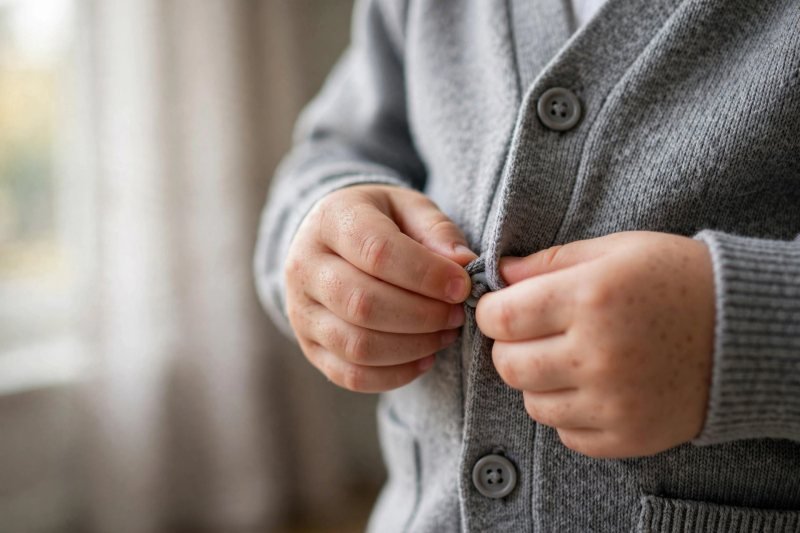
Conquer the uniform. Shirt and cardigan buttons, elastic-waist trousers, socks or tights, and the whole PE kit — T-shirt, shorts, plimsolls — on and off again. Choose Velcro school shoes; laces can wait until Year 1.
-
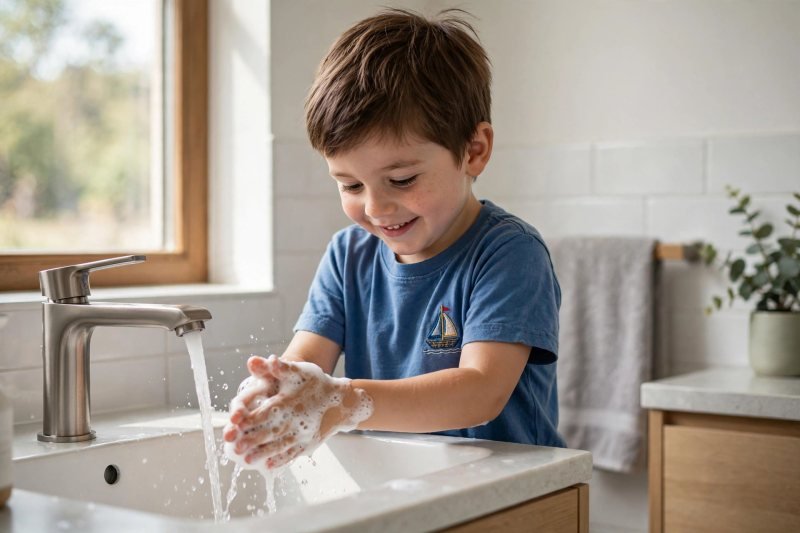
Practise the loo routine solo. School loos are cubicles with no grown-up inside: go, wipe, flush, wash with soap. Rehearse the full sequence at cafés and soft play as well as at home.
-
Rehearse the lunch hall. Carry a tray with a plate and cup without spilling, queue patiently, and open every part of a packed lunch — or use a knife and fork for hot school dinners.

-
Learn lining up and carpet time. Line up behind a sibling or friend, walk in quietly, sit cross-legged for a whole picture book, and answer when your name is called.

-
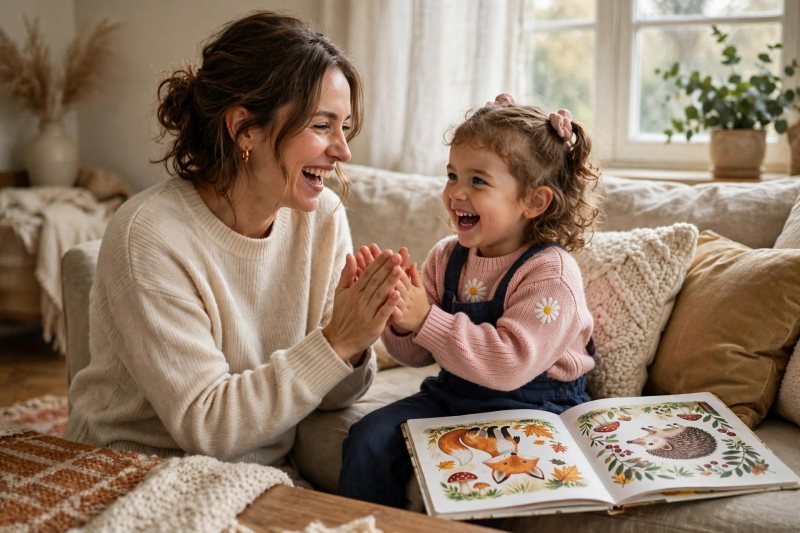
Play with letter sounds. The head start that counts is hearing sounds: s-s-sun, b-b-ball. Play "I spy" with sounds rather than letter names, clap out syllables, and devour rhyming books.
-
Do real-world early maths. Count stairs, apples and red cars. Count to 20, spot numbers 1–10 on doors and buses, compare "more" and "less" at snack time, and sort the washing by colour.

-
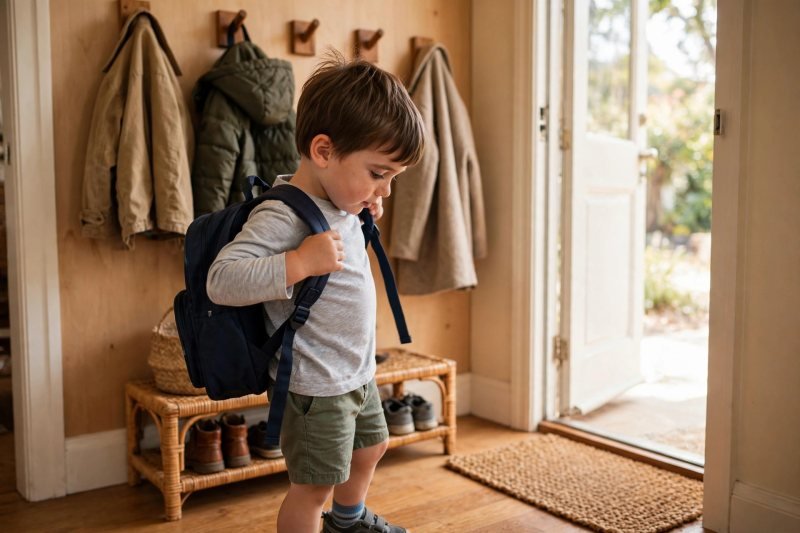
Get organised with belongings. Drill the book bag: water bottle in, reading book out, coat on the peg, jumper named and hung up.
-
Build social confidence. Rehearse asking the teacher or teaching assistant for help — "please, I'm stuck" beats tears. Practise turn-taking games and using words for big feelings.
-
Do a trial run, then track it. Walk the route to school, practise a short cheerful goodbye at the gate, and role-play a whole school day. Then tick off the checklist together over the summer.



Make it easier
Start with just the uniform and the loo — the two things teachers notice first. One focus per week keeps progress visible and pressure off. If a skill frustrates them, park it and come back in a fortnight; maturity arrives in jumps at this age.
Make it harder
For children ticking most boxes: write their full name (not just their first), retell a favourite story in order, count to 30, recognise numbers to 20, or learn to manage proper lace-up shoes. Extend sideways into confidence, not upwards into Year 1 work.
Other ways to play it
- Summer countdown: one checklist skill per day through August, ticked off each evening — the first-day-of-school printable makes a cheerful companion sheet for the final week.
- School role-play weekend: set up a "classroom" with carpet time, register and a lunch hall; let them be the teacher sometimes. A back-to-school practice run covers the same ground out in the real world: the route, the gate, the goodbye.
- Big-kid inspector: let an older sibling or grandparent "assess" the uniform and lunch-hall skills — children perform brilliantly for an audience.
- Keep practising through play: preschool learning activities at home offer gentle, ordinary-life ways to keep every skill in this checklist ticking over.
How it changes by age
- For ages 4–5, in the summer before Reception. The 4-year-olds age hub has more activities for this year. Most children start in September, though some schools stagger entry with part-time first weeks. Summer-born children are the youngest in the year and develop on their own timeline — completely normal. Every child develops at their own pace; this checklist describes what's typical, not mandatory. Families following the US kindergarten year instead can use the kindergarten readiness checklist, the American counterpart to this guide.
What they're learning
In parent-friendly terms, this checklist builds the EYFS prime areas: communication and language (listening, following instructions, expressing needs); personal, social and emotional development (independence, turn-taking, managing feelings); and physical development (dressing, cutlery, pencil control). The life skills hub gathers more of this everyday-independence work. On top sit early literacy foundations (hearing sounds, rhyming) and early mathematics (counting, comparing, patterns).
Clearing up
No mess — unless highlighter ticks on the checklist count. Keep the finished checklist; it's a lovely keepsake for the memory box.
Questions parents ask
What age do children start school in England?
Does my child need to read before starting Reception?
What should my child be able to do with their uniform before Reception?
How can I help my child cope with the full school day?
What is the EYFS and does my child need to meet its goals before school?
Will the school expect my child to be fully toilet trained?

save it for later
Pin this for the next rainy afternoon
Keep it on a board so it is there when you need it, rather than when you happened to find it.
Save to Pinterest


