


Fizzing Sidewalk Paint: Baking Soda Science for Toddlers
Mix bright paint from baking soda, hand your toddler a brush and the whole driveway, then spray it with vinegar and watch the painting fizz, bubble, and melt away — ready to be painted again.
Mix baking soda with a splash of water and a drop of washable color to make thick paint. Let your toddler paint the driveway, then spray plain white vinegar over the artwork — the paint fizzes and bubbles as the two react. Repaint and spray again for endless rounds. Always supervise, aim the spray down, and never taste the paint.

The short version
- Stir about a third of a cup of baking soda + a splash of water + color per bowl until yogurt-thick.
- Toddlers paint the sidewalk; the adult sprays white vinegar over the artwork first.
- The fizz is carbon dioxide bubbles from the baking soda–vinegar reaction.
- Each fizz uses up the baking soda — repaint and spray again for endless rounds.
- Constant supervision; spray aims down only; outdoors only; never taste the paint.
- Age
- Ages 2–3
- Prep
- 5 min
- Mess
- Some
- Difficulty
- Easy
- Where
- Outdoor
Why kids love this
They get to paint on the DRIVEWAY — a canvas bigger than any paper they've ever had. The fizz is a genuine shock the first time: their painting suddenly bubbles and melts away. Paint, spray, fizz, repeat — a loop they control, with bubbles to pop.
What you'll need
- Baking soda — about 2 cups total
- Water — about 1 cup
- Washable tempera paint or food coloring, 2–3 colors
- 4–6 small plastic bowls or cups, one per color
- 2–3 chunky paintbrushes, a spoon for stirring, plain white vinegar in a small spray bottle
- Old clothes or a smock, and a hose or bucket of water for clean-up
Before you start
1. Choose a driveway, sidewalk, or patio patch in partial shade — dry paint barely fizzes. 2. Set the bowls, brushes, baking soda, water, and colors out within reach. 3. Fill the spray bottle with plain white vinegar and keep it with you — the adult does the first spraying.
How to do it
-
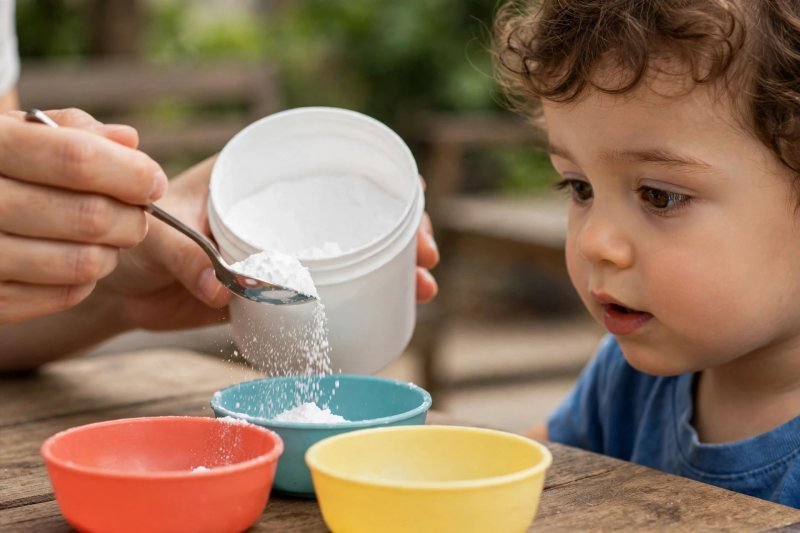
Scoop the baking soda. Spoon about a third of a cup into each bowl, and let your toddler help — scooping the powder is half the fun.
-
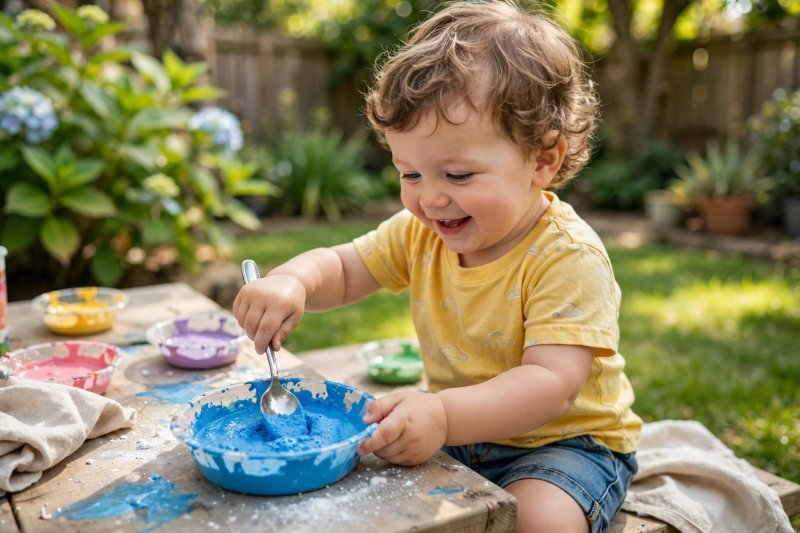
Add water and stir. Stir in a splash of water until it's as thick as yogurt — more baking soda if it's watery, a few more drops of water if it's stiff.
-
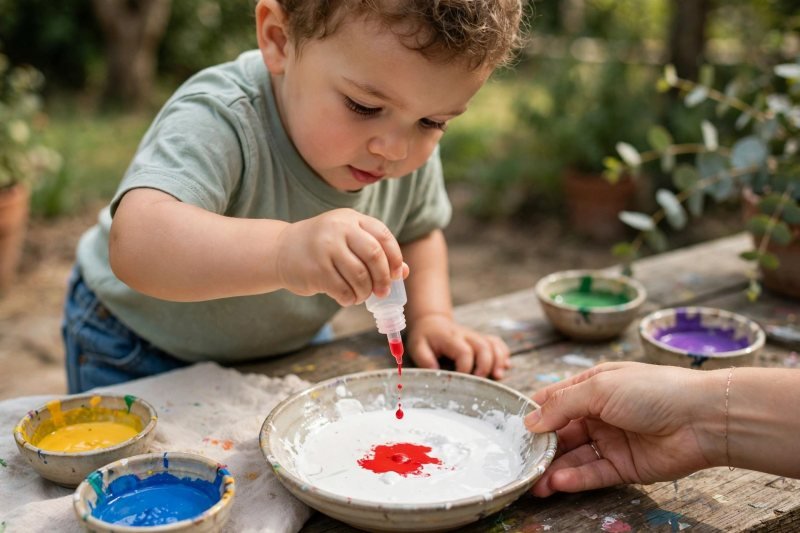
Add the color. Stir a drop or two of washable paint or food coloring into each bowl and let your toddler choose — swirling two together is fine, just like this color-mixing water play for toddlers.
-
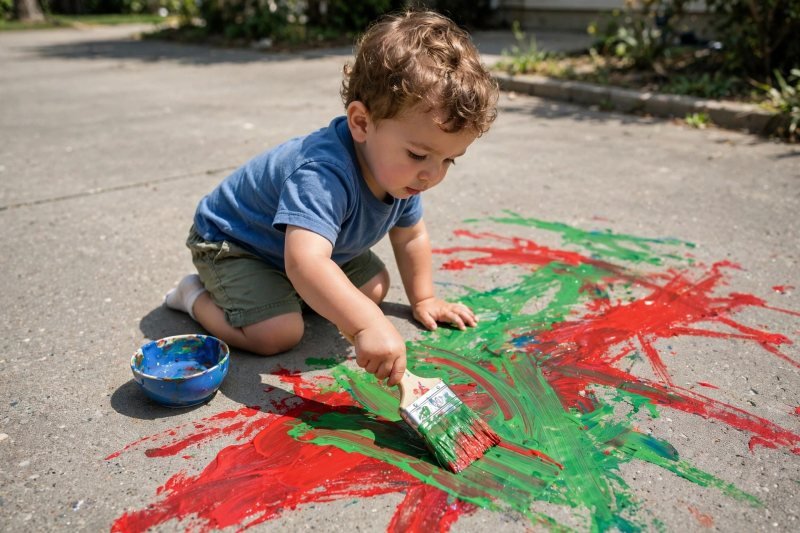
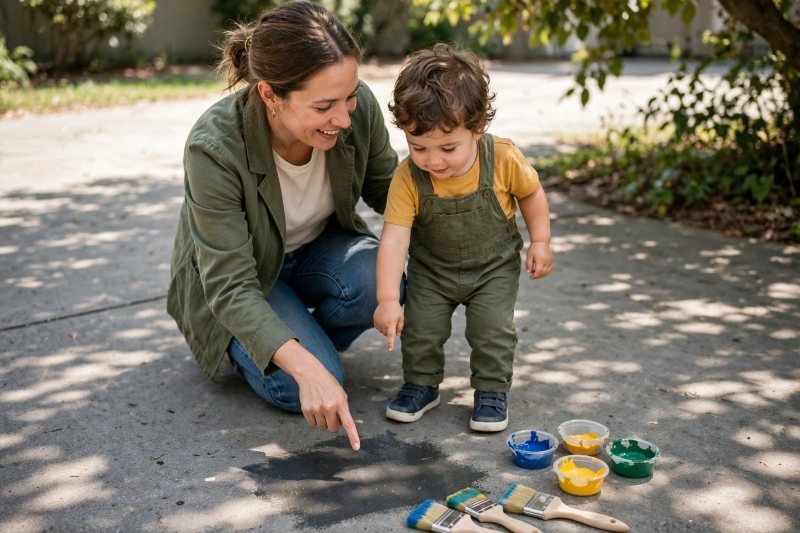
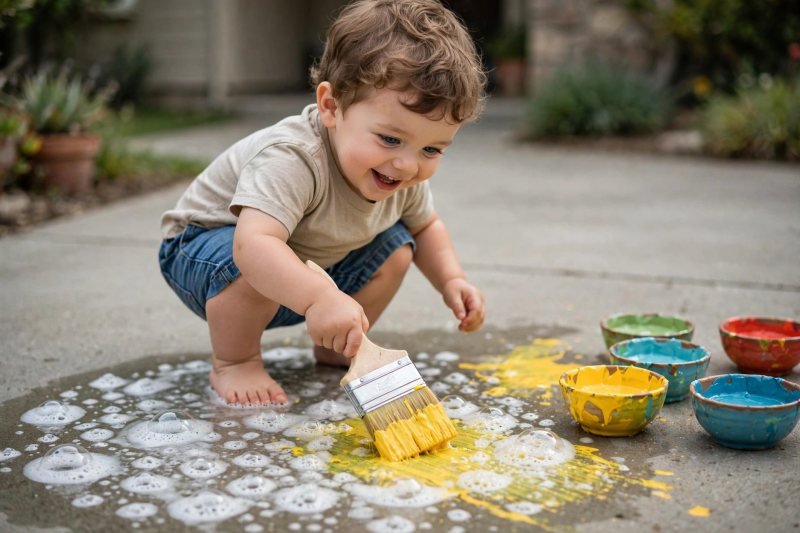
Paint the sidewalk. Hand over a big brush and let your toddler loose: strokes, dots, scribbles — no wrong way to paint a driveway. Chunky brushes build the grip muscles practiced in these fine-motor activities for preschoolers.
-
Admire the artwork. Stand back together before anything fizzes: name the colors, spot the shapes — it's about to disappear.
-
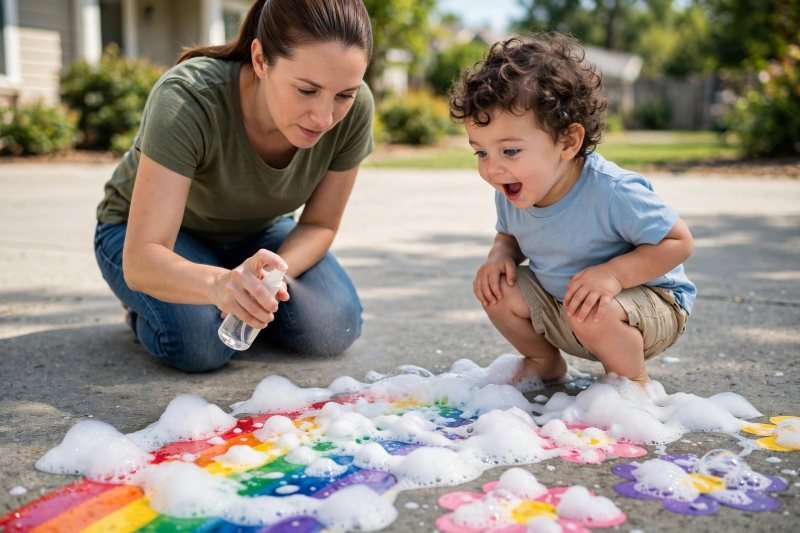
Countdown and spray. "Ready… set… FIZZ!" Then you — the adult — spray the vinegar generously over the painting. Watch their face on the first spritz.
-
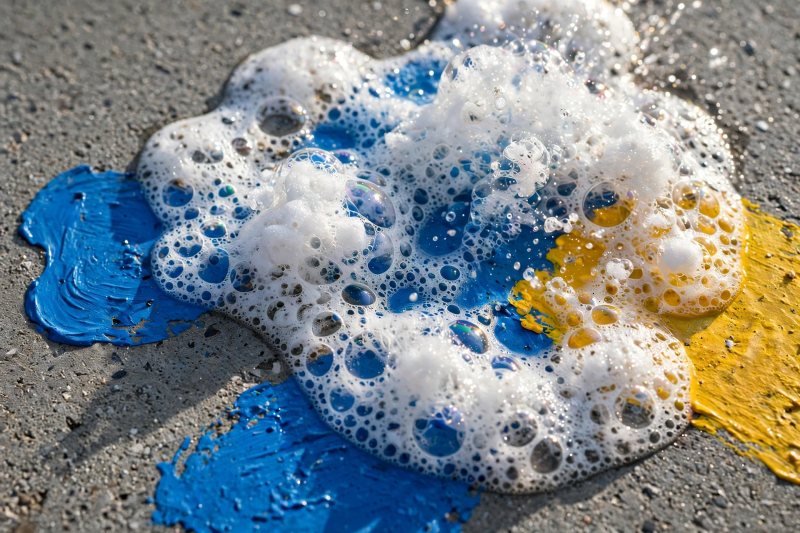
Watch the fizz. Lean in close (not too close) as the paint bubbles and colors swirl. Narrate it: "Look at those bubbles! The blue is melting!" The bubbles are carbon dioxide gas escaping as the baking soda and vinegar react — the reaction bubbles the paint apart.
-
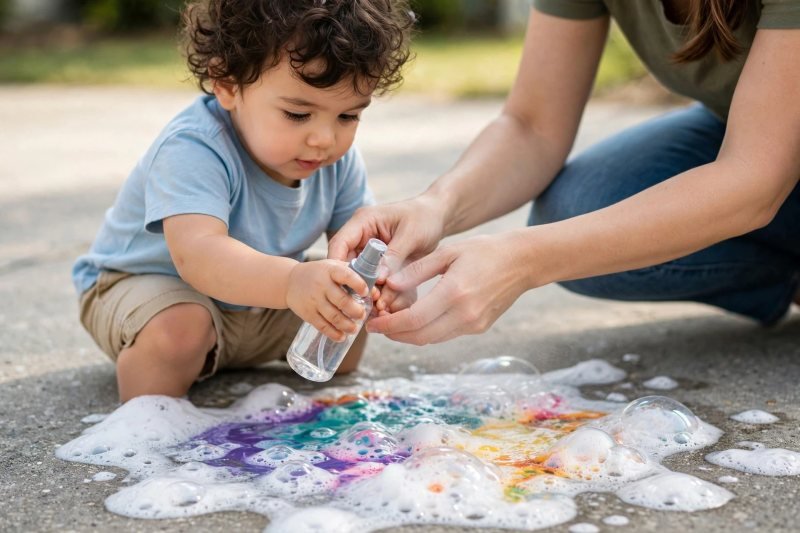
Hand over the spray bottle. Let your toddler spray with your hand guiding theirs — one rule: aim DOWN at the painting, never at faces.
-
Paint it again. Scoop more paint onto the fizzed patch and spray again — every round uses fresh baking soda, so every round fizzes as hard.
-
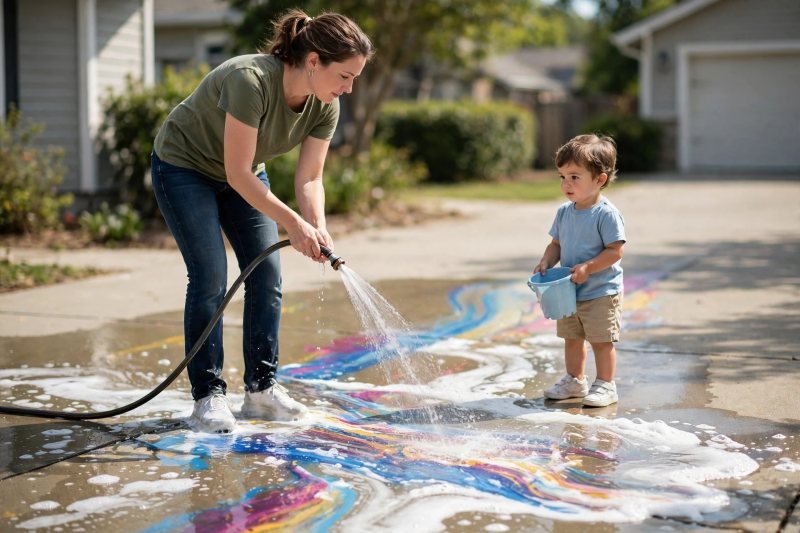
Rinse it all away. Blast the driveway with the hose. The mixture is water-soluble and washes straight off.


Make it easier
Pre-mix the paint before heading outside — your toddler just paints and watches. Start with two colors instead of four — fewer bowls to manage, same spectacular fizz. Let them practice first with a water-filled bottle, so aiming down is second nature.
Make it harder
Let your three-year-old do the mixing and predict what the vinegar will do before you spray. Paint one color at a time and spray each separately — which fizzes biggest? Ask them to report like a scientist: "What do you see? What do you hear?" — and when they want more, our easy science experiments for toddlers keep the fizzing going indoors and out.
Other ways to play it
- Color-reveal fizz. Paint with plain white baking soda paint, then spray vinegar tinted with food coloring — the color blooms as it fizzes.
- Rainbow rows. Paint stripes side by side and spray down the line for a fizzing rainbow.
- Already erupted the volcano? Fans of the baking soda vinegar volcano for preschoolers will recognize this wilder outdoor cousin — that one erupts in a bottle; this one paints the driveway first.
How it changes by age
- Ages 2–3 are the sweet spot: old enough to paint with a chunky brush and delight in the fizz, young enough that painting the driveway feels gloriously rebellious. Around 18 months, children can paint while the adult mixes and sprays. Four- and five-year-olds can mix, spray with supervision, and predict the fizz.
What they're learning
Cause and effect. I spray, it fizzes — tested and confirmed, over and over. Fine motor skills. Gripping a chunky brush, stirring thick paint, and squeezing a spray trigger build the small muscles behind writing readiness. Color confidence. Mixing and naming colors in huge, joyful quantities — our color mixing activities for preschoolers build the same naming skills indoors. Early science vocabulary. Fizz, bubbles, react, mixture — real words in context. Sensory exploration. Thick paint, popping bubbles, cool mist.
Clearing up
Blast the driveway with the hose — the mixture is water-soluble and washes straight off concrete, asphalt, and pavers. Wash hands, brushes, and bowls with warm soapy water. The vinegar smell fades within the hour outdoors.
Questions parents ask
What age is fizzing sidewalk paint good for?
What do you mix to make fizzing sidewalk paint?
Why does the paint fizz when you spray vinegar on it?
Is fizzing sidewalk paint safe for toddlers?
Can you make fizzing sidewalk paint without food coloring?
How do you clean up fizzing sidewalk paint?
Work in shade — full sun dries the paint too fast for a good fizz. Yogurt-thick paint fizzes best; thin, watery paint barely bubbles. Each fizz uses up the baking soda in that patch — repaint and spray again for round two. Stick to plain concrete, asphalt, or pavers. White paint fizzes exactly the same — color is for joy, not chemistry. If your toddler loves painting outdoors, our water painting outdoor wall turns a plain wall into a no-mess painting canvas for hot days.


