


Density Tower: Layered Liquids Experiment for Kids
Pour five colorful liquids into a tall glass and watch them stack into a rainbow tower, then drop in small objects to see where each floats. This density experiment for kids takes under half an hour.
A density tower is a tall glass stacked with liquids that float on one another. Pour honey, dish soap, colored water, oil, and colored rubbing alcohol in that order, slowly down the side, and each lighter liquid floats on the denser one below. Drop in small objects and watch them hover between layers. It suits ages 5–6, with an adult handling the rubbing alcohol.

The short version
- Layer order, densest first: honey, dish soap, water, oil, rubbing alcohol.
- Pour slowly down the side of the glass or over the back of a spoon.
- An adult handles the rubbing alcohol; nobody tastes the mixture.
- Dropped objects float at different layers — perfect for prediction games.
- Photograph the tower early; layers blur after a day or two.
- Cleanup goes in the trash, not the sink, because of the oil.
- Age
- Ages 5–6
- Prep
- 5 min
- Mess
- Some
- Difficulty
- Easy
- Where
- Indoor
Why kids love this
Five- and six-year-olds love to pour, and this experiment lets them pour five times in a row — each slow pour adding a new stripe of color until the tower glows like a rainbow. Then the best part: dropping a grape, a bead, or an ice cube in and guessing where it stops. Objects hang mid-glass as if by magic, and kids always want one more. It pairs beautifully with our baking soda and vinegar volcano for a full kitchen-science afternoon.
What you'll need
- 1 tall, clear plastic tumbler or Mason jar
- 1/4 cup each: honey or corn syrup, dish soap, water, vegetable oil, rubbing alcohol
- Red and blue food coloring
- 2 small cups for mixing, plus 1 tablespoon for slow pouring
- A grape, a popcorn kernel, a plastic bead, a small button, and an ice cube
- 1 tray with raised edges, plus a cloth or paper towels
Before you start
Cover the table with the cloth and set the container in the center of the tray. Measure each liquid into its own cup. Stir red or purple food coloring into the rubbing alcohol — an adult job — and set the blue coloring beside the water; your child colors the water in step 4. Close the rubbing alcohol bottle, put it away, and crack a window for ventilation.
How to do it
-
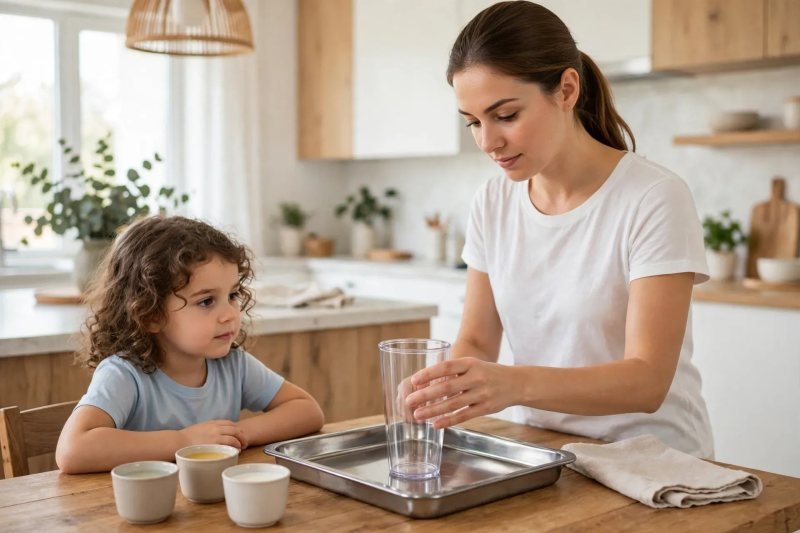
Set up the tower. Set the tall container in the middle of the tray, with your child seated at eye level.
-
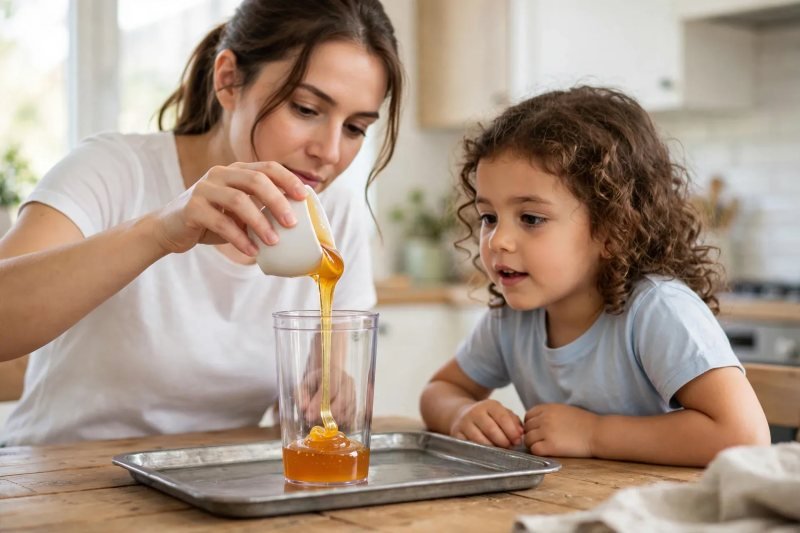
Pour the honey layer. The adult pours the honey or corn syrup in first — the heaviest liquid, so it sinks to the bottom.
-
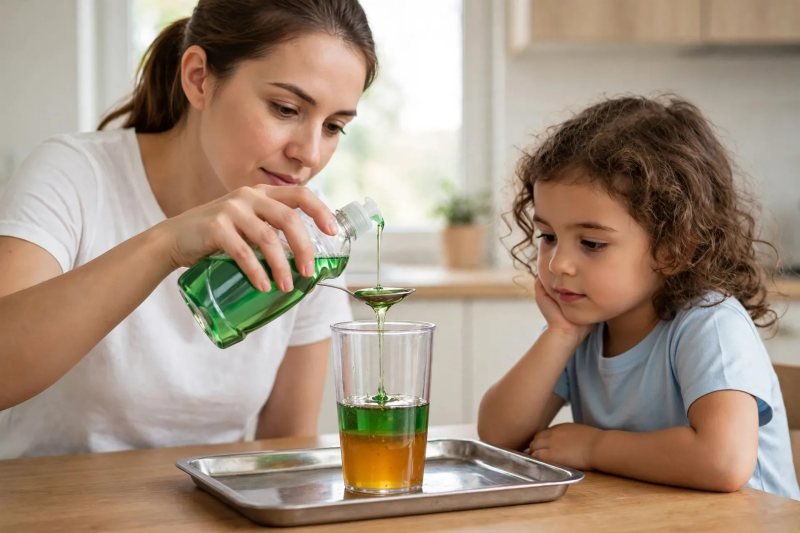
Add the dish soap layer. Pour the dish soap very slowly over the back of a spoon to form the second layer.
-
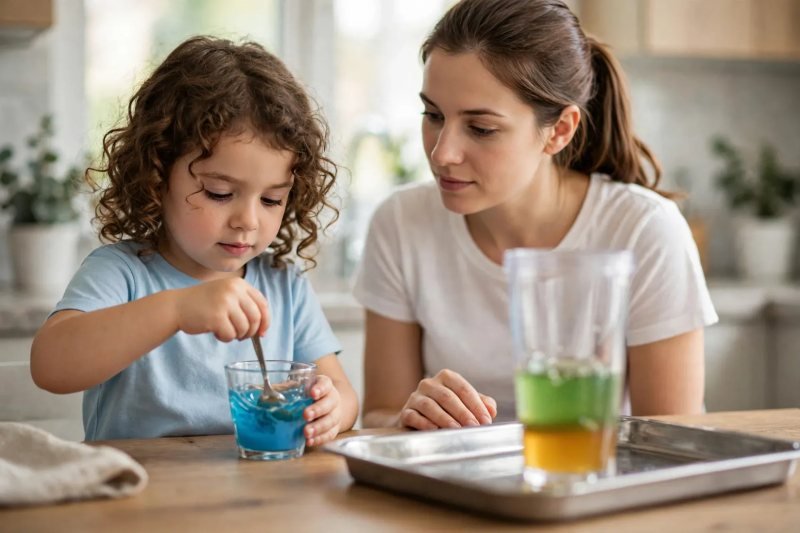
Color the water blue. Have your child stir blue food coloring into the water until the color is even.
-
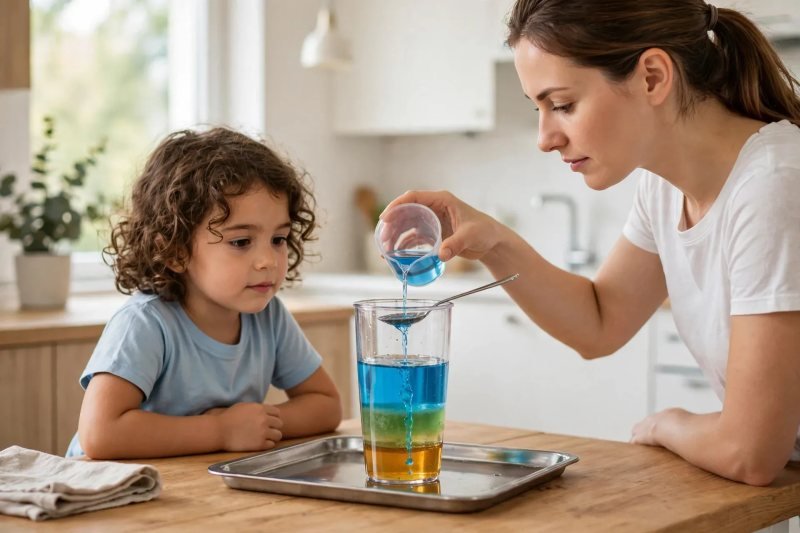
Pour the blue water layer. Pour the blue water slowly down the inside of the glass, over the back of the spoon, as the third layer.
-
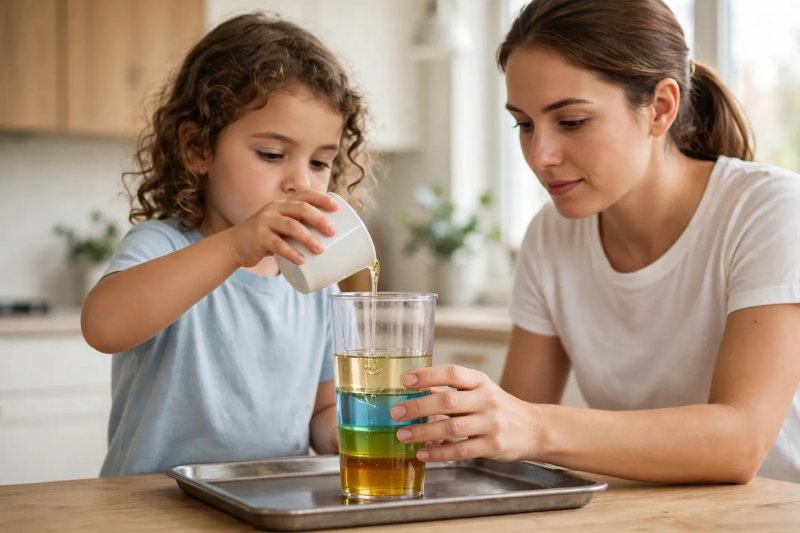
Pour the oil layer. Let your child pour the vegetable oil slowly down the side of the glass as the fourth layer.
-
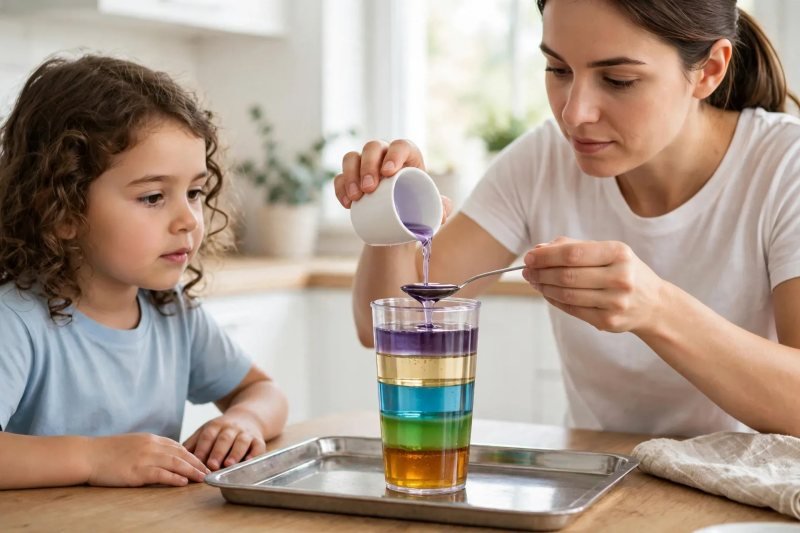
Pour the alcohol layer. The adult pours the colored rubbing alcohol gently over the back of the spoon as the top layer, then puts the bottle away.
-
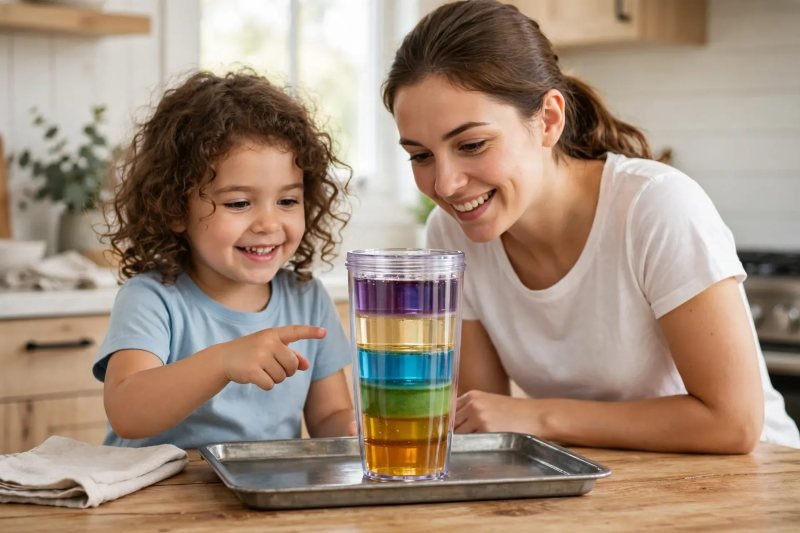
Admire the tower. Admire the tower together — ask your child to point to the top and bottom layers and count all five.
-
Drop in the objects. Drop in the objects one at a time, letting your child guess where each will stop first.
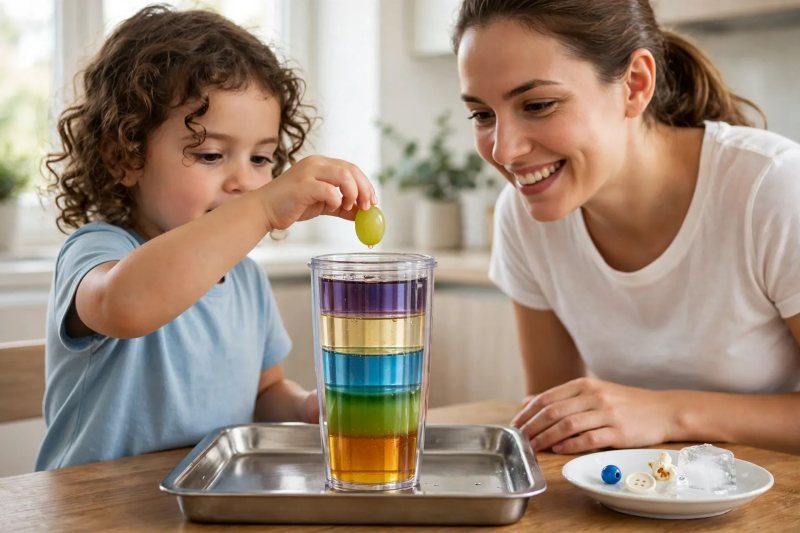
-
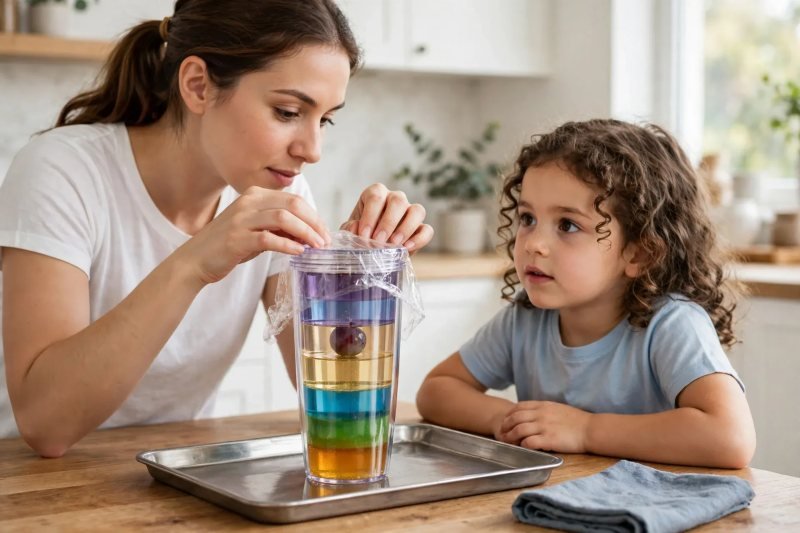
Watch, cover, and clean up. Watch each object float mid-tower, cover the top loosely with plastic wrap, then clean up together.


Make it easier
Use just three liquids — honey, water, and oil — with three objects to drop in. You pour while your child drops the objects and narrates what happens.
Make it harder
Have your child predict the layer where each object will stop, and chart the guesses against the results. Or build two towers side by side — wide jar versus narrow glass — and compare the layers. Older kids can also try the walking water experiment to watch color travel between cups all by itself.
Other ways to play it
- Swap the honey for light corn syrup, or the water for milk, and see how the colors change.
- Build a mini tower in a narrow spice jar for show-and-tell.
- Try a cherry tomato, a blueberry, or a small pasta shell and compare where each settles. A Skittles rainbow experiment uses the same slow-dissolve magic with color.
How it changes by age
- Designed for ages 5–6. Children this age can pour from a small cup with a steady hand and follow the slow-pouring rule, but they need an adult beside them for the rubbing alcohol and a tall container that could tip. If your child rushes or tastes things, do the pours yourself and let them drop the objects in. Younger children can start with color mixing activities for preschoolers before tackling the tower.
What they're learning
The core idea is density: a liquid heavier for its size sinks below a lighter one, so the five layers stack instead of mixing. Children practice observation, prediction, and cause and effect — slow pouring keeps layers separate, fast pouring mixes them. They also pick up science words in context: density, sink, float, layer, surface. For a gentler first sink-and-float game, try sink or float for toddlers.
Clearing up
Display the tower for a day or two if you like, out of reach of small hands. When done, pour it into the trash — not down the sink — or seal it in an old container and throw it away. Wash the cups and spoon with hot soapy water and wipe the tray and table.
Questions parents ask
What is a density tower?
What liquids go into a density tower, and in what order?
Why don't the layers mix together?
Is a density tower safe for kids?
Why did my layers mix into one color?
What objects can kids drop into a density tower?
Photograph the tower right after pouring — layers are sharpest then and blur over a day or two. The dancing raisins experiment is another five-minute kitchen science win.


