


Wavy Hair in Kids: Enhancing Natural Waves Without the Frizz
Wavy hair care for kids ages 4-5: a gentle wash-day routine for 2a to 2c waves with dry detangling, conditioning, scrunch-drying with a soft t-shirt, air-drying, and simple next-day refreshes — no heat and no heavy products.
Wavy hair in kids ages 4-5 (2a to 2c waves) does best with a gentle routine: detangle dry, cleanse lightly, condition and finger-detangle, scrunch dry with a soft t-shirt instead of a towel, air-dry without touching, and refresh on later days with plain water — no heat and no heavy products.

The short version
- Detangle dry and with conditioner in — never dry-brush waves or force a comb through a knot.
- Cleanse gently and lightly: a small amount, fingertips on the scalp, suds through the lengths.
- Scrunch, do not rub: a soft cotton t-shirt lifts water out while keeping wave groupings smooth.
- Air-dry hands-off and refresh with water alone — heat and heavy products flatten young waves.
- Wash once or twice a week and judge by how the hair looks and feels, not by a daily schedule.
- Age
- Ages 4–5
- Mess
- Low
- Where
- Indoor
Why kids love this
Wavy hair has its own logic, and children are happiest when the routine works with it instead of fighting it. Nothing here pulls, rushes, or tries to brush waves flat. Your child watches her own pattern appear — soft S-shapes forming as her hair dries — and helps at every stage: holding the t-shirt, scrunching a section herself, choosing how her hair rests while it dries. There is no heat and no heavy coating to leave hair feeling limp. Wash day stays short, predictable, and a little magical, because the waves do the impressive part themselves once the handling is gentle. That mix of comfort, control, and seeing her natural texture show up builds a relaxed relationship with her hair.
What you'll need
- A wide-tooth comb — for dry detangling only, used slowly and in sections; all containers kept blank and unlabeled in any photo
- A gentle, light cleanser suitable for children — a small amount is enough for fine wavy hair
- A light conditioner — slippery enough to finger-detangle with, light enough to rinse clean without weighing waves down
- A clean, soft cotton t-shirt — for scrunching instead of a rough towel
- A spray bottle filled with plain water — for wetting hair evenly and for next-day refreshes
- A regular towel — for shoulders and drips, not for rubbing hair dry
- Hair clips or soft ties — for working in sections
- A comfortable, secure seat at the sink or the edge of the bath — your child sits in a swimsuit or t-shirt during washing
- A favorite song or short story — to time conditioner and make hands-off drying feel like part of the plan
Before you start
1. Choose a wash day when you are not rushed — once or twice a week is plenty for most 4- and 5-year-olds unless hair is visibly dirty sooner. 2. Lay everything out before your child sits down — comb, cleanser, conditioner, t-shirt, clips, and spray bottle within your reach — so you never leave her unattended near water. 3. Talk through the plan in order — detangle, wash, condition, scrunch, dry, refresh tomorrow — so she knows nothing will pull or get hot, and knows her jobs are to hold, scrunch, and choose.
How to do it
-
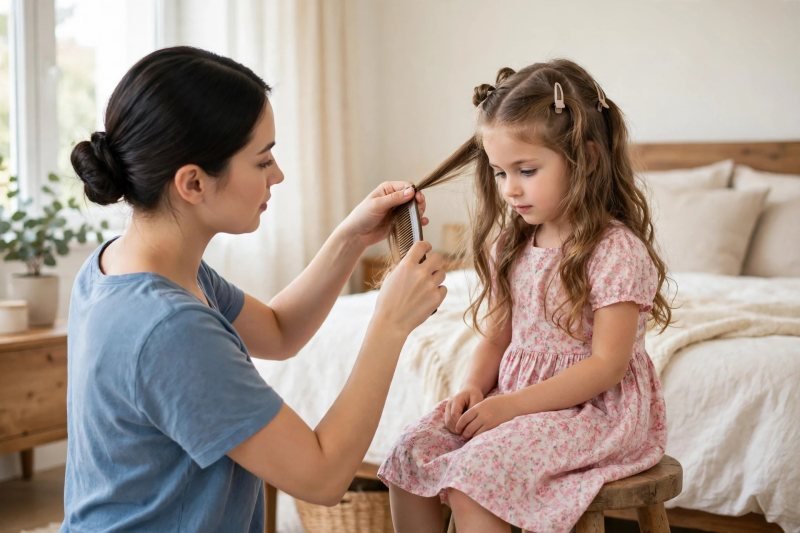
Detangle dry, before any water. Start while the hair is completely dry, because wavy hair is less stretchy before it gets wet, and a knot found dry is far kinder to undo than one found soaked. Work in three or four clipped sections, hold each section gently near the roots so her scalp never feels a pull, and work the wide-tooth comb from the very ends upward in short, patient strokes; loosen any resistant tangle with your fingers first rather than forcing the comb through. Let her hold the mirror, choose which side starts, and count the sections with you. Say, "We start at the ends and tiptoe up — your waves never have to fight the comb." This calm handling also builds trust for future haircuts, much like the unhurried preparation in a toddler first haircut guide.
-
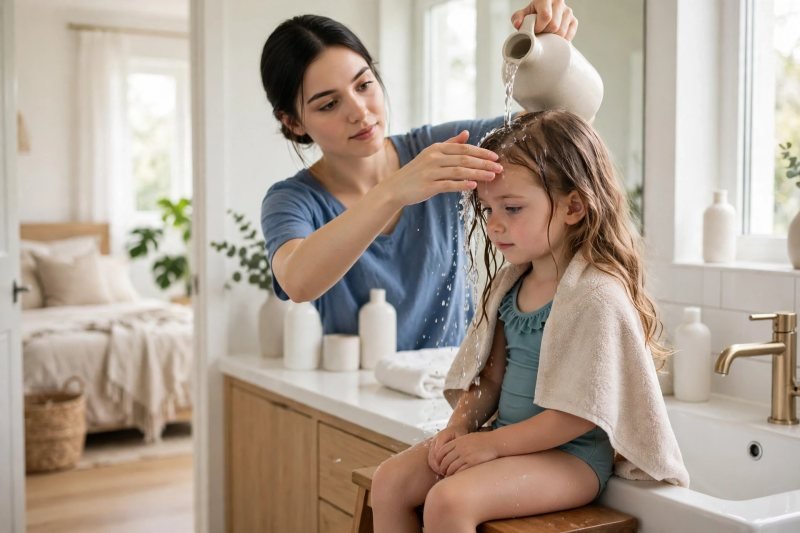
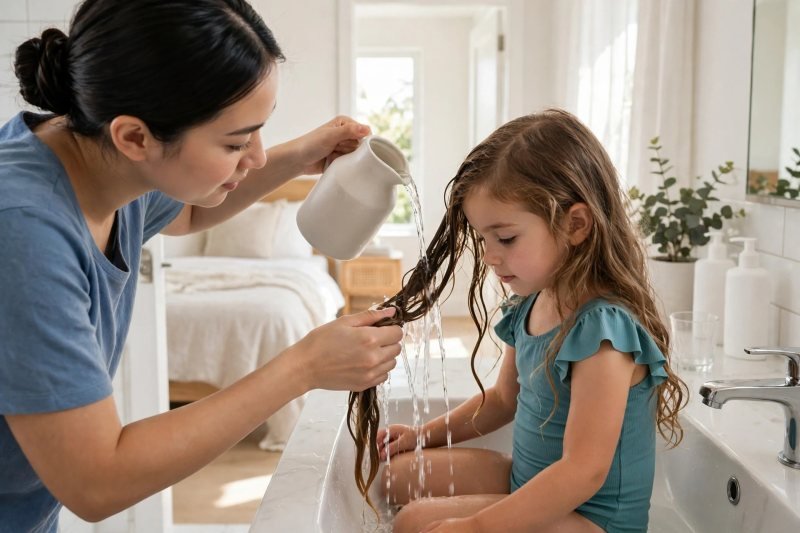
Wet the hair thoroughly at the sink. Seat her securely at the sink or the edge of the bath in a swimsuit or t-shirt, towel across her shoulders, and wet the hair slowly and completely with lukewarm water — pouring from a jug; using a gentle shower head on its softest setting; or misting and squeezing with the spray bottle until every section is evenly damp. Wavy hair can repel water at first, especially at the drier ends, so take an extra minute; cleanser and conditioner both work better on truly wet hair. Shield her forehead with your hand, tilt her head back slightly, and let her test the temperature on her wrist first. Say, "Warm, not hot — tell me if it feels just right." A predictable, comfortable start makes the whole routine feel safe, the same way a simple kids skincare routine does.
-
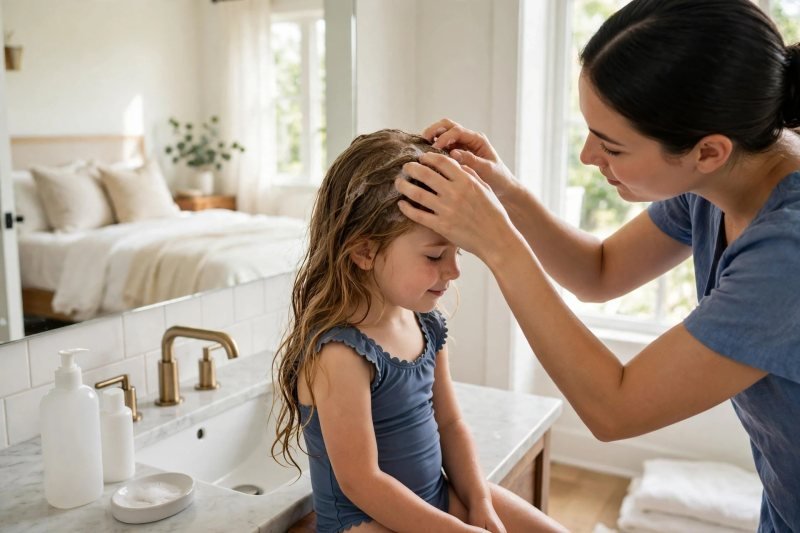
Cleanse gently, focusing on the scalp. Use only a small amount of gentle cleanser — fine wavy hair needs far less than most parents expect — and work it mainly into the scalp with your fingertips in slow circles, with no nails and no scrubbing; the lengths are cleaned by the suds rinsing through them. Keep sections loose, never pile hair on top of her head, and never twist or bunch the lengths, because that is where new tangles and frizz begin. One gentle cleanse is enough for a routine wash; a second is only needed after sunscreen, sand, or a very active day — the same once-or-twice-a-week rhythm in our guide to how often to wash toddler hair. Say, "Soft fingertips on your scalp, and the bubbles do the rest of the work." Rinse lightly until the water runs clear, saving the full rinse for after conditioning.
-
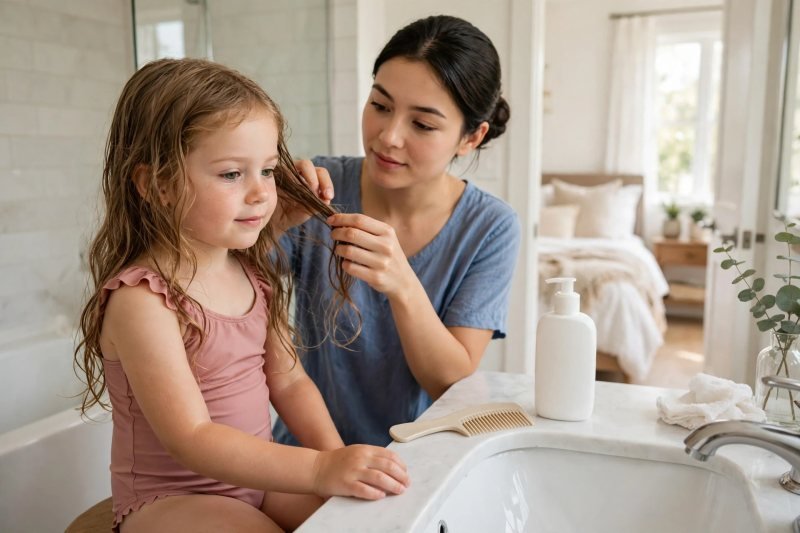
Condition and finger-detangle. Smooth light conditioner through the lengths section by section, concentrating on the mid-lengths and ends where wavy hair is driest, and let its slip do the detangling work. Use your fingers first — raking gently downward, pausing at any knot, and easing it apart strand by strand — and reach for the wide-tooth comb, still working ends-up, only if your fingers meet a tangle they cannot solve. She can hold each finished section, scrunch it once to feel the softness, and tell you where a spot still feels rough. Leave the conditioner on for a few unhurried minutes — one song is a perfect timer. The same slip-and-fingers approach works for tighter patterns too, as our curly hair care for toddlers guide shows. Say, "The conditioner makes your hair slippery-soft, so our fingers can slide the tangles out." Hair detangled now, while conditioned, will not need aggressive brushing later in the week.
-
Rinse cool and leave the waves alone. Rinse with lukewarm to slightly cool water, letting it run down the lengths in the direction the hair naturally falls, and resist rubbing, wringing, or twisting as you finish. For fine, easily weighed-down waves, rinse thoroughly so the hair feels clean and light; for drier ends, leave only the faintest trace in the very tips. Squeeze each section once, gently, from roots to ends so the natural S-shape gathers, then stop touching it with your palms. Check together in the mirror: the pattern should already show in soft clumps, not a separated, fluffy cloud. If rinsing ever brings tears, the gentle pouring tricks in washing toddler hair without tears help here too. Say, "See your waves lining up? We rinse, we squeeze once, and then we let them be." How calm and grouped the hair looks now is the best predictor of how it will dry.
-
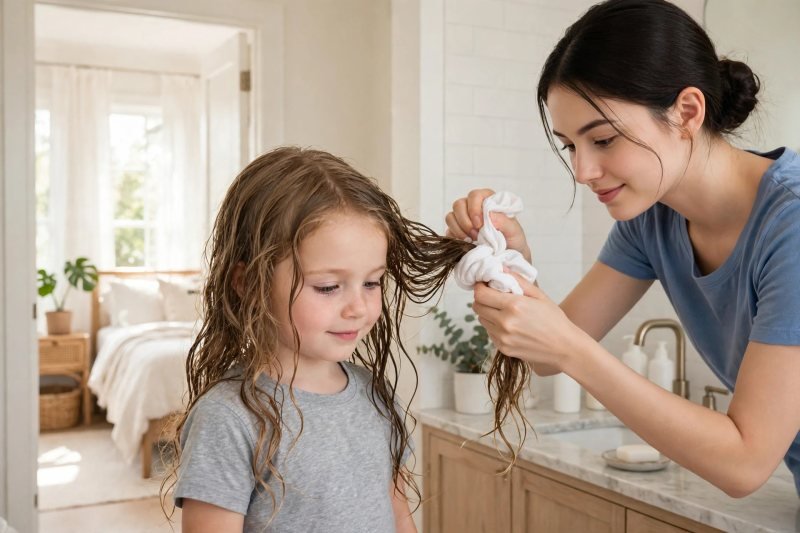
Scrunch out the water with a soft t-shirt. Swap the rough towel for a clean, soft cotton t-shirt, because its smooth surface glides over waves where looped towel fabric catches, separates, and roughens them into frizz. Lay the t-shirt flat in your hands, gather one section into it from the ends upward, and scrunch — lifting the ends toward the scalp and squeezing in gentle pulses — then release and move on without dragging fabric across the hair. Repeat until the hair is damp rather than dripping, and let her scrunch one section herself with the t-shirt bunched in both hands; gentle participation beats adult precision here. Keep every motion upward and supportive, never side to side. Say, "We lift your waves up and give them a soft squeeze — no rubbing, no shaking." The waves should now sit in defined, springy groupings with no fluffy halo at the surface.
-
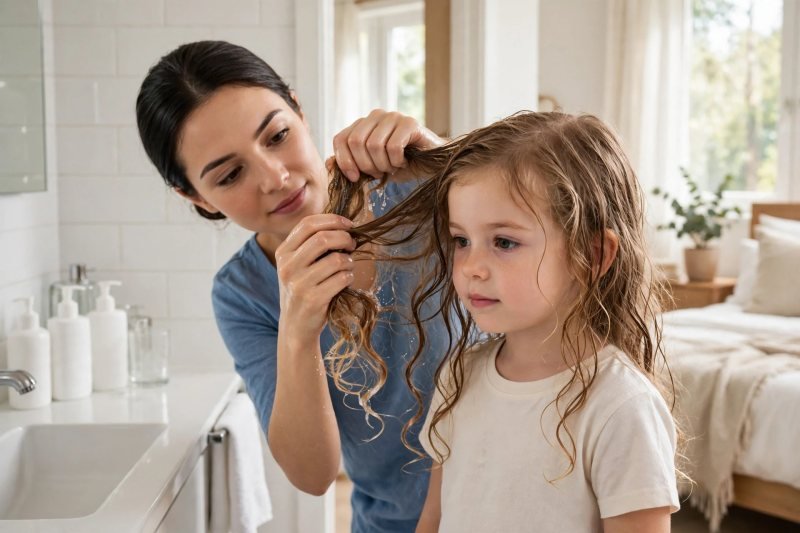
Define the waves with one more scrunch. While the hair is still damp, invite the waves to form with a final, deliberate round of scrunching — head tipped slightly forward or to one side if she enjoys it; sections lifted from underneath and scrunched upward in the t-shirt or with bare, wet hands; then released without being pulled back down. Use this moment to arrange the parting and front pieces very lightly with fingertips only, because after this point the rule is hands off. If a section looks straight while its neighbors wave, scrunch it once more and leave it; wavy hair often springs up as it dries, and over-handling creates unevenness. No extra products are needed for 2a to 2c waves at this age. Say, "One last lift for each wave, and then our hands retire." A simple finish protects fine hair from heaviness and build-up that flatten young waves by morning.
-
Air-dry completely hands-off. Let the hair air-dry with no heat at all — no dryer and no heated tools — and no brushing, combing, or touching while it dries, because every touch separates the groupings you just created and invites frizz at the surface. Keep her comfortable and occupied with a story, a snack, or gentle play that does not involve hats, hoods, or lying down until the hair is fully dry. Ends often dry faster than roots; simply wait, and resist smoothing the top layer with a palm, which flattens the crown while frizzing the surface. Once the hair is completely dry — cool, light, with no dampness at the nape — she can shake her head gently side to side to soften the finish. Say, "Dry means done — your waves finish the job all by themselves." Patience here earns the clearest wave pattern of the week, achieved with nothing but air and restraint.

-
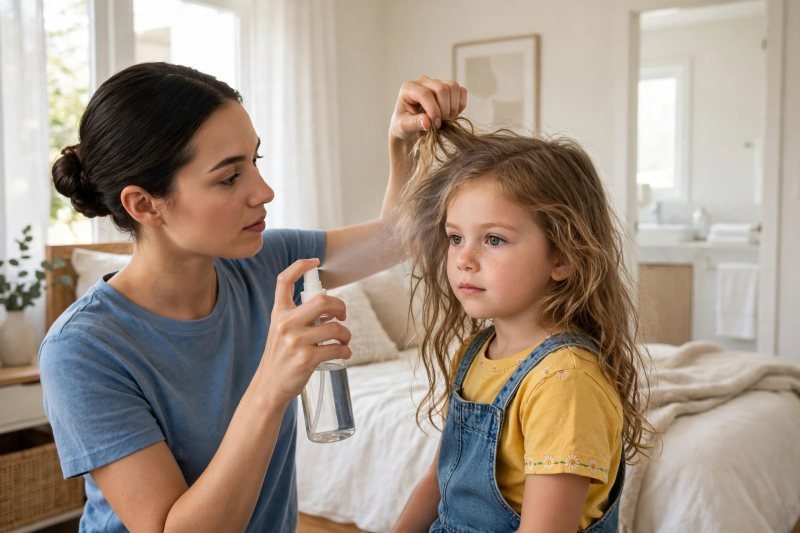
Refresh the next morning with water alone. On the day after washing, and for a day or two beyond, refresh rather than rewash: mist the hair lightly with plain water from the spray bottle, focusing on sections flattened in sleep or fluffy at the surface, then scrunch each misted section upward with your hands or the t-shirt exactly as on wash day. Flattened waves usually spring back within minutes once damp and scrunched; a frizzy section usually needs a little more water rather than any product, and a tangled-looking section should be smoothed with wet fingers, never dry-brushed. Fine waves flatten easily overnight, so fine toddler hair care uses the same light mist and scrunch to wake them up. Keep the refresh to about five minutes, in her normal clothes in the bedroom or at the sink, so mornings stay calm. Say, "A little water wakes your waves up — scrunch, and they remember themselves." Most young 2a to 2c hair looks its best on refresh days, fully settled and softly defined.
-
Wrap up and protect the waves overnight. Finish by noticing the result together — name what worked, which sections waved most, and what to try slightly differently next wash — then set up the habits that carry waves to the next wash day: hair left loose or gathered very loosely on top of the head at night so it is not crushed underneath her; no brushing on dry days, with wet fingers and water handling touch-ups; and the next wash planned by how the hair looks and feels, not by a rigid daily schedule. The section-by-section calm she has practiced here also makes trims easier, as a toddler first haircut guide shows when haircuts feel like familiar routines. Put the t-shirt in the wash, rinse the comb, and let her have the final verdict in the mirror. Say, "Your waves, your way — we just help them show up." Ending on her approval, not perfection, keeps wash day welcome week after week.



Make it easier
Wash in the bath instead of at the sink: if sitting at a sink feels wobbly, do the wetting, cleansing, and conditioning during a normal bath, seated securely in a swimsuit, and save the t-shirt scrunch for stepping out. Cut the routine to its core four moves — detangle dry, cleanse, condition, scrunch — and let air-drying and the water refresh carry the rest; a shorter, calmer version done kindly beats a full version done in a rush. Refresh-only mornings all week: wash once, then rely on the five-minute water refresh for several days; most young waves hold their pattern far longer than parents expect.
Make it harder
Teach the section map: let your 5-year-old name and count the four sections herself, hold each clip, and scrunch each section in order — independence and sequencing practice built into care she already enjoys. Keep a wave journal together: after each wash she draws her waves — looser or springier, smoother or fluffier — and you note what you changed, building simple observation and cause-and-effect thinking. Practice the refresh solo: with you watching, let her mist one section, scrunch it, and judge the result in the mirror — a real self-care skill, learned on the easiest step first.
Other ways to play it
- Bath-time version: the whole wash happens on bath night — detangle dry on the stool beforehand, cleanse and condition in the water, scrunch with the t-shirt on the mat afterward, and air-dry in pajamas during a story.
- Short wavy hair version: for chin-length or shorter waves, skip the clips and work in two sections; use half the conditioner, scrunch with a smaller fold of t-shirt, and expect a faster dry and an especially springy refresh.
- Fine, easily flattened 2a version: rinse conditioner out fully, take a little less water out in the scrunch so waves clump well, and refresh with a lighter mist — fine waves need encouragement to group, and almost no weight on them.
How it changes by age
- Age 4: Four-year-olds do best with a short, predictable wash and plenty of small jobs: holding the t-shirt, counting sections, choosing which side starts, and scrunching one section herself. Keep explanations simple and sensory — slippery, soft, springy — seat her securely where she cannot slip, and finish while she is still enjoying it; a happy 25 minutes teaches more than a perfect 40.
- Age 5: Five-year-olds can follow the whole sequence and start owning parts of it: detangling the ends of one section with supervision, misting her own refresh, and noticing whether her waves look smooth or fluffy. Give her the vocabulary — wave, scrunch, refresh, hands-off — and let her teach the steps back to you or to a doll; explaining a routine is how it becomes hers.
What they're learning
Body awareness and self-care: learning the order of a care routine, what gentle handling feels like, and how to notice and describe her own hair — independence skills she will use every day. Cause and effect: seeing directly that rubbing creates frizz while scrunching and patience create waves — a visible, same-day result she can connect to her own actions. Fine motor control: scrunching sections, squeezing a spray bottle, holding clips, and easing tangles apart with fingers — varied, purposeful hand work at exactly her level. Respect for natural differences: understanding that her hair has its own pattern worth working with, not fixing — an early, concrete lesson in appreciating how bodies differ.
Clearing up
Rinse the comb and clips and leave them to dry on the towel, empty and rinse the spray bottle if it will sit unused for days, and put the scrunching t-shirt straight into the laundry — it works best clean and smooth. Wipe the sink or bath edge, mop any drips so the next person does not slip, and hang the shoulder towel to dry. Cleanser and conditioner go back, lids closed, on a shelf out of children's reach. The whole reset takes two minutes, and leaving the space ready makes the next wash day — and tomorrow's five-minute refresh — feel easy to begin.
Questions parents ask
How often should you wash a child's wavy hair?
Why does my child's wavy hair turn frizzy?
Should you brush a child's wavy hair?
How do you refresh kids' wavy hair the next day?
What is the best way to dry a child's wavy hair without frizz?

save it for later
Pin this for the next rainy afternoon
Keep it on a board so it is there when you need it, rather than when you happened to find it.
Save to Pinterest


