


Sorting Worksheets for Kindergarten: Cut, Sort and Glue
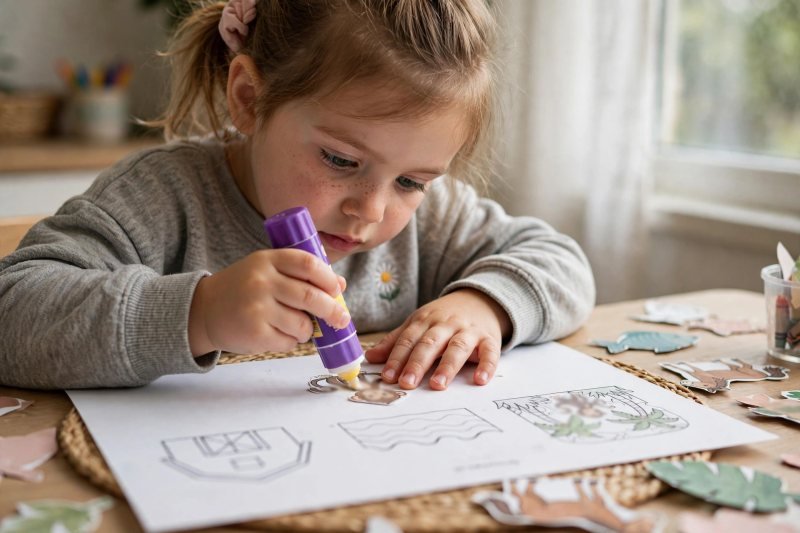
Sorting worksheets for kindergarten turn early math into a mini craft: cut out picture pieces, sort them by color, size, shape, or animal home, and glue each one in place.
Sorting worksheets for kindergarten are printable cut-and-glue pages: your 5- or 6-year-old cuts out picture pieces, sorts them by color, size, shape, or animal home, and glues each piece down. They build classification — the math behind grouping and sets — plus scissor control. One page per sitting, sort before you glue, and read the rule back together.

The short version
- Cut the picture strip, sort the pieces on the table, then glue them down.
- Start with the color page — one obvious rule, an easy first win.
- Sort FIRST, glue last: unsorted pieces wait in a "parking lot" corner.
- One page per sitting; read the rule aloud before and after.
- Age
- Ages 5–6
- Prep
- 5 min
- Play time
- 15 min
- Mess
- Low
- Difficulty
- Easy
- Where
- Indoor
Why kids love this
Scissors and a glue stick make it a craft, not homework. The cutting is the hook, and the sorting sneaks in while hands are busy.
What you'll need
- Printed pages, single-sided, one page per session
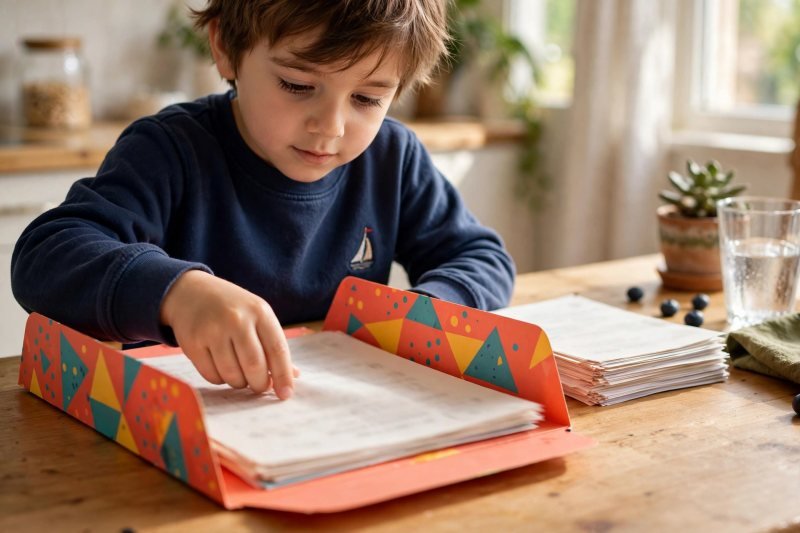
- Blunt-tip scissors, a glue stick, crayons, and a folder for finished pages
Before you start
Print one page the night before — never the whole pack at once. Set out everything before your child sits down. Keep a master copy of each page for reprints.
How to do it
-
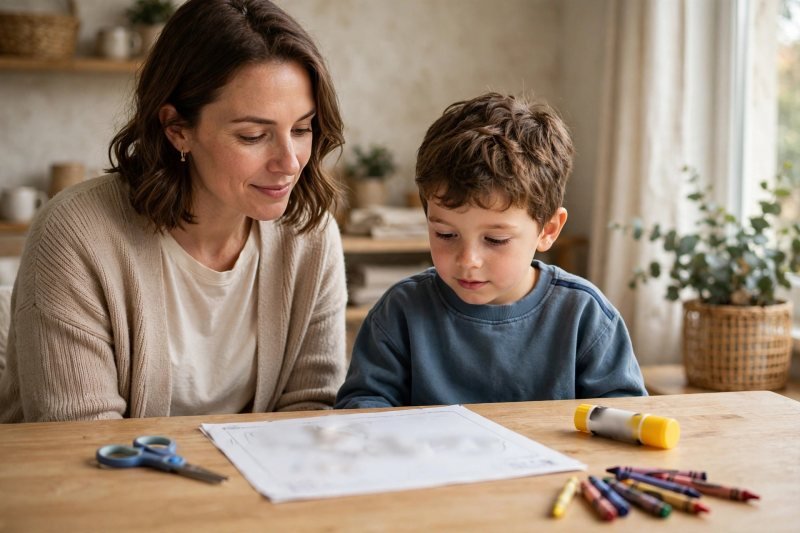
Set up a one-page station.

-
Today's page, scissors, glue stick, folder. Pack out of sight; sit side by side.
-
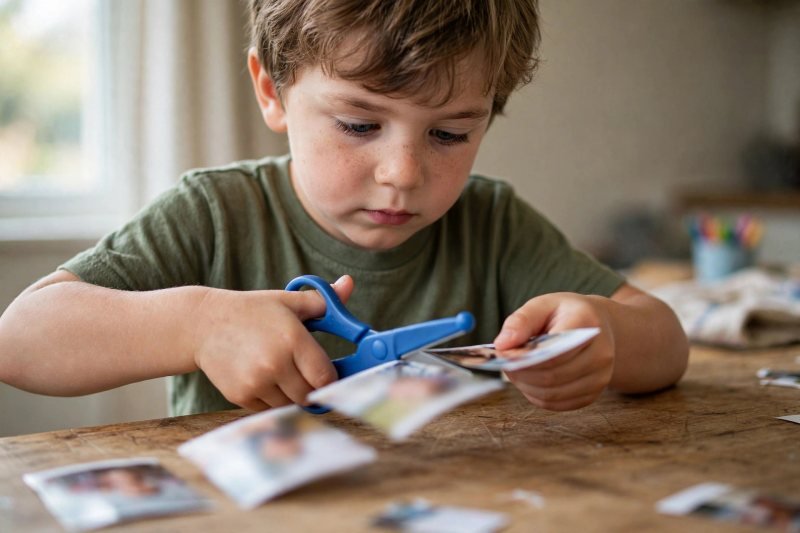
Name every piece together.

-
A child can't sort what they can't name.
-
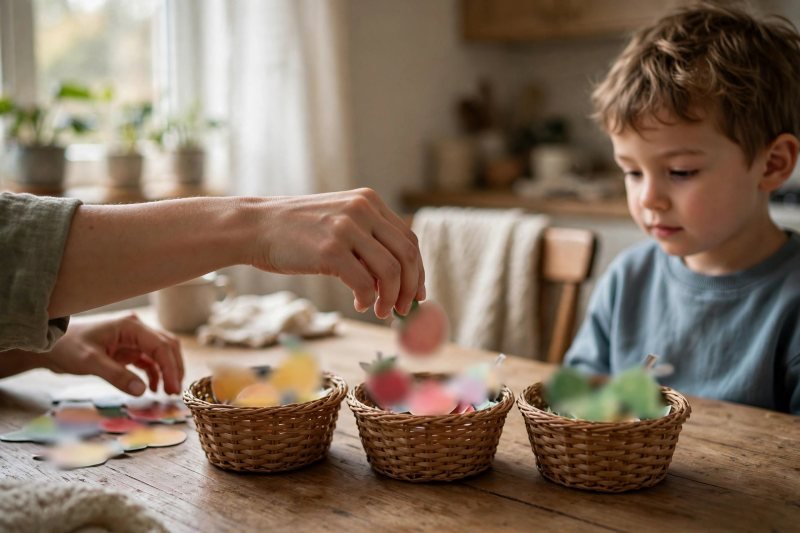
Cut the strip into pieces.
-
Your child cuts each picture free; rough cuts are fine.
-
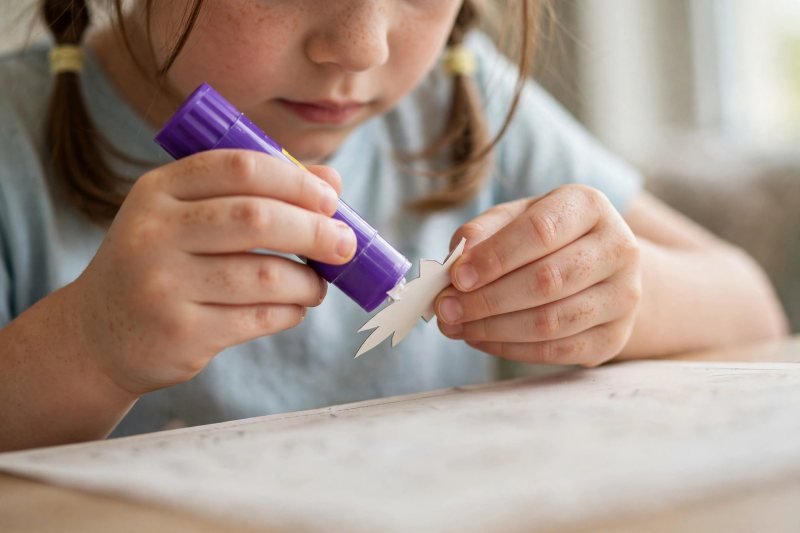
Sort every piece on the table — no glue yet.

-
Unsorted pieces wait in a "parking lot" corner.

-
Model the first page, thinking aloud.
-
"This apple is red — red basket."
-
Glue one piece at a time from the sorted groups.
-
Never glue from the parking lot.
-
Check the page together.
-
"Does everything follow the rule?" Let your child judge.
-
Work pages 2 and 3 with lighter help.
-
Narrate the first row only.
-
Tackle the thinking pages together.
-
"Where does a fish live? What does a kite do?"
-
Finish with the make-your-own page and file it.
-
"Invent a sort — any rule you want."


Print it out
Make it easier
Pre-cut the strips yourself — your child sorts and glues only. Cover one box with a sticky note: a three-way sort becomes a two-way sort.
Make it harder
Add a second attribute on the round-up page: "red AND round things go here." Eyes-only round: sort the whole bank in their head first, then place.
Other ways to play it
- 1. Real-object remix. Sort real things by the same rule — socks by color, toys by size.
- 2. Partner check. You sort (plant two mistakes); your child finds them.
- 3. Symmetry sort. Fold a finished page in half and find the matching halves — symmetry activities for kids turns the same pages into a mirror game.
How it changes by age
- At 5: The routine is the lesson. One page per session, expect wobbly cutting, sit with them for the thinking pages.
- At 6: More speed, more independence. Try the eyes-only challenge, then our pattern worksheets for kindergarten.
What they're learning
- Classification: what makes things "the same" — the math beneath grouping and sets - Attribute vocabulary: color, size, and shape words used in real decisions (shapes activities for preschoolers) - Scissor skills that handwriting needs (fine motor ideas) - Planning before committing: sort first, glue last, then count each group — number recognition activities for preschoolers keeps the counting going.
Clearing up
Two minutes: scraps into recycling, glue stick capped, scissors away, finished page into the folder.
Questions parents ask
Are worksheets good for teaching sorting to kindergartners?
Should I cut the pieces out, or should my child?
My child glues pieces before sorting them. What helps?
How do I check the pages without an answer key?
What is a cut-and-glue sorting worksheet? A worksheet with a job built in. Across the top sit two or three labeled boxes — baskets, toy chests, animal homes. Along the bottom runs a strip of picture pieces to cut out. Your child cuts the pieces free, decides which box each belongs in, glues it down, and checks the rule. Start with page 1, the color page — a five-minute win that teaches the whole routine.
How do I use the pages in one sitting? Five beats, same order every time: name, cut, sort, glue, check. Name each piece first. Cut the pieces out; rough cuts are fine. Then the golden rule: sort every piece before the glue stick opens. Glue one at a time from its group, then check together.
What do I do when my child sorts by the wrong attribute? Interview before you correct. "Tell me your rule" is the most useful sentence here — half the time your child used a different, valid rule. The fruit page's rule is color, but "round things and long things" is real classification too. Honor it, then name the page's rule. Truly random placement means the page is too hard.
What sorting categories are on the 8 pages? 1. Fruit by color — apples, lemons, grapes into red, yellow, purple baskets. 2. Balls by size — big, medium, small balls into three toy boxes. 3. Objects by shape — plate, book, pizza slice into circle, square, triangle boxes. 4. Animals by home — cow, fish, monkey: farm, ocean, jungle. 5. Fly vs. roll — bird, plane, kite in one box; ball, car, wheel in the other. 6. Odd one out — three match, one doesn't. 7. Make your own sort — invent the rule, then glue. 8. Round-up — a mixed bank from pages 1–3.
- Keep every finished page — a month of sorts is the best progress report there is.
- If a page goes badly, stop without comment and retry in a few days.
- When the pack is done, toddler learning activities at home keeps the same cut-and-sort rhythm going with household games.
- Download the 8-page printable pack below and print one page per session.

save it for later
Pin this for the next rainy afternoon
Keep it on a board so it is there when you need it, rather than when you happened to find it.
Save to Pinterest


