


Seasons Activities for Preschool: 10 Hands-On Ideas for Ages 5–6
Ten hands-on seasons activities for preschool ages 5–6: sort the seasons, craft a tree through the year, hunt for seasonal signs, dress for the weather, and watch day length change — real science, no worksheets.
These seasons activities for preschool give ages 5–6 ten hands-on ways to explore the year: take a "what season is it?" walk, sort picture cards into season trays, craft a tree through all four seasons, dress a doll for the weather, hunt for seasonal signs, watch shadows change with the sun, match clues to seasons, and keep a year-long seasons journal.

The short version
- The four seasons run spring, summer, fall, winter in the Northern Hemisphere, repeating in a cycle.
- Sorting and matching games teach classification; the tree craft and journal build fine motor skills and observation.
- Scavenger hunts repeated in different seasons make the year click: same walk, new eyes.
- Shadow watching shows day length changing — the sun's path is higher in summer, lower in winter.
- Seasons flip in the Southern Hemisphere, because Earth's lean points the other way there.
- Age
- Ages 5–6
- Prep
- 15 min
- Play time
- 45 min
- Mess
- Some
- Difficulty
- Easy
- Where
- Both
Why kids love this
Sorting picture cards into four season trays feels like a game, not a lesson. The tree-through-the-seasons craft hangs on the wall all year as their artwork. Scavenger hunts turn an ordinary walk into a detective mission; shadow tracing feels like a magic trick with an explanation.
What you'll need
- 12–16 picture cards with season clues (magazine cutouts or home prints: sun, snowflake, flowers, falling leaves, pumpkin, beach ball — pictures only, no words)
- 4 shallow trays or baskets — one per season, each a different color
- 1 large paper sheet (18×24 in.) with a tree outline in four quarters, plus markers
- Washable tempera paint, glue stick, cotton balls, torn tissue paper in pink, green, orange, white
- A doll or stuffed animal plus clothing to sort: mittens, sun hat, rain boots, swimsuit, scarf, shorts, raincoat, sweater
- 4 "hunt sheets" (drawn symbols: flower, leaf, snowflake, sun), a basket, chalk, a blank notebook and crayons
Before you start
1. Print or cut the cards — four clear picture clues per season, no words, so pre-readers play equally. 2. Set out the four trays, each marked with a drawn season symbol: sun, leaf, snowflake, flower. 3. Draw the big tree, divide it into four pencil-line quarters, and mark each with a small season symbol. 4. Heap the dress-up pile by the doll — the messier the pile, the more fun the sorting. 5. Pick a sunny day for shadow tracing; the rest works in any weather.
How to do it
-
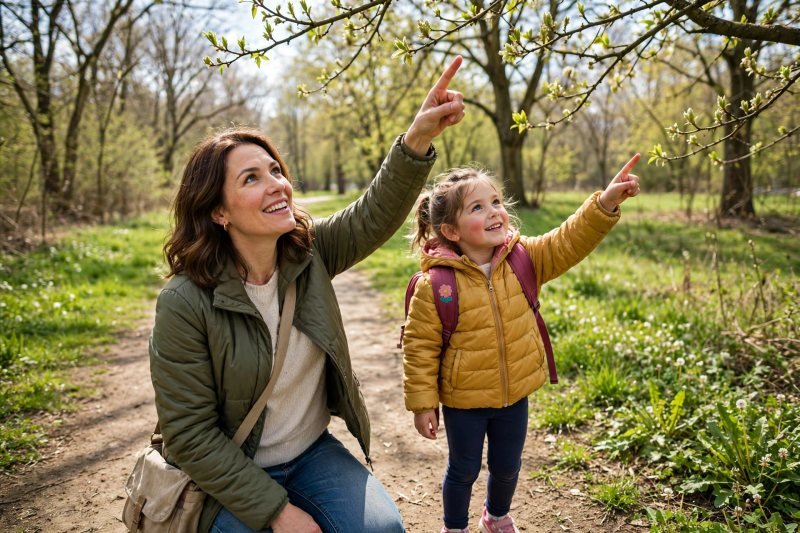
Take a "what season is it?" walk. Hunt for clues: how the air feels, what the trees are doing, what people are wearing. Name the season — everything after this points back to it.
-
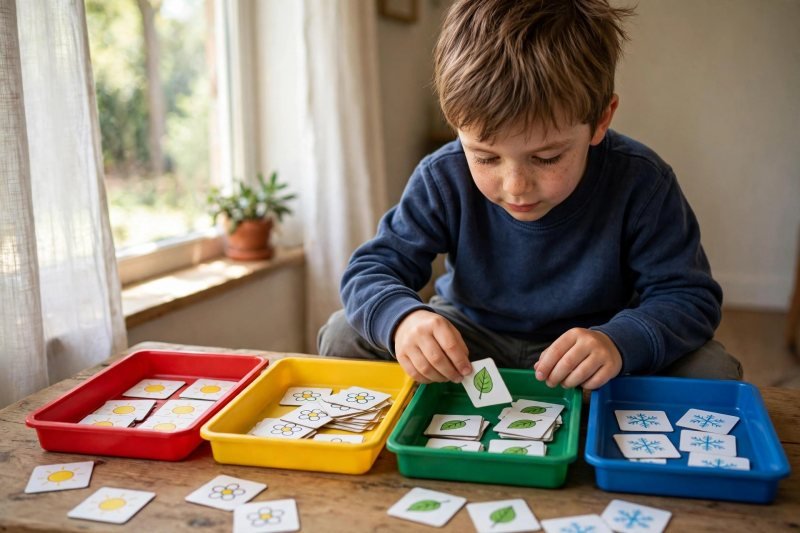
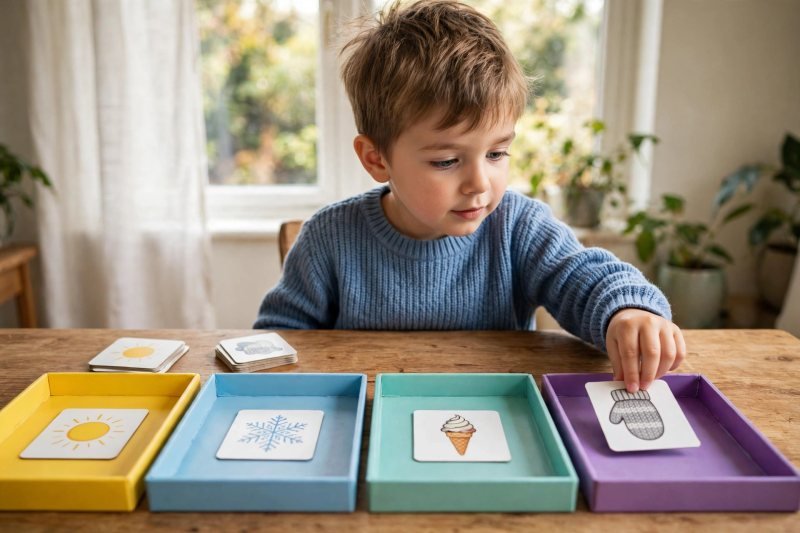
Sort picture cards into four trays. Spread the cards face up; your child names each clue ("snowman!") and drops it in the matching tray. Talk through tricky ones: "pumpkins are fall, right?"
-
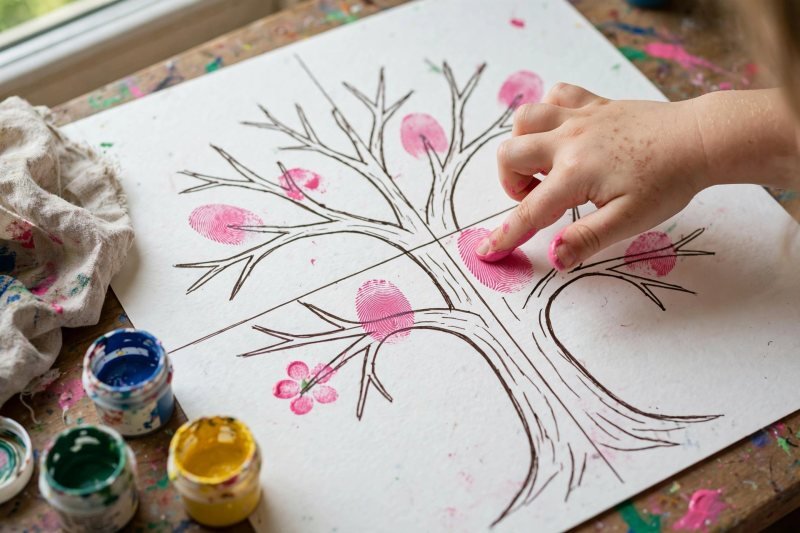
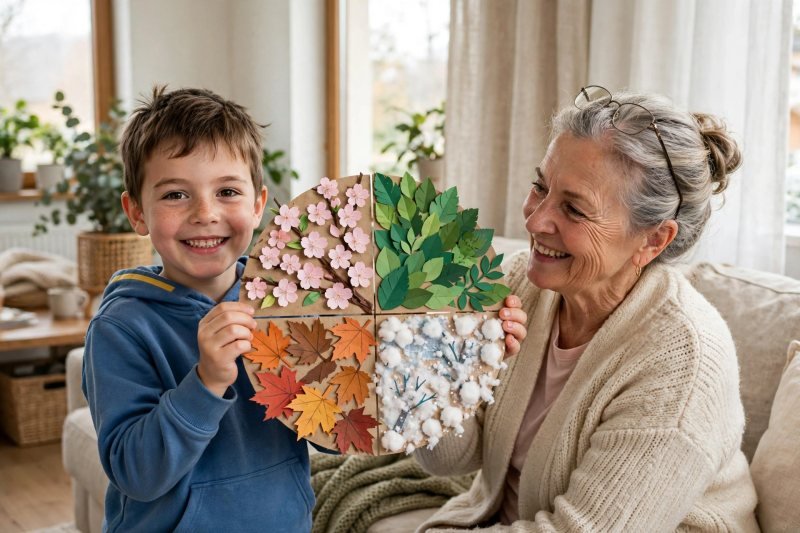
Make the tree-through-the-seasons craft. On the big tree sheet: pink fingerprint blossoms (spring), green tissue leaves (summer), torn orange and yellow leaves (fall), cotton-ball snow (winter). One tree, four seasons, side by side.
-
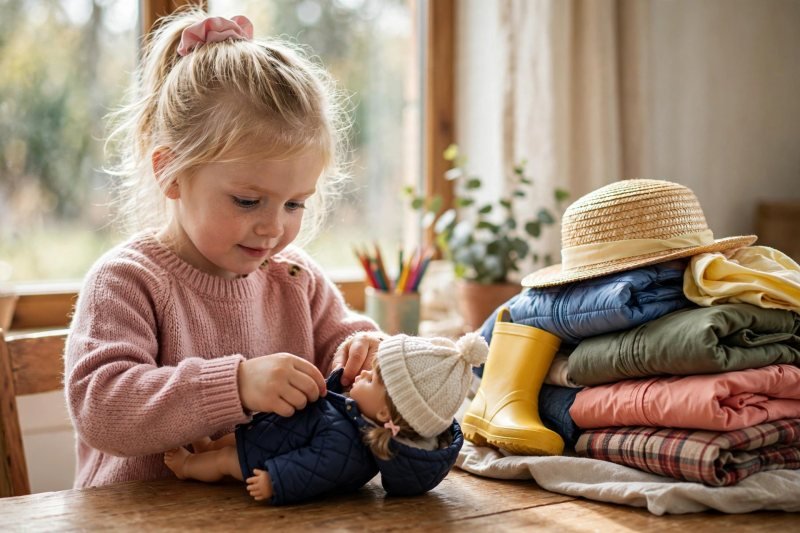
Play dress-for-the-weather. Hold up each item: "Sun hat — which season?" Your child sorts the pile, then dresses the doll four times. Mismatches are the best part — a scarf in summer gets a laugh.
-
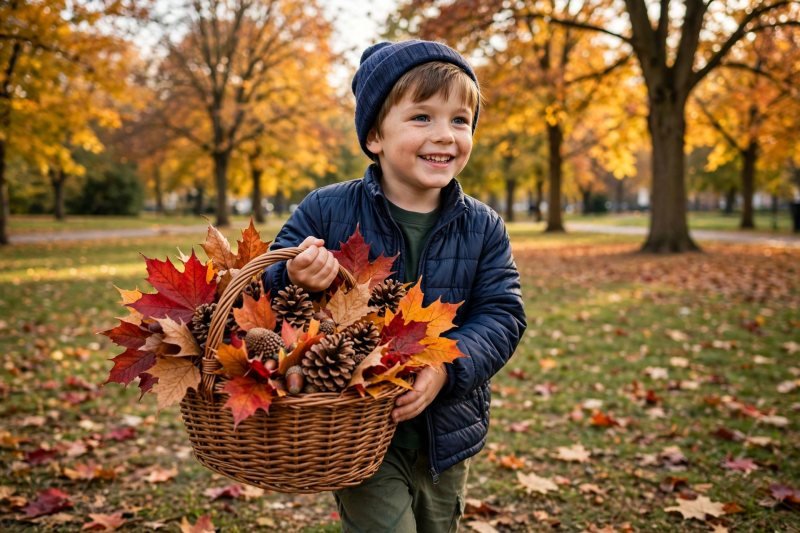
Hunt for signs of the current season. Take the basket and today's hunt sheet outside; find each symbol's real thing — a budding twig, a crunchy leaf, a patch of frost. Keep what you can carry; leave the rest.
-
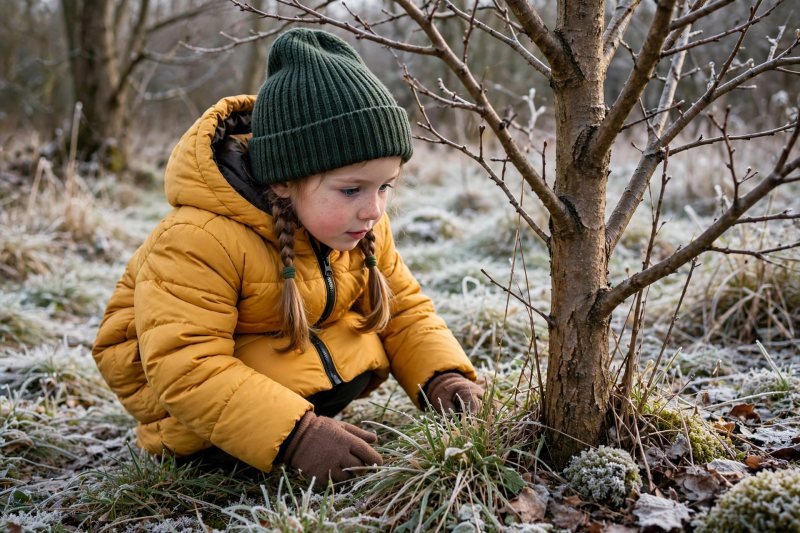
Repeat the hunt next season — same walk, new eyes. The tree that had blossoms now has bare branches: "Remember when this was green?" This is where the year clicks.
-
Watch your shadow change. Trace your child's shadow in chalk morning, midday, and afternoon — long, short, long. The sun climbs high in summer and stays low in winter, so shadows and day length change through the year.

-
Play the seasons matching game. Deal mixed clues — weather, food, animals, clothing — and your child matches each to a tray. "A bear sleeping? Winter. Ice cream melting? Summer."
-
Start a seasons journal. One page per month: draw the same tree as it looks now, marked with a season symbol. By year's end, flipping the pages shows the whole cycle turning.

-
Host a seasons showcase. Hang the tree craft, open the journal, lay out hunt finds. Your child "teaches" the four seasons to a grandparent, a sibling, or stuffed animals — teaching locks the learning in.


Make it easier
For ages 3–4, skip the journal and repeat hunts — the sorting trays, tree craft, dress-up game, and one scavenger hunt are plenty. Pre-sort three cards yourself and leave one obvious card for them, so the game starts with a win. Use a coloring-book tree outline instead of drawing one. In spring, try these spring flower crafts for preschoolers alongside the tree craft.
Make it harder
Before each scavenger hunt, predict: "What will we find this season that we didn't find last season?" Then check — the same predict-and-observe habit used in autumn leaf collection and sorting. Track one tree's changes weekly — a weather station your child helps build makes the daily watching a habit — and look for patterns after a month.
Other ways to play it
- Sorting swap: sort real objects instead of cards — pinecones, shells, acorns, mittens.
- Tree craft for mixed ages: little ones do the fingerprint blossoms and cotton snow; older ones tear the tissue leaves and draw branch details. More fall art lives in these art activities for autumn.
- Scavenger upgrade: hunt with the senses — find something each season you can hear, smell, and touch (more ideas in this five senses scavenger hunt).
What they're learning
Early earth science: the year has four seasons in the Northern Hemisphere — each with its own weather, plants, animals, and clothing — repeating in a cycle. Sorting and matching build classification skills; the tree craft and journal build fine motor control and the habit of comparing then and now. Vocabulary: season, spring, summer, fall, winter, tilt, daylight, shadow, cycle, compare.
Clearing up
The tree craft hangs on the wall as the year's reference chart — keep it up. Hunt finds that keep (pinecones, pressed leaves) live in the season trays; the rest goes back outside. The journal lives on a low shelf for flipping back through the months. One honest note: seasons flip in the Southern Hemisphere — summer here means winter in Australia — because the Earth's lean points the other way down there.
Questions parents ask
What are fun seasons activities for preschoolers?
How do you teach seasons to preschoolers?
What is a good craft to teach the four seasons?
How do you explain seasons to a 5-year-old?
Why do we have seasons?
Are the seasons the same everywhere in the world?
If you start mid-year, begin with the current season and work forward — the cycle teaches itself wherever you start. Photograph the same tree each month for an end-of-year flip-through alongside the journal. A bird feeder craft for preschoolers gives the monthly walk a second reason to stop at the tree. The four trays double as card storage, so cleanup is one step. Why do we have seasons? The short, honest answer for this age: the Earth leans a little as it travels around the sun. Because of that lean, our part of the world tips toward the sun in summer — longer days, warmer weather — and away in winter — shorter days, colder weather. Spring and fall are the in-between tilts. Good science words: season, tilt, daylight, shadow, cycle, compare.

save it for later
Pin this for the next rainy afternoon
Keep it on a board so it is there when you need it, rather than when you happened to find it.
Save to Pinterest

