


Eczema Care for Toddlers: Home Treatment Tips That Work
Good eczema treatment toddler care at home is mostly rhythm: a short lukewarm bath, a gentle fragrance-free cleanser, patting dry, and moisturizing within about 3 minutes to soak and seal. Here is the full daily routine, step by step.
For toddler eczema care at home: give a short lukewarm bath, use a gentle fragrance-free cleanser only where needed, pat dry leaving skin slightly damp, then moisturize generously within about 3 minutes with a fragrance-free cream or ointment — the soak-and-seal step. Dress in soft cotton, keep nails short, reduce triggers like fragrance, heat, and wool, and see a doctor for infection signs or no improvement.

The short version
- Soak and seal: short lukewarm bath, pat dry, moisturize within about 3 minutes while skin is still damp.
- Use a fragrance-free cream or ointment — thicker seals better than thin lotion on very dry skin.
- Cleanser only where needed; no bubble bath, no scrubbing, no scented products.
- Soft cotton clothing and pajamas; avoid wool, scratchy seams, and overheating.
- Keep nails short and smooth to reduce scratch damage, especially during sleep.
- See a doctor promptly for oozing, yellow crusts, spreading rash, cracked or bleeding skin, or no improvement with gentle care.
- Age
- Ages 2–3
- Prep
- 5 min
- Play time
- 10 min
- Mess
- Low
- Difficulty
- Easy
- Where
- Indoor
Why kids love this
Toddlers love this routine because it never feels medical. The bath is short and splashy, the cream is a smooth, slippery game of "painting" arms and legs, the clothes are the soft ones, and the whole thing ends the same cozy way every night. Skin care that feels like cuddle time gets cooperation that no lecture ever will.
What you'll need
- A gentle, fragrance-free cleanser made for sensitive skin
- A fragrance-free cream or ointment (thicker than a lotion) in a tub or tube
- A soft towel for patting, never rubbing
- Soft, smooth cotton clothing and cotton pajamas
- Toddler nail clippers or a soft nail file
- A plain notebook for tracking skin days and possible triggers
- Lukewarm bath water and a few simple bath toys
Before you start
1. Set the cream tub, towel, and cotton clothes beside the bath before the water runs — the moisturizer step happens fast, on damp skin. 2. Run the bath lukewarm, not warm-hot; test with your inner wrist. 3. Keep the routine at the same time each day, usually the evening bath, so it becomes an unremarkable habit. 4. Remind yourself of the order: soak, cleanse gently, pat, seal within about 3 minutes, dress soft.
How to do it
-
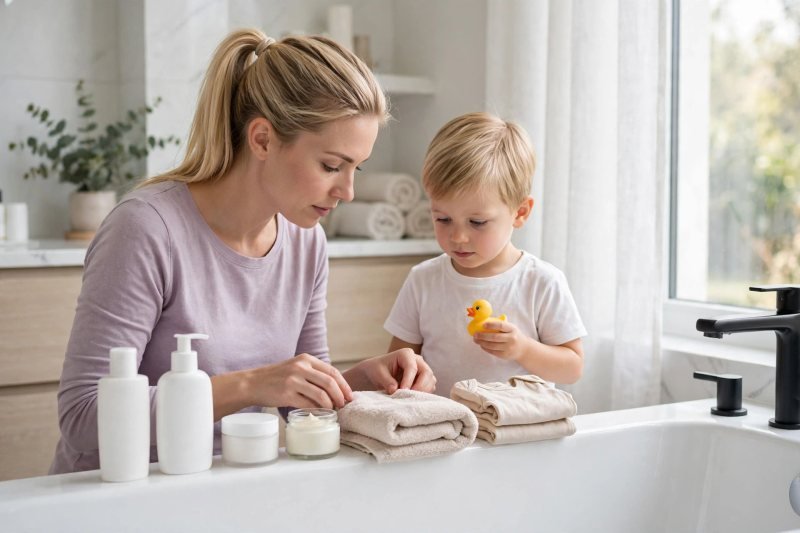
Gather everything before the bath starts. Lay the cleanser, cream tub, towel, and cotton clothes within arm's reach of the tub and say: "Bath things ready — first we soak, then we paint on the cream." The whole routine depends on speed later — moisturizer must land on damp skin within minutes — so a parent who has set up in advance never has to leave a wet toddler or hunt for the cream with slippery hands, and this calm setup hands straight into the soak.
-
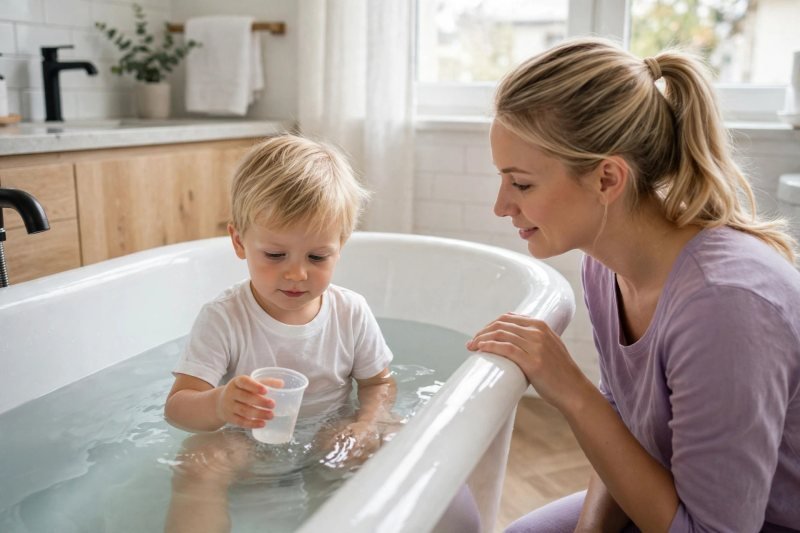
Keep the bath short and lukewarm. Settle your toddler into lukewarm water for a short soak — long enough to hydrate the skin and play a little, short enough that the water never turns into a long, hot stew — and say: "Warm like a puddle in the sun, nice and quick." Lukewarm, brief baths are the foundation of eczema-friendly care: hot water and long soaks strip the skin's natural oils and leave it drier than before, while a short soak loads the skin with the water the next steps will seal in.
-
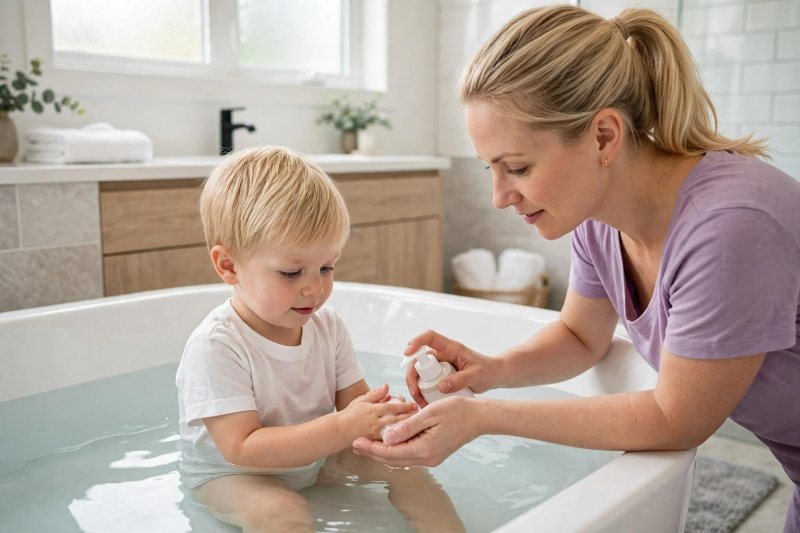
Cleanse gently, and only where needed. Use a small amount of gentle, fragrance-free cleanser only on the places that actually need washing — hands, diaper area, grubby folds — and plain water everywhere else, saying: "Just the dirty spots get the soap today." Skip bubble bath, skip scrubbing, skip washcloth friction on dry patches; most of a toddler's skin needs only the soak, and every unnecessary product is one more chance to irritate — which is why the gentlest wash hands directly into a careful rinse and lift.
-
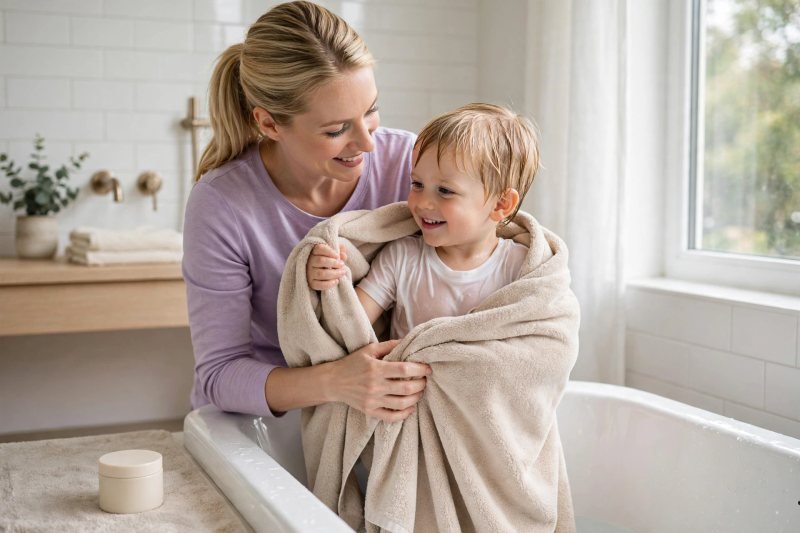
Rinse and lift straight onto the towel. Pour clean lukewarm water over the skin to rinse, lift your toddler out, and wrap them in the soft towel on your lap or the bath mat, saying: "Out we come — now we pat, pat, pat." Speed matters here, pleasantly: the clock on the seal step starts now, so skip the long post-bath play on bath nights and treat the next three minutes as the main event the whole bath was preparing for.
-
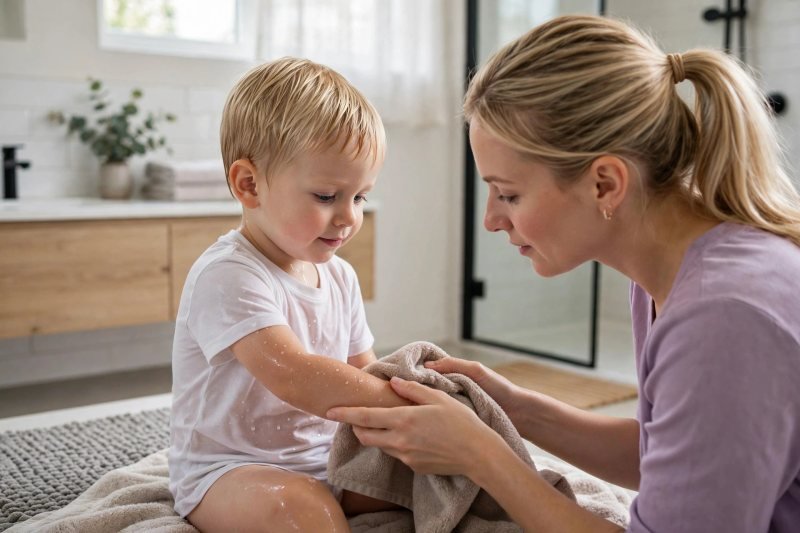
Pat dry, leaving the skin slightly damp. Pat gently all over with the soft towel — pressing and lifting, never rubbing — and deliberately stop while the skin is still slightly damp, saying: "We leave a little water on, because the cream is going to lock it in." Rubbing frays sensitive skin and full drying wastes the soak; damp skin is the whole point of the soak-and-seal method used in widely shared pediatric guidance, and it sets up the most important step of the routine.
-
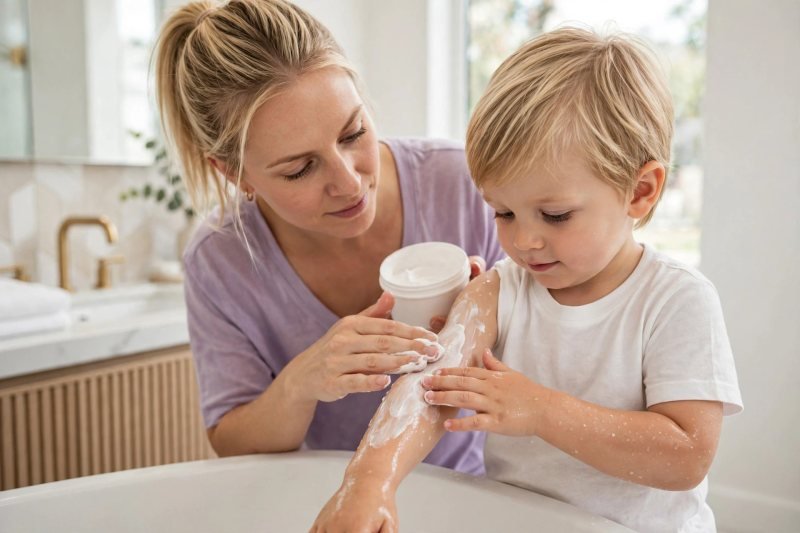
Moisturize within about 3 minutes — soak and seal. Scoop the fragrance-free cream or ointment and smooth it generously over the whole body, working in the direction the hair grows, while your toddler "helps" paint their own arms, saying: "Cream on the wet skin locks the water in — that's the seal." Be generous: skin should look covered and feel soft, and thicker creams and ointments seal better than thin lotions for very dry skin. This three-minute window is the step parents most often miss and the one that makes the biggest everyday difference, which is why the dressing step follows immediately, while the seal is fresh.
-
Dress in soft cotton, head to toe. Pull on soft, smooth cotton clothing — and cotton pajamas at night — over the moisturized skin, saying: "Soft clothes on, so the cream can do its job." Cotton is breathable, smooth against patches, and easy to wash; keep wool and scratchy, seamed, or heavily fragranced clothing off irritated skin, and avoid overdressing, because heat and sweating are reliable itch triggers. A comfortably dressed toddler scratches less through the evening, which carries the routine into its small protective jobs.

-
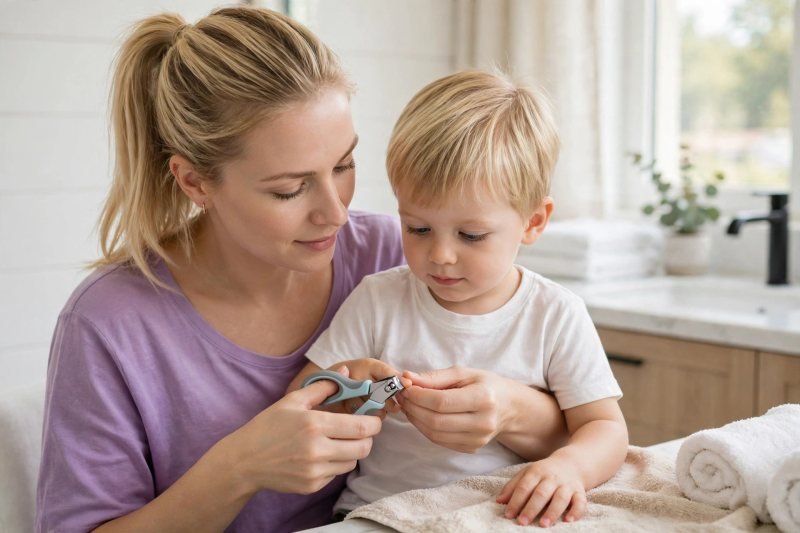
Trim nails short and smooth. While nails are soft from the bath, trim them short and file any sharp edges smooth, saying: "Tiny trim, so your nails can't scratch your skin in your sleep." Toddlers scratch eczema without meaning to, especially asleep, and short, smooth nails dramatically reduce the damage a night of scratching can do — torn skin is where infections start. Make it a calm, regular part of bath night, like the tidy nail care in this toddler first haircut guide approach to grooming, and the habit protects every other step.
-
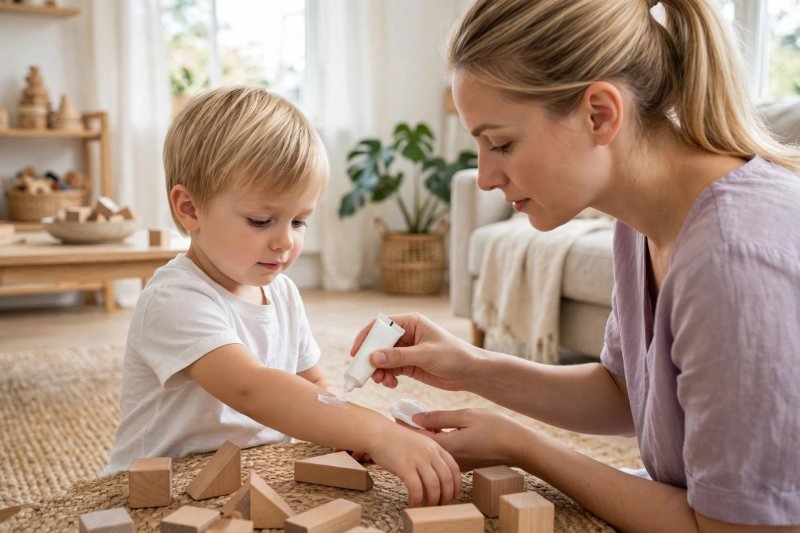
Reduce triggers through the day. Build the quiet background habits — wash new clothes before wearing; use fragrance-free laundry products; keep rooms comfortably cool rather than hot; dress in layers you can peel when your toddler heats up at play — and reapply moisturizer to dry patches during the day when you notice them, saying: "A little more cream for that dry spot." Trigger reduction is unglamorous and powerful: fragrance, harsh soaps, heat and sweating, and wool are the everyday culprits for many children, and the fewer flares you trigger, the less rescue care anyone needs — a rhythm the whole family already knows from this simple kids skincare routine.
-
Close the day with a skin check and a note. At pajama time, do one last moisturizer pass on dry areas, look the skin over calmly, and jot two lines in your notebook — how the skin looked today; anything new (food, fabric, heat, illness) — saying: "Cream, check, sleep — all done." Tracking turns guesswork into patterns you and your pediatrician can actually use, and it keeps the see-a-doctor signs (next sections) easy to judge: a patch that is spreading, oozing, or not improving stands out clearly against your own written record of ordinary days.



Make it easier
Put the cream tub where the bath ends, not in a cabinet — if you have to fetch it, the 3-minute window closes. Let your toddler choose which arm gets "painted" first; a tiny choice buys a lot of stillness. On non-bath days, do a mini version: dampen dry patches with a warm wet washcloth, then moisturize — soak and seal in miniature.
Make it harder
Teach your toddler to smooth cream onto their own arms and legs while you cover the back and tricky spots. Let them keep the skin notebook with you: a sticker on calm-skin days builds a record they are proud of. Practice the words dry, itchy, cream, and soft at pajama time, so your toddler can report their skin instead of just scratching it.
Other ways to play it
- Very dry or winter skin: switch from cream to a thicker ointment for the seal step, moisturize twice a day, and keep indoor air from getting very dry where you can.
- Summer and sweaty days: keep baths especially short and lukewarm, rinse sweat off with plain water after hot play, moisturize lightly but often, and favor loose cotton.
- Ask your doctor about wet-wrap therapy: some doctors suggest wrapping moisturized skin in damp, soft layers for short periods during flares — this is a doctor-guided technique, so raise it at your visit rather than improvising it at home.
How it changes by age
- Ages 2–3: parents run every step; toddlers help by holding the cream tub, "painting" easy spots, and choosing cotton clothes. Keep the bath short, the tone playful, and the order identical every night — predictability is what makes daily eczema care sustainable for the whole family. For more repeatable ideas at this age, see activities for 2-year-olds at home.
- If your child has prescribed creams: use them exactly as your child's doctor directed — timing, amount, and where they go — and ask your doctor how they fit around the moisturizer step. Never start, stop, borrow, or substitute medicated creams on your own, and never apply someone else's prescription to your child.
- SEE A DOCTOR promptly if you notice: oozing, yellow crusts, blisters, or other signs of infection; a rash that is spreading; cracked or bleeding skin; swelling or pain; itching that regularly disrupts sleep; or skin that does not improve with consistent gentle care. Home care supports eczema management — it does not replace medical care for flares that are worsening or infected.
What they're learning
Routine and sequencing: soak, pat, seal, dress — a four-beat sequence repeated nightly until it is automatic; the same predictability underpins toddler learning activities at home. Body communication: naming dry and itchy spots helps toddlers ask for cream instead of scratching in silence. Gentle self-care: applying cream to their own arms is real independence practice with immediate, soothing feedback. Patience: a calm nightly routine that always ends the same way builds the security that helps itchy kids settle to sleep, as part of a steady bedtime wind-down.
Clearing up
Cap the cream tub and put it back at its bath-side station, hang the patting towel to dry, and toss the day's cotton clothes into the laundry. Wipe any cream smears off the tub edge so the next bath is not slippery, put the nail clippers back in their spot for next bath night, and add your two notebook lines while the day is fresh. The tidy takes two minutes and keeps tomorrow's soak-and-seal effortless.
Questions parents ask
What is the soak and seal method for toddler eczema?
How often should you moisturize a toddler with eczema?
What should you avoid putting on toddler eczema?
Do toddlers with eczema need a bath every day?
When should a toddler with eczema see a doctor?

save it for later
Pin this for the next rainy afternoon
Keep it on a board so it is there when you need it, rather than when you happened to find it.
Save to Pinterest


