


A Pouring Station
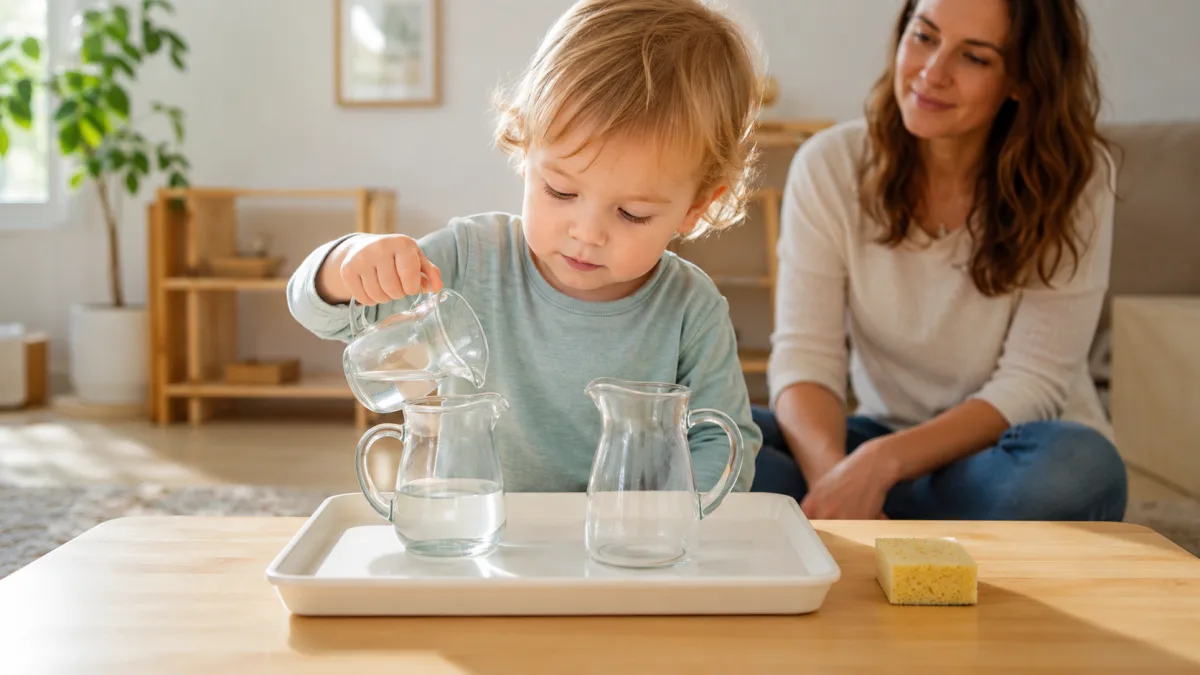
Two small jugs, a tray, and water. Absorbing, genuinely useful, and a child can do it entirely alone.
Set up two small jugs and a tray so a child can practise pouring water between them. Suits ages 2 to 5, takes two minutes to set up, and builds control a child can practise independently.
The short version
- A third full, never to the brim.
- Demonstrate once, slowly, without talking.
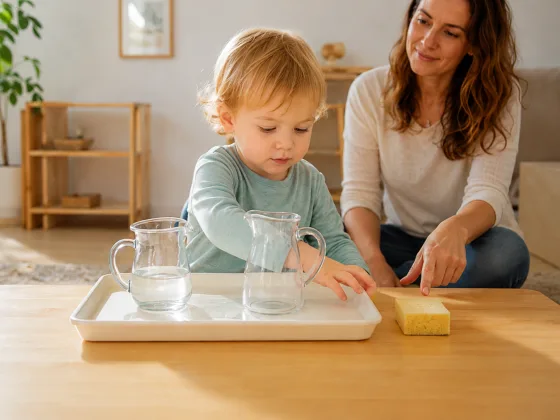
- Point at the sponge rather than mopping it up yourself.
- Age
- Ages 2–5
- Prep
- 2 min
- Play time
- 15 min
- Mess
- Medium
- Difficulty
- Easy
- Where
- Indoor
Why kids love this
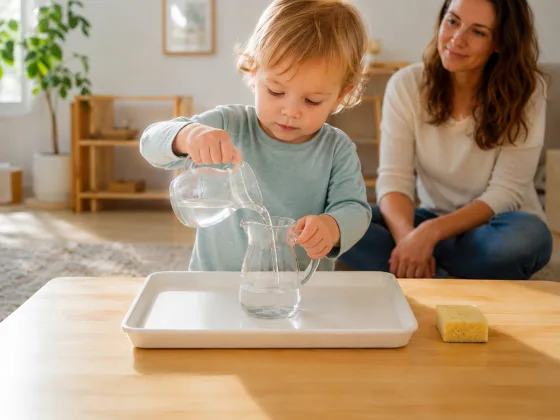
It is a real job with an obvious right answer — the water is either in the jug or on the tray — and no adult is needed to say whether it went well. Children repeat this far longer than seems reasonable. Ten or fifteen minutes of solid concentration from a three-year-old is common.
What you'll need
- Two small jugs, or a small jug and a cup — glass or ceramic if you dare, plastic if not
- A tray with a rim
- A small sponge or cloth
- Water
- Optional: a few drops of food colouring so the level is easy to see
Before you start
Fill the first jug about a third full. This is the whole trick: a jug filled to the brim guarantees a spill and a discouraged child, and one filled a third of the way lets them succeed and then do it again. Set everything on the tray, with the sponge beside it.
How to do it
-
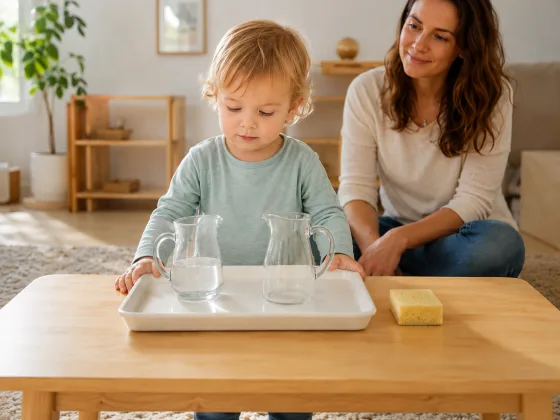
Put the tray on a low table where they can stand or sit comfortably.
-
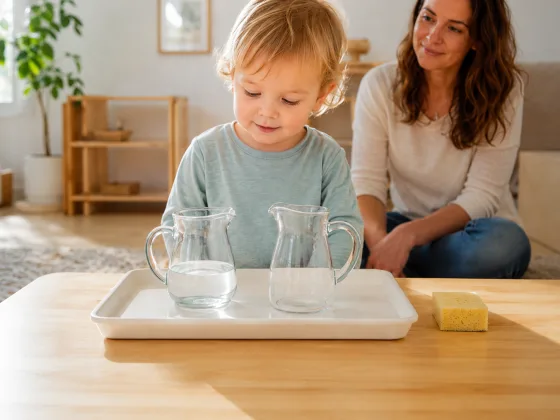
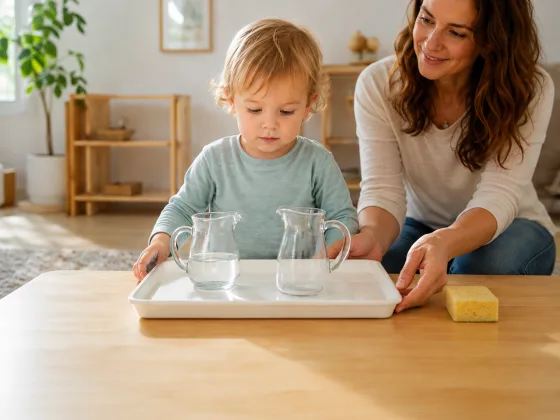
Fill one jug about a third full and set both jugs on the tray.
-
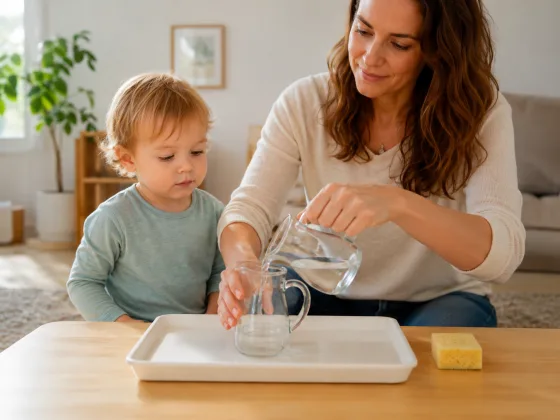
Sit down and do it once yourself, slowly, without talking.
-
Slide the tray towards them and say nothing.
-
Let them pour back and forth as many times as they like.
-
When water goes on the tray — and it will — point at the sponge rather than mopping it yourself.
-
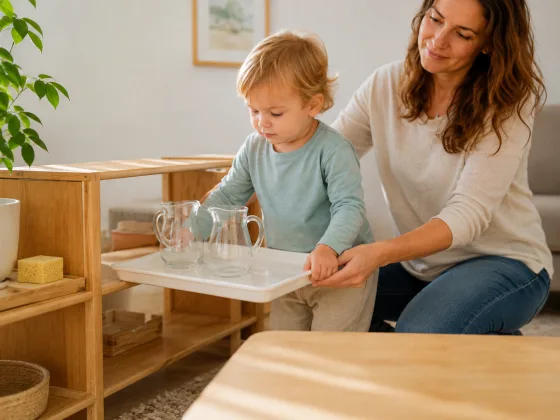
When they lose interest, tip the water away together and put it back on the shelf.
Make it easier
A wider receiving container and less water. A bowl is far more forgiving than a jug.
Make it harder
A narrow-necked bottle, a funnel, or a line to fill to exactly. Or ask them to share the water equally between three cups.
Other ways to play it
- Add a funnel and a narrow bottle.
- Use a small teapot instead, which is much harder and very appealing.
- Swap water for dry rice or lentils for a version with no wet mess.
- Add a measuring line on the receiving jug to pour up to.
- Pour into several cups so each gets the same amount.
How it changes by age
- Two: a wide bowl, very little water, and expect most of it on the tray.
- Three to four: two jugs, back and forth, with real concentration.
- Five and up: bottles, funnels, and pouring to a measured line.
What they're learning
Pouring needs a steady two-handed grip, a controlled tilt and eyes on the target — the same combination that later makes a lot of practical tasks possible. The self-correcting part matters as much: the child can see whether it worked without being told, which is what makes it something they will repeat.
Clearing up
Tip the water away, dry the tray, put it back on a shelf at their height. Left out ready, it gets used again the next day without anybody suggesting it.