


Less Screen Time, Without the Argument
What actually works is not willpower. It is having something else already out on the table, and the tablet not in the room.
Practical ways to reduce screen time: put something else out before you ask them to stop, keep the device out of sight, warn before the end, and make the alternative easy to start. No guilt and no claims about screens.
The short version
- Put the next thing out before you ask them to stop.
- Keep the device out of the room rather than out of bounds.
- Warn in things they can see — two songs, one episode — not in minutes.
- Three reliable activities beat twenty they might like.
- Age
- Ages 2–8
The hardest moment is not the screen. It is the stopping.
A child asked to turn something off with nothing to move on to will object, and reasonably so. You would too. So the single most useful change is to stop asking them to stop, and start giving them something to move to.
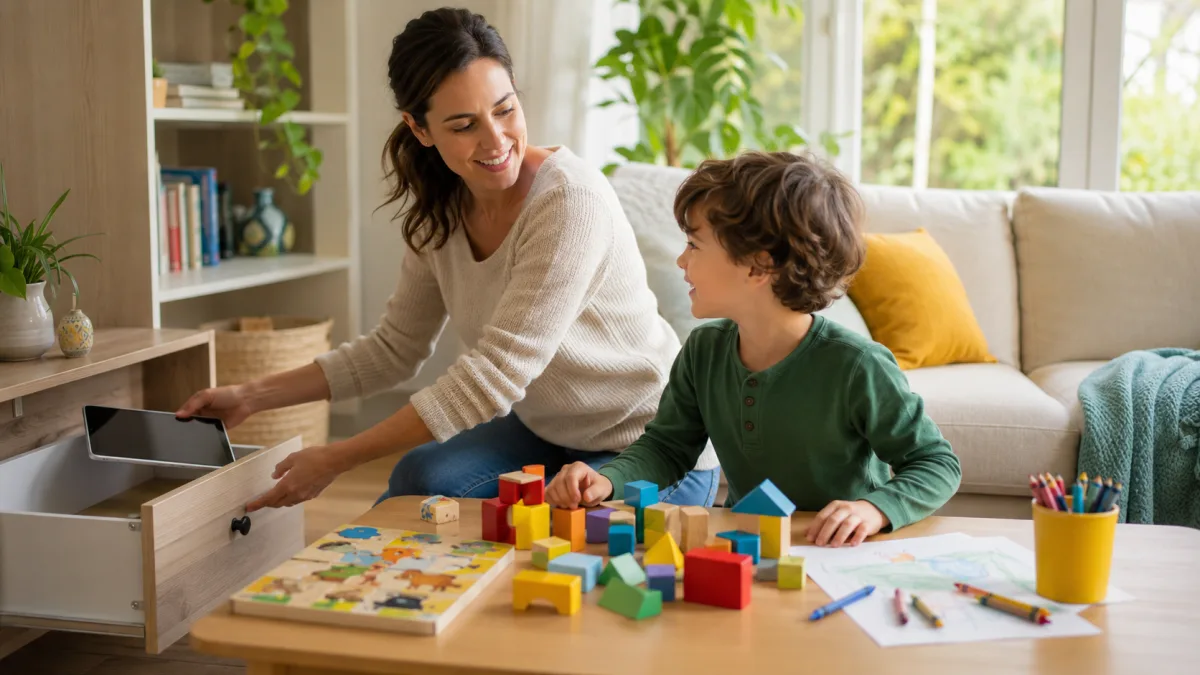
In practice that means putting the next thing out before you say anything. A tray on the table, a box of Lego on the floor, a bowl of water in the sink. Then: "when this finishes, that is out for you." It works far more often than a countdown does, because it is an offer rather than a removal.
The second change is where the device lives. A tablet on the sofa gets asked for; a tablet in a drawer in another room mostly does not. This is not about hiding it — most children over four know exactly where it is — but about removing the constant small reminder.
Warn before the end, and warn in terms they can see. "Two more songs" or "until this episode finishes" works better than "five minutes", which means nothing at four. Then hold the line you set, because a warning that moves is not a warning.
Expect it to go badly sometimes anyway. A tired child at the end of a long day will melt down about the television regardless of how well you handled it, and that is not a sign the approach is wrong.
One thing this site will not do is tell you screens are ruining your child. There is a great deal of noise about that and very little of it is useful to somebody trying to get through a wet Tuesday. What we can help with is having a good alternative ready, which is a smaller and much more achievable goal.
If you want a starting point: pick three activities your child reliably enjoys, keep the materials for them somewhere you can reach in ten seconds, and use those three over and over. Reliability beats variety.