


Teaching a Child to Play Alone
It is built, not waited for. Stay in the room, say less, and leave for two minutes before you leave for twenty.
A step-by-step way to build independent play: same time each day, an activity they can already do, an adult present but not involved, then brief absences that gradually lengthen.
The short version
- Start with something familiar, not something new.
- Be present but say much less — praise interrupts too.
- Leave for two minutes before you leave for twenty.
- Come back before they need you to.
- The room matters more than the technique.
- Age
- Ages 2–7
Independent play is a skill. Some children arrive with more of it than others, but all of them get better at it with practice — and the practice has a shape.
Start with something they can already do. A new or difficult activity needs you, and needing you is the thing you are trying to reduce. Pick something familiar and slightly dull.
Same time each day. After breakfast and after lunch are the two that work in most houses. Predictability does a great deal of the work here.
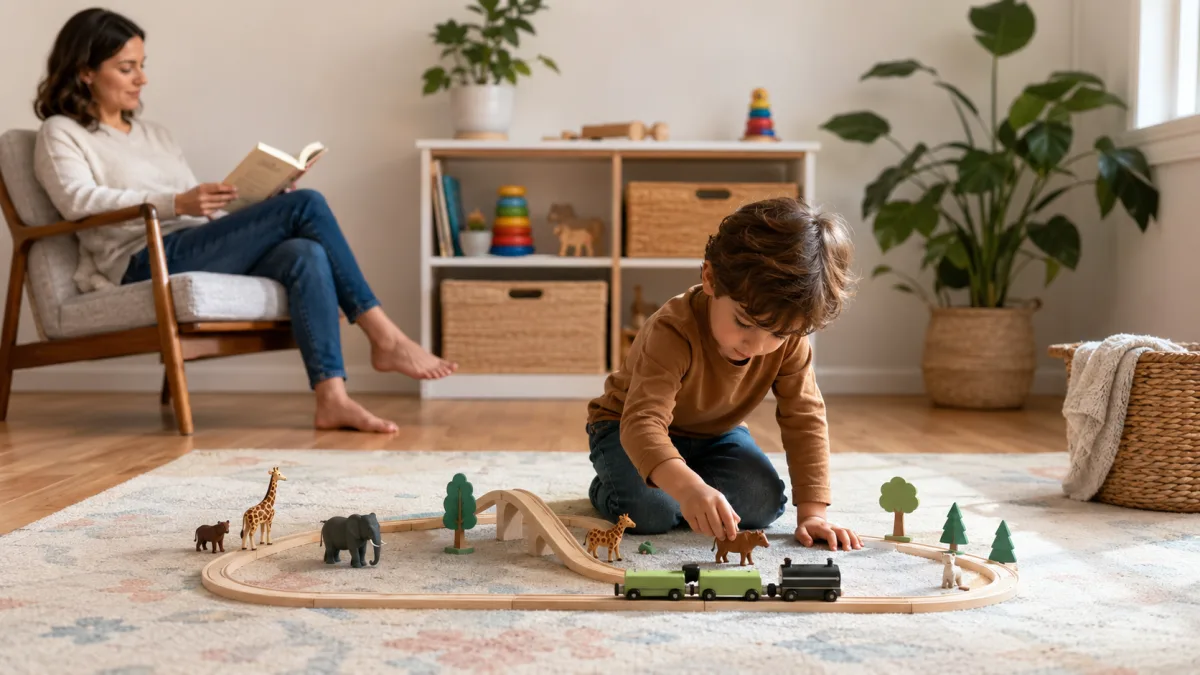
Be in the room, but not in the play. Sit down, do something boring, and — this is the hard part — say much less than you want to. Every comment, however encouraging, pulls their attention back to you. Praise interrupts as effectively as criticism.
When they are settled, leave for two minutes. Say you are going, say you are coming back, and come back before they need you to. Coming back early is what builds the confidence to let you go for longer.
Then four minutes. Then ten. The progression is the method; the length is just where you have got to.
Expect it to go backwards. Illness, tiredness, a new baby, a change at nursery — any of these will cost you a fortnight of progress, and none of them mean it has stopped working. Go back a step and rebuild.
What actually makes the biggest difference is not any of the above, though. It is the room: fewer things out, at their height, easy to start without help. A child who has to ask you to open something is not playing independently, however long you have been building up to it.
And be realistic about the numbers. Ten minutes is a genuine achievement at three. Half an hour at six is normal. Anyone promising you two hours is selling something.