


A Quiet Box for the Difficult Hour
One box, five or six calm things, brought out only when everything is falling apart. It works because it is rare.
Put together a box of quiet activities kept aside for the hardest part of the day. Suits ages 2 to 7, takes fifteen minutes to assemble once, and works because it is only brought out occasionally.
The short version
- It works because it is rare. Do not leave it out.
- Put it away before they are finished with it.
- Nothing in it should need you.
- Age
- Ages 2–7
- Prep
- 15 min
- Play time
- 30 min
- Mess
- Low
- Difficulty
- Easy
- Where
- Indoor
Why kids love this
Because it is not always there. The same sticker book that is ignored on a shelf becomes interesting when it appears once a week from a box that lives on top of a cupboard. It also arrives at the exact moment a child has run out of ideas, which is when a new thing is most welcome.
What you'll need
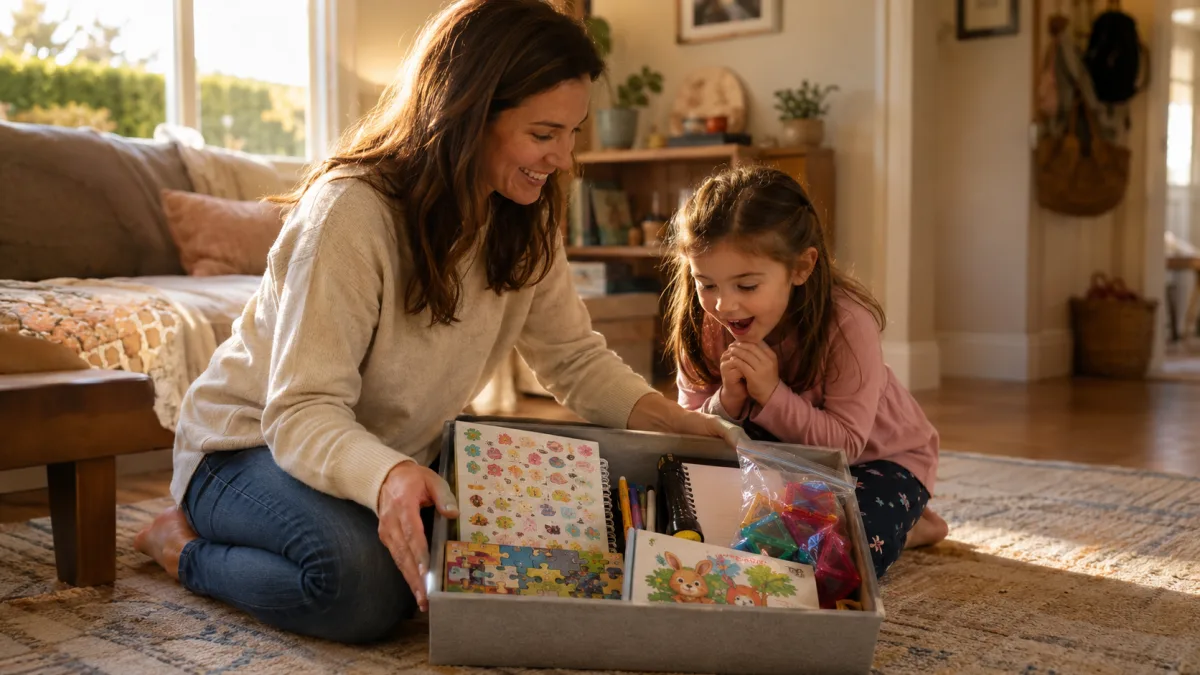
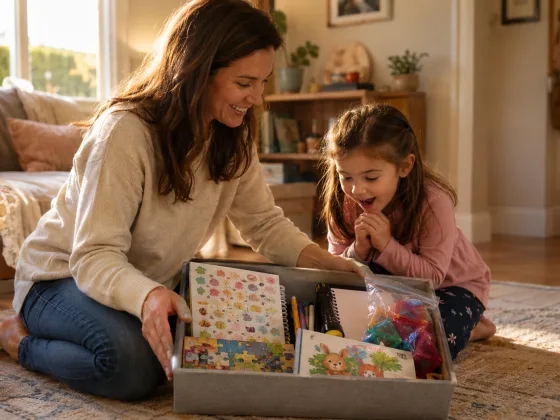
- A lidded box or a large tin
- A sticker book
- A small jigsaw or two
- A notepad and a few pens kept only for this
- A torch
- A small bag of building pieces or magnetic tiles
- A picture book they have not seen for a while
- Optional: an audio story
Before you start
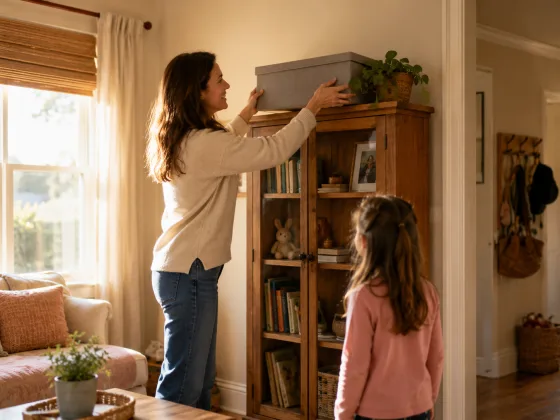
Assemble it once, out of sight, and put it somewhere they cannot reach or see. The whole method depends on it being unavailable the rest of the time. Refresh it every month or so by swapping two things out for two things that have been out of circulation.
How to do it
-
Choose five or six quiet things and put them in the box. Nothing noisy, nothing that needs you, nothing with small pieces that will scatter.
-
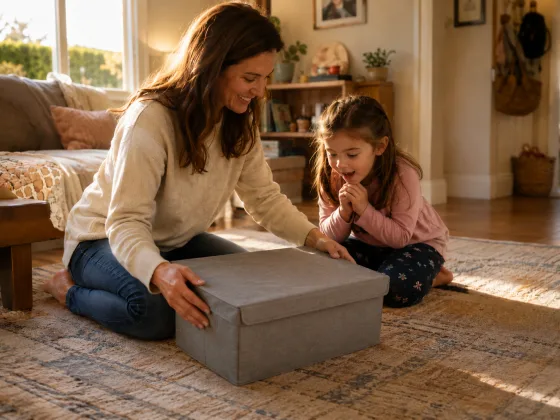
Put the lid on and put it out of sight and out of reach.
-
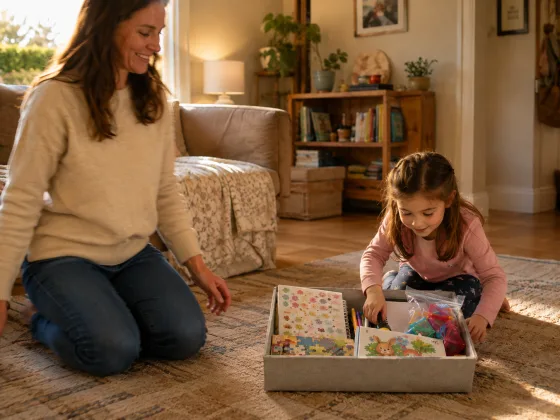
Do not mention it. It is not a reward and it is not a threat.
-
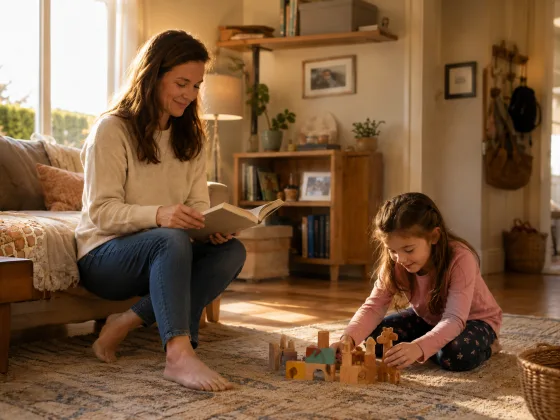
When the hard hour arrives — usually somewhere between three and five — bring it out without ceremony.
-
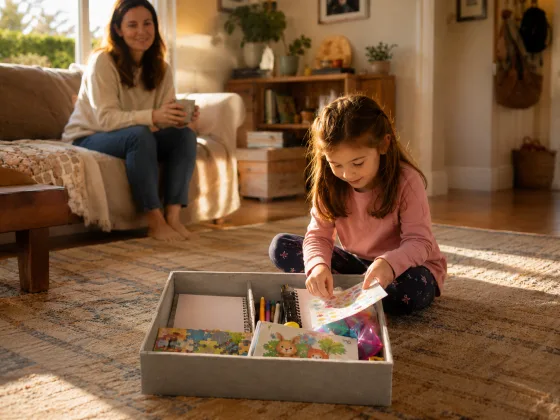
Put it on the floor or the table and walk away. No instructions.
-
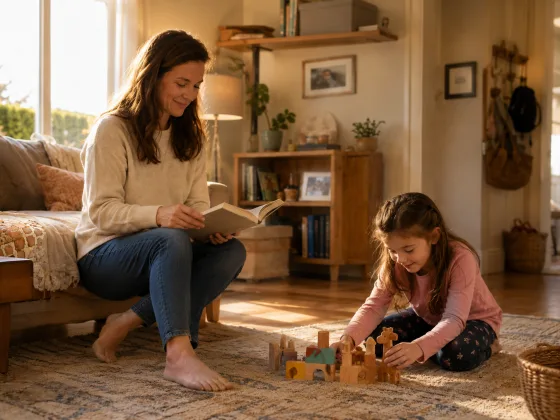
Let them use it for as long as it holds.
-
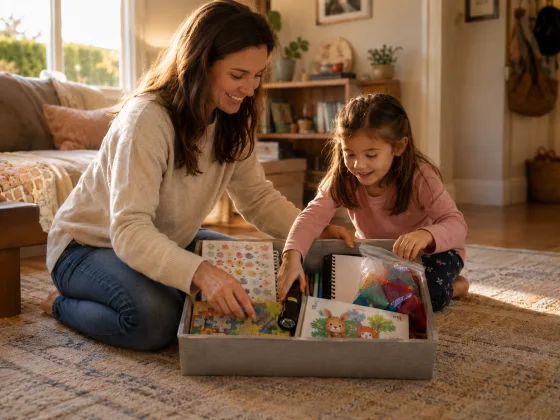
Put it away, complete, before they have quite finished with it.
-
Swap two items for two different ones every few weeks.
Make it easier
Fewer things, and only things they can start alone. Anything needing you to open, cut or explain does not belong in this box.
Make it harder
Add something with a genuine challenge — a harder puzzle, a maze book, a small construction set with instructions.
Other ways to play it
- Keep a smaller version in the car or in a bag for journeys.
- Make a themed box — all drawing, or all building.
- Keep a separate one for illness days, with even quieter things in it.
- Add one entirely new item occasionally.
- Let an older child choose what goes in next month's box.
How it changes by age
- Two to three: chunky puzzles, a board book, stickers, and something to post things into.
- Four to five: sticker books, drawing, simple building.
- Six and up: mazes, dot-to-dots, harder puzzles, a notebook that is only theirs.
What they're learning
This is mostly about learning to settle, which is a real skill and a difficult one at the end of a long day. The specific activities matter less than the fact that they can be started and finished without an adult.
Clearing up
Put it away complete, with everything back in it, so it is ready next time. A box missing half its contents does not work.