


Year 1 High Frequency Words: The 100-Word List (UK)
The full UK Year 1 high frequency words list — all 100 DfE words in published order — with a four-batch method, quick games, and a 10-minute routine for five- and six-year-olds.
The Year 1 high frequency words are the 100 words from the DfE's Letters and Sounds phonics programme that English schools teach five- and six-year-olds, from the (1) to an (100). Teach them in four batches of 25 — two or three new words at a time with a see-say-spell-trace routine, one quick game per batch, ten minutes daily, mastering each batch before opening the next.

The short version
- The UK's published 100-word list from the DfE's Letters and Sounds programme.
- Four batches of 25, mastered one at a time — never all 100 at once.
- Two or three new words per session with a see-say-spell-trace routine.
- Four games: Beat the Clock, Word Snap, Hide-and-Seek Words, Word Dominoes.
- Weekly all-100 review for a month or two locks the words in.
- The UK list, not the US Fry list — different words, different order.
- Age
- Ages 5–6
- Prep
- 20 min
- Play time
- 10 min
- Mess
- None
- Difficulty
- Easy
- Where
- Indoor
Why kids love this
One hundred words sounds endless — until you chop it into four. These are the words filling your child's school reading books, and when batch one clicks, familiar words start appearing on every page you read together. That rush of "I know that word!" powers everything: four quick games, a ten-minute daily routine, and celebrations at 25, 50, 75, and 100.
What you'll need
- 100 index cards, one thick dark marker, 4 envelopes or rubber bands, a shallow tray of salt or sand, a kitchen timer, cushions for hiding cards, a favourite picture book, and a sticker sheet.
Before you start
1. Write the 100 cards in published order — one word per card, lowercase; number each back in pencil (1–100). 2. Split into four batches of 25 and band each. 3. Hide batches 2–4. Your child only sees the batch they're working on. 4. Fix a practice time — ten minutes daily, same time each day.
How to do it
-
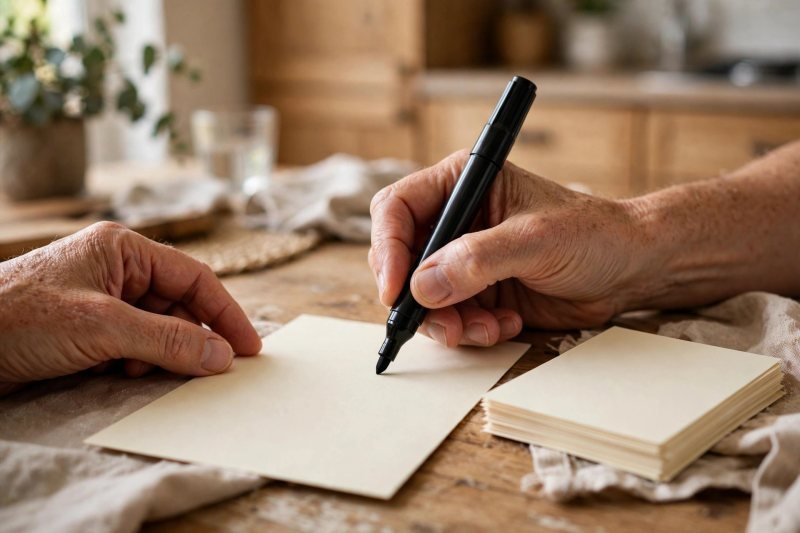
Build the 100-card deck in published order. Write each word once, big and lowercase, in the exact order below — most useful words first — and number each back in pencil (1–100). Show your child only batch 1 for now. Batch 1 (words 1–25): the, and, a, to, said, in, he, I, of, it, was, you, they, on, she, is, for, at, his, but, that, with, all, we, can.
-
Teach batch 1 three words at a time. For each word: see it, say it, spell it, trace it — finger in salt or the air. Add two or three new words a session, never more than five. A word read instantly moves to the "know it" pile. Stop when the timer rings. For the full routine behind see-say-spell-trace, see our guide to teaching sight words.

-
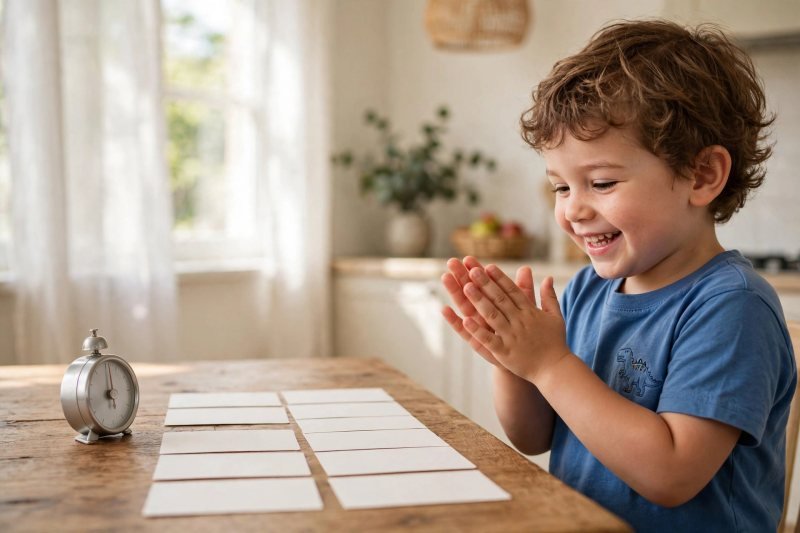
Play Beat the Clock. Lay the batch's cards in a row. Your child reads down the row, racing only yesterday's time. Time it, cheer, jot it down, repeat tomorrow.
-
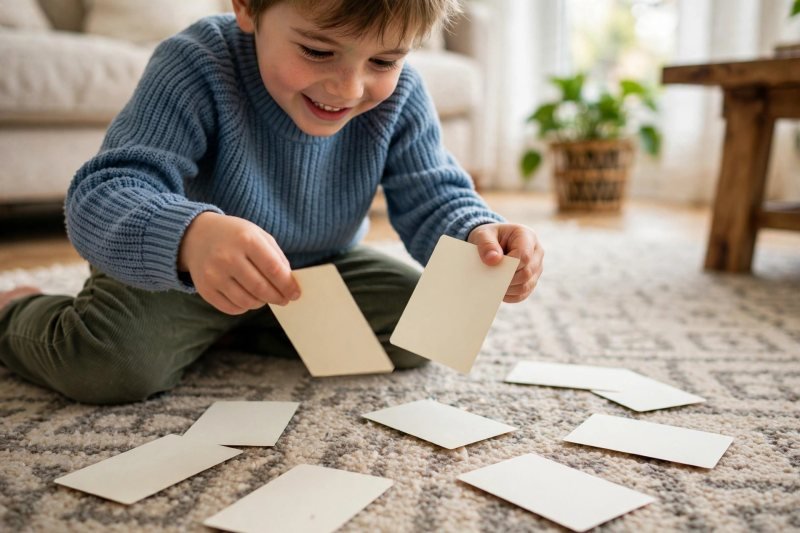
Open batch 2 with Word Snap. Master batch 1 first — every card read instantly on two different days. Deal batch 2's cards face up; take turns flipping two and reading both aloud. Batch 2 (words 26–50): are, up, had, my, her, what, there, out, this, have, went, be, like, some, so, not, then, were, go, little, as, no, mum, one, them.
-
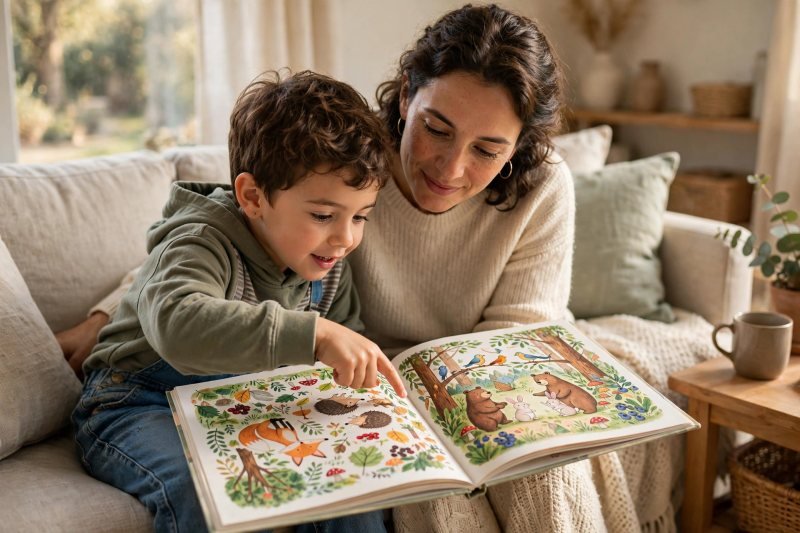
Celebrate 50 with Reading Detective. Open a favourite picture book: your child points at every word they recognise while you read. They read the words they know; you carry the rest. Mark it with a sticker and a photo.
-
Take batch 3 outside with Hide-and-Seek Words. Hide five or six cards around one room or the garden. Your child hunts them down — a found card only counts when read aloud on the spot. Batch 3 (words 51–75): do, me, down, dad, big, when, it's, see, looked, very, look, don't, come, will, into, back, from, children, him, Mr, get, just, now, came, oh.

-
Rainbow-write the wobblers. Pull stubborn words into a small pile. Write each in one colour, then trace over it in a second and a third. Keep the pile to five or six words.

-
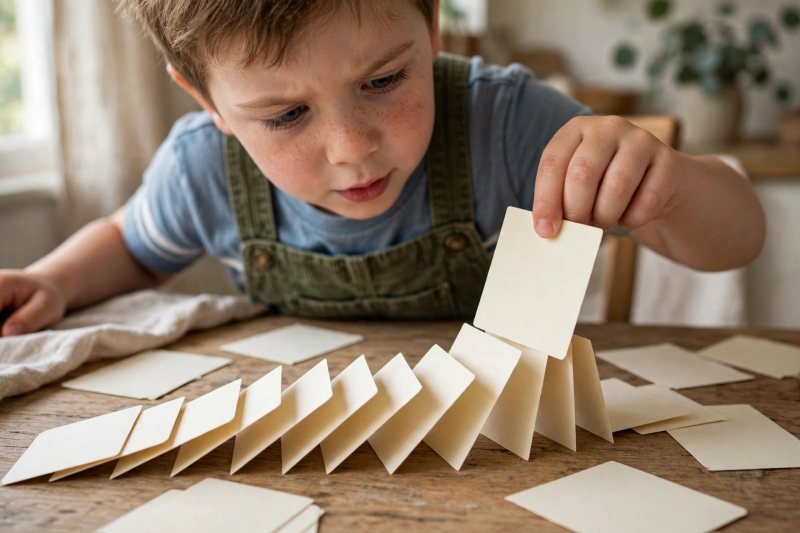
Deliver batch 4 with Word Dominoes. Lay batch 4's cards face down in a wiggly line. Your child flips one and reads it; a correct read "knocks" the next one down. Batch 4 (words 76–100): about, got, their, people, your, put, could, house, old, too, by, day, made, time, I'm, if, help, Mrs, called, here, off, asked, saw, make, an.
-
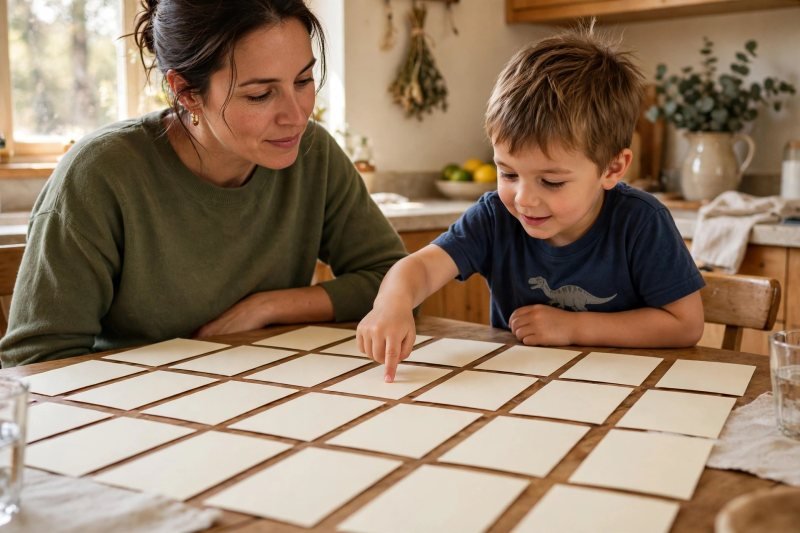
Lock all four batches in with the weekly review. Spread all 100 cards face up once a week; your child reads them in order. Pull wobbly ones into a "refresh" batch and replay Beat the Clock with just those for two minutes a day.
-
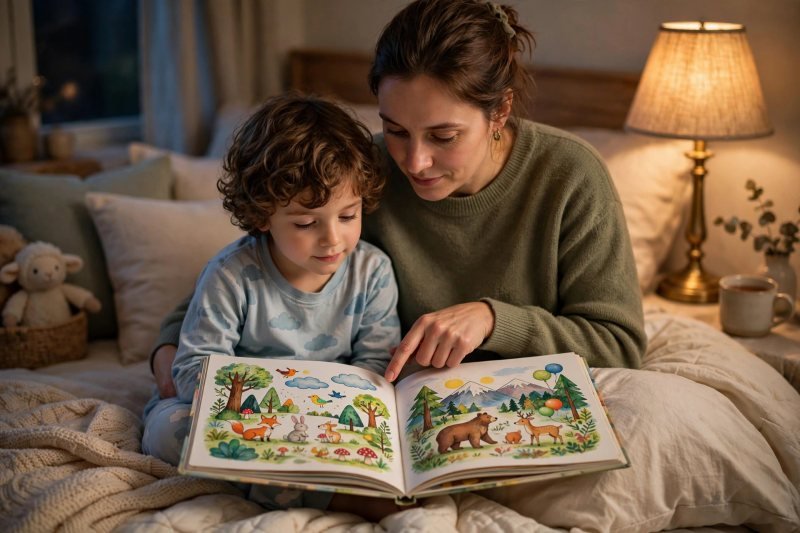
Read real books, then look ahead. Early readers are high frequency word goldmines. They read every word they know; you carry the rest. When all 100 read instantly, there's a "next 200" waiting — but no hurry.


Make it easier
Cut to 10 cards, not 25 — finish, celebrate, add the next 10. Drop the timer if timing creates pressure. Go back a batch without shame if batch 2 wobbles.
Make it harder
Speed rounds: race Beat the Clock with all 25 cards at once. Write the words with a chunky pencil. Silly sentences from three mastered words, read in a monster voice.
Other ways to play it
- Outdoor edition: tape the batch's cards along a fence; Hide-and-Seek moves to the garden.
- Teddy edition: let your child teach the cards to a line of plush toys.
How it changes by age
- Younger fives: first 10–15 words only, two or three new words a week, five-minute untimed sessions.
- Older fives and sixes: the full four-batch plan — up to five new words a session, timed games included.
- Not there yet? Skip the list. Daily read-alouds build more skill than cards.
What they're learning
High-frequency word recognition — these 100 do the heavy lifting in early reading. Reading fluency — instant recognition frees the brain for meaning. Goal-setting — four batches teach start, work, finish, celebrate.
Clearing up
High frequency words are not tricky words. Many of these 100 sound out normally; "tricky words" (common exception words) can't be decoded. The lists overlap but aren't identical. Don't teach all 100 at once. Skipping to batch 4 backfires. Forgetting between batches is normal. Re-learning is faster than learning.
Questions parents ask
What are the Year 1 high frequency words?
What are the first 25 Year 1 high frequency words in order?
Are high frequency words the same as tricky words?
How long does it take a 5-year-old to learn all 100?
The 100 words follow the published DfE/Letters and Sounds order, grouped into four batches of 25 for home practice. Schools often group the same words by phonics phase instead (roughly 31/44/25). Small school-adapted variants circulate online with a dozen or so words swapped; treat your school's list as the authority if it differs. This is not the US Fry list: the UK list includes mum, dad, children, Mr, Mrs and don't, in a different order. For the US frequency-ranked list, see our Fry first 100 sight words; for the Reception-year lead-in, see high frequency words for Reception; for how tricky words differ from high frequency words, see tricky words for Reception Phase 2; and for the general method, our guide to teaching sight words and sight words vs phonics.

save it for later
Pin this for the next rainy afternoon
Keep it on a board so it is there when you need it, rather than when you happened to find it.
Save to Pinterest


