


Sight Word Bingo: Free Printable Boards for Kindergarten
Three free printable sight word bingo boards for kindergarten — covering first Dolch words, kindergarten words, and early Fry words — plus calling cards, four game variants, and parent tips for turning every round into reading practice.
Grab the free printable sight word bingo set in the "Print it out" block on this page: three boards covering 48 genuine high-frequency words (Dolch pre-primer, Dolch primer, and early Fry words), plus calling cards. Print on cardstock, cut the cards, and play 10–20 minute games — the caller reads each word aloud, players cover matching squares and read them back. Three boards grow with your kindergartner.

The short version
- Three free printable boards: Board 1 (16 Dolch pre-primer words), Board 2 (16 Dolch primer words), Board 3 (16 early Fry words), plus a 48-card calling deck.
- Print on cardstock at "Actual size," cut the calling cards, and use beans, buttons, or bottle caps as markers.
- The caller reads each word aloud; players read it back before covering — every word is read twice per turn.
- Ten to twenty minutes, two or three short rounds, and always quit while everyone wants another.
- Four variants beyond classic bingo: four corners, blackout, picture-clue bingo, and silly-sentence showdown.
- Bingo builds instant recognition of high-frequency words; it works alongside phonics and read-alouds, not instead of them.
- Age
- Ages 5–6
- Prep
- 15 min
- Play time
- 15 min
- Mess
- None
- Difficulty
- Easy
- Where
- Indoor
Why kids love this
Bingo is the rare game where reading is the price of winning, and children can feel that from the very first round. Every called word is a reading rep, every covered square is progress you can see, and shouting "Bingo!" never gets old — not in round one, not in round ten. The chips are satisfyingly chunky to place, no round drags long enough for attention to wander, and it is a game the whole family can genuinely play together. Best of all, losing a round just means a fresh board and another chance.
What you'll need
- The three printable sight word bingo boards from the "Print it out" block on this page (printable PDF boards typeset at publish time)
- The printable calling cards from the same download
- White cardstock or heavy paper for printing (plain paper tears under excited five-year-olds)
- 20–30 small markers per player: dried beans, buttons, bottle caps, or pom-poms
- Safety scissors for cutting the calling cards
- Clear packing tape or laminating pouches (optional — for boards that will see daily use)
- A zip-top bag or small box for the calling cards and markers
Before you start
1. Download the bingo set from the "Print it out" block on this page: three boards plus a full deck of calling cards covering all 48 words. 2. Print each board at "Actual size" (100%) so the grids come out evenly. Use cardstock if you have it — heavy boards stay put while little hands place markers. 3. Pick your starting board: Board 1 for beginners, Board 2 for confident kindergartners, Board 3 for children ready for a stretch. The word list for each board is in the article body below.
How to do it
-
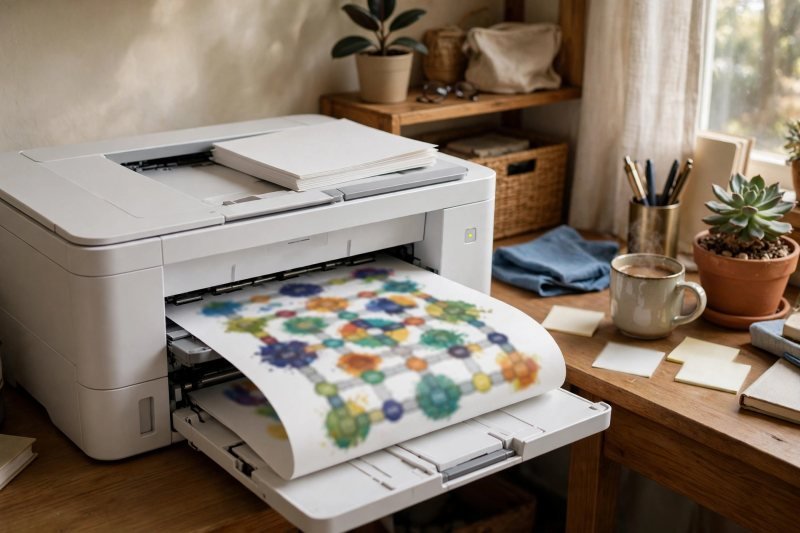
Print the board you need. Print one copy of your starting board per player — two or three players can all use the same board, since every printed copy is laid out differently. If your child is brand new to these words, start with Board 1.
-
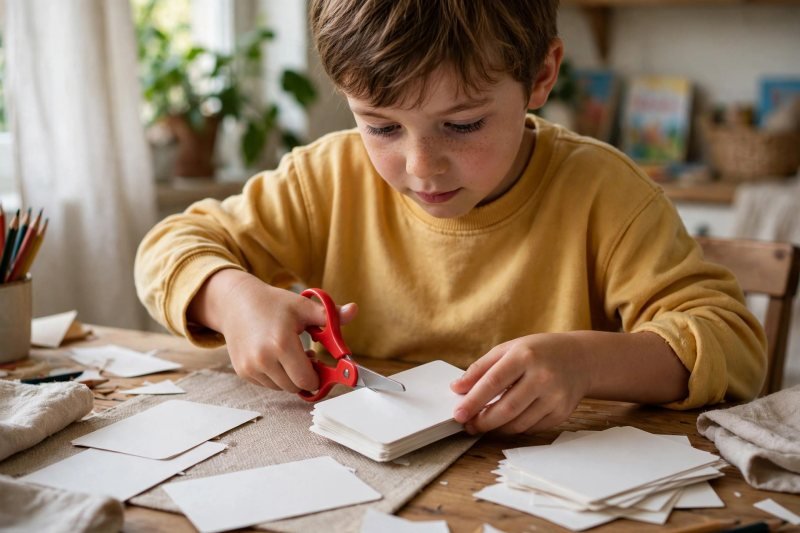
Cut the calling cards. Cut along the guide lines to make the 48 word cards — one for every word across the three boards. If your child is cutting with you, hand them the straight cuts and take the fiddly ones yourself; safety scissors, always. Shuffle the stack well before the first round.
-
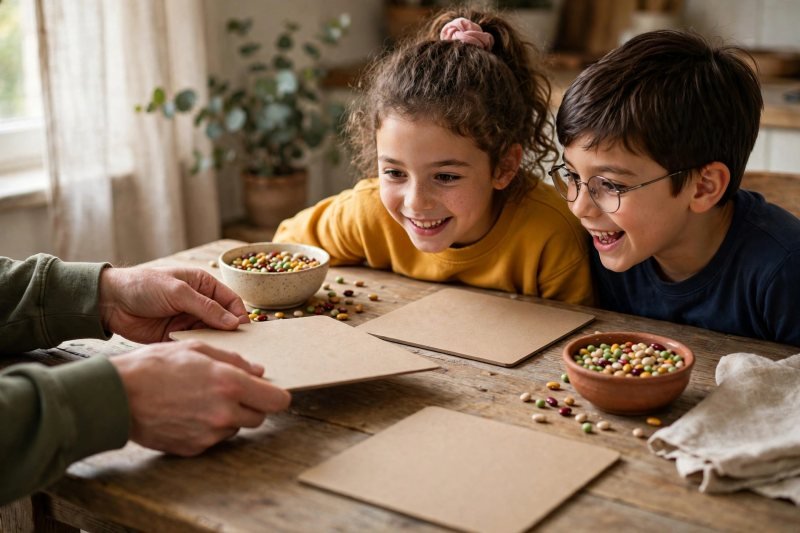
Gather your markers. Pour a handful of dried beans, buttons, or bottle caps into a small bowl for each player — about twenty markers each. Let your child choose their marker: the kid who picks the "lucky red buttons" is already invested in the game.

-
Hand out the boards. Give each player a board, face up, with a bowl of markers beside it. Let players look over their boards for a minute before the game starts — previewing the words quietly builds familiarity, and the child who scans ahead has already practiced reading half of them.
-
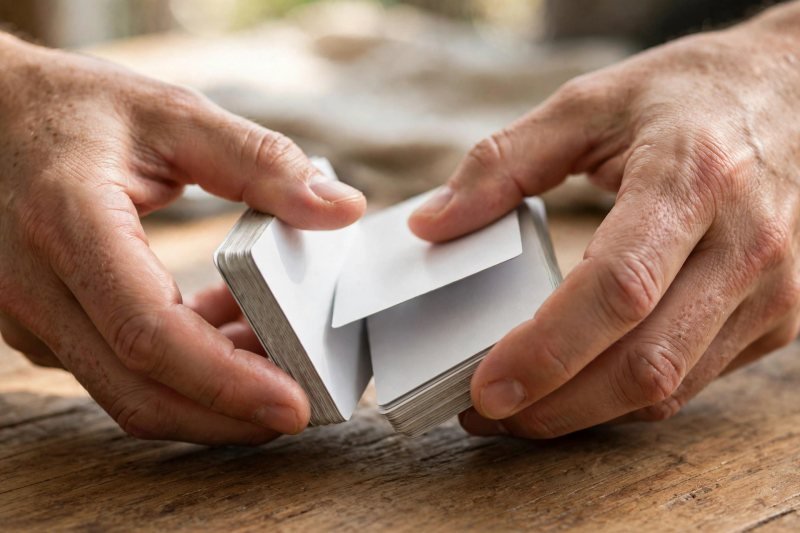
Mix the calling cards. The caller (you, at first) holds the shuffled stack face down. Agree on the win condition before round one: the classic straight line across, down, or diagonally is the best starting point. Say it out loud so everyone knows what they are aiming for.
-
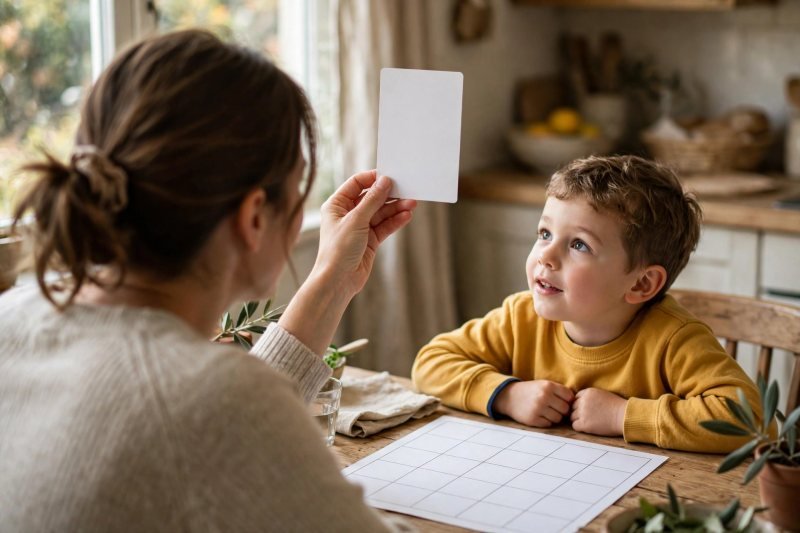
Call the first word. Draw a card, read the word aloud clearly, and hold it where players can see it. Then ask your child to read it back before anyone covers a square — that tiny moment is the actual lesson, and it costs nothing. If the word is on a player's board, they cover it with a marker.
-
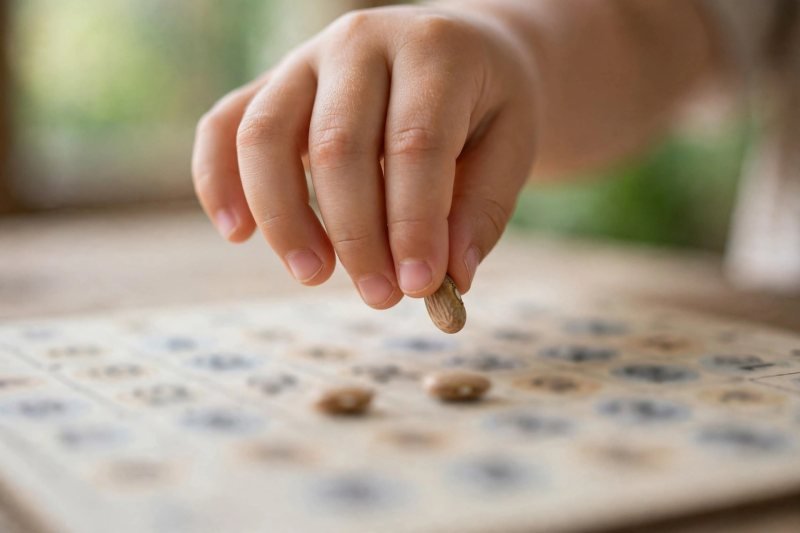
Cover, and read every square. Every time a player covers a word, they read it aloud — no silent covering allowed. This house rule is what turns bingo into reading practice instead of matching practice. Call the next card and keep a steady rhythm: call, read back, cover, repeat.
-
Shout "Bingo!" and check the win. The first player to complete the winning line shouts "Bingo!" and reads back every covered word while you check them against the cards you drew. The read-back is non-negotiable — it proves the win and sneaks in one more reading rep. Then celebrate properly.

-
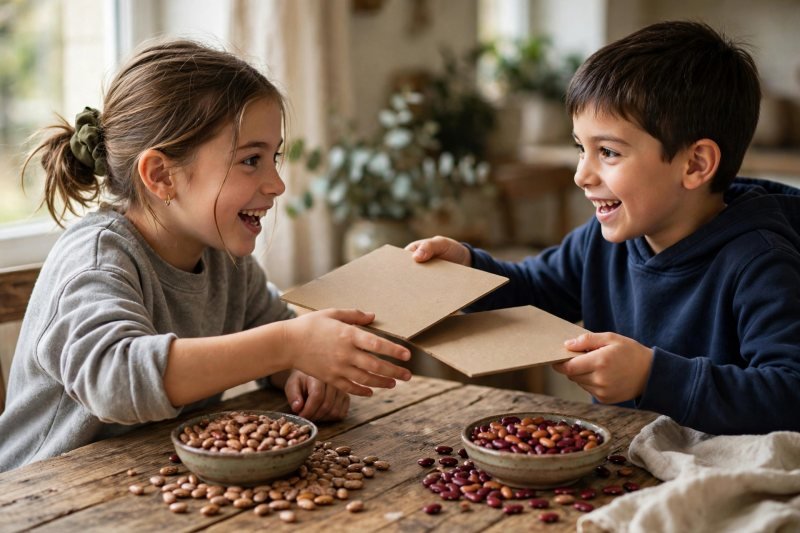
Play another round. Shuffle the called cards back in, let the winner be the next caller (children LOVE calling the words — and calling means reading every card), and deal fresh boards or clear the markers off the same boards. Three short rounds beats one long one every time.
-
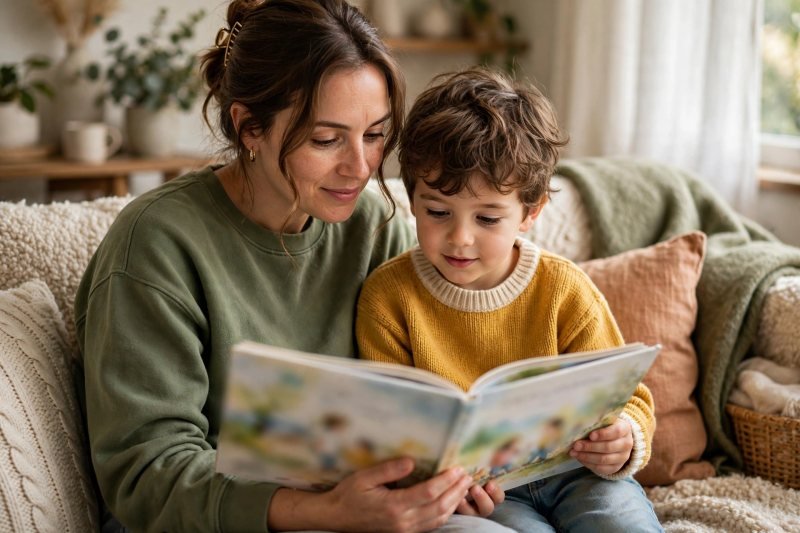
Stretch the learning after the game. Pick three covered words and challenge your child to use each one in a silly spoken sentence before the boards go away — "the elephant ate my pancake" counts double. Or take the word cards on a five-minute word hunt through a picture book, pointing out each one you find.


Print it out
Make it easier
Play with just Board 1, and give your child a "preview peek": read through all 16 words together before the game starts. Call the words slowly and repeat each one — there is no timer in bingo. Let your child cover the square without reading it back for the first two rounds, then add the read-back rule in round three. Play as a team: you and your child share one board against a sibling, a grandparent, or even a stuffed-animal "opponent."
Make it harder
Move up a board when your child wins comfortably twice in a row — Board 2, then Board 3. The caller gives a clue instead of the word: "It rhymes with fun" for run, or "the opposite of up" for down. Add the silly-sentence rule: every covered word must be used in a spoken sentence before the marker goes down. Speed round: the caller draws cards quickly and players race to cover — only for children who already know the words cold.
Other ways to play it
- Four corners: the first player to cover all four corner squares wins. Rounds are fast — perfect for short attention spans.
- Blackout bingo: cover every single square on the board to win. A full-board win takes longer and gives the maximum reading reps of any variant.
- Picture-clue bingo: instead of calling the word, hold up a small picture, act the word out (march in place for go, point to yourself for me), or give a sound clue. Great for wiggly players.
- Silly-sentence showdown: every covered word must appear in a spoken sentence before the marker stays down — the silliest sentence of the round gets a bonus cheer.
How it changes by age
- This article is written for ages 5–6 (kindergarten). A confident four-year-old who knows some sight words can play Board 1 with the "make it easier" tweaks. Six- and seven-year-olds still enjoy it as a fast review game, especially the blackout and silly-sentence variants. As always, follow the child: if the board is too hard, drop back a board rather than pushing forward.
What they're learning
Instant word recognition: seeing the same high-frequency words game after game builds the automatic recognition fluent reading depends on. Reading under mild pressure: calling words at game speed trains children to retrieve words quickly and confidently, not just eventually. Listening and matching: hearing a word, finding it on the board, and connecting the spoken and printed forms. Game rules and gracious losing: waiting for turns, accepting that someone else shouted "Bingo!" first, and asking for another round. Confidence with print: reading a word aloud to claim a square turns out-loud reading into something rewarding instead of something scary.
Clearing up
Bingo teaches recognition, not the whole of reading. It is a wonderful tool for high-frequency words, but phonics (sounding words out) and daily read-alouds are still doing the heavy lifting. Bingo is the fun reinforcement, not the curriculum. Do not correct mid-game. If your child covers the wrong square, let the round finish and mention it gently afterward — or not at all. A corrected child stops shouting; a confident child keeps playing. Forgetting between games is normal. A word covered perfectly on Tuesday can vanish by Friday. That is memory at age five, not a problem — just keep playing. You do not need all three boards out. One board at a time, mastered, beats three boards of confusion. Move up only when winning feels easy.
Questions parents ask
What age is sight word bingo best for?
How many words are on each bingo board?
What do I need to play sight word bingo?
How do you turn bingo into a reading game instead of just matching?
My child keeps losing at bingo — how do I keep it fun?
Can sight word bingo replace phonics practice?
This is the game-night companion to Free Printable Sight Word Flashcards: Pre-K and Kindergarten Sets, which has two printable card decks and five more games, and to Sight Word Games for ways to play that need no printer at all. The word sets behind the boards are drawn from the same lists as Sight Words for Kindergarten: The First 40 Words to Master. Board 3's stretch words come from the Fry first 100 sight words list, and if you are wondering how bingo fits alongside sounding words out, sight words vs phonics explains the balance.

save it for later
Pin this for the next rainy afternoon
Keep it on a board so it is there when you need it, rather than when you happened to find it.
Save to PinterestTry this next
-
Teaching Kids Skin Care Habits: Gentle Routines for Ages 5–6
Ages 5–6
-
How to Teach CVC Words: A 6-Week Plan for Kindergarten Parents
Ages 5–6
-
Mermaid Birthday Party Ideas: An Under-the-Sea Bash for Ages 5–6
Ages 5–6
-
The Silent E Rule Explained for Parents: When E Makes the Vowel Say Its Name
Ages 5–6


