


Water Xylophone Experiment: Sound Science for Kids
Turn five jars of water into a real musical instrument! This water xylophone experiment teaches ages 5–6 sound science at home — tap, listen, and hear how water level changes pitch.
Fill five identical jars with different water levels, from nearly full to nearly empty. Tap each gently with a wooden spoon: the fullest sounds lowest, the emptiest highest. More water makes the glass vibrate more slowly — a lower pitch.

The short version
- Tapping a jar makes the glass vibrate — and vibration is what sound is.
- More water means slower vibration: a lower note.
- Less water means faster vibration: a higher note.
- An adult handles glass jars; sturdy plastic cups are a safe swap.
- Five identical jars with a staircase of levels make the clearest scale.
- Age
- Ages 5–6
- Prep
- 5 min
- Mess
- Low
- Difficulty
- Easy
- Where
- Indoor
Why kids love this
A water xylophone experiment is part music, part science, and completely theirs. The moment a clear note rings from the first jar, most five- and six-year-olds tap it again, then race down the row to hear the notes climb. The guessing game hooks them hardest: "Which jar sounds lowest?" They point, they tap, they find out.
What you'll need
- 5 identical clear glass jars (mason jars or drinking glasses) — or sturdy clear plastic cups for a fully kid-run version
- Water, room temperature
- 1 wooden spoon or wooden chopstick for tapping
- 1 rimmed tray, baking sheet, or folded towel to catch drips
- Food coloring, 5 colors (optional — it makes the water levels easy to see)
- 1 small pitcher or measuring cup for pouring
- Paper towels or a cloth
Before you start
Clear a spot at the kitchen table and set the tray in the middle with the empty jars, pitcher, wooden spoon, and food coloring on it. Push anything breakable out of tapping range.
How to do it
-
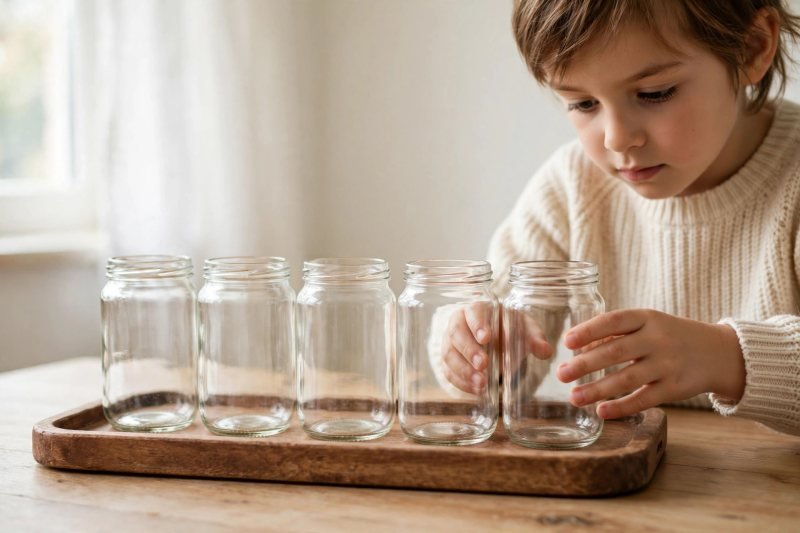
Line up the five empty jars. Set the tray in the middle of the table and stand the five identical jars in a neat row. Say, "These are going to be our instruments," and let your child tap an empty jar once to hear its plain ring.
-
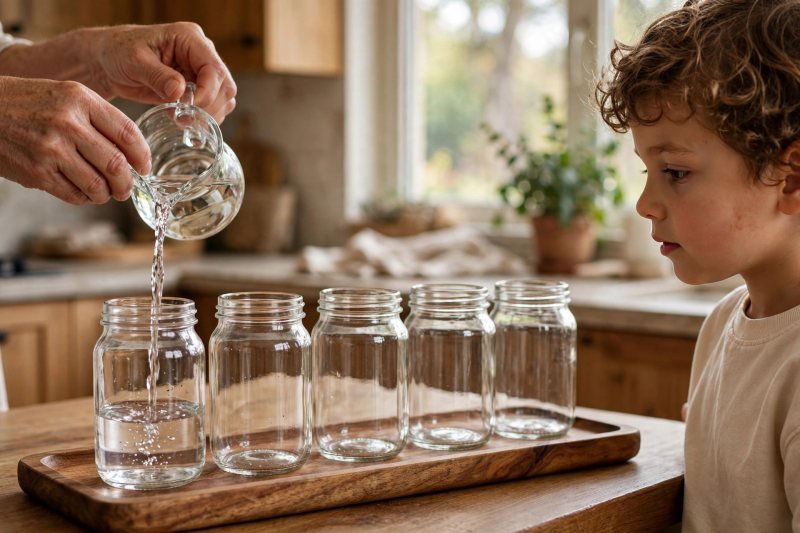
Fill the first jar almost to the top. An adult takes the pitcher and fills the first jar nearly full — slow and steady, no splashes. Say, "This one gets the most water. Remember how full it is."
-
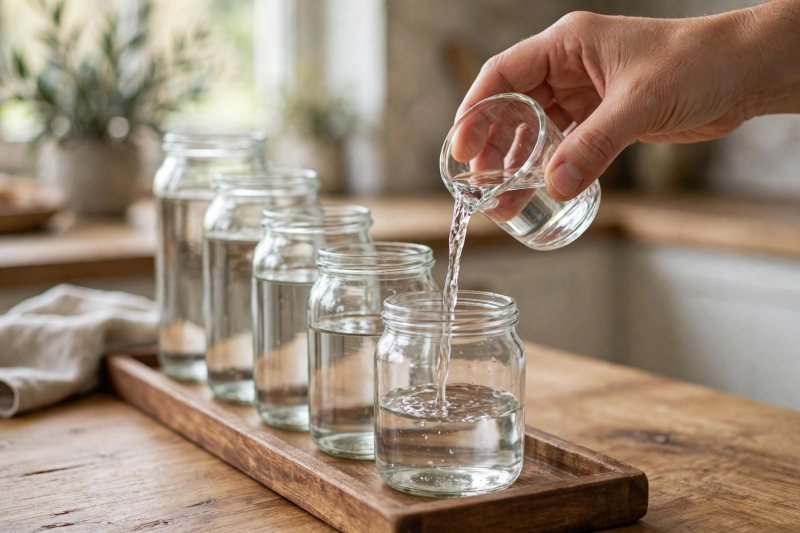
Fill each next jar a little less. Pour a little less into the second jar, less again into the third, and so on, until the last jar holds just a splash. Point out the staircase: "See how the water steps down, jar by jar?"
-
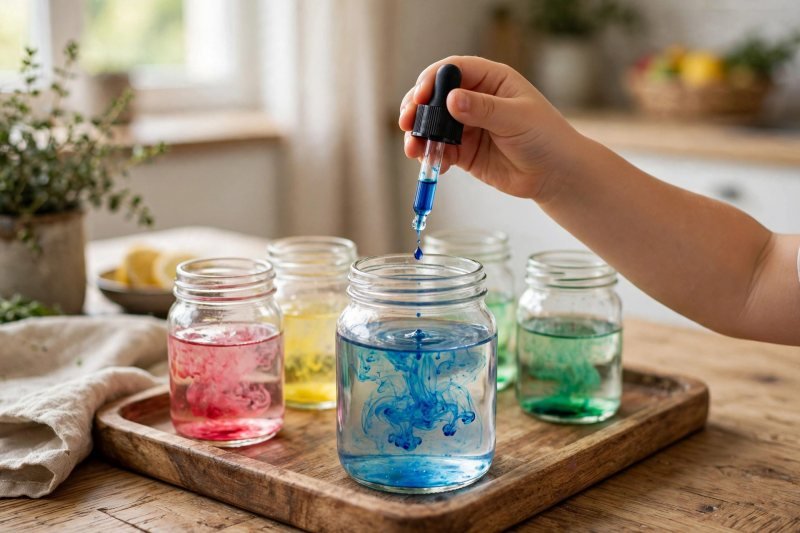
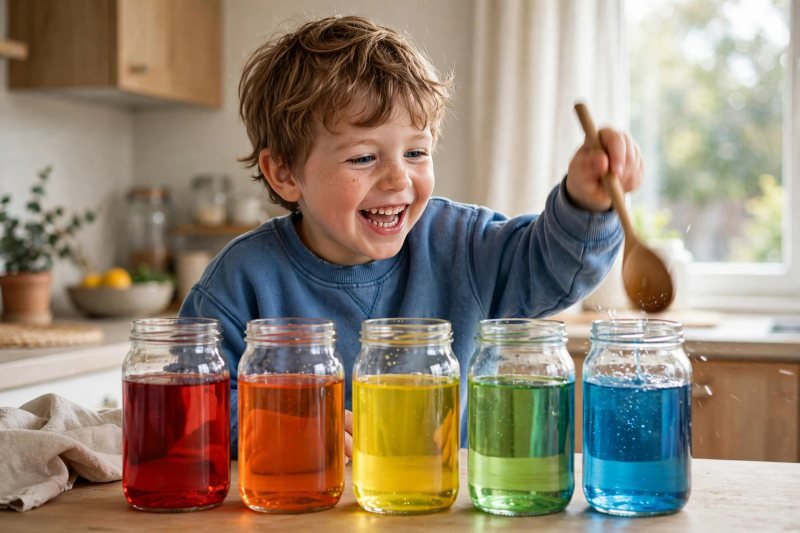
Add a drop of food coloring. One drop of color per jar, then a gentle stir with the spoon. Say, "Now every jar has its own color, so we can tell the levels apart just by looking."
-
Arrange the jars fullest to emptiest. Slide the jars into order — fullest on the left, emptiest on the right. Ask, "Which end do you think will sound lowest?" and let your child guess before a single tap.

-
Steady a jar and tap once. Hold a jar steady with an adult hand on the glass while your child taps its side once with the wooden spoon. Say, "One soft tap — then listen until the sound stops," and let the note ring out fully.

-
Compare the fullest and the emptiest. Tap the fullest jar, then the emptiest, one after the other. Say, "One sounds low and deep, the other high and bright. Can you hear it?" Tap them again so the difference sinks in.

-
Predict, then test. Ask your child to predict: does MORE water make the note higher or lower? Then play the whole row from fullest to emptiest and find out together — the notes climb as the water drops.

-
Play the scale. Now play the row from emptiest to fullest — a musical scale, low to high. Try climbing steadily up the row, then back down, and let your child play a little tune of their own.
-
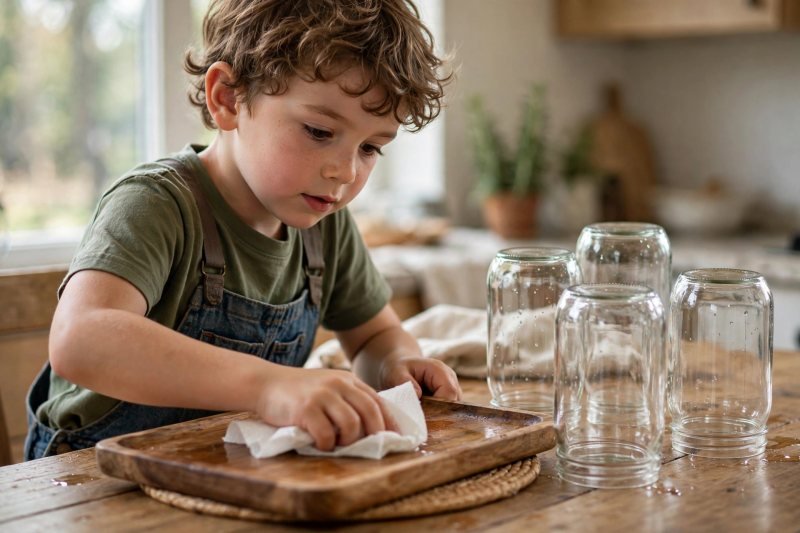
Pour out and pack away. Pour the water down the sink or into a watering can, wipe the tray dry, and stand the jars upside down to dry. Say, "Instruments away — same time tomorrow?" and let your child carry the spoon back to the drawer.


Make it easier
Use three jars — full, half, nearly empty — so the high-medium-low difference is unmistakable. The adult does all pouring and steadying; the child takes the best job: tapping and listening.
Make it harder
Cover the water lines with a tea towel and have your child order the jars from lowest to highest note by ear alone, then lift the towel to check. Have them draw the five jars and mark the highest and lowest.
Other ways to play it
- Rainbow row: five food colors — the prettiest version, and each jar is easy to remember.
- Spoon swap: tap with a metal spoon instead of wood. The tone changes but the pitch stays the same — a first taste of timbre.
- Blow across the top: blow gently across each jar's mouth like a bottle top. The rule flips — the fullest jar sounds HIGHEST — because now the air inside vibrates, not the glass. Less air, higher note. Then try the dancing raisins experiment — one you hear, one you watch — or the magic milk experiment, where colors swirl without a sound, and the lava lamp experiment, where oil and water stack into layers.
How it changes by age
- For ages 5–6, when children can predict, test, and describe high versus low. Ages 3–4 love the tapping with an adult handling every jar. Ages 7–8 can set the levels themselves with plastic cups and try the order-by-ear challenge.
What they're learning
Why do the water glasses make different sounds? Sound is vibration — something shaking back and forth really fast. Tap a jar and the glass vibrates; the shaking travels through the air to your ears, and your brain reads it as sound. No vibration, no sound. Does more water make the note higher or lower in a water xylophone? Lower, every time. The glass doesn't vibrate alone — it drags the water along. More water means a heavier load that can't shake as fast, and slower shaking is what our ears hear as a lower note. Same reason a big bell booms low while a tiny bell tinkles high. How do our ears turn shaking air into music? The vibrating jar pushes the air in tiny waves, like ripples on a pond. The waves reach the ear, the eardrum wiggles, and the brain reads the wiggles as sound: fast wiggles high, slow wiggles low. Three words to keep: pitch, vibration, volume.
Clearing up
Pour the water down the sink or into a watering can. Wipe the tray and table dry; stand jars upside down to dry. Food coloring rinses off with soap.
Questions parents ask
How do you make a water xylophone for kids?
Why does more water make a lower sound in a water xylophone?
Can you use plastic cups instead of glass for a water xylophone?
What age is a water xylophone experiment good for?
Identical jars matter — different shapes ring differently with the same water. A hard table rings longer than a soft cloth. For more kitchen science to run mostly solo, browse the easy science experiments collection — and the walking water experiment is the perfect next step: watch colors climb from jar to jar with no tapping at all.

save it for later
Pin this for the next rainy afternoon
Keep it on a board so it is there when you need it, rather than when you happened to find it.
Save to Pinterest


