


Do Toddlers Need Conditioner? How to Choose a Kids' Conditioner
A kids' conditioner is not a must for every toddler — it earns its place when hair tangles, ends feel dry, or combing ends in tears. This calm guide shows the signs to look for, what a good label says, and a gentle ten-step bath routine.
No — not every toddler needs a kids' conditioner. It earns its place when hair tangles at the nape, ends feel dry, or combing ends in tears, which happens most with wavy, curly, thick, or long hair. Fine, short hair often needs none. When you do use it: a pea-sized amount on the ends only, combed through, rinsed well.

The short version
- Diagnose first: tangles, dry ends, and combing tears are the signs conditioner helps; fine short hair may need none.
- Choose by criteria: made for kids, gentle, fragrance-free or lightly fragranced — no brands or adult formulas required.
- Rinse-out for the bath, leave-in spray for morning tangles; patch-test every new bottle a day ahead.
- Use a pea-to-dime amount on the ends only, never the scalp, and comb from the ends upward while it sits.
- Set the rhythm by hair type — every wash for curly or dry hair, occasionally or never for fine hair.
- Age
- Ages 2–3
- Prep
- 5 min
- Play time
- 10 min
- Mess
- Low
- Difficulty
- Easy
- Where
- Indoor
Why kids love this
Toddlers do not care about conditioner; they care that combing stops hurting. That is what a kids' conditioner quietly delivers when it is the right match: the comb slides instead of snagging, the morning brush takes thirty seconds instead of a negotiation, and hair time stops being the part of the day everybody dreads. Kids also love the small rituals around it — choosing which plain bottle is "theirs," holding the wide-tooth comb like a tool of office, and the cozy towel moment when the hair falls smooth and they get told, truthfully, that it looks lovely. Choose by criteria rather than by cartoon, use a pea-sized amount in the right places, and conditioner becomes the least dramatic product in the bathroom.
What you'll need
- One plain bottle of conditioner made for children — gentle formula, fragrance-free or very lightly fragranced
- Your usual kids' shampoo (conditioner is step two, never a substitute for washing)
- A wide-tooth comb — the detangling happens while the conditioner is in
- A plastic rinsing cup
- A folded towel on the tub edge, plus a dry towel for afterward
- A timer-free attitude: conditioner needs one calm minute, not ten
Before you start
1. Read the label before bath night (step 3 gives the checklist) and patch-test any new product a day ahead: a tiny dab on the inner forearm, then wait and watch for irritation. 2. Run a lukewarm bath — never hot — and line up shampoo, conditioner, comb, and cup on the tub edge in use order, so you never turn away. 3. Decide tonight's plan — wash plus conditioner, or wash only — based on how the hair has behaved this week (step 1 teaches the signs). 4. Put the bottle on a high shelf afterward; conditioner lives with the grown-up products, out of reach, every time.
How to do it
-
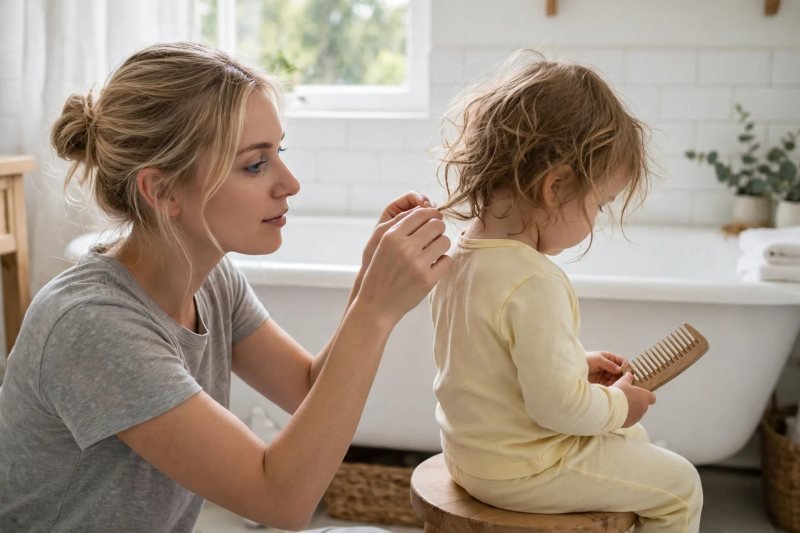
Step 1: Look at the hair first — conditioner answers a problem, not a schedule. Before any bottle is bought, read your toddler's hair like a weather report: does it tangle into a nest at the nape by morning; do the ends feel dry or flyaway while the roots feel fine; does combing end in pulling, protests, or tears; is there static in dry weather? Say: "We're not buying a product — we're solving a tangle." If none of those signs is present — short, fine hair that combs in seconds — your toddler honestly may not need conditioner yet, and skipping it is a perfectly good answer. The signs matter because they tell you what the conditioner is for in your house, and that purpose decides the format and the amount in the steps ahead.
-
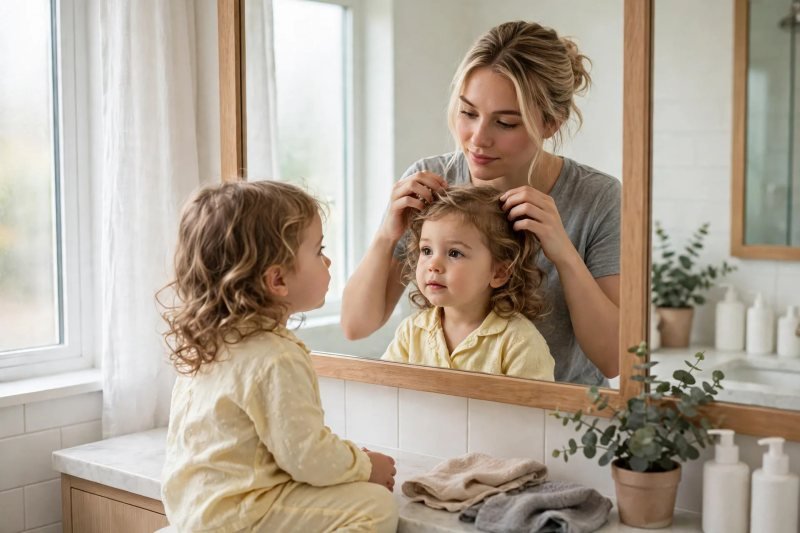
Step 2: Match the decision to the hair type in front of you. Hair, not age, makes this call: fine, straight toddler hair is easily weighed down and often needs no conditioner at all, or the lightest touch on the very ends after a sweaty or sunscreen-heavy day; wavy and curly hair tangles more, dries faster at the ends, and usually thanks you for conditioner every wash; thick, coily, or very long toddler hair almost always combs kinder with it. Say: "Same bathroom, different hair, different answer." If you are preparing for a first trim soon, this site's toddler first haircut guide makes the same point from the chair's side — hair type, not habit, should drive hair decisions for little kids.
-
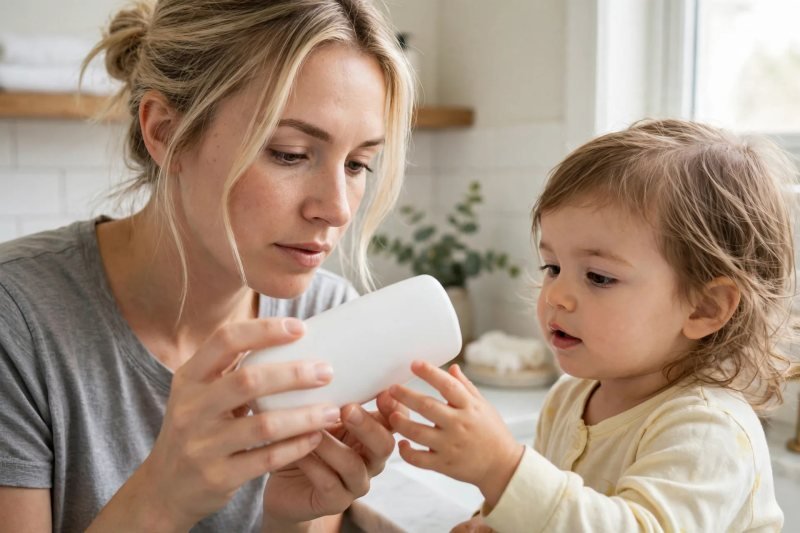
Step 3: Read the label like a detective before it touches any hair. Hold the plain bottle and run the checklist out loud: made for children (adult conditioners are formulated for adult scalps, color-treated hair, and concerns toddlers do not have); gentle, everyday language rather than intensive "repair" or salon claims; fragrance-free or very lightly fragranced, because toddler skin and noses are new; a short, readable ingredient list you can actually pronounce your way down. Skip anything marketed with heavy perfumes, glitter, or grown-up styling promises. Say: "Boring label, good bottle." These are the same calm criteria this site applies across the bathroom shelf in its simple kids skincare routine — made for kids, gentle, lightly or never scented — because a toddler's whole routine should be this unexciting.
-
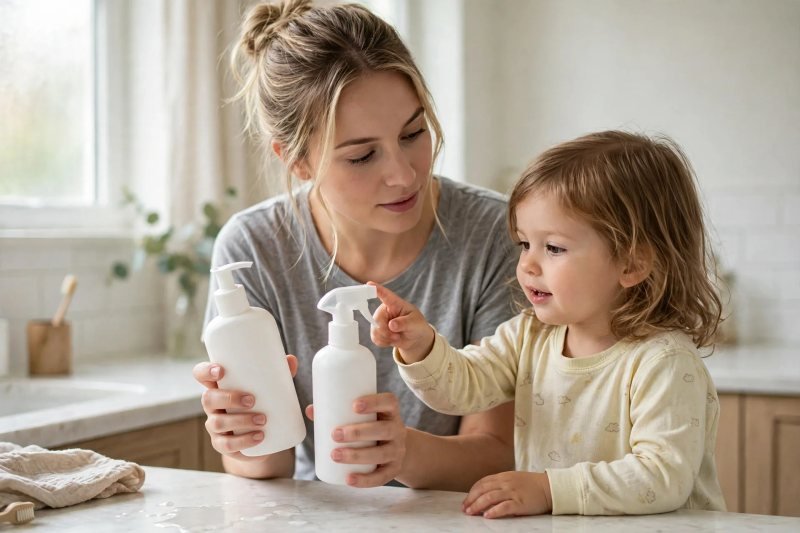
Step 4: Choose the format: rinse-out for bath control, leave-in for morning tangles. Two honest formats cover nearly every toddler: rinse-out conditioner, used in the bath and rinsed away, gives you total control of how much goes in and comes out — the right default for ages 2–3; leave-in conditioner, usually a light spray used on dry or damp hair, is a morning tool for the nape-nest problem — a spritz, a comb, and the school run is saved. Say: "Rinse-out is our bath tool; spray is our morning tool." Some families need one, some both, many neither on fine hair — and "both bottles, plainly labeled for kids, no brands required" is the entire shopping philosophy of this guide. Pick by where your tangles live: in the bath, or at breakfast.
-
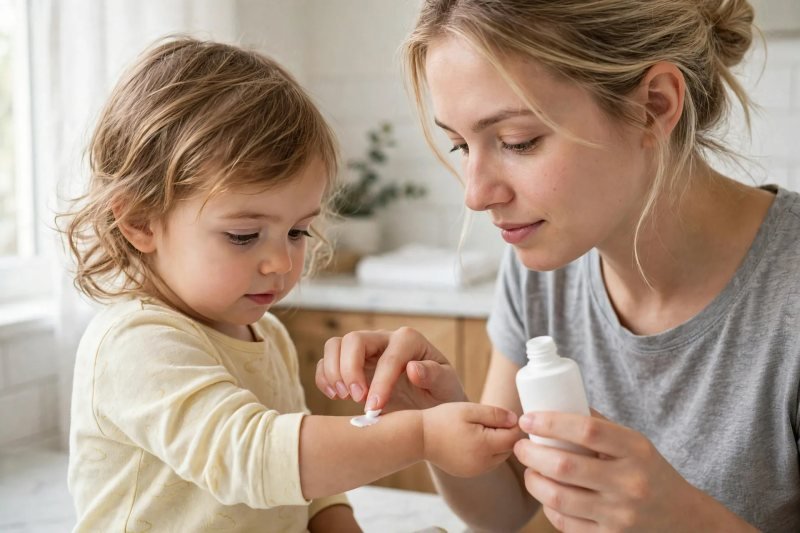
Step 5: Patch test the new bottle a day before its first real use. Squeeze a pea-sized dab onto your toddler's inner forearm, smooth it in, and let the day pass; check the spot at bedtime and again next morning for redness, bumps, or itching. Say: "We test everything new on a tiny patch first — that is the rule for every bottle in this house." A calm patch test turns the first full use into a non-event, and if the spot does react, you have learned something for the price of one dab, not one miserable bath. This is grown-up patience, and it applies to every new product a toddler meets — shampoos, creams, and conditioners alike — no matter how gentle the label sounds.
-
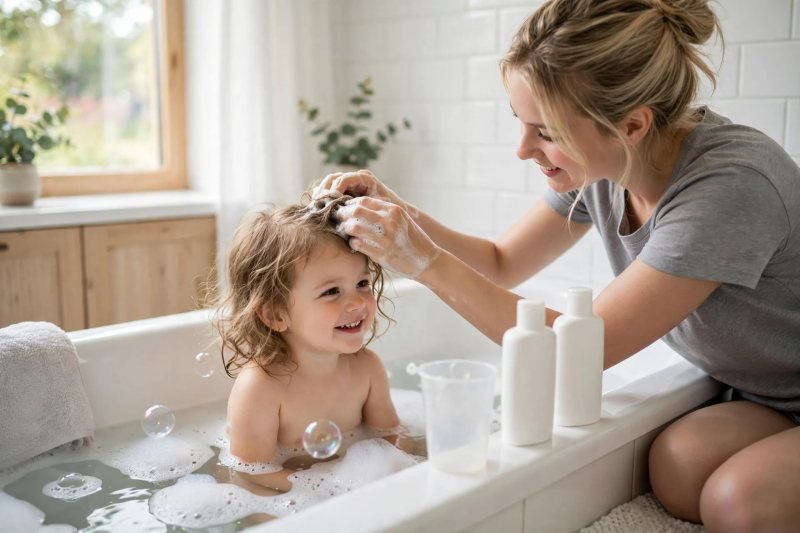
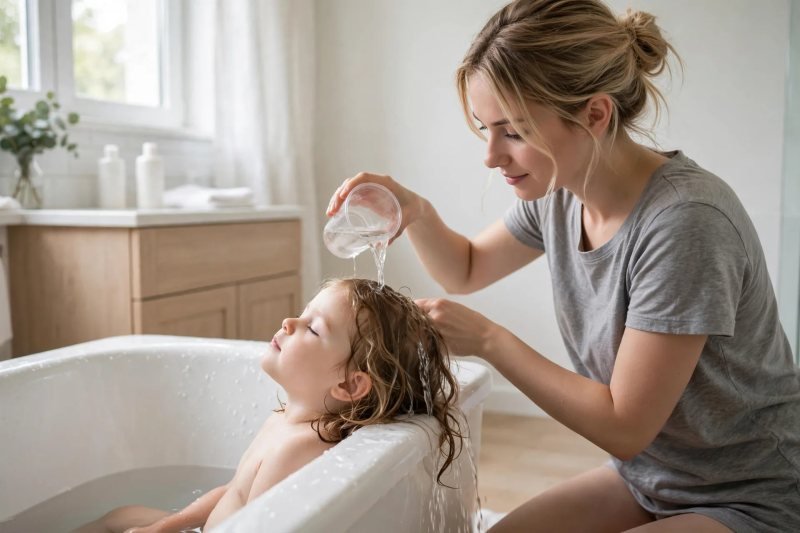
Step 6: On wash night, shampoo first and rinse like you mean it. Conditioner is step two of a wash, never a replacement for step one: wet the hair, use your usual coin-sized amount of kids' shampoo, massage gently with fingertips, and rinse until the water runs clear and the hair feels clean, not slick. Say: "Clean first, smooth second — conditioner on dirty hair is just perfume for tangles." Leftover shampoo left in the hair is the hidden reason many first conditioner attempts disappoint: the conditioner ends up fighting yesterday's suds instead of smoothing the hair. A thorough rinse is unglamorous and decisive, and it sets up the small, correct amount in the next step to actually work.
-
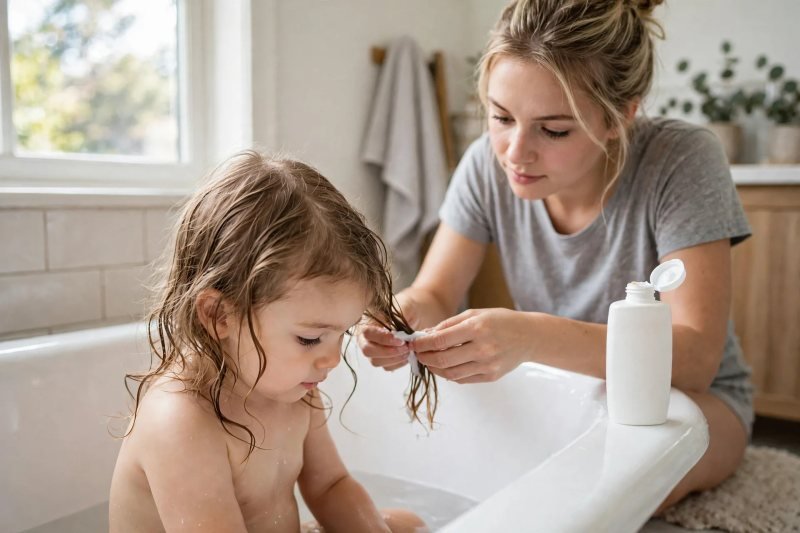
Step 7: Apply a pea-to-dime amount to the ends only — never the scalp. Squeeze a pea-sized amount (a dime for thick, curly, or long hair) into your palm, rub hands together, and smooth it through the bottom half of the hair — mid-lengths to ends — keeping it off the scalp and roots. Say: "Conditioner feeds the ends, because the ends are the old, dry part; the scalp makes its own oil." A toddler's scalp does its job well; conditioner parked on it mostly buys you greasy-looking roots and an unimpressed comb. Work the amount through with fingers first, coating the nape tangle zone and the very ends, and resist the second squeeze — with toddler hair, more is never better, it is just harder to rinse.
-
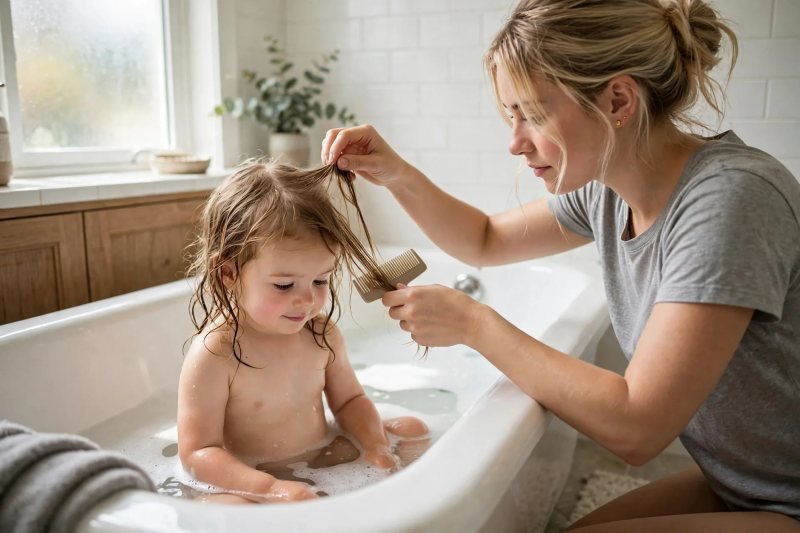
Step 8: Comb through with a wide-tooth comb while the conditioner is in. This is the step the whole product exists for: with the conditioner smoothing the hair, draw a wide-tooth comb slowly from the very ends upward, an inch at a time, holding the hair above the comb with your other hand so tangles release instead of pulling at the scalp. Say: "Ends first, tiny steps up — the comb does the untangling, not tugging." Knots melt now that would have torn at the dry comb-out later; work the nape nest last and most gently, let your toddler hold the comb for the easy front sections, and give the conditioner its calm minute of sitting while the combing happens — the minute and the comb are a team.
-
Step 9: Rinse cool and clean — or follow the bottle if it is a leave-in. For rinse-out conditioner, rinse with the cup until the hair feels smooth but not slippery-soapy; a whisper of smoothness is the goal, a coated slick feeling means keep rinsing. Say: "Smooth, not slimy — that's how we know it's right." If you chose a leave-in spray instead, it does not belong in this bath step at all: it goes on damp or dry hair at the mirror in the morning, a light mist on the ends, then the comb — rinse-out products get rinsed, leave-in products get left, and mixing the two instructions up is how hair ends up heavy by noon. Towel-squeeze gently; never rub toddler hair into a new tangle with the towel. If rinsing is the part your toddler hates most, our wash toddler hair without tears guide has the calm-rinse tricks that keep this step tear-free.
-
Step 10: Dry, admire, and set your household rhythm. Comb once more as the hair dries, dress your toddler in pajamas, and take the official moment: "Look — smooth, and nobody cried." Then set the rhythm that matches the hair you diagnosed in step 2 — and if the wash rhythm itself is the question, how often to wash toddler hair settles it: conditioner every wash for curly, dry, or long hair; once a week or after beach-and-sunscreen days for fine hair; none at all until the signs appear, for short easy hair. Say: "We use it when the hair asks for it." Store the bottle high and out of reach, note the date you opened it, and re-diagnose every few months — toddler hair changes fast, and the right answer at two may be a different bottle, or no bottle, at three.


Make it easier
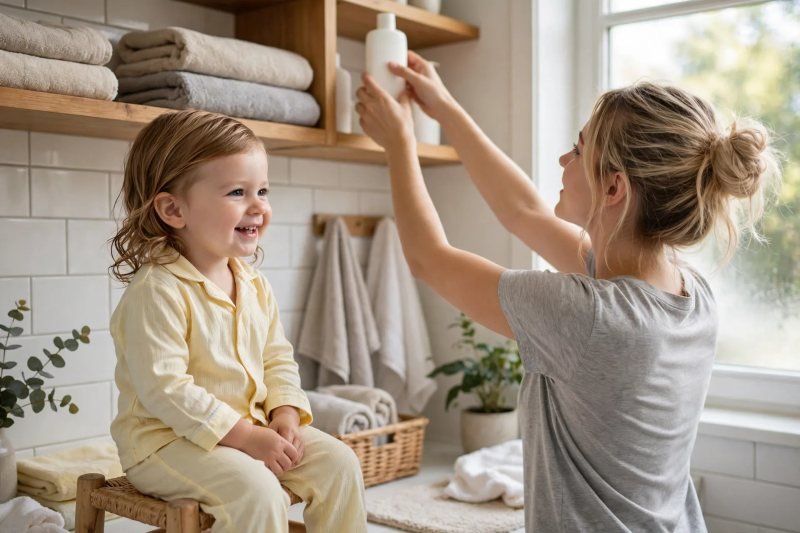
Start with the ends-only rule and the smallest amount — you can always add a second pea next wash; you cannot un-rinse an over-conditioned head of toddler hair. If bath detangling still meets resistance, move the comb-out to a stool at the mirror with the leave-in spray and a favorite song as the timer. Keep one bottle only until it is finished — a single plain kids' conditioner, chosen by the checklist, beats a rotating cast of half-used experiments.
Make it harder
Teach the routine in order as a picture sequence your toddler can "read" — wash, smooth the ends, comb from the bottom, rinse — and let them direct which step comes next. For very curly or coily hair, add a midweek refresh: a light leave-in spritz and gentle comb on dry hair to reset curls without a full wash. Let your toddler be the patch-test scientist for any new family product, checking the forearm spot with you at bedtime — early habits in reading skin responses are genuinely useful.
Other ways to play it
- The morning-tangle version: skip bath conditioner entirely and keep only a leave-in spray at the mirror — two spritzes on the nape nest, comb from the ends, done before the toast pops.
- The beach-day version: after sun, sand, and sunscreen, wash once gently, condition the ends generously (a full dime), comb through slowly, and rinse well — vacation hair is the thirstiest case toddler hair presents.
- The sibling version: an older child's hair routine can share the checklist but never the assumptions — re-run steps 1 and 2 per head of hair, because the family bathroom holds as many hair types as it holds children.
How it changes by age
- Age 2: At two, conditioner is purely a parent's tool: pea-sized, ends only, comb while it sits, rinse fully. Keep the whole addition under three minutes and expect the toddler's contribution to be holding the comb and approving of bubbles.
- Age 3: Threes can join the decisions — holding the bottle, naming whether hair feels "tangle-y" today, combing the front sections. The criteria and amounts stay adult business, but the diagnosis can start to be shared, one honest observation at a time.
What they're learning
Cause and effect, bathroom edition: tangles plus the right tool plus patience equals an easy comb — a tiny, repeatable science lesson with immediate evidence. Body vocabulary: scalp, ends, nape, rinse — hair care quietly teaches the names of the head and what each part needs. Gentle persistence: combing from the ends upward, an inch at a time, is a first masterclass in solving a knot by patience instead of force. Product literacy for later: reading labels, patch testing, and using small amounts are habits that will serve this child at every bathroom shelf for decades.
Clearing up
Conditioning adds thirty seconds to the bath tidy: rinse the comb and cup, cap the bottle, and put it straight onto its high shelf while your toddler is still wrapped in the towel — the shelf habit is the cleanup. Wipe the tub edge where the slippery bottle sat, hang the towel, and give the bath a quick rinse so the next bather does not meet a conditioner-slick floor of the tub. The wide-tooth comb gets a weekly wash with the shampoo it serves beside; a clean comb is half the detangling battle, fought in advance.
Questions parents ask
Do toddlers really need conditioner?
How much conditioner should you use on toddler hair?
Can I use my adult conditioner on my toddler?
What is the difference between rinse-out and leave-in conditioner for kids?
At what age can a child start using conditioner?

save it for later
Pin this for the next rainy afternoon
Keep it on a board so it is there when you need it, rather than when you happened to find it.
Save to Pinterest


