


Fingerplays for Toddlers: 12 Rhymes With Hand Motions That Teach Sounds
Twelve classic fingerplays for toddlers with every hand motion described. Each rhyme builds syllables, rhyming, and word-stress skills for ages 2–3.
The best fingerplays for toddlers are short rhymes with simple hand motions: The Itsy Bitsy Spider, Pat-a-Cake, Twinkle Twinkle Little Star, and This Little Piggy. Sit face-to-face, do the motions slowly, and invite your toddler to copy. Each rhyme trains a sound skill — the building blocks of reading.

The short version
- Fingerplays pair a short rhyme with hand motions that mark the sounds toddlers need to hear.
- Repeat one rhyme daily — familiarity comes before participation.
- Let your toddler copy the motions first; words arrive months later.
- Each rhyme builds a different sound skill: syllables, rhyming, word stress, counting.
- No equipment needed; fingerplays work anywhere, in any language.
- Age
- Ages 2–3
- Mess
- None
- Difficulty
- Easy
- Where
- Both
Why kids love this
Fingerplays for toddlers pair short rhymes with simple hand motions. Here are 12 classics with each motion described, plus the sound skill each builds. Their hands become the story: the spider climbs, the star twinkles, the piggies wiggle.
What you'll need
- Nothing — just your hands, your voice, and a lap.
Before you start
1. Start with just one rhyme. 2. Choose a calm moment: after breakfast, before bath, or during a long wait. 3. Sit face-to-face so your toddler can see your hands.
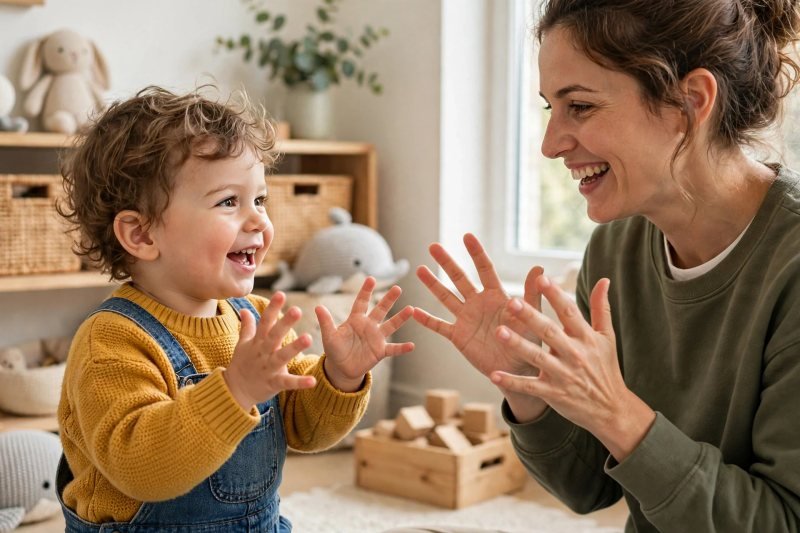
Run every rhyme the same way: say it once yourself, motions slow and big, while your toddler watches; repeat it and invite your child to copy your hands; guide their hands if they want help; repeat the same rhyme 2–3 times; and slow down on the fun part and try it again tomorrow.
How to do it
-
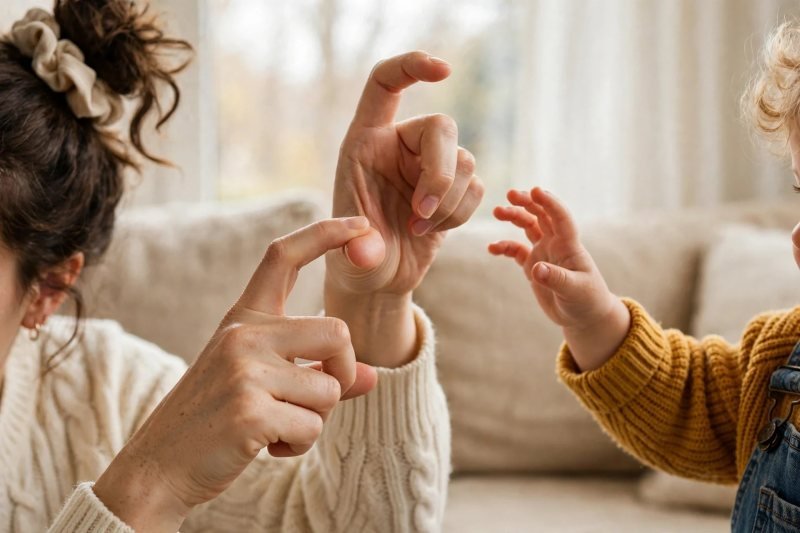
The Itsy Bitsy Spider — "The itsy bitsy spider…" Climb thumb-to-index hands upward, finger over finger; wiggle down for rain, spread wide for sun, climb again. Teaches syllables and s-sounds.
-
Twinkle, Twinkle, Little Star — "Twinkle, twinkle, little star…" Hold hands up, opening and closing fingers to twinkle; point skyward, then rock your arms. Trains ears on long vowel endings — the first step to rhyming.

-
Pat-a-Cake — "Pat-a-cake, pat-a-cake…" Clap the pats, roll hands over each other, mime a sprinkle, end with an oven toss. Clapping counts syllables; cake/bake and me/three teach rhyming.

-
This Little Piggy — "This little piggy…" Wiggle each tiny toe (or finger) in turn; on the last one, run fingers up to a surprise tickle. Five syllable beats plus counting words in order.

-
Round and Round the Garden — "Round and round the garden…" Circle your child's palm, walk two fingers up their arm, finish with a chin tickle. The wait builds anticipation; the rhyming pairs show words can sound alike.

-
Where Is Thumbkin? — "Where is Thumbkin?…" Hide thumbs in fists, pop them out on the question; each finger peeks out and runs away in turn. Teaches question intonation and loud-versus-soft control.

-
Two Little Dickie Birds — "Two little dickie birds…" Hold up two fingers as birds; fly them behind your back one at a time, then bring each swooping back. Vanishing on cue trains listening for key words; soft/loud builds volume control.

-
Hickory Dickory Dock — "Hickory, dickory, dock…" Walk two fingers up your child's arm like a mouse; at the strike, clap loudly, then slide down. Clear dock/clock rhyme plus tick-tock consonants to imitate.

-
Open Them, Shut Them — "Open them, shut them…" Open and close fists wide, creep fingers tall, then rest folded hands in your lap. Opposites — open/shut, big/small — grow vocabulary fast.
-
Here Is the Beehive — "Here is the beehive…" Make a fist for the hive; the other hand's fingers buzz around it, then fly home one by one. Buzzing z-sound practice plus numbers one to five.



Make it easier
Slow down and exaggerate the motions. Skip the words at first — just move your hands while your child watches. Focus on one beloved part, like the chin tickle.
Make it harder
Let your 3-year-old lead while you copy. Speed it up, whisper it, then roar it. Pause before each line's last word and let them fill it in. When letter play follows sound play, alphabet activities for toddlers are the gentle next step.
Other ways to play it
- Try a squeaky mouse voice, then a grumbly bear voice. Swap in your child's name. Do it standing, or at bedtime in a whisper.
- Two more rhymes to add over the coming weeks:
- Five Little Ducks — "Five little ducks…" Hold up five fingers; fold one down per verse, then pop them all back up. Counting backward, with day/away rhyming couplets.
- Head, Shoulders, Knees and Toes — "Head, shoulders, knees and toes…" Touch each body part as you sing it, starting slow; then speed up. Links words to meaning; speed trains quick listening.
- The sung versions of several of these rhymes live in our nursery rhymes for toddlers collection.
- The magic is repetition: the same rhyme, at the same cozy time each day, for weeks. Ten minutes of fingerplays beats an hour of flashcards.
How it changes by age
- Yes. At 2, most toddlers copy the motions first; words arrive months later — exactly the right order. By 3, many sing along and invent verses. At three, the same chant-and-clap games grow into teaching rhyming to preschoolers.
What they're learning
Phonological awareness — hearing syllables, rhymes, and word beats — one of the strongest early predictors of later reading, plus vocabulary and fine-motor control. This Little Piggy and Five Little Ducks double as counting practice — counting activities for toddlers build on the same finger counting. The listening skills here feed directly into phonics activities for preschoolers.
Clearing up
Nothing to clean — the whole activity packs away into your hands.
Questions parents ask
What age should you start fingerplays with a toddler?
What if my toddler will not copy the hand motions?
How do fingerplays help toddlers learn to read?
How many fingerplays should a 2-year-old know?
What is the difference between fingerplays and nursery rhymes?

save it for later
Pin this for the next rainy afternoon
Keep it on a board so it is there when you need it, rather than when you happened to find it.
Save to PinterestTry this next
-

Phonemic Awareness Activities for Toddlers: 10 No-Prep Sound Games
Ages 2–3
-
Reading Readiness in Toddlers: 12 Signs Your 2-Year-Old Is Ready for Words
Ages 2–3
-
How to Read Aloud to a 2-Year-Old: 9 Tricks That Build Future Readers
Ages 2–3
-

Rhyming Words for Toddlers: 50 Easy Pairs to Say Together (Cat–Hat, Dog–Frog)
Ages 2–3


