


Toddler Girl Christmas Dresses: Cutest 2026 Picks
20 soft, festive toddler girl Christmas dresses for ages 2-3 — plaid, fair-isle style knits and gentle prints with easy diaper access, non-slip feet, twirl-friendly skirts and all-day comfort, nothing scratchy against skin.
Toddler girl Christmas dresses for ages 2-3 work best comfort-first: soft cotton and knit fabrics with nothing scratchy against skin, skirts that lift for fast diaper changes, layers to add outside and peel in warm houses, and non-slip socks. This guide teaches 20 festive dresses — plaid, fair-isle style knits and gentle prints — with a photo order for each.

The short version
- Comfort decides everything: soft fabrics only against skin, wide flat elastic waists, and no stiff sequins, rough wool or tight sashes.
- Every dress allows a fast diaper change — a lifting skirt, pull-down tights or leggings, built-in snaps or elastic waists, never a full undress.
- Layer for both worlds: cozy coats and hats over dresses for cold trips out, light cotton dresses ready for overheated party houses.
- Feet stay grippy: non-slip socks or grip-sole shoes indoors, with a spare pair packed for spills.
- Keep imagery and prints generic: plaid, fair-isle style patterns, reindeer, snowflakes and trees — no licensed characters or logos.
- Age
- Ages 2–3
- Mess
- Low
Why kids love this
Two- and three-year-old girls love a dress that lets them keep being toddlers — running to the tree, climbing onto a lap, twirling in the kitchen — without anything scratching, squeezing or slipping. Every dress in this guide passes that test first and looks festive second: soft cotton and smooth knits against skin, waistbands that stretch for snacks and floor sitting, skirts with room to move, and socks and shoes with grip so polished floors do not end the fun. Toddlers also love choosing, and these picks are built for small choices — this dress or that dress, the red hat or the headband — so getting dressed feels like part of Christmas, not a battle before it. When a little girl is comfortable in her dress, photos get easier too: you get real smiles and real twirls, not a child tugging at a collar or pulling at a tight sash.
What you'll need
- Soft base layers — plain long-sleeve and short-sleeve bodysuits in white and cream, with snap closures for fast diaper access under any dress
- Leggings and tights with wide, soft elastic waists — in red, deep green, navy, brown and cream; fleece-lined tights for cold days out
- Festive dresses — plaid dresses, fair-isle style knit sweater dresses, and dresses with generic reindeer, snowflake or tree motifs; no licensed characters, no logos, no trademarked prints
- One or two dressier dresses — a velvet-touch dress with a soft cotton lining and an ivory knit sweater dress, both smooth against skin with no stiff details
- Warm outer layers — a cozy coat, a soft cardigan in red or cream, a knit hat that fits snugly without cords, and mittens for trips outside
- Gentle accessories — a generic red hat with white trim, a soft fabric headband, and a reindeer-ear headband with no hard edges; all lift off instantly
- Footwear — non-slip socks with grips, soft ballet-style flats with grip soles, and sturdy shoes for outdoors; nothing smooth-soled on hard floors
- Soft bloomers or shorts to wear under light dresses for climbing and floor sitting
- A spare backup dress folded in a bag, a soft cloth for quick face wipes before photos, and a laundry basket ready for the end of the day
Before you start
The day before, lay out two or three favorite dresses from the steps below and let your toddler point to a favorite — a chosen dress is worn far more happily than an assigned one. Check every dress against skin: run your hand inside seams, collars, waistbands and linings; move any scratchy, stiff or sequined dress to outer-layer-only duty over a bodysuit, or out of the pile entirely. Test diaper access on each shortlisted dress — the skirt lifts easily, tights or leggings pull down, any built-in bodysuit snaps open — and set aside any dress that needs a full undress for a change. Lay out non-slip socks or shoes beside each dress, charge your phone or camera, and fold the backup dress into a bag by the door or car seat.
How to do it
-
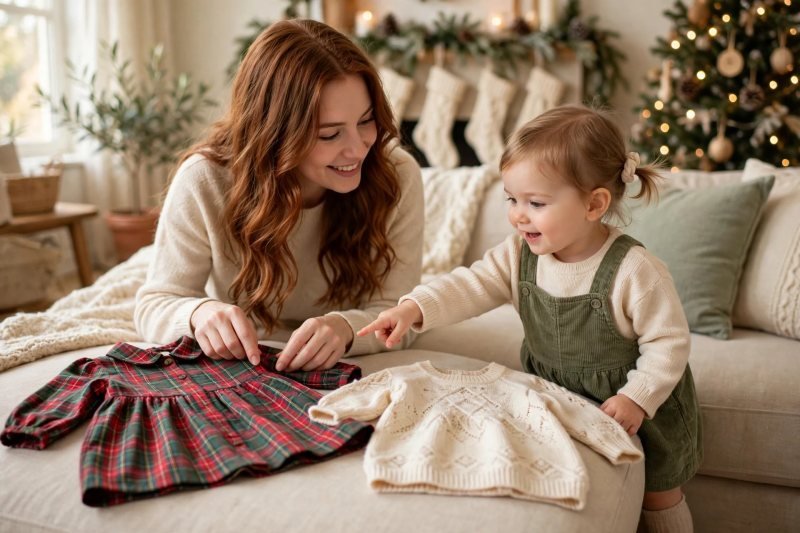
Start with classic dresses. Begin with the two dresses toddlers wear longest without complaint — (1) a red-and-green plaid dress in brushed cotton with cream knit tights and soft ballet-style flats with grip soles — the brushed cotton feels smooth rather than crisp, the skirt skims rather than clings, the tights have a wide, soft waistband, and there is nothing scratchy at the neck; lift the skirt and pull tights down together for diaper changes, and photograph this dress beside the tree where plaid reads instantly festive; and (2) a cream fair-isle style knit sweater dress in a generic diamond-and-snowflake pattern, worn with soft red leggings and non-slip socks — choose a knit with a cotton or cotton-blend feel rather than a rough wool feel, check the inside of the neckline with your palm before dressing, and let the stretchy leggings handle floor play and lap sitting while the dress stays neat on top; this is your best all-rounder, festive in photos and forgiving in real life, so reach for it whenever the plan is part party and part playdate. Say, "Soft first, pretty second — let us pick the cozy dress you love." Classics first means the season starts comfortable, and a comfortable start is what makes every later photo possible.
-
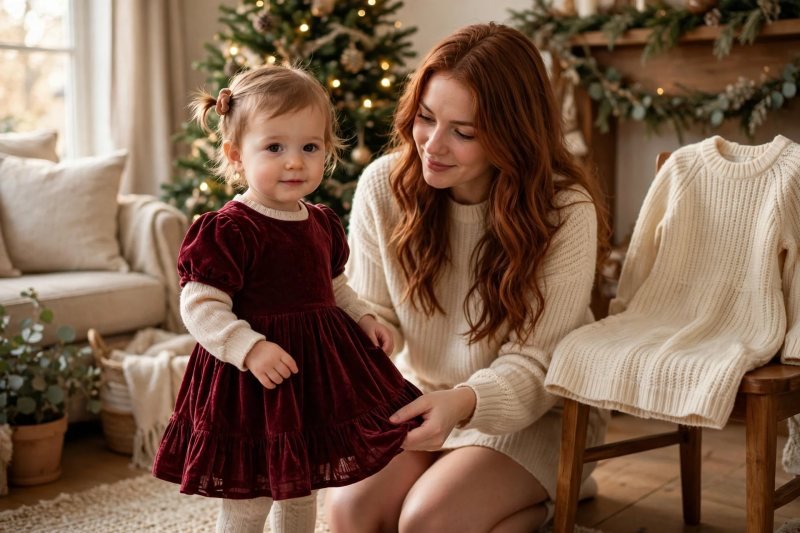
Dress up for family photos. When you want one notch dressier without losing comfort, turn to — (3) a burgundy velvet-touch dress with a soft cotton lining, worn over a cream long-sleeve snap bodysuit with cream tights — the bodysuit is the comfort trick, because the special fabric never touches skin directly, the lining glides instead of clinging, the bodysuit snaps make changes the fastest in this guide, and the rich burgundy photographs beautifully against red and green decorations; photograph this dress early, before snacks, because deep colors show every crumb with pride; and (4) an ivory knit sweater dress with cream tights and soft grip flats, worn plain with no sash at all — if the dress arrives with a tie sash, remove it or knot it once, very loosely, at the back for the photo only, because a tight sash is the first thing a three-year-old will fight and cords have no place around a toddler waist all day; the pale palette is stunning for a posed grandparent or sibling picture near a window, so save it for that one planned photo, then change if the day gets messy. Say, "This is our picture dress — we wear it, we smile, then we play again." Naming the photo dress as a short, special job helps toddlers cooperate for the five minutes it needs. Pair the picture dress with handprint reindeer cards made the same week, so the photograph and the card share the same colors and the same afternoon.
-
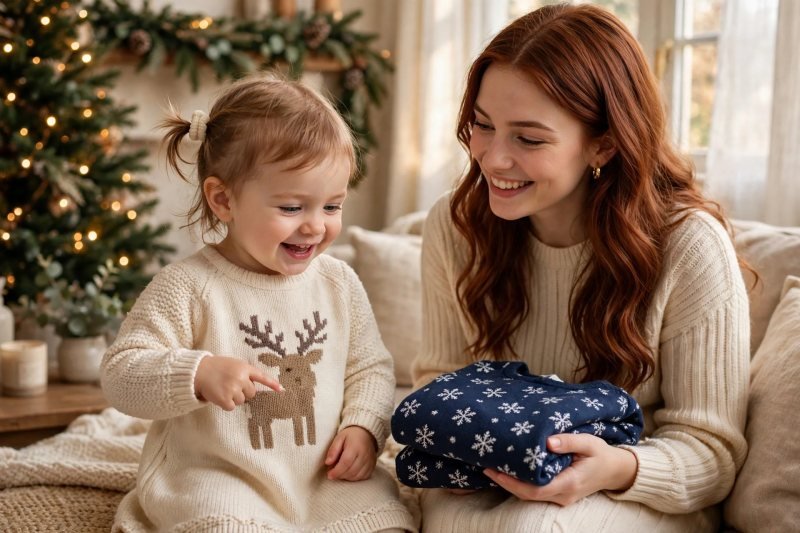
Play with gentle prints. Prints do the festive work so fabrics can stay plain and soft in — (5) a cream knit dress with a generic reindeer motif knitted into the front — a simple brown reindeer worked into the knit itself — worn with brown or red leggings and grippy socks; a knitted motif beats a stiff applique every time because it bends with the dress and never peels, cracks or scratches at the edges; photograph it head-on so the motif reads clearly, and expect your toddler to point at it all day, which keeps the dress happily on; and (6) a navy cotton dress with a scattered white snowflake print, worn with cream leggings or tights and non-slip socks — all-over prints hide a multitude of snack evidence, navy is the practical photo hero because it hides dribbles and looks smart beside red and green without competing with them, and the soft printed cotton needs no layer underneath in a warm room; this is a strong everyday-party dress that survives lunch and still looks intentional at dinner. Keep every print generic — plaid, fair-isle style patterns, reindeer, snowflakes and trees — with no licensed characters, no logos and no trademarked designs anywhere. Say, "Your dress has a reindeer — can you point to his nose?" A print a toddler can talk about is a print she will happily keep wearing.
-
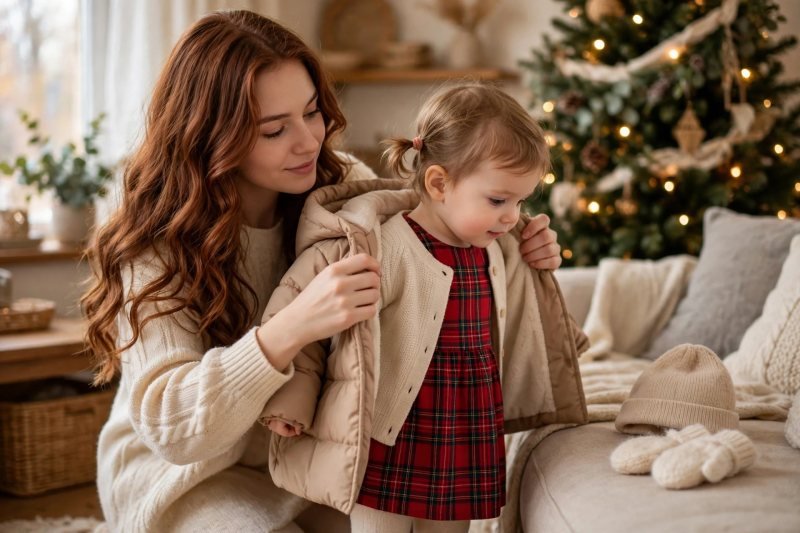
Layer dresses for cold trips out. Getting to grandparents, a service or a winter walk means layers that go on warm and come off fast over a dress, the same layering logic that makes toddler winter outfits work all season — (7) a red plaid dress layered with a cream cardigan buttoned only at the top, fleece-lined tights and sturdy shoes, finished with a cozy coat for the car — the cardigan suits a toddler who hates being fully buttoned, each layer peels independently indoors, and the tights pull down together with the lifted skirt so diaper changes stay simple even in an unfamiliar bathroom; and (8) a deep-green knit dress worn with a warm coat, a snug knit hat and mittens for the trip itself — choose a hat that fits snugly or sits softly with no cords and no long ties, keep mittens tucked into coat sleeves if your toddler pulls them off, and peel the coat and hat the moment you arrive indoors so the knit dress does not overheat her during play. The layering check for both dresses is the same one used in preschool winter outfits — warm outside, one layer off inside, nothing itchy in between. Say, "Coat on for the cold, coat off for cuddles — layers are our superpower." A toddler who knows layers come off again resists them far less.
-
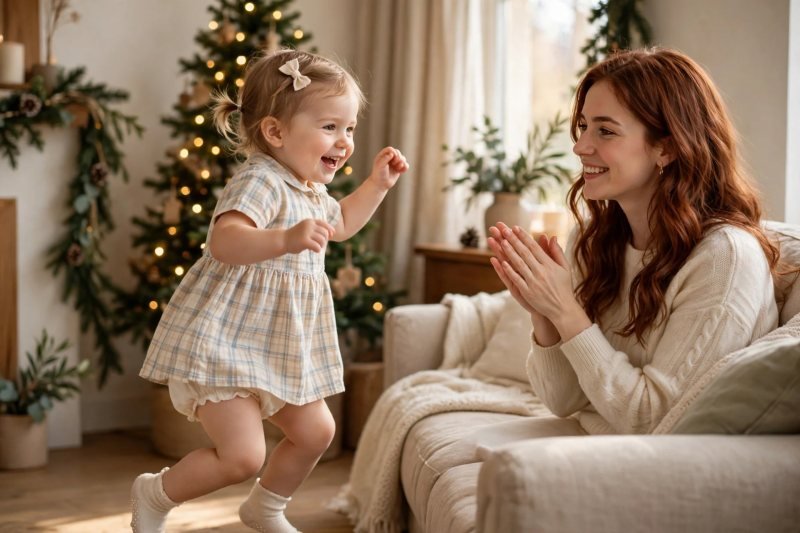
Keep cool in warm houses. Christmas houses run hot — ovens on, rooms full, heating high — so these lighter dresses prevent the red-cheeked meltdown — (9) a short-sleeve plaid dress in light cotton with soft bloomers underneath and bare legs or thin socks with grips — short sleeves end the sleeve-tugging battle, the bloomers keep climbing and floor sitting comfortable and modest, and the plaid still reads fully festive in photos even in the lightest fabric in this guide; and (10) a sleeveless cranberry dress worn over a thin white short-sleeve tee, with grippy socks — the tee protects shoulders and underarms from any dress seams, the sleeveless cut keeps arms completely free for reaching, hugging and dancing, and if the room cools you add the cardigan from the layering step rather than changing the whole outfit; photograph this dress during dancing or play, because it moves beautifully and never looks stiff. In every warm-house dress, feel the back of your toddler's neck after twenty minutes — warm and dry is right, hot and sweaty means one more layer comes off. Say, "Too warm? We take a layer off — easy." Toddlers who trust that discomfort gets fixed quickly stay dressed happily for hours.
-
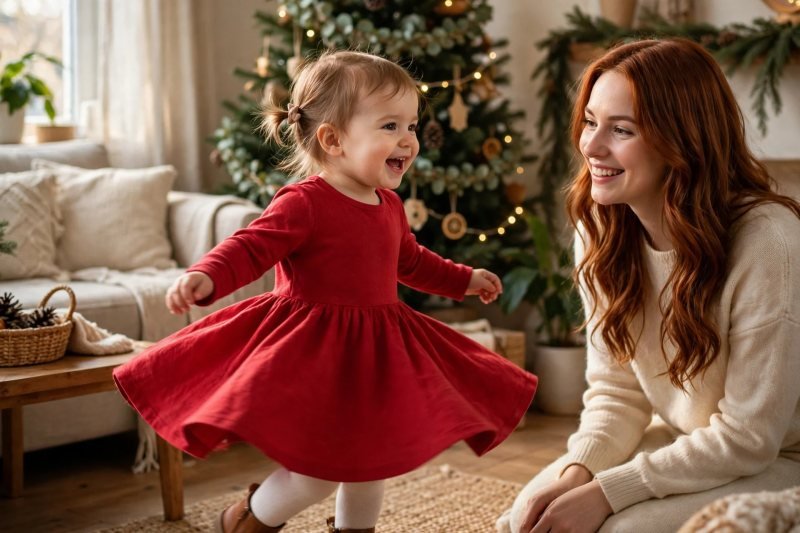
Twirl in comfort fits. Some dresses earn their place purely by how they move — (11) a full-circle twirl dress in soft red cotton jersey with soft shorts or leggings underneath and non-slip socks — the skirt is cut generously so it lifts and spins when she turns, the jersey stretches at the waist with no buttons, zips or ties anywhere, and the underneath layer keeps twirling modest on the dance floor that every living room becomes; test the twirl at home first, because a dress that spins well gets requested daily; and (12) a swing A-line dress in deep-green soft jersey with a wide, flat elastic waist and cream tights — the A-line shape skims the tummy completely, so snacks, sitting cross-legged and curling up with a book all stay comfortable, the flat elastic never digs or rolls, and the simple shape photographs cleanly against busy decorations; this is the dress for long afternoons, because nothing about it needs adjusting, ever. Both fits prove the same point to a two-year-old: a party dress can feel exactly like her favorite play clothes. Say, "Give it a twirl — does this dress love to spin?" A dress that passes the twirl test will be worn without a single negotiation.
-
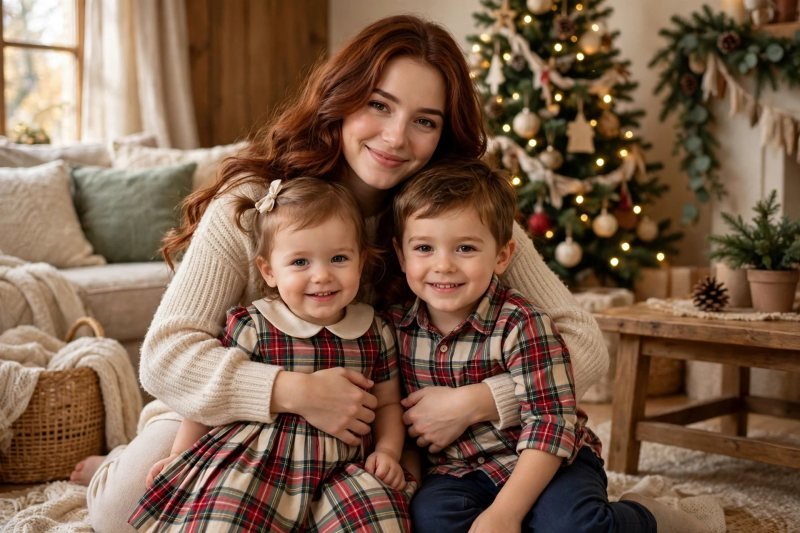
Coordinate siblings by palette. Shared colors photograph better than identical outfits, and each child keeps a dress or outfit that suits their own comfort — (13) a shared-plaid dress — your toddler in her plaid dress from the classics step while a sibling wears a plaid shirt or plaid-trimmed top with plain bottoms in the dress's deepest color; the echo reads intentional in group photos, nobody is forced into an outfit they dislike, and each child's diaper and comfort needs stay individually solved; and (14) a shared fair-isle style dress — her fair-isle style knit dress in cream while a sibling wears the same generic pattern family in red, each with their own softest bottoms; choose the pattern family, not the identical garment, and photograph siblings close together so the shared knit links them visually. Coordination by palette — red, cream, deep green, navy and plaid running through every dress in this guide — also means cousins and friends slot into group photos without anyone planning it. Say, "You match like a team, but everybody gets their own cozy." Siblings who are comfortable sit closer, smile longer and need far fewer retakes.
-
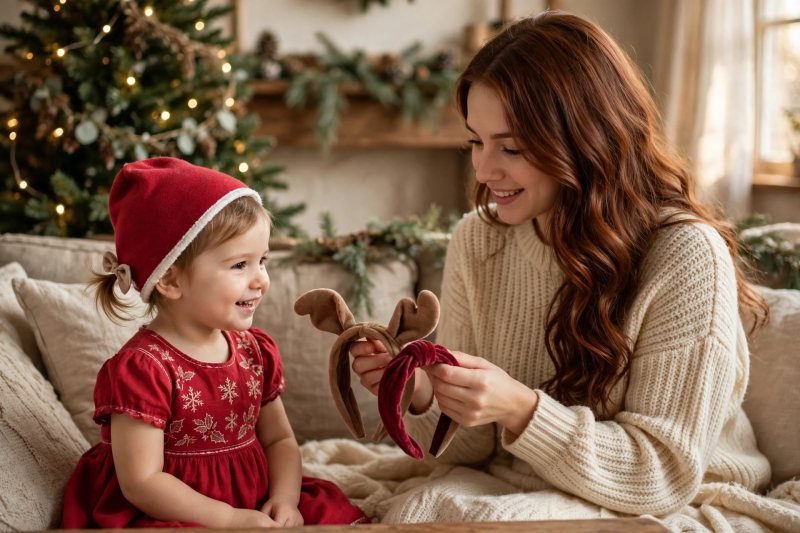
Add hats and gentle accessories. Accessories are the fastest festive upgrade for any dress and the first thing to remove if a toddler objects — (15) any favorite dress from this guide finished with a generic red hat with white trim in the style of a Santa hat, made from soft fleece with a wide, non-elastic band — the hat goes on for photos and songs and comes off for eating and naps, the band should never leave a mark, and no chin straps or cords are needed for a hat worn indoors under supervision; and (16) the same dress finished instead with a soft fabric headband — cranberry-red with a small bow, or a reindeer-ear headband with soft, floppy ears and no hard edges — check the band's inside for rough seams, stretch it over your own wrist first to gauge tightness, and treat the first head-shake as a no, because accessories are an invitation, never a requirement. Photograph accessorized dresses first, while the hat is still a novelty and smiles are genuine, then let the dress carry the rest of the day on its own considerable charm. Say, "Hat on for the photo — hat off whenever you say." A toddler in control of the hat will usually choose to wear it longer than one who is not. A paper-plate Christmas wreath made together doubles as the photo backdrop, so the hat and headband in this step are photographed against something she helped make.
-
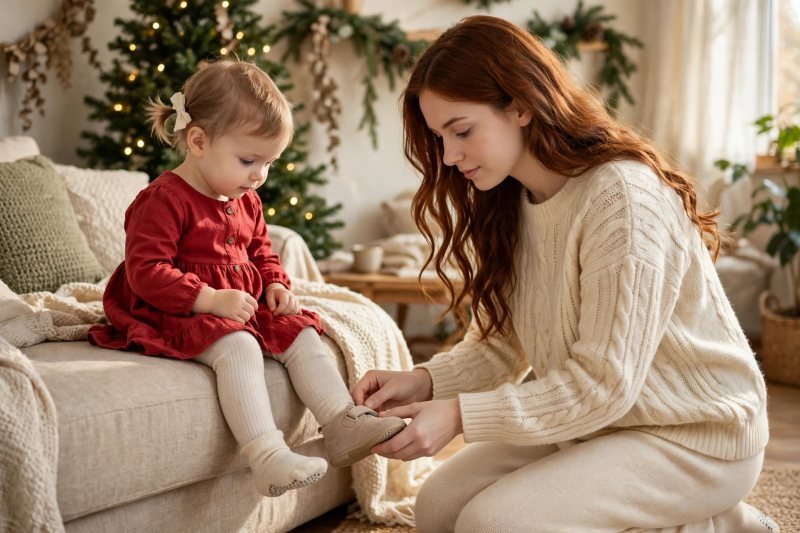
Finish feet and fix diaper access. The last details decide whether a party dress survives the whole day — (17) a red dress with a built-in snap bodysuit underneath the skirt, worn with cream leggings that pull down over it and non-slip socks with visible grips — the built-in snaps keep the dress tucked and neat with zero tucking, the pull-down leggings make this the fastest full change in the guide, and the snap line sits flat so nothing presses into her tummy when she sits; photograph it early, because it looks neatest before the third lap-climb; and (18) an elastic-waist everyday dress in soft cream knit with deep-green leggings and sturdy grip shoes — no buttons, no zips, no belts and no ties anywhere, so an older three-year-old can lift the skirt and manage the leggings alone for toilet trips, the elastic sits flat and wide rather than thin and diggy, and the shoes stay grippy for kitchen dancing. For every dress, do the floor test before the event — socks grip, shoes flex, nothing slides on your hardest floor — and pack spare non-slip socks, because one juice spill turns any sock smooth. Say, "Wiggle toes, test the grip — now you are ready to dance." Feet that feel secure make toddlers braver, bolder and far more photogenic.
-
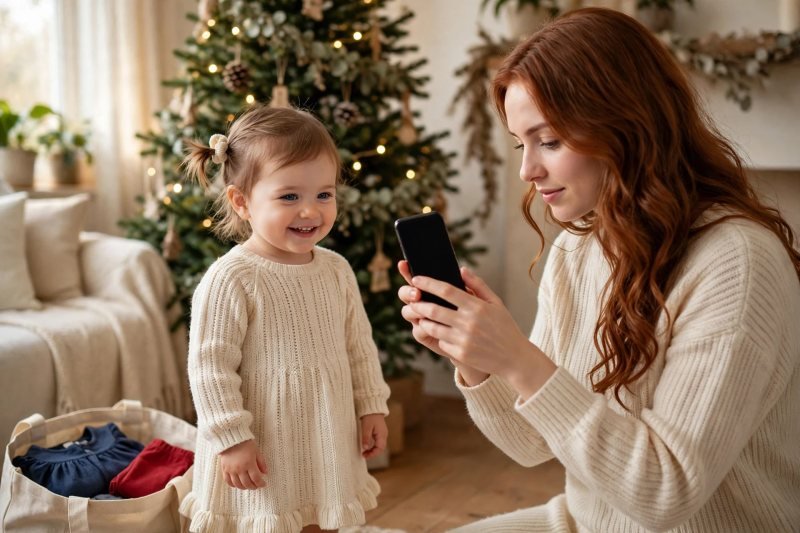
Photograph in order and pack a backup. Finish with the plan that protects every dress you have chosen — (19) an all-cream photo dress — the ivory knit sweater dress from the photo step worn first, before any food, photographed against the deepest colors in the room, the tree or a red blanket, for contrast; cream shows every mark, so this dress lives for exactly one planned photo session at the very start of the gathering, and the plain palette makes it the easiest picture of the season to print and frame; and (20) the backup hero dress, folded in your bag all day — a plain navy cotton dress with red leggings and spare non-slip socks — navy hides stains, reads festive in any light, pairs with every hat and headband in this guide, and changes a juice-soaked or muddy toddler back into a party guest in ninety seconds flat; it is the same pack-a-spare habit that saves Christmas crafts for kids from a paint, glue, or juice spill. Take your planned photos in this order — accessorized dresses first while hats are fun, the cream dress before food, prints and navy after — then stop photographing dresses and just enjoy the day, candids in whatever she is wearing. Say, "One more smile, then all play — Christmas is for playing." A short, planned photo list protects the thing the dresses were always for — a happy toddler at Christmas. When the photo order is done, the Bright Play Days learning hub gathers the play and learning ideas that carry these dresses into ordinary winter days.


Make it easier
Choose three dresses only — one classic, one photo dress, one twirl dress — and rotate them all season; toddlers love the familiar, and three well-fitting dresses beat twenty unworn ones. Dress in stages: soft bodysuit at home, party dress at the destination — arriving slightly undressed beats arriving already overheated and cross. Put the photo first: take the planned pictures in the first ten minutes at any gathering, then release everyone into comfort and candids.
Make it harder
Build a full week-of-Christmas rotation: assign one dress per event — party, photo, walk, evening, Christmas morning — and lay out all five on Sunday with tights, socks and accessories bagged per dress. Add a toddler choice board: photograph each dress laid flat, print or show the pictures, and let your three-year-old plan tomorrow's dress by pointing — real early decision-making practice. Coordinate the whole family by palette: pull the guide's colors — red, cream, deep green, navy, plaid — into adult outfits loosely so group photos harmonize without anyone buying matching sets.
Other ways to play it
- Warm-climate Christmas: swap every knit dress for its cotton twin — short-sleeve plaid, the sleeveless cranberry dress and light twirl jerseys carry the day; keep the red hat for photos only and prioritize bare feet or grippy socks indoors.
- Cold-climate Christmas: promote the layered dresses to all-day status, add fleece-lined tights under every skirt, keep the cozy coat and hat in every photo taken outdoors, and dress indoors one layer lighter than you dress yourself.
- Christmas morning only: start in the twirl dress for present-opening spins, add the red hat for photos by the tree, and keep the backup navy dress ready in case breakfast meets the first dress.
- Hem and kneel check: a party dress hem should clear the floor when she kneels to pick up a toy and when she sits cross-legged; if the hem pools, shorten the look with leggings and a lifted waist layer rather than letting her trip on it for a photo.
How it changes by age
- Age 2: Two-year-olds need the fastest changes and the fewest fastenings: favor snap-bodysuit dresses, two-layer dresses over bodysuits, elastic waists and pull-down leggings or tights. Keep accessories photo-only and brief, choose non-slip socks over shoes indoors, and expect one full dress change mid-event — the backup hero dress exists precisely for this age. Dress her last, after your own coat is on, to keep waiting-in-layers time to a minimum.
- Age 3: Three-year-olds want a say and can manage more: offer a choice between two dresses, let her try lifting the skirt and managing elastic leggings alone for toilet trips, and give her the hat decision from the accessories step. She can hold a pose for one planned photo if it is short and praised, she will test every dress with a twirl, and she loves the sibling-coordination idea when it is framed as a team uniform rather than a copy.
What they're learning
Choice and independence: picking between two soft dresses, deciding on a hat, and managing elastic waists alone — small decisions that build confidence and cooperation at dressing time. Body awareness and comfort language: learning to signal too hot, too scratchy or too tight — and being believed — teaches toddlers that their body signals matter and words fix discomfort. Color and pattern recognition: naming red, green, cream and navy, spotting plaid, snowflakes and reindeer motifs, and matching shared palettes across siblings — festive early visual learning. Sequencing and routine: base layer, dress, tights or leggings, shoes, hat — dressing in order is a real multi-step sequence toddlers practice daily, with a photo as the celebration at the end.
Clearing up
Sort the day's dresses straight into three piles as they come off — worn once and clean enough to rewear, worn and washable, and the stained heroes for a prompt soak. Hang the photo dresses and knit sweater dresses rather than folding them into the drawer crush, shake tights and leggings out before washing so lost socks surface, and check every skirt fold and pocket for hidden snacks before anything goes in the machine. Fold the unworn backup dress straight back into its bag for the next event, store hats and headbands together in one soft bag so next year's set is complete, and note which dresses your toddler actually loved — next Christmas's shortlist writes itself from that list.
Questions parents ask
What is the best Christmas dress for a toddler girl?
How do you keep a toddler girl comfortable in a Christmas dress all day?
What shoes and socks are safest with toddler Christmas dresses?
How do you dress a toddler girl for both a cold trip and a warm house?
What Christmas dress prints are best for toddler girls?
Internal link targets for publisher: handprint-reindeer-cards (step 2, anchor "handprint reindeer cards"); toddler-winter-outfits-ages-2-3 (step 4, anchor "toddler winter outfits"); preschool-winter-outfits (step 4, anchor "preschool winter outfits"); paper-plate-christmas-wreath (step 8, anchor "paper-plate Christmas wreath"); christmas-crafts-for-kids (step 10, anchor "Christmas crafts for kids"); learn (step 10, anchor "Bright Play Days learning hub"). Full 20-pick enumeration: (1) red-and-green plaid brushed-cotton dress with cream knit tights; (2) cream fair-isle style knit sweater dress with red leggings; (3) burgundy velvet-touch dress with soft cotton lining over cream snap bodysuit; (4) ivory knit sweater dress worn plain with no sash; (5) cream knit dress with generic reindeer motif knitted in; (6) navy cotton dress with scattered white snowflake print; (7) red plaid dress with cream cardigan and fleece-lined tights; (8) deep-green knit dress with warm coat, snug knit hat and mittens for travel; (9) short-sleeve light plaid cotton dress with soft bloomers; (10) sleeveless cranberry dress over thin white short-sleeve tee; (11) full-circle red cotton jersey twirl dress; (12) swing A-line deep-green jersey dress with wide flat elastic waist; (13) shared-plaid sibling dress echoing a sibling plaid shirt; (14) shared fair-isle style sibling dress in cream with sibling in red; (15) favorite dress plus generic red hat with white trim; (16) favorite dress plus soft cranberry or reindeer-ear headband; (17) red dress with built-in snap bodysuit and pull-down cream leggings; (18) elastic-waist cream knit dress with deep-green leggings and grip shoes; (19) all-cream ivory photo dress photographed before food; (20) navy backup hero dress with red leggings folded in a bag. Count verification: Instructions contain numbered markers (1) through (20), each appearing exactly once, distributed 2+2+2+2+2+2+2+2+2+2 across steps 1–10, summing to exactly 20. Imagery discipline: 100% generic festive imagery — plaid, fair-isle style knits, generic reindeer, snowflake and tree motifs and a generic red hat only; no licensed characters, no logos, no trademarked prints in text or images; children fully clothed in every scene; dressing shown as dresses laid out or worn over clothes.


