


Reading Comprehension for 1st Grade: 10 Questions to Ask After Every Book
Build 1st grade reading comprehension by asking the same ten questions after every book: predict from the cover, guess what happens next mid-story, then retell the story, discuss the character's feelings, the setting, one tricky word, why the character acted, a personal connection, the main idea, and their opinion. Fifteen to twenty-five warm minutes per book, asked conversationally — not as a quiz — is all it takes.

The short version
- Decoding and understanding are different skills — comprehension needs its own practice.
- The same ten questions every book: predicting, recall, characters, setting, vocabulary, inference, connection, main idea, opinion.
- Ask predicting questions during the story; ask everything else after the last page.
- Model your own thinking aloud — "I think she's scared because…" — before asking.
- Accept every honest answer; a thoughtful wrong guess beats a shrug.
- Keep it conversational: story time with opinions, never a test.
- Five questions on a tired evening still counts as a complete session.
- Age
- Ages 6–8
- Play time
- 20 min
- Mess
- None
- Difficulty
- Easy
- Where
- Indoor
Why kids love this
No worksheets, no tests, no desk — just story time with a grown-up who asks what they think. Kids love being the expert on their own opinions, predicting twists before they happen, and catching you out when their prediction beats yours. The "sell it to a friend" finale turns them into little book critics, and most start volunteering answers before you even ask.
What you'll need
- One picture book or early chapter book you already own (any book works)
- A cozy reading spot you already have — couch, bed, or blanket fort
- Optional: a sticky note and pencil to jot down your child's funniest answers
Before you start
1. Choose a book at a comfortable level — one your child can read mostly on their own, or one you'll read aloud while they do the thinking. 2. Skim the book yourself first (two minutes) and note one page about two-thirds through where something exciting is about to happen — your pause point for question 2. 3. Notice one word that might be unfamiliar — you'll use it for the vocabulary question. If none stands out, use one that tripped your child up while reading. 4. Settle in somewhere comfortable and distraction-free. Screens away, both of you.
How to do it
-
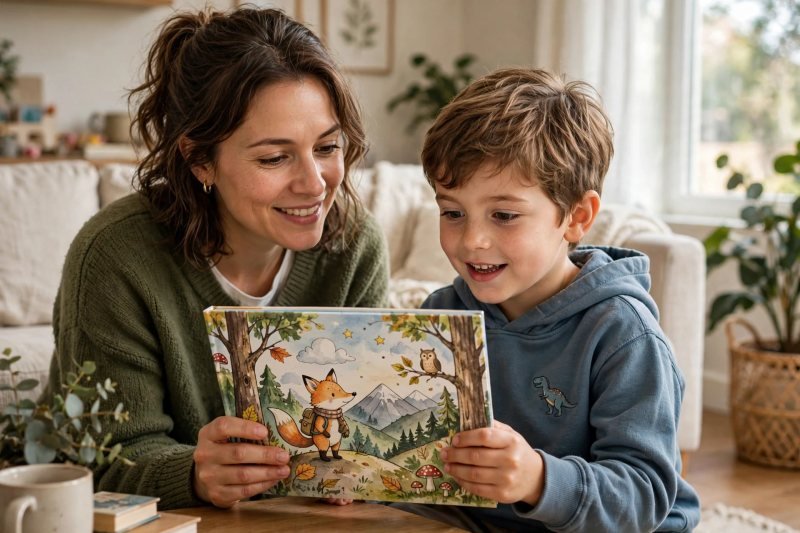
Step 1 — Study the cover and predict. Before opening the book, look at the cover and read the title together. Ask: "What do you think this book is about?" There are no wrong predictions — wild guesses make the story more fun to check against. If your child is shy, guess first yourself to show how it's done.
-
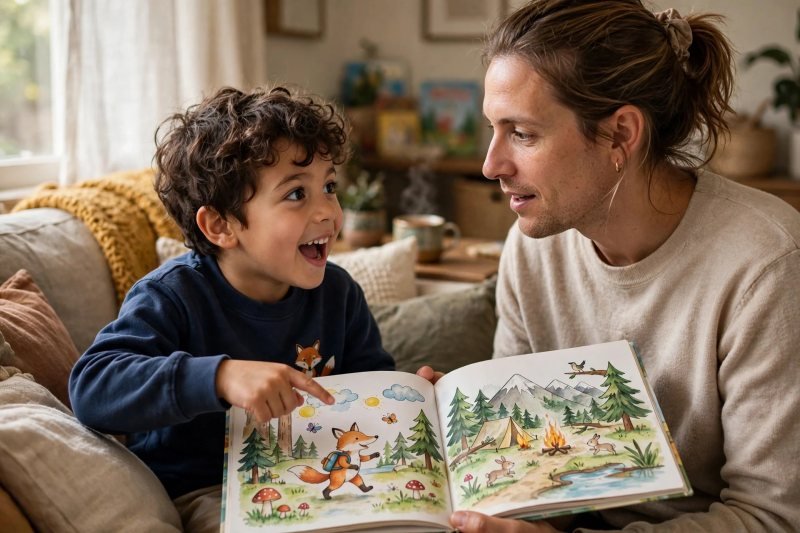
Step 2 — Read to your pause point, then guess what happens next. Read together — your child reads, you read, or you take turns. At the exciting spot, stop and ask: "What do you think happens next? What makes you think that?" That second question is the magic: it teaches your child to back up predictions with evidence.
-
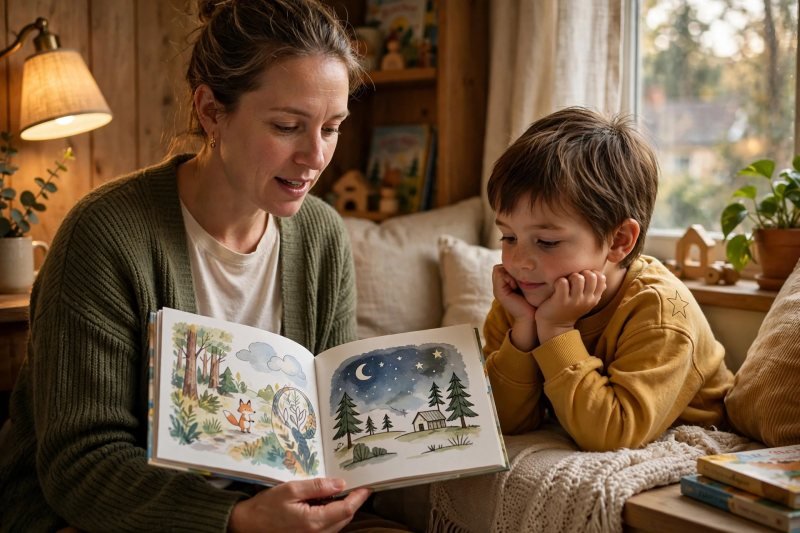
Step 3 — Finish the story straight through. Read the rest without further interruptions and enjoy it. The story deserves a clean ending, and the questions below work better once the whole tale is sitting complete in your child's head. Resist the urge to quiz as you go.
-
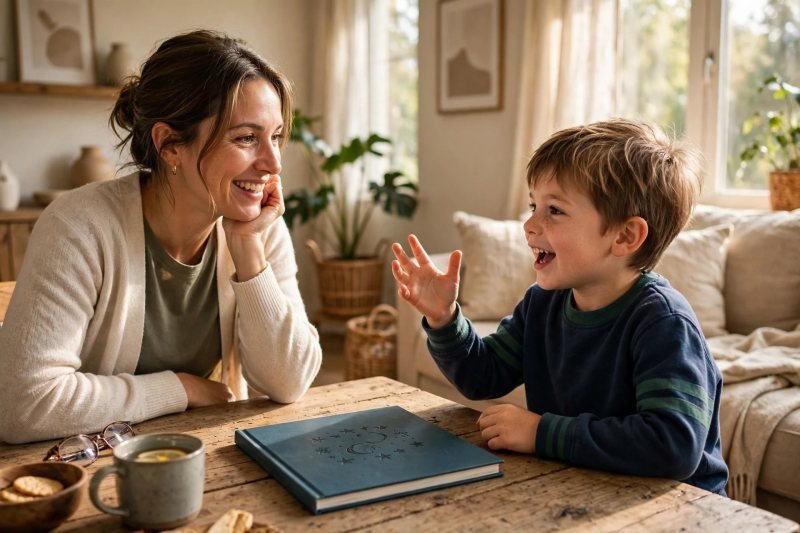
Step 4 — Retell it together: first, next, last. Close the book and ask: "What happened first? And then? How did it end?" Take turns — you say the first part, your child says the next. Retelling in order is the backbone of comprehension, and doing it as a team keeps it playful, not pressured.
-
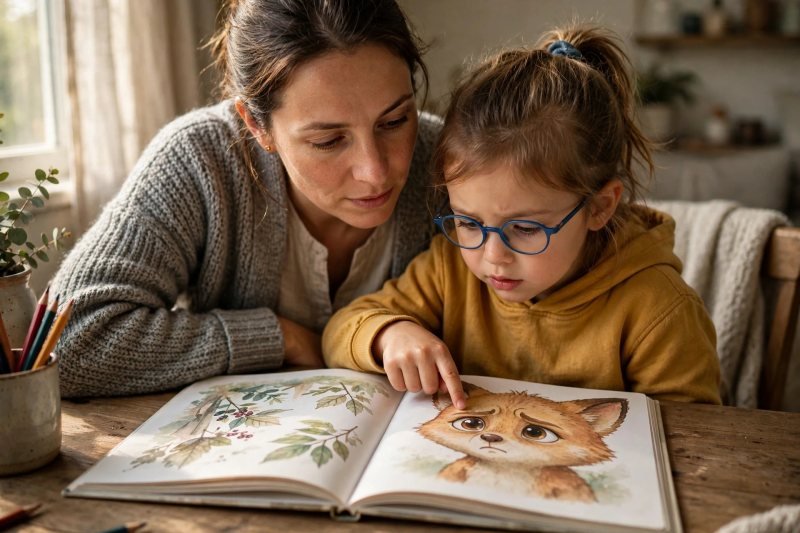
Step 5 — Talk about the character's feelings. Ask: "How was [the main character] feeling when [a key moment]? What tells you that — the words or the picture?" Hunt for clues in the illustration together: faces, posture, colors. You're teaching your child that evidence lives inside the story, waiting to be found.
-
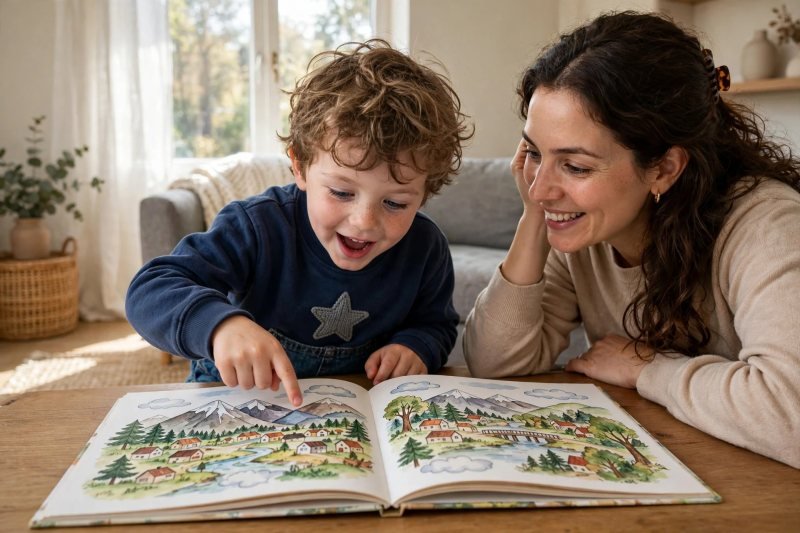
Step 6 — Pin down the setting. Ask: "Where did this story happen? And when — daytime, nighttime, long ago? How could you tell?" Kids love playing detective here, and setting questions quietly build the habit of noticing details they read right past the first time.
-
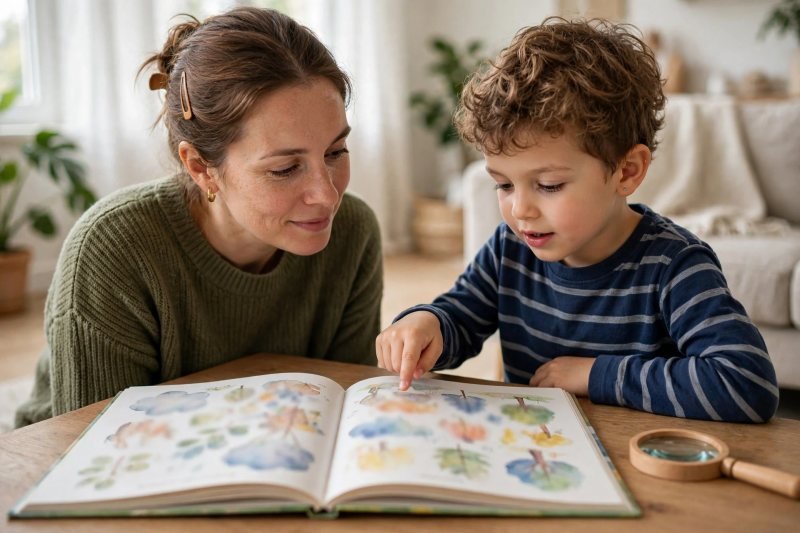
Step 7 — Crack one tricky word together. Return to the word you noted: "Remember this word? What do you think it means?" Coach your child to hunt for clues — the picture on the page, the rest of the sentence, what would make sense here. Celebrate the detective work, not just the right definition.
-
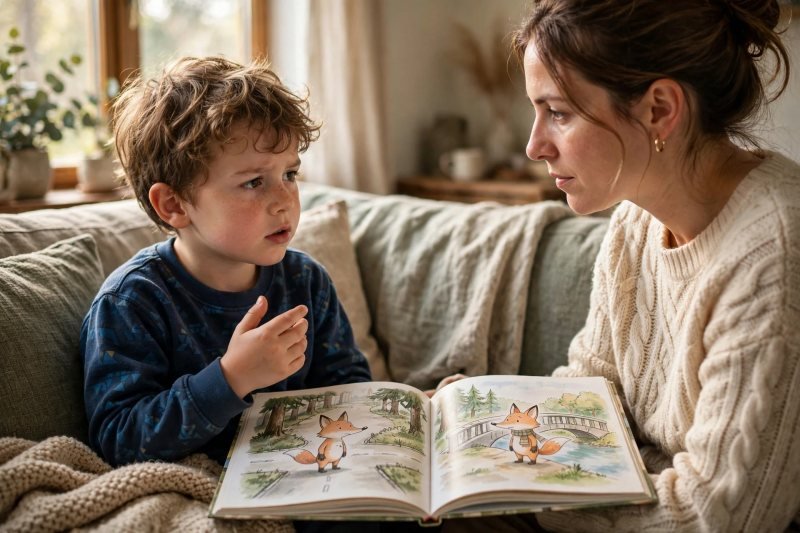
Step 8 — Ask why the character did it. "Why do you think [the character] did that?" This is inference — reading between the lines — and the deepest thinking in the routine. Accept any thoughtful reason; if your child is stuck, offer two possibilities and ask which feels right and why.
-
Step 9 — Connect the story to real life. Ask: "Has anything like this ever happened to you? What did you do?" Stories that hook onto your child's own memories stick — and children who connect books to their lives read with more curiosity next time. Share your own connection too; it's a conversation, not an interview.

-
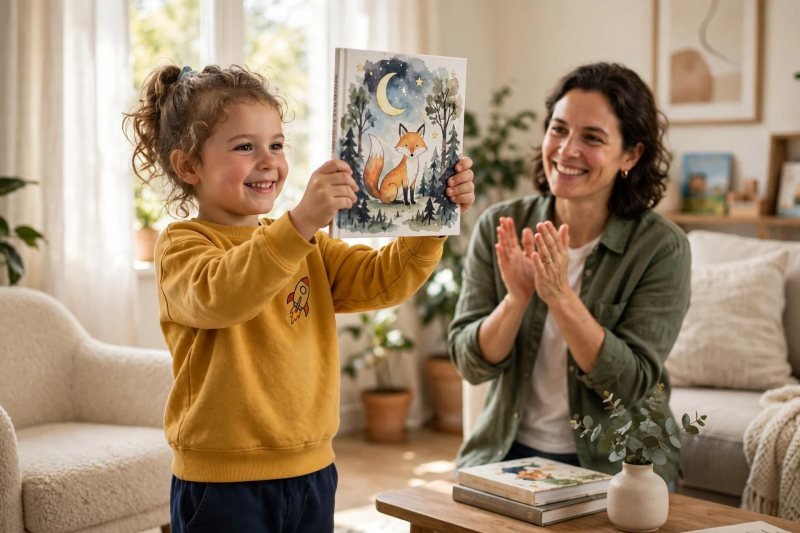
Step 10 — Finish with the book pitch. Close with three mini-questions: "What is this book mostly about — in one or two sentences? Did you like the ending — would you change anything? And what would you tell a friend to make them want to read it?" The pitch is the payoff: summarizing plus opinion, delivered with a critic's pride. End with genuine praise for their thinking.


Make it easier
- Ask only the cover question, the retelling question and the feelings question — three questions is a complete session for a wiggly six-year-old.
- Answer each question yourself first, then ask what your child thinks — modelling halves the difficulty.
- Let your child answer by pointing at pictures instead of using words.
- Skip questions entirely on tired evenings; the story alone still counts.
Make it harder
- Add "What makes you think that?" after every answer, every night — evidence-backed thinking is the advanced level.
- Ask your child to predict the ending from the halfway point, then compare after the last page.
- Have your child ask you the ten questions after the next read-aloud — flipping roles is the deepest practice.
- Run the routine across several nights with a chapter book, retelling "so far" each evening.
Other ways to play it
- Prediction journal: jot each night's cover prediction on a sticky note; check it after the story and celebrate the close ones.
- Character hot seat: your child pretends to be the main character and answers your questions in character.
- Ending remix: your child tells an alternate ending, then defends why theirs is better.
- Sibling book club: an older sibling asks the questions — teaching the routine cements it twice over.
How it changes by age
- Built for ages 6–8, the 1st grade window when decoding is getting steady and the brain has room to think about meaning. Younger siblings (4–5) can enjoy the cover question, the feelings question and the retelling with heavy help — keep it to two or three questions. Our rhyming words for preschoolers list is a gentle warm-up for them. Older 7–8 year olds can add "what makes you think that?" everywhere and run the routine on early chapter books. If questions consistently frustrate your child, drop back to just enjoying stories together for a few weeks; comprehension grows on a diet of stories, with or without the questions.
What they're learning
Predicting: using covers, titles and story clues to guess what comes next Recall and sequencing: retelling a story's beginning, middle and end in order Character analysis: naming feelings and finding evidence in words and pictures Setting awareness: noticing where and when a story happens Vocabulary strategies: working out new words from context and illustrations Inference: reading between the lines to explain why characters act Text-to-self connections: linking stories to their own experiences Main idea: summarizing a whole book in one or two sentences Evaluation: forming and defending an opinion about a story
Clearing up
Zero clearing up. Close the book, put it back on the shelf, and — if you kept one — stick the prediction sticky note inside the front cover as a souvenir of the evening's thinking. Nothing to wash, store, or charge.
Questions parents ask
How can I improve my 1st grader's reading comprehension at home?
What questions should I ask after reading a book with my child?
Should I ask questions while reading or after the book is finished?
What if my child can't answer comprehension questions and just says "I don't know"?
How do I know if my 1st grader understands what they read?
Do picture books really count for 1st grade reading practice?
How can I make read-aloud time build real reading comprehension in 1st grade? If your 1st grader can sound out the words but draws a blank when you ask what the story was about, you're seeing one of the most common quirks of early reading: decoding and understanding are two different skills, and they don't always grow together. The fix for reading comprehension in 1st grade needs no worksheets and no special training — just conversation. This plan gives you ten questions to ask after every book, organized by the kind of thinking each one teaches: predicting, recall, characters, setting, vocabulary and opinion. The numbered steps below walk you through one complete read-aloud session, from the cover to the last question, in about 15 to 25 warm minutes. No quiz tone, no right-answer pressure — to your child, this should feel like chatting about a good story, because that's exactly what it is.
Why do kids who read the words still miss the meaning? Reading the words is only half the job. A child can decode every word of a story and still walk away with no picture of what happened — the words went in, but the story never landed. Comprehension is what happens between the sentences: noticing how a character feels, using a picture to figure out a new word, remembering what happened three pages ago. Young readers don't do this automatically; they learn it by hearing grown-ups think aloud about stories. Every question below hands your child a small piece of your thinking: "I wonder what she'll do next" becomes "What do you think happens next?" Run this for weeks and months, and the questions move inside your child's head — they start asking them of themselves. That's the goal. You're not testing; you're installing a voice.
Which ten questions should I ask after every 1st grade book? Ask the same ten questions after every book for a few weeks and the routine becomes invisible — your child starts anticipating them, and anticipation is thinking. There are no single "correct" answers to most of these; a thoughtful wrong guess beats a shrug every time. The ten questions, in session order: Before you open the book — 1. Looking at the cover and the title, what do you think this book is about? (predicting). Halfway through — 2. What do you think is going to happen next? (predicting — now with evidence). After the last page — 3. What happened first, and what happened next, and how did it end? (recall). 4. How was the main character feeling when [a key moment]? What tells you that? (characters). 5. Where and when did this story happen? How could you tell? (setting). 6. What do you think [one tricky word] means? What helped you figure it out? (vocabulary). 7. Why do you think the character did that? (inference). 8. Has something like this ever happened to you? (connecting to their life). 9. What is this book mostly about — in one or two sentences? (main idea). 10. Did you like the ending? Would you change anything? How would you convince a friend to read this book? (opinion). Accept every honest answer, including "I don't know" — just follow it with "What do you think, though?" Some evenings you'll only reach five or six questions before attention drifts. That's a complete session; the routine matters more than the count.
Should I ask questions during the story or wait until the end? Do both, but keep different questions in different slots. Predicting questions belong during the story — they run on curiosity, and curiosity has a short shelf life. Pause once at the cover (question 1) and once at a juicy moment about two-thirds through (question 2), then read on without pausing every page. Constant interruptions turn a story into a quiz and drain the enjoyment that comprehension feeds on. Everything else waits until after the last page, when the whole story exists in your child's head at once — retelling, characters, setting and main idea all need the finished picture. Tie the vocabulary question to a word that actually tripped your child up during reading, and circle back to it right after you finish, while the sentence is still fresh.
What do I do when my child answers 'I don't know' to everything? First, check the clock: a tired child at 8 p.m. genuinely has nothing left, and no question fixes that. Read earlier in the day, or skip the questions some nights. If "I don't know" shows up even when your child is fresh, the question is too big — shrink it. Instead of "What happened first, next, and last?", try "What was the funniest part?" Instead of "Why do you think she did that?", try "Was she happy or mad right there?" Offer two choices, or answer the question yourself first — "I think he was scared, because look at his face" — and ask, "What do you think?" Modelling your own thinking aloud is the single most effective move in this whole plan, and it costs nothing. Sometimes a shrug is a boundary, not a failure: drop the question, enjoy the book, and ask it again next week. Many children need to hear a question three or four times before they attempt it.
What level of book should we use for comprehension practice? Use books your child can read almost comfortably — or read harder books aloud yourself while they do the thinking. If every sentence is a decoding battle, there's no brain left for the story; that's your sign to drop down a level — our CVC words list and blending sounds activities rebuild the sounding-out step. Picture books absolutely count. A 1st grader studying a character's face in the illustrations is doing real comprehension work — pictures are evidence, and questions 4, 5 and 7 all run on them. Many families alternate: some nights the child reads (their how to teach a child to read practice), other nights the parent reads while the child thinks. Both count. For fluency support, our sight words for kindergarten collection helps easy words fade into the background so the story can step forward.

save it for later
Pin this for the next rainy afternoon
Keep it on a board so it is there when you need it, rather than when you happened to find it.
Save to Pinterest


