


Scooping Out a Pumpkin
The insides are the best part. Scooping is a proper sensory activity, and the washed seeds do a week of counting afterwards.
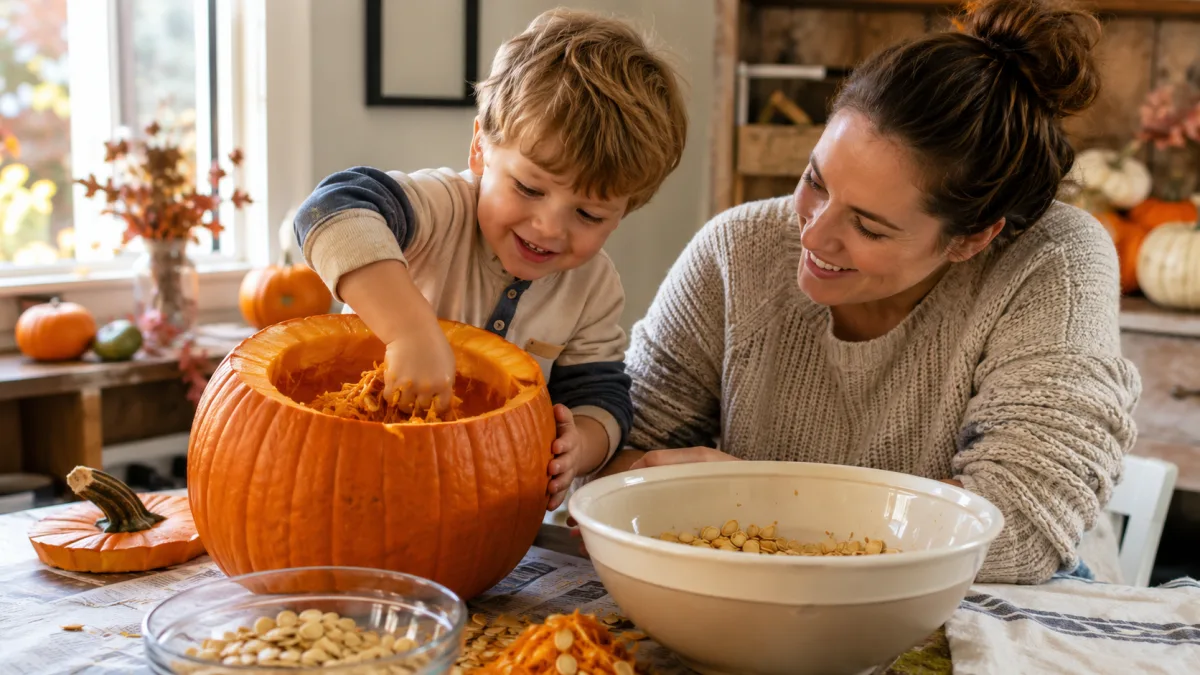
Let children scoop the insides out of a pumpkin with their hands and a spoon, then wash, dry and sort the seeds. Suits ages 2 to 8, takes about 30 minutes, and the carving stays an adult job.
The short version
- Cut a generous opening so an arm fits comfortably.
- Hands before tools — the scooping is the activity.
- Save the seeds. They are a second activity for free.
- Age
- Ages 2–8
- Prep
- 5 min
- Play time
- 30 min
- Mess
- High
- Difficulty
- Easy
- Where
- Indoor
Why kids love this
It is cold, stringy, slimy and completely socially acceptable to plunge both arms into, which is a rare combination. Children who normally avoid messy textures often make an exception for a pumpkin, because there is an obvious job to do.
What you'll need
- A pumpkin
- A large sharp knife (adult only)
- A big metal spoon, or an ice cream scoop
- A large bowl for the insides
- A colander and a tea towel for the seeds
- Newspaper or a wipeable cloth for the table
Before you start
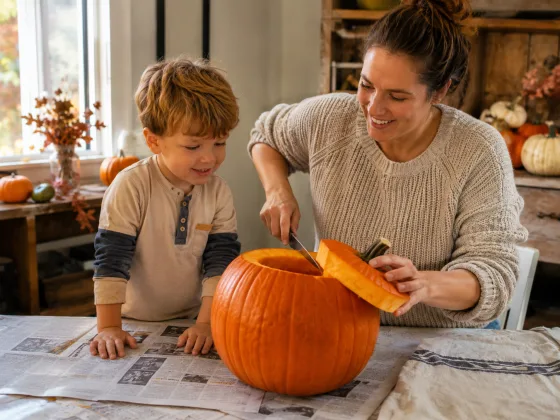
Cut the lid off the pumpkin yourself before you call anybody. Cut a generous opening — a small hole means a stuck arm and a frustrated child. Newspaper down, sleeves rolled up.
How to do it
-
Cut the top off the pumpkin and set the lid aside.
-
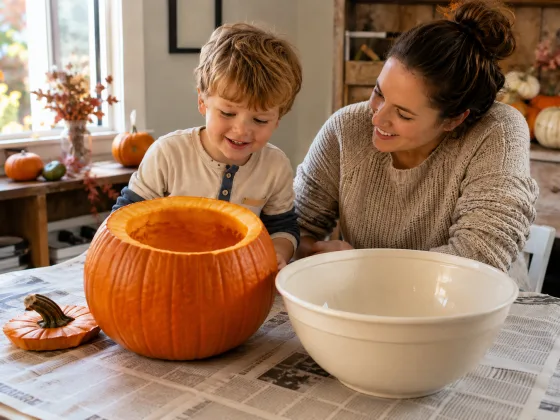
Put the pumpkin on newspaper with a big bowl next to it.
-
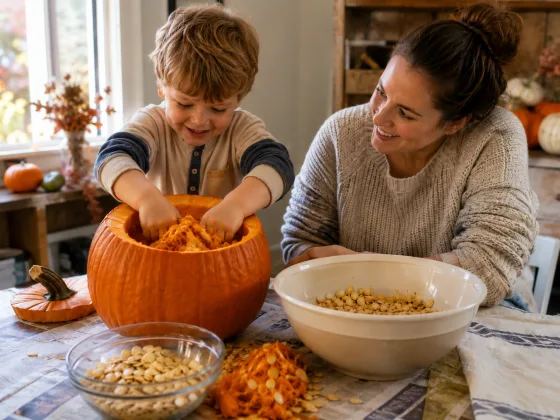
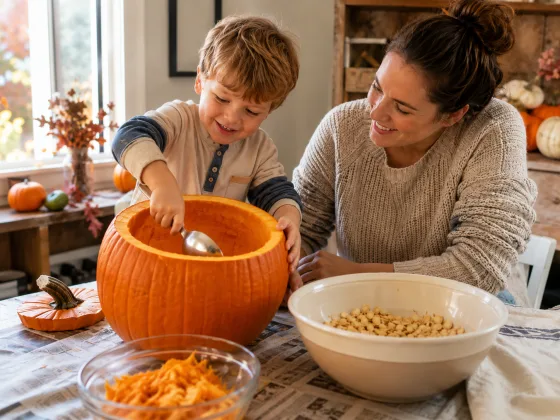
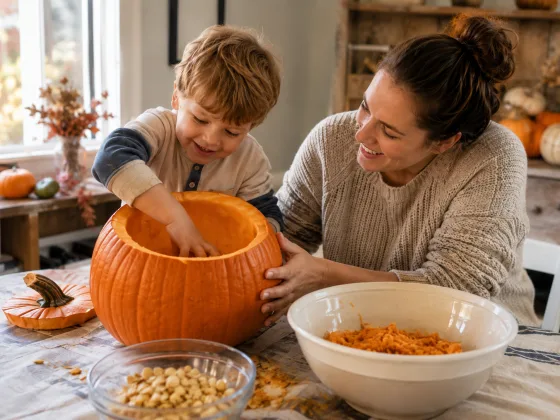
Let them reach in with both hands first, before any tools. This is the good bit.
-
Give them the spoon for scraping the sides once the loose stuff is out.
-
Keep going until the inside walls feel smooth.
-
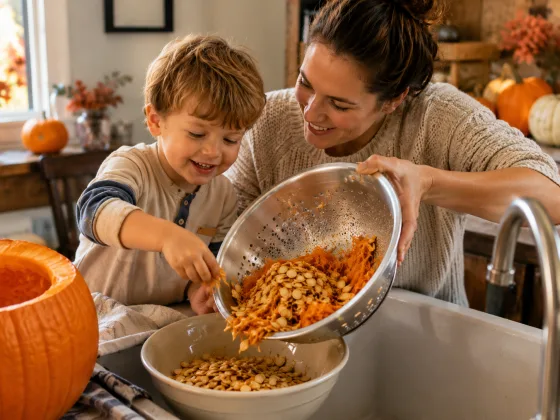
Tip the insides into a colander and pick the seeds out together.
-
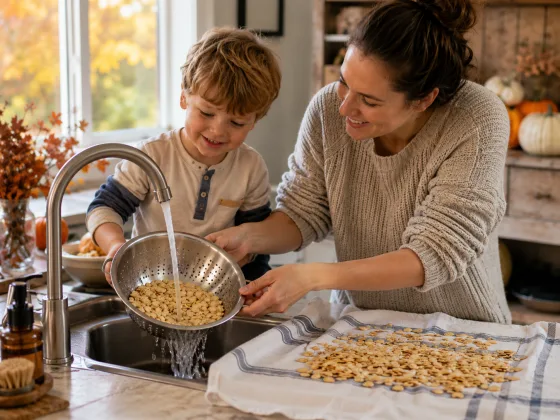
Rinse the seeds under the tap and spread them on a tea towel to dry.
-
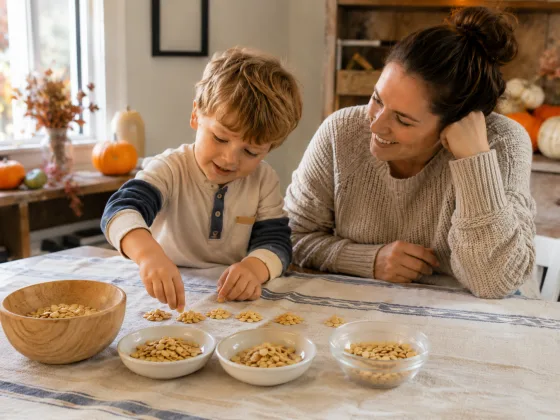
Once dry, count and sort them — that is a second activity for another day.
Make it easier
A smaller pumpkin. A big one is genuinely hard work and a three-year-old will give up halfway.
Make it harder
Ask them to count the seeds into groups of ten, or to guess how many there are before you start and see how close they got.
Other ways to play it
- Roast the dried seeds with a little oil and salt for a snack.
- Use the dried seeds for counting, sorting or gluing onto a picture.
- Draw the face on with a marker instead of carving it.
- Paint the whole pumpkin rather than cutting it at all.
- Grow one: plant a few seeds in a pot in spring and see what happens.
How it changes by age
- Two to three: hands in, a few handfuls out, then off to do something else. That is fine.
- Four to five: they can do most of the scooping with a spoon.
- Six and up: the whole job, plus washing and drying the seeds, plus estimating the count.
What they're learning
The texture is the sensory part. The seeds are the maths part — counting, grouping and estimating, with a genuinely surprising number at the end. There is also a good conversation in it about seeds and what they are for.
Clearing up
Roll up the newspaper with the stringy insides inside it. The shell goes on the compost after a few days; a carved pumpkin starts to collapse within about a week.