


Real Kitchen Jobs a Small Child Can Actually Do
Washing, tearing, stirring and sprinkling. Eight jobs that are genuinely useful on a busy cooking day.
Eight real kitchen tasks young children can do safely on a busy cooking day: washing vegetables, tearing herbs, stirring cold mixtures, mashing, sprinkling and laying the table. Ages 2 to 8.
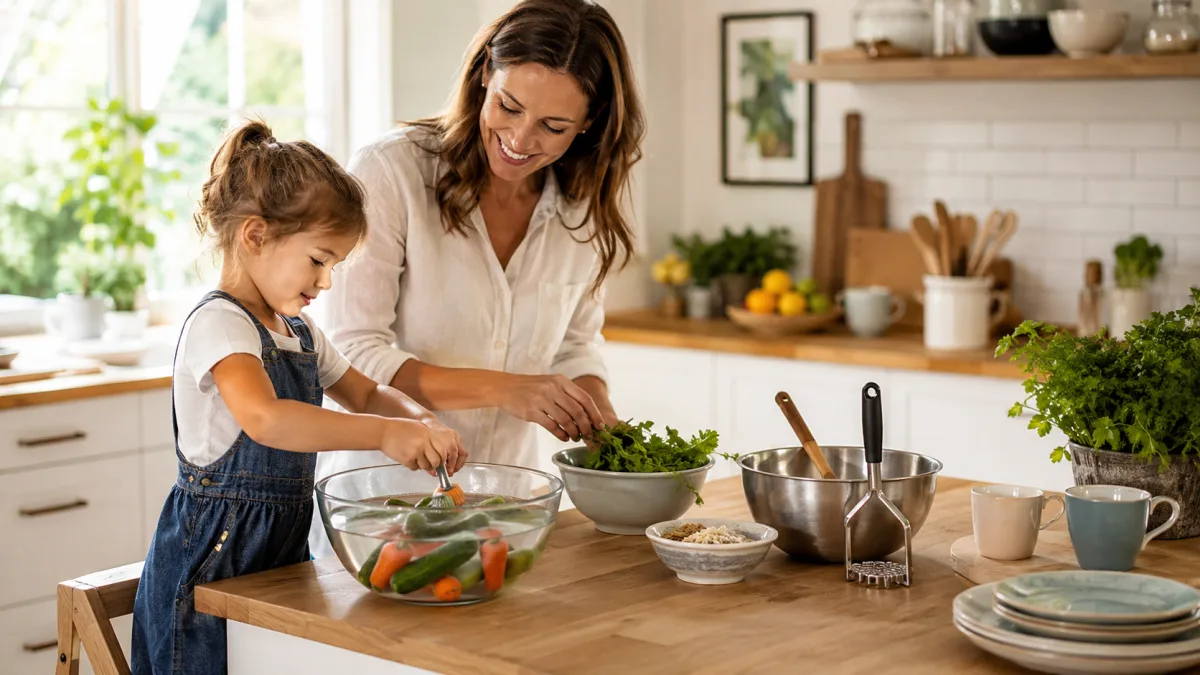
The short version
- Set up away from the hob. That decision does most of the safety work.
- Washing vegetables is the best job for a toddler.
- Give a small bowl, never the whole packet.
- Age
- Ages 2–8
- Prep
- 5 min
- Play time
- 30 min
- Mess
- Medium
- Difficulty
- Easy
- Where
- Indoor
Why kids love this
It is real. A child washing potatoes that genuinely go in the oven is doing something that matters, and they know the difference between that and a pretend job. It also puts them at the counter beside you rather than under your feet, which on a big cooking day is the entire point.
What you'll need
- A sturdy step or a low table
- A bowl of water and a brush for washing
- A colander
- Herbs to tear
- A masher
- Cold mixtures to stir
- A small jug for pouring
Before you start
Set up a station away from the hob and the oven. That is the single decision that makes this safe. Roll sleeves up, put an apron on, and get the water at hand temperature.
How to do it
-
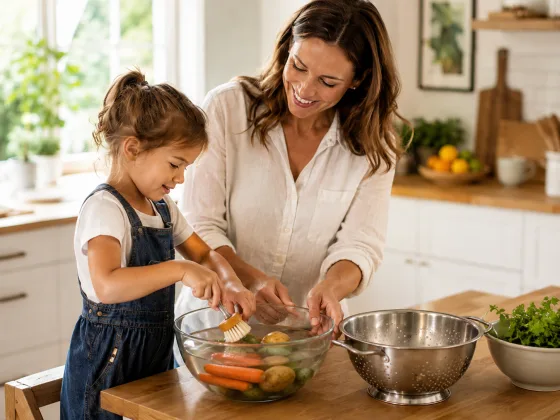
Washing: give them potatoes, carrots or apples in a bowl of water with a brush. This is the best job for a two-year-old and lasts a surprisingly long time.
-
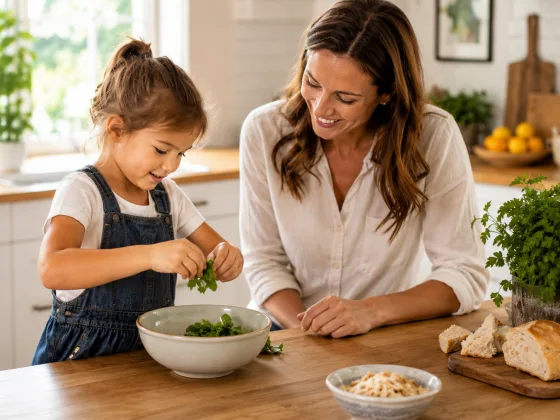
Tearing: hand them herbs, lettuce or bread to tear into a bowl. No tools, no risk.
-
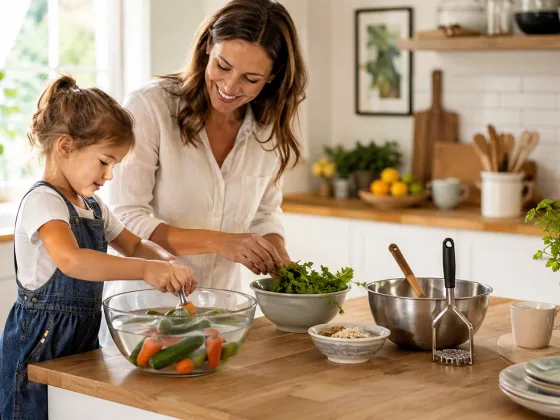
Stirring: anything cold and thick — batter, dressing, a bowl of dry ingredients.
-
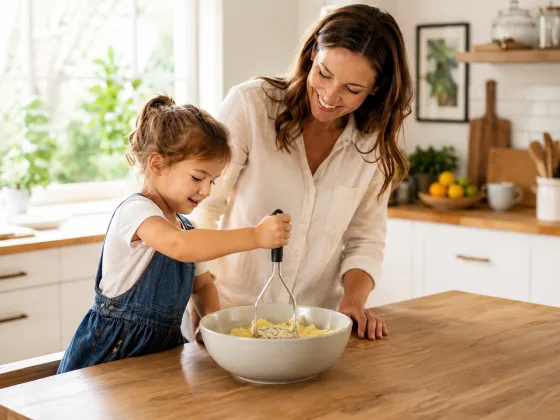
Mashing: cooked potato or banana once it has cooled. Real work and very satisfying.
-
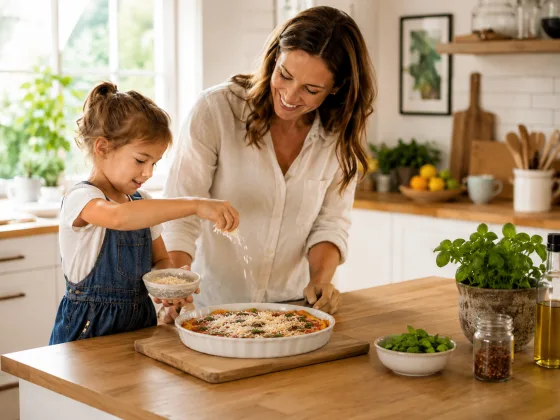
Sprinkling: cheese, herbs or seeds over the top of something. Give them a small bowl, not the whole packet.
-
Peeling: hard-boiled eggs, satsumas, or garlic cloves for an older child.

-
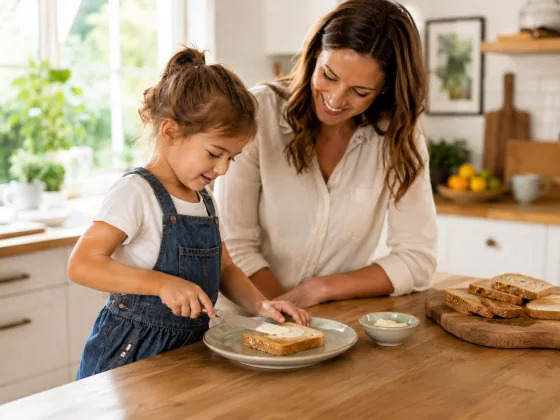
Spreading: butter or soft cheese on toast with a blunt knife.
-
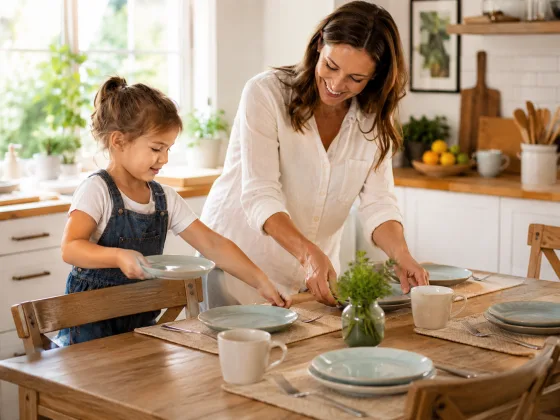
Laying the table: counting out plates, forks and cups, one each.
Make it easier
Washing and tearing only. Both are completely safe and neither can go wrong.
Make it harder
Give a six or seven-year-old the whole of one dish, with you reading the steps out, and let them decide when it is done.
Other ways to play it
- Give them a whole small job start to finish, like making the salad.
- Let them choose between two vegetables for dinner.
- Write them a picture list of their jobs.
- Make it a weekly thing so they get better at the same task.
- Let an older child read the recipe out to you.
How it changes by age
- Two: washing vegetables in a bowl, and tearing.
- Three to four: stirring, mashing, sprinkling, laying the table.
- Five and up: peeling, spreading, measuring, and using a blunt knife on soft things with supervision.
What they're learning
Laying the table is early one-to-one matching — one plate each, one fork each — which is the same thinking that underpins division. Measuring, pouring and counting out ingredients is maths that has an obvious purpose.
Clearing up
Wiping the counter afterwards is a job too, and most children like it more than the cooking.