


Counting the Stairs (and Everything Else)
Not really an activity — a habit. Counting things out loud all day does more for early maths than any worksheet.
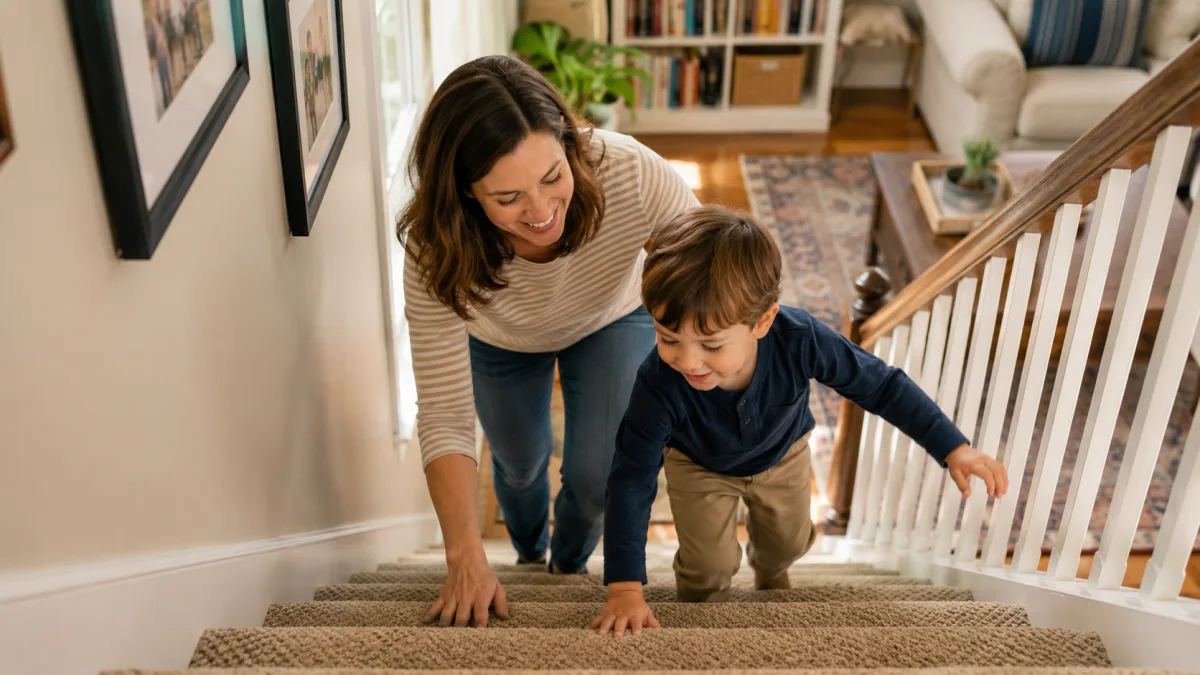
Build counting into everyday moments by counting stairs, peas, socks and steps out loud with your child. Needs nothing, suits ages 2 to 5, and works in short bursts throughout the day.
The short version
- Touch each thing as you count it — that is the part that teaches.
- Ask "so how many?" at the end.
- Five counted accurately beats twenty recited fast.
- Age
- Ages 2–5
- Play time
- 5 min
- Mess
- Low
- Difficulty
- Easy
- Where
- Indoor
Why kids love this
Children like joining in with something rhythmic, and counting up the stairs quickly becomes a thing they start themselves. It also gives a small child a way of taking part in a boring moment — walking upstairs, laying the table, waiting for toast — which is why it sticks.
What you'll need
- Nothing. Stairs, socks, peas, steps, buttons, cars — whatever is already there.
Before you start
None, but decide to do it. This one only works if it becomes automatic, and that takes a few days of remembering.
How to do it
-
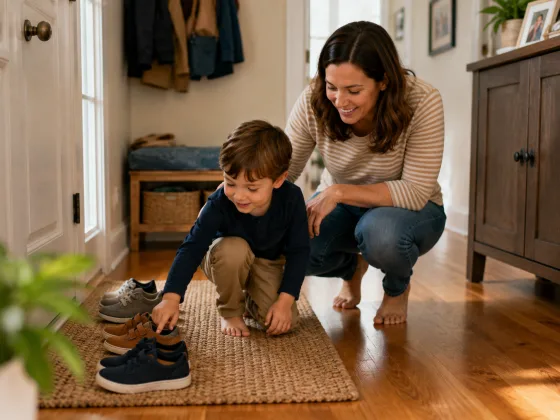
Pick one regular moment: the stairs, laying the table, or putting shoes on.
-
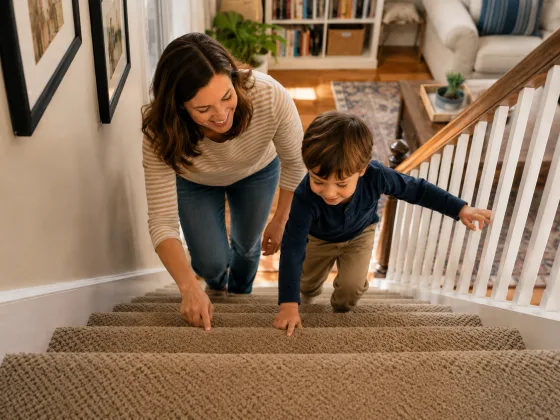
Count out loud as you do it, touching each thing as you say its number.
-
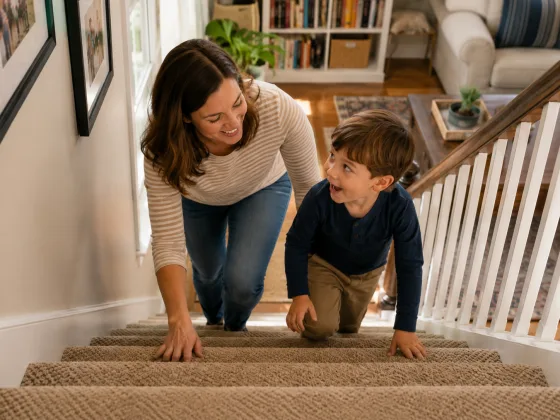
Leave a gap before the last number and see if they fill it in.
-
Once they join in, let them lead and you follow.
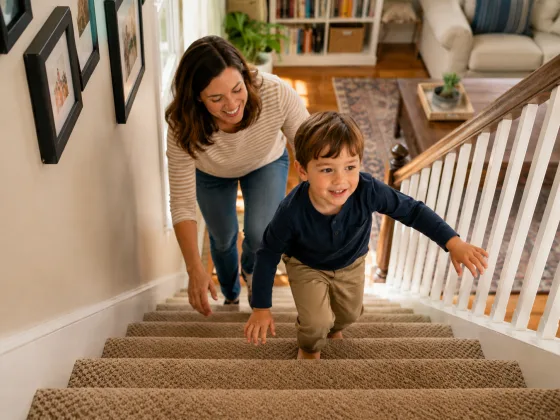
-
Count small amounts properly rather than racing to twenty — five things counted accurately is worth more.
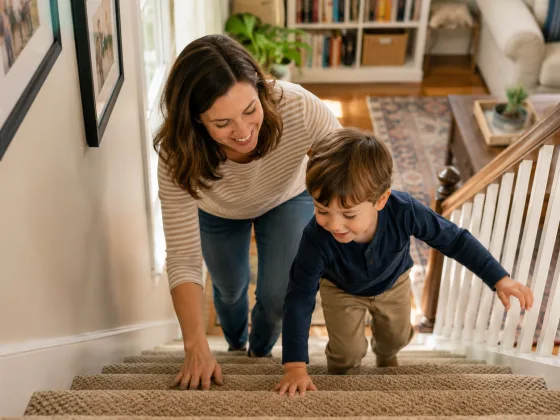
-
At the end, ask "so how many?" and repeat the last number. That step is the one most people skip.
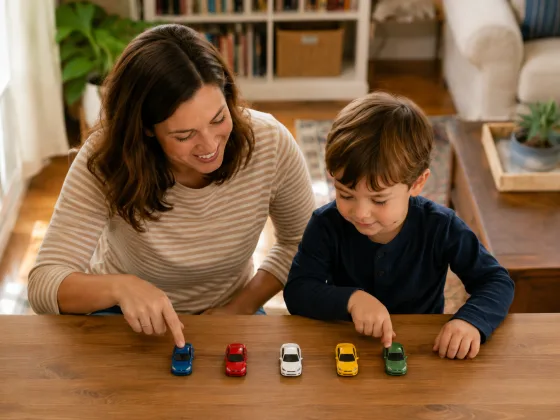
-
Add a second moment in the day once the first is automatic.
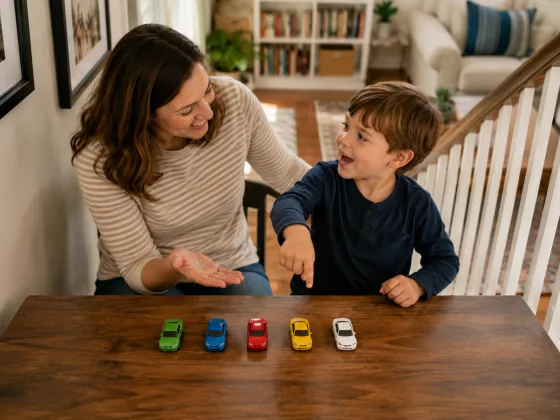
Make it easier
Count to three and stop. Three accurate is better than ten recited, and it can grow from there.
Make it harder
Count backwards, count in twos, or ask how many there would be if one more arrived.
Other ways to play it
- Count backwards down the stairs for a rocket launch.
- Count in a silly voice, or a whisper, or one step at a time on tiptoe.
- Count two at a time for an older child.
- Count things that are not objects: claps, jumps, knocks on the door.
- Count out the plates at dinner — one each is early division.
How it changes by age
- Two: you count, they join in with the last number.
- Three: they count with you, touching each thing.
- Four to five: they count alone, and can answer "how many altogether?".
What they're learning
Two separate skills are being practised here. Saying the number words in order is one. Touching each object once, saying one number per object, and knowing that the last number is the answer is the other — and the second is much harder and much more important. The "so how many?" question at the end is what builds it.
Clearing up
Nothing to clear up.