


Threading Pasta Necklaces
Dry pasta tubes and a shoelace. Quiet, absorbing, and one of the best things you can do for a small hand.
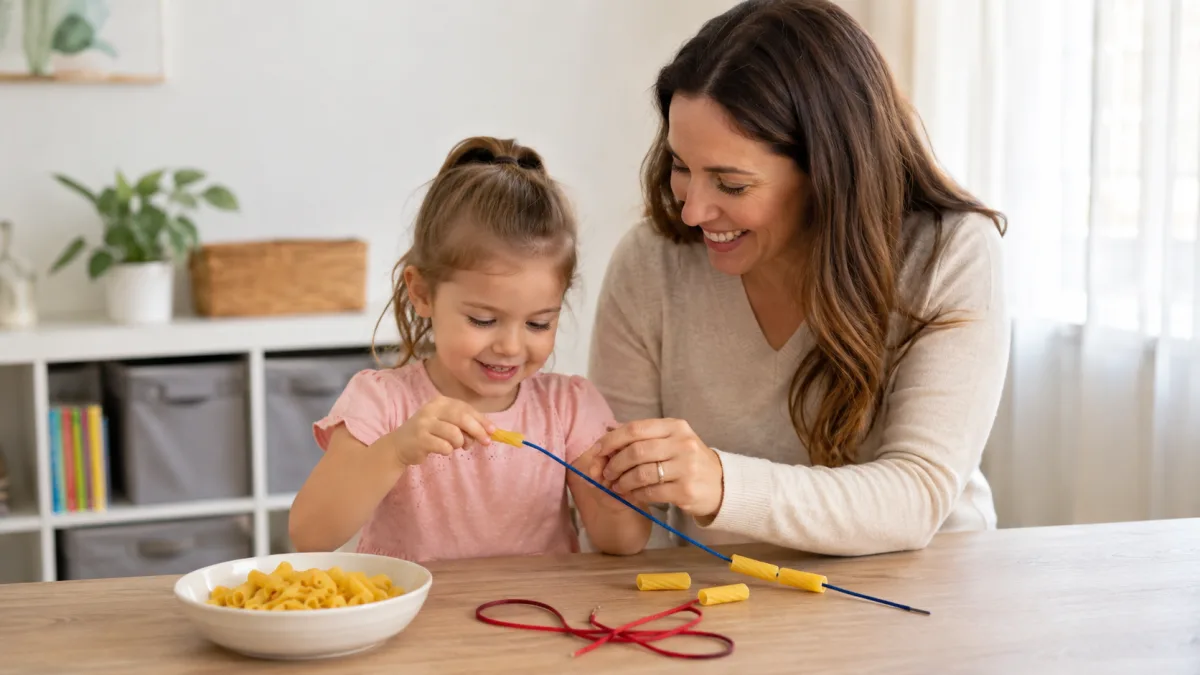
Thread dried pasta tubes onto a shoelace to make necklaces. Needs only pasta and a lace, suits ages 3 to 6, takes one minute to set up and builds the pincer grip used for holding a pencil.
The short version
- Shoelaces beat string — the stiff tip does the hard part.
- Knot the end first, or the first ten pieces end up on the floor.
- Not for children who still mouth things.
- Age
- Ages 3–6
- Prep
- 1 min
- Play time
- 25 min
- Mess
- Low
- Difficulty
- Easy
- Where
- Indoor
Why kids love this
There is a satisfying click as each piece goes on, and a necklace at the end that can actually be worn or given away. It is also completely open-ended. There is no pattern to get wrong, so a child who is easily frustrated can succeed at it immediately.
What you'll need
- Dried pasta with a hole — penne, rigatoni or macaroni
- Shoelaces, or string with one end wrapped in tape to stiffen it
- A bowl for the pasta
- Optional: food colouring and a splash of vinegar to dye the pasta first
Before you start
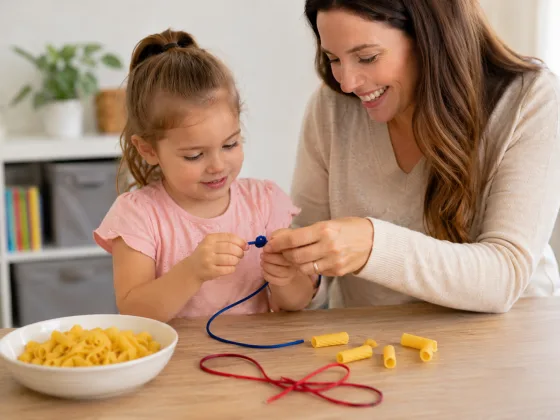
Tie a large knot in one end of the lace, or tie a piece of pasta on as a stopper, so the first pieces do not slide straight off. A shoelace beats string every time: the stiff plastic tip does the fiddly work that small fingers cannot.
How to do it
-
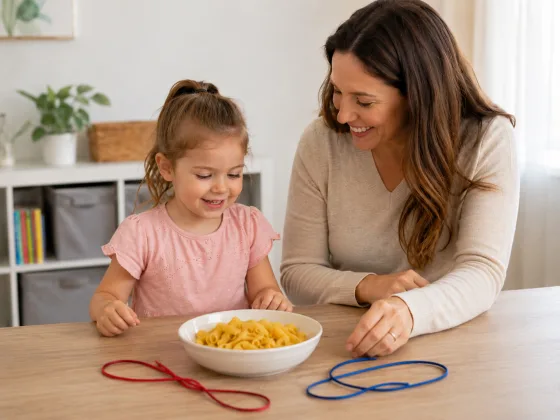
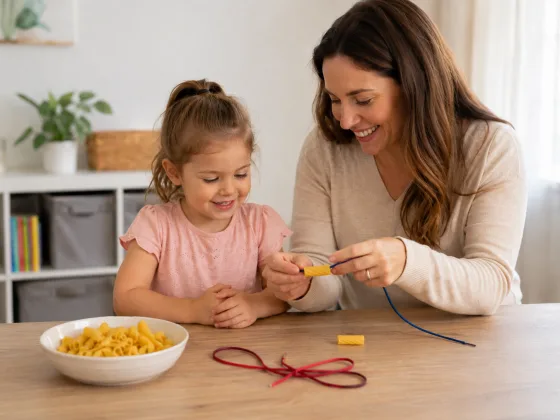
Pour the pasta into a bowl in the middle of the table.
-
Knot one end of the lace, or tie a stopper piece on.
-
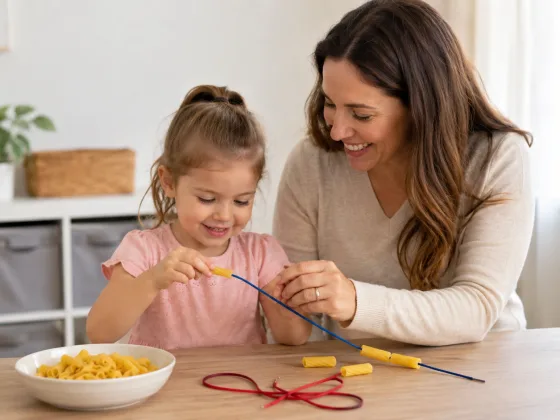
Show one piece going on, then hand it over.
-
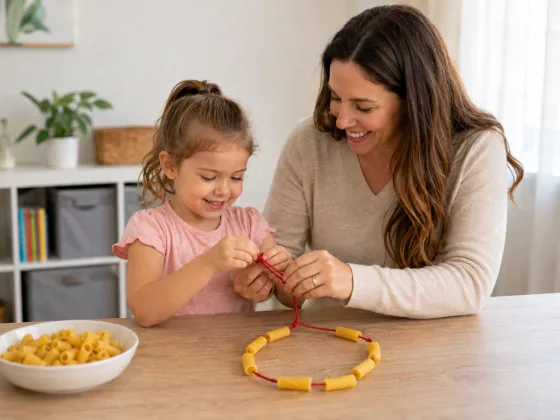
Let them thread until they lose interest — that might be five pieces or fifty.
-
Tie the ends together when they are done.
-
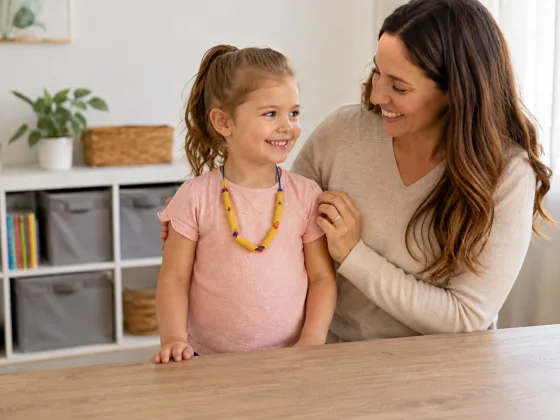
Wear it, or give it to somebody.
Make it easier
Bigger pasta with a bigger hole, and a pipe cleaner instead of a lace — it is stiff, so it needs only one hand.
Make it harder
Give a pattern to follow, or ask for a necklace with exactly twenty pieces. Both add a real task to something otherwise open-ended.
Other ways to play it
- Dye the pasta first: a spoon of vinegar and ten drops of food colouring in a sealed bag, shaken, then dried on a tray.
- Make a pattern — two red, one yellow — and see if they can continue it.
- Count the pieces on as you go.
- Thread onto a pipe cleaner instead for a bracelet that holds its shape.
- Use cut drinking straws instead of pasta for a change of texture.
How it changes by age
- Three: rigatoni and a pipe cleaner. Expect a short necklace and a lot of concentration.
- Four to five: shoelaces and patterns start to work.
- Six and up: fine string, small beads mixed in, and making them as gifts.
What they're learning
Threading uses the pincer grip — thumb and forefinger — which is the same grip used to hold a pencil. It also needs both hands doing different jobs at once, which is a genuinely difficult skill. Patterns and counting come along free if you talk about them while it happens.
Clearing up
Pasta back in the jar, laces back in the drawer. Anything on the floor is swept in seconds.