


Building Your Name Out of Sticks
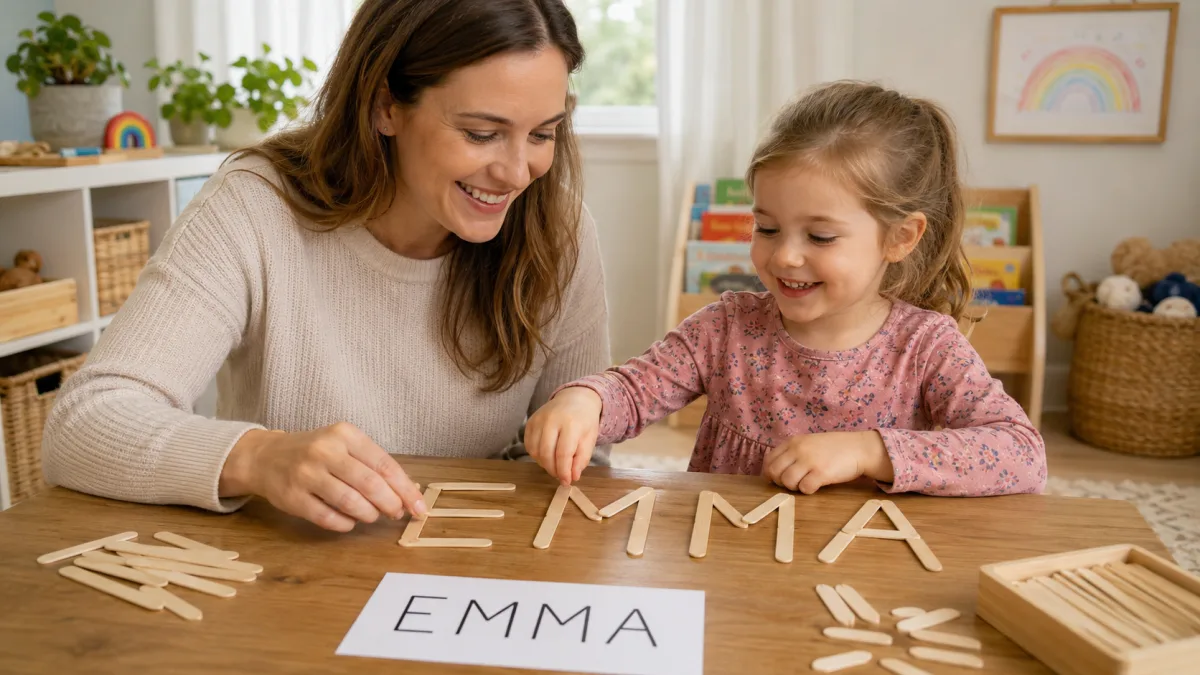
Straight lines make most capital letters. Lolly sticks, twigs or straws turn letter shapes into something you build rather than draw.
Build capital letters from lolly sticks, twigs or cut straws to learn letter shapes without needing to write them. Suits ages 3 to 6, takes five minutes to set up, and starts with the letters of the child's own name.
The short version
- Capitals, not lower case — they are made of straight lines.
- Start with the first letter of their name.
- Point at the model rather than moving their sticks.
- Age
- Ages 3–6
- Prep
- 5 min
- Play time
- 20 min
- Mess
- Low
- Difficulty
- Easy
- Where
- Indoor
Why kids love this
It is building, not writing, so a child who resists a pencil will happily do it. Getting the shape wrong costs nothing — you just move a stick. Starting with their own name matters more than it sounds. Those are the letters they already care about.
What you'll need
- Lolly sticks, straight twigs, cut drinking straws or dry spaghetti
- A flat surface — a tray, a table, or the floor
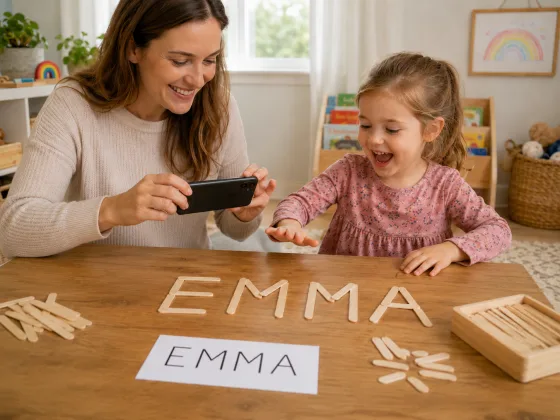
- A card with their name written in capitals, as a model
- Optional: play dough for joining the sticks at the corners
Before you start
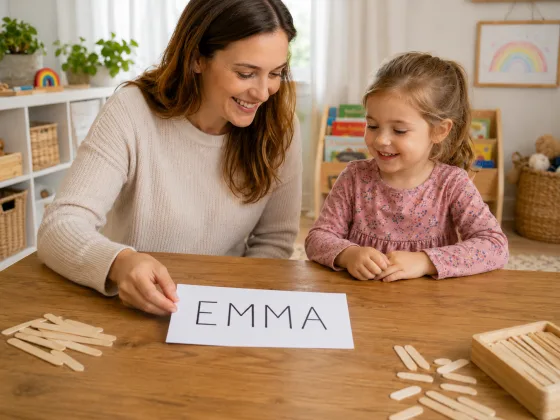
Write their name in large capitals on a card. Capitals only — most of them are straight lines, and lower case is full of curves that sticks cannot make. Collect ten or fifteen sticks. Break some in half so there are short ones for the crossbars.
How to do it
-
Write their name in big capitals on a card and put it where they can see it.
-
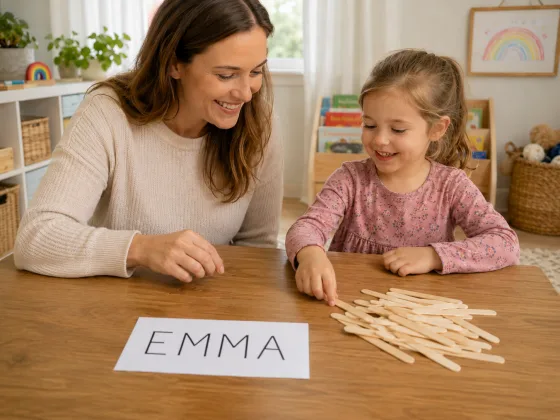
Put the sticks in a pile next to it.
-
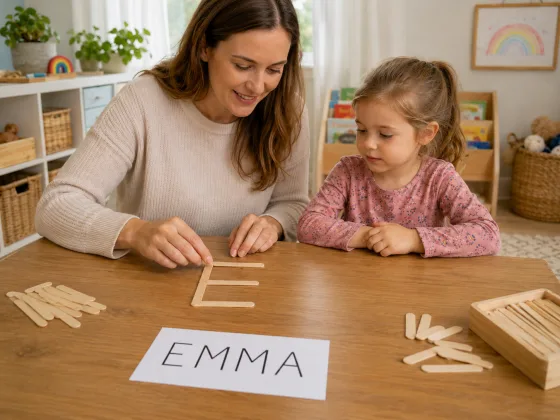
Build the first letter yourself, slowly, while they watch.
-
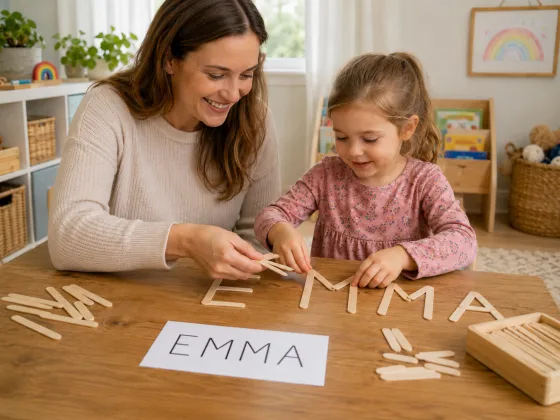
Hand over the sticks for the second letter and let them try.
-
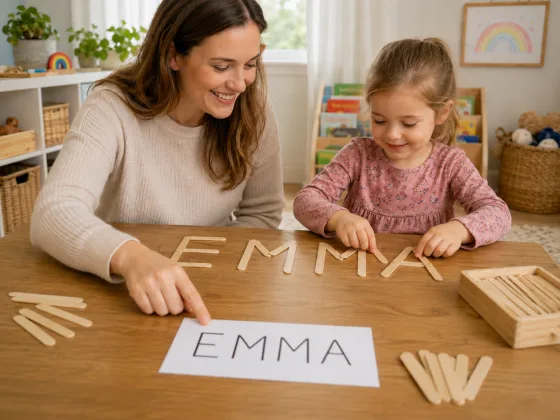
Help by pointing at the card rather than by moving their sticks.
-
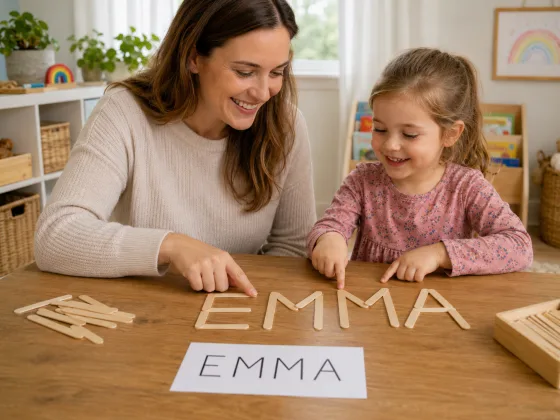
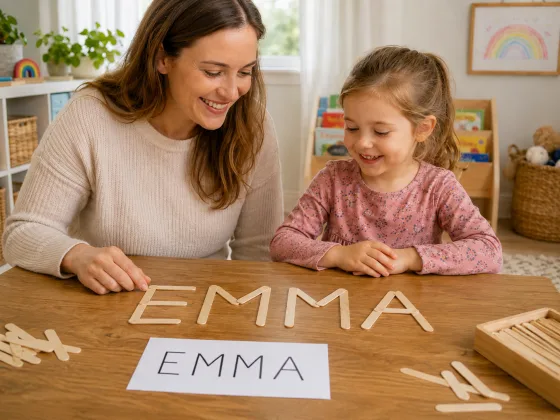
Carry on until the whole name is built.
-
Read it together, pointing at each letter.
-
Take a photograph, then knock it down — knocking it down is part of it.
Make it easier
Build only the first letter of their name, and build it directly on top of the letter written large on paper so the sticks have somewhere to sit.
Make it harder
Build a whole short word, or their surname, or ask them to build a letter with their eyes shut and see how close it is.
Other ways to play it
- Build letters that need curves using play dough rolled into snakes.
- Build the first letter of everybody in the family.
- Use twigs collected on a walk instead of lolly sticks.
- Build a letter and see if they can guess it before it is finished.
- Build numbers instead.
How it changes by age
- Three: the first letter of their name, built on top of a large printed version.
- Four to five: their whole first name, working from a card.
- Six and up: short words, or lower-case letters using dough for the curves.
What they're learning
Making a letter from separate parts forces attention to how it is actually built — how many lines, which direction, where they meet. That is precisely the knowledge needed later for writing it. Using capitals first is deliberate: they are mostly straight lines, and they are easier to tell apart than lower-case letters.
Clearing up
Sticks back in a jar. They last forever and the jar can live on a shelf ready for next time.