


A Masking Tape Obstacle Course
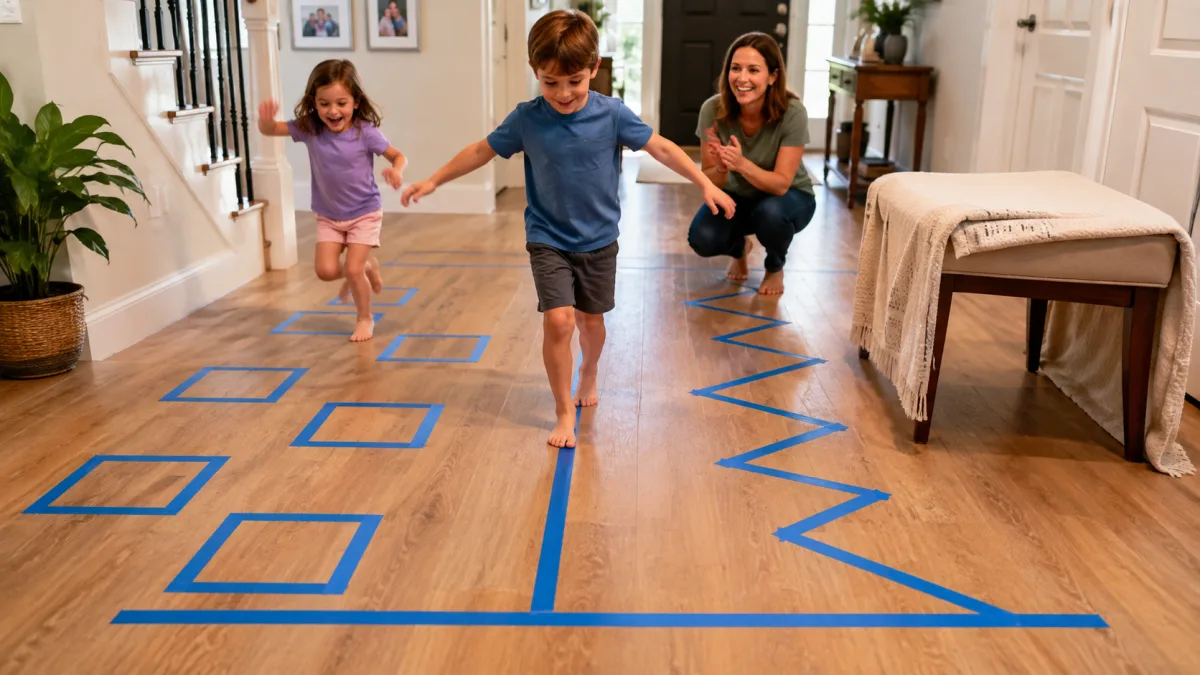
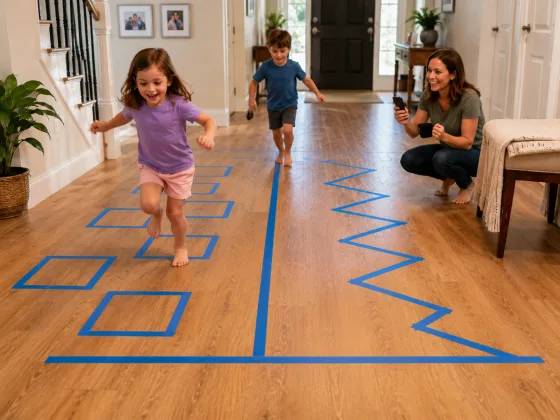
One roll of tape turns a hallway into a course to balance, jump and crawl along. Works in a flat, upstairs, in the rain.
Use masking tape to mark lines, shapes and hopping spots on the floor for an indoor obstacle course. Needs one roll of tape, suits ages 2 to 8, and takes five minutes to set up.
The short version
- Test the tape on a hidden patch first.
- Bare feet, never socks.
- Let them redesign it — that is when it gets good.
- Age
- Ages 2–8
- Prep
- 5 min
- Play time
- 30 min
- Mess
- Low
- Difficulty
- Easy
- Where
- Indoor
Why kids love this
It appears out of nowhere in a space they already know, which is most of the appeal — a hallway that was boring at breakfast has become a course by lunchtime. And it is theirs to change. Children start adding rules within about four minutes, which is when it becomes genuinely good.
What you'll need
- A roll of masking tape (low-tack decorator's tape is best)
- A hallway, landing or clear stretch of floor
- Optional: cushions, a chair to crawl under, a soft toy to rescue
Before you start
Test the tape on a hidden bit of floor first. Masking tape lifts cleanly from wood, laminate and tiles; on some carpets and painted floors it can mark, so check before you commit to twelve metres of it. Move anything breakable out of the run.
How to do it
-
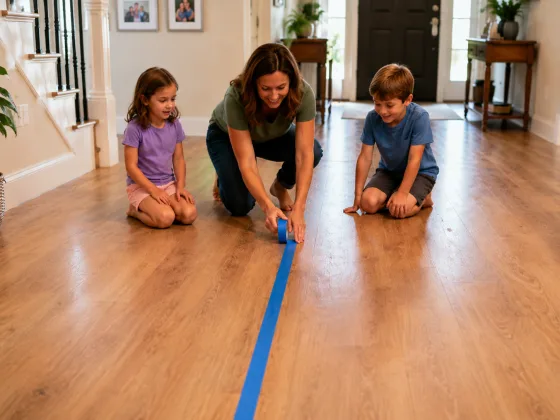
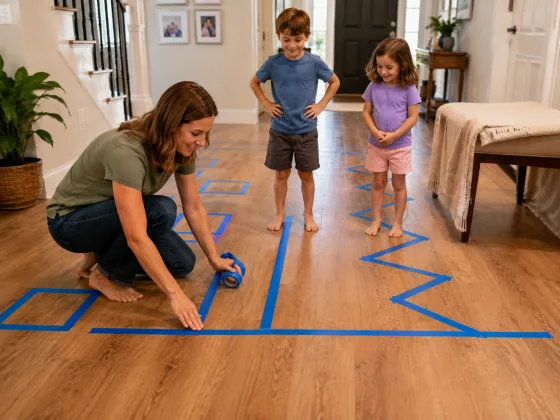
Lay a long straight line down the middle of the hallway. That is the balance beam.
-
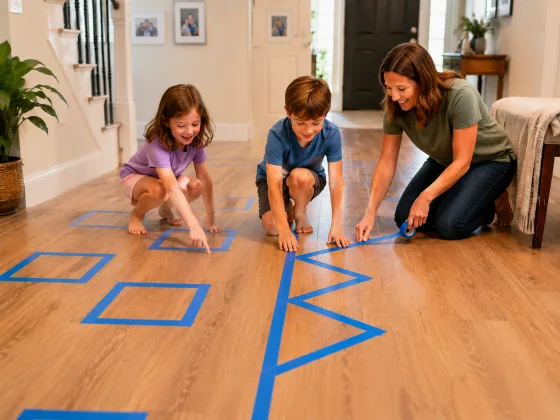
Add a zigzag section coming off it.
-
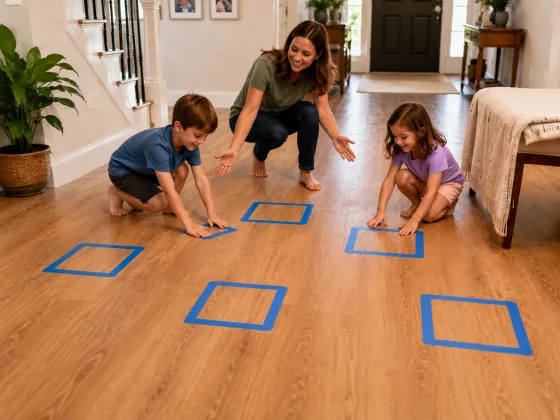
Stick down six squares in a scattered pattern to jump between.
-
Mark a start line and a finish line.
-
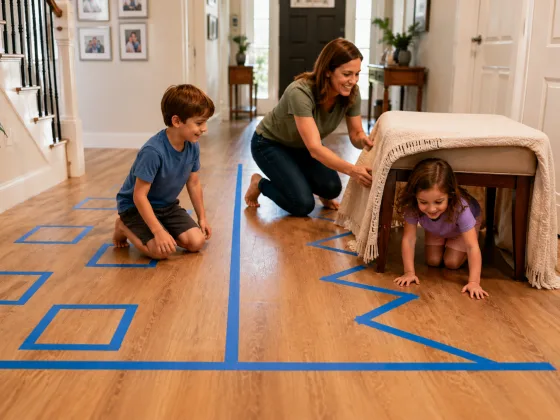
Add one obstacle to go under — a chair with a blanket over it works.
-
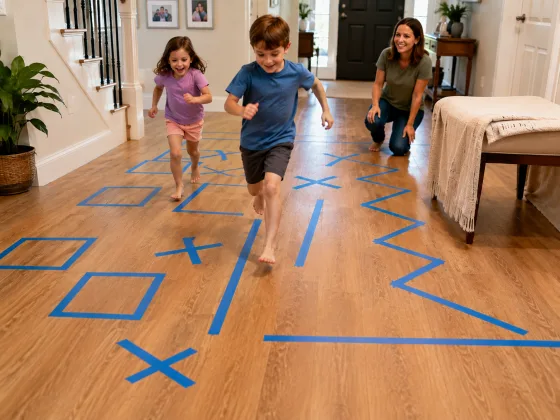
Demonstrate the whole thing once, badly, which children enjoy.
-
Let them run it. Then let them change it.
-
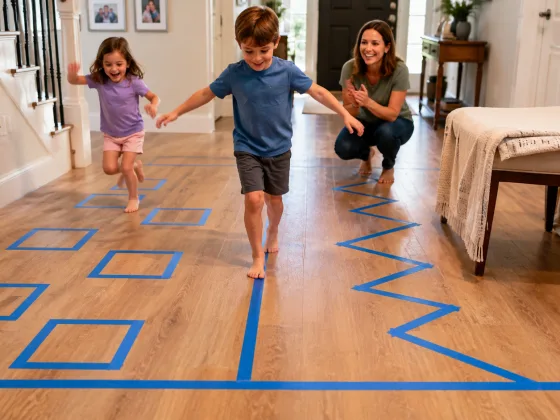
Time them if they want it timed. Some do, some hate it.
Make it easier
Straight lines only, spaced close together, and no timing. A two-year-old wants to walk the line, not complete a course.
Make it harder
Add a backwards section, a bit that must be done carrying something, or a rule that touching the floor between squares means starting again.
Other ways to play it
- Add a rule: hop the squares on one foot, or crawl the zigzag.
- Put a soft toy at the end that has to be rescued and carried back.
- Make it a two-lane course and race.
- Tape numbers in the squares and call out which to jump to.
- Tape letters instead and have them spell a short word by jumping.
How it changes by age
- Two to three: one straight line to walk along, and squares to step between.
- Four to five: the full course with a few rules.
- Six and up: let them design it and set the rules, then make them run it too.
What they're learning
Balance, jumping, changing direction and judging distance — the physical skills that get very little practice indoors in winter. Having them design their own course is real planning: what goes where, in what order, and whether it actually works when tested.
Clearing up
Peel it up in long strips — children usually enjoy this part as much as the course. Do not leave low-tack tape down for more than a day or two, as it gets harder to remove.