


Getting the Energy Out in a Small Room
Four ways to wear a child out indoors without breaking anything or annoying the neighbours downstairs.
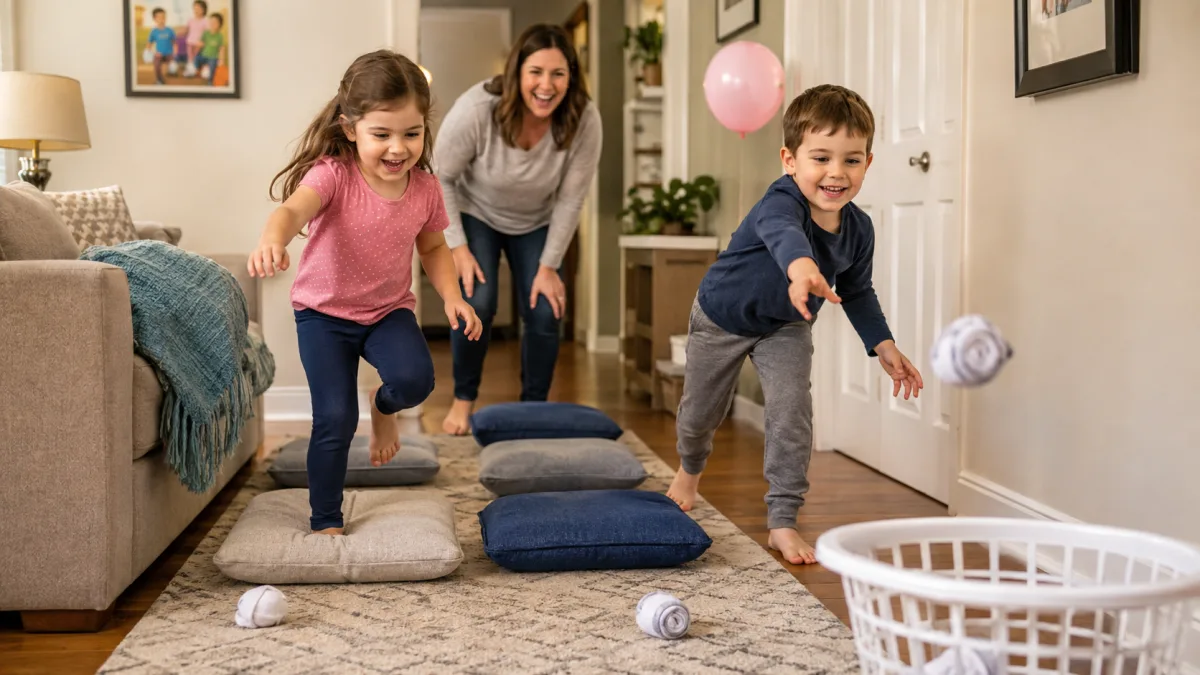
Four indoor gross motor games for small spaces: sock basketball, cushion stepping stones, balloon keepy-uppy and animal walks. No equipment beyond socks, cushions and a balloon.
The short version
- Do this before the quiet activity, not after.
- Finish with the tiptoe walk so it ends calm.
- Burst balloon pieces go straight in the bin.
- Age
- Ages 2–8
- Prep
- 3 min
- Play time
- 20 min
- Mess
- Low
- Difficulty
- Easy
- Where
- Indoor
Why kids love this
They are allowed to throw things indoors, which is normally forbidden and therefore excellent. And they work. A child who has done ten minutes of animal walks up a hallway is a noticeably different child afterwards.
What you'll need
- Several pairs of socks, rolled into balls
- A washing basket, a bucket or a box
- Sofa cushions
- One balloon
- A hallway or a cleared floor
Before you start
Move anything breakable, and check what is on the wall behind the basket. Roll six or eight pairs of socks. Doing this together is itself an activity for a younger child.
How to do it
-
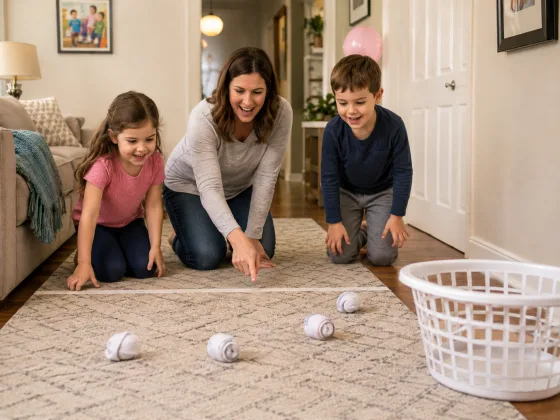
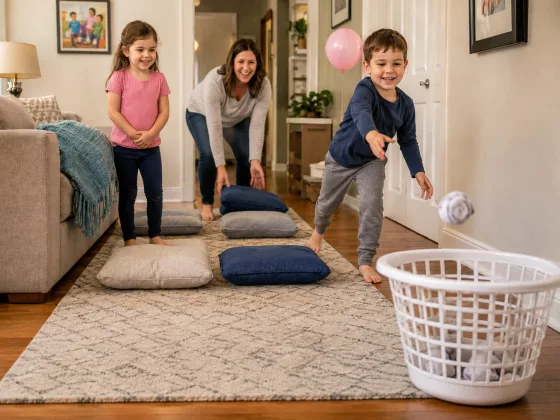
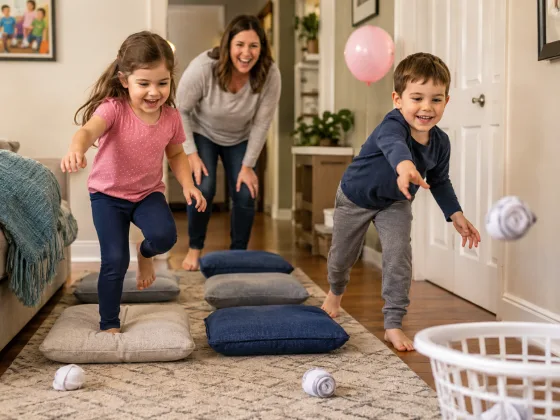
Sock basketball: put the basket at one end of the room and mark a throwing line with tape or a cushion.
-
Take turns throwing. Move the line back a step each time somebody scores.
-
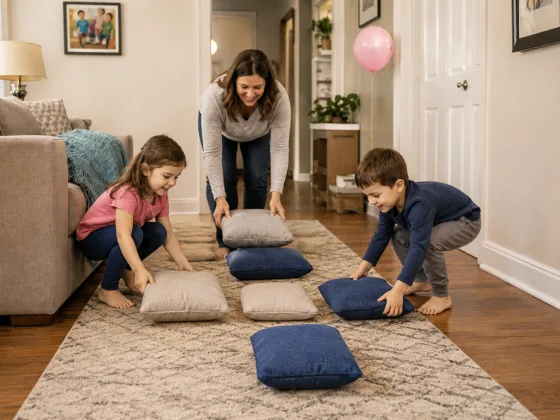
Cushion stepping stones: lay sofa cushions across the floor with gaps between them.
-
The floor is lava. Get from one end to the other without touching it. Move the cushions further apart as they get better.
-
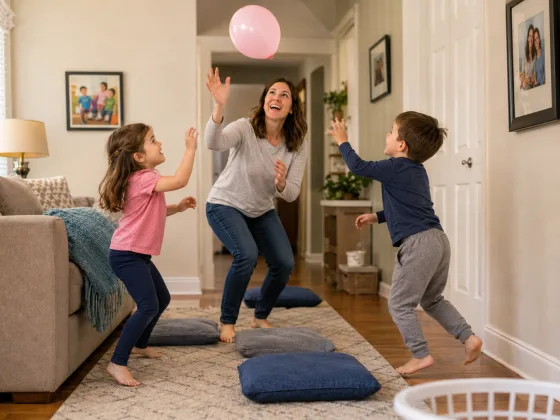
Balloon keepy-uppy: blow up one balloon. It must not touch the floor. Count how many hits you manage together.
-
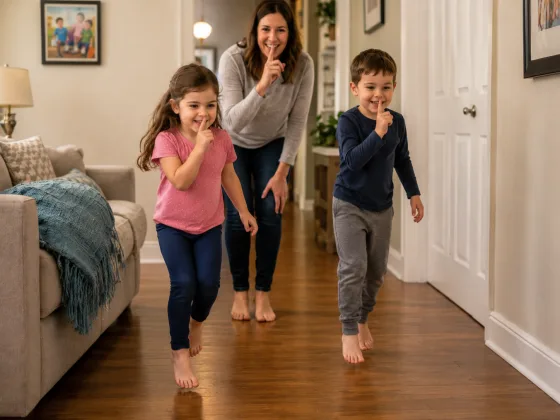
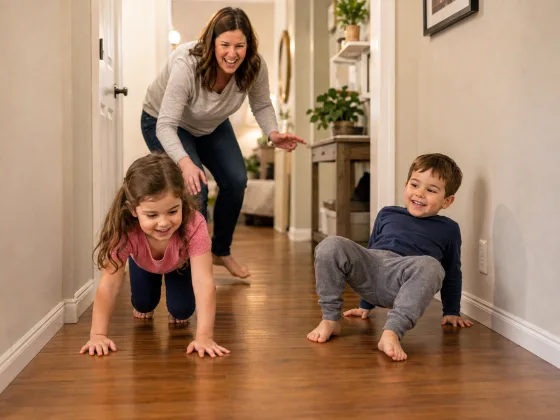
Animal walks: bear crawl up the hallway, crab walk back, frog jumps up, tiptoe silently back. Two lengths of each is plenty.
-
Finish with the quietest one — tiptoeing — so it winds down rather than up.
Make it easier
Bigger target, closer line, cushions almost touching. Success first, difficulty later.
Make it harder
Throw with the other hand, balance on one leg while throwing, or set a target number to reach as a team.
Other ways to play it
- Score sock basketball properly, with two points from behind a far line.
- Add a rule that the balloon must be hit with elbows only, or heads only.
- Do animal walks to music and freeze when it stops.
- Make the cushion route include a turn or a doubling back.
- Play sock basketball into a laundry basket while sitting down, for a quieter version.
How it changes by age
- Two to three: cushion stepping stones with the cushions touching, and throwing socks into a big box from very close.
- Four to five: all four, with scores.
- Six and up: add rules, targets and a bit of competition — they will invent most of it themselves.
What they're learning
Throwing at a target, jumping and landing, crawling in different patterns and keeping a balloon up all build coordination in ways that are hard to get indoors. Animal walks in particular use both sides of the body together, which is worth more than it looks.
Clearing up
Cushions back on the sofa, socks back in the drawer, balloon popped and binned rather than left about.