


First Words to Teach Your Toddler to Recognize: Start With These 10
Ten first words to help your toddler notice print — their name, Mom, Dad, ball, dog, and more — plus labels for your home and quick games that make words feel like play.
The best first words to teach toddler to read readiness are their name, Mom, Dad, no, up, more, go, ball, dog, and milk. Write each on its own card, tape them where the things live, and play five-minute spotting games daily. This builds print awareness — the idea that print carries meaning — the true first step toward reading.

The short version
- Start with your child's own name — the most meaningful word in their world.
- Choose words they already say and feel: Mom, Dad, no, up, more, go, ball, dog, milk.
- Put labels where the things live — the name on their door, "milk" on the fridge.
- Keep sessions to five minutes; daily repetition beats long sessions.
- Accept pointing, touching, and echoing — recognition comes before speech.
- Age
- Ages 2–3
- Prep
- 10 min
- Play time
- 5 min
- Mess
- None
- Difficulty
- Easy
- Where
- Indoor
Why kids love this
At two and three, children love discovering they have a word of their very own. A child who finds her name on her door, her cup, and her little chair feels the same thrill as spotting a favorite character in a book — "that's MINE!" These ten words attach to things your toddler already cares about: their name, their parents, the ball they carry everywhere, the dog next door, milk in the fridge. No flashcards, no quizzing — just labels around the house like tiny surprises.
What you'll need
- Blank index cards or strips of sturdy paper (about 15)
- A thick dark marker for bold, easy-to-see print
- Painter's tape or sticky tack for the labels
- A favorite ball, stuffed animal, and sippy cup from your child's shelf
- A small basket or tray to keep the word cards together
Before you start
1. Write the ten word cards: your child's name, Mom, Dad, no, up, more, go, ball, dog, milk. One word per card, big and bold. 2. Keep the cards in one basket so the same words get reused — consistency matters more than variety. 3. Stick up the name card before your child is watching, so they discover it. Discovery beats delivery. 4. Keep sessions to five minutes, once or twice a day. End while it is still fun.
How to do it
-
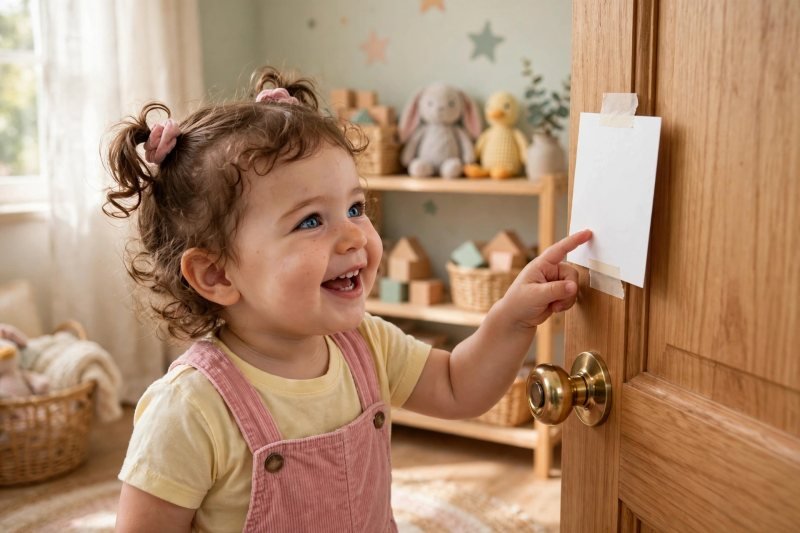
Start with their name. Tape the name card on your child's bedroom door at their eye level. When they find it, tap it together and say it aloud — it anchors everything else.
-
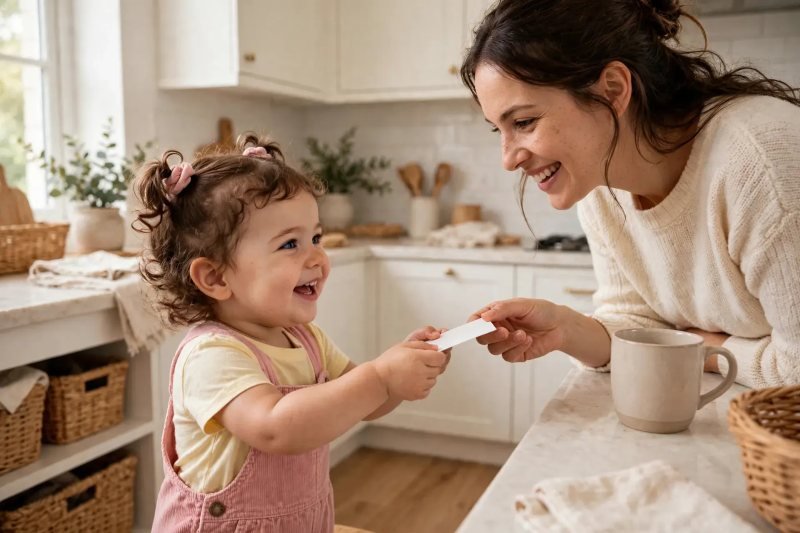
Add Mom's card. Stick it on something of yours — your mug, your chair, your jacket. When your child brings you the card: "You found my word!"
-
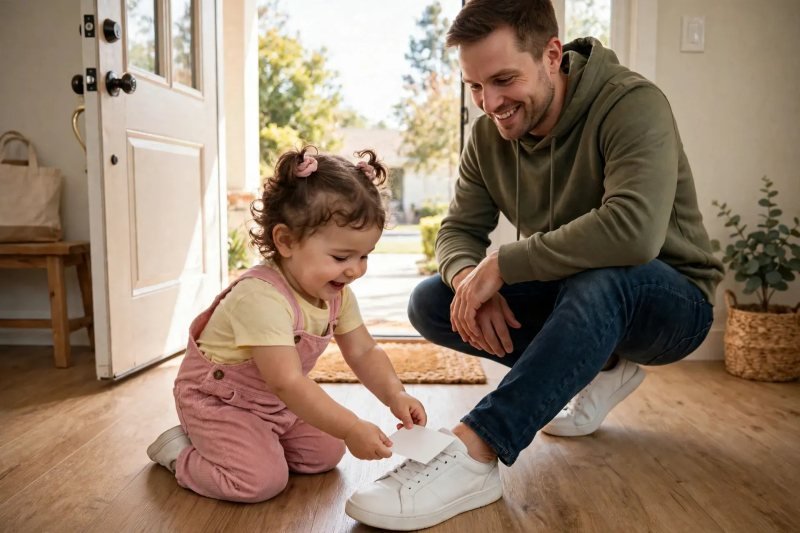
Add Dad's card. Stick it on dad's shoe, hat, or side of the couch, and let your child be the "delivery person" who carries it there.
-
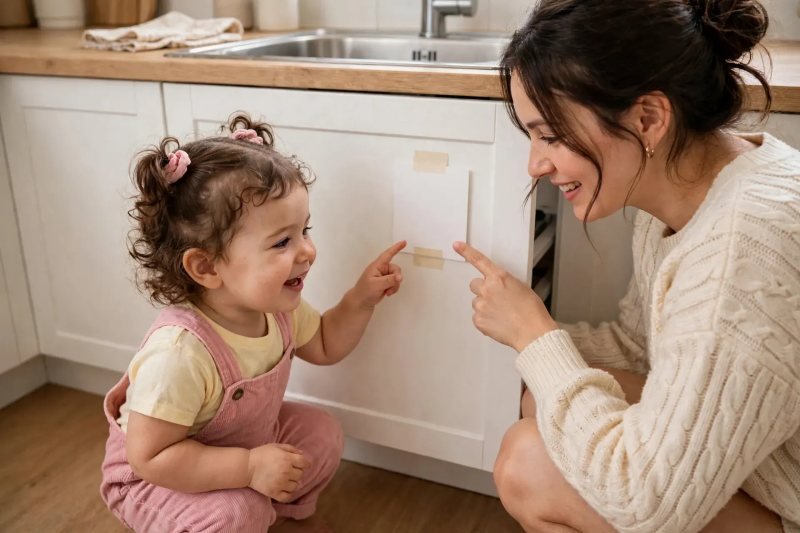
Teach "no" on the off-limits cabinet. Tape it on the cabinet under the sink, and point to the card whenever they reach and stop.
-
Play the "up" lift game. Hold up the card, say it, then lift your child, a doll, and a pillow. Tape the card on the fridge at lifting height.

-
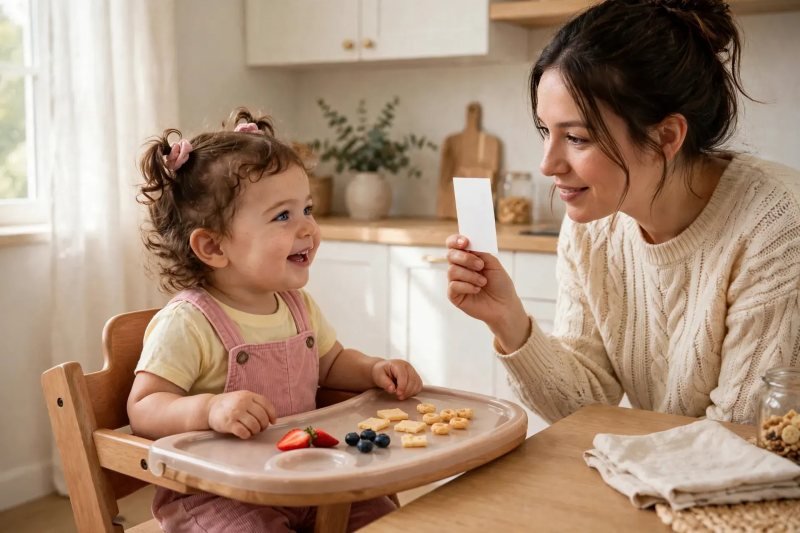
Use "more" at snack time. Tape it near the snack cupboard. At snack time, hold up the card and ask, "More?" — then hand over the snack.
-
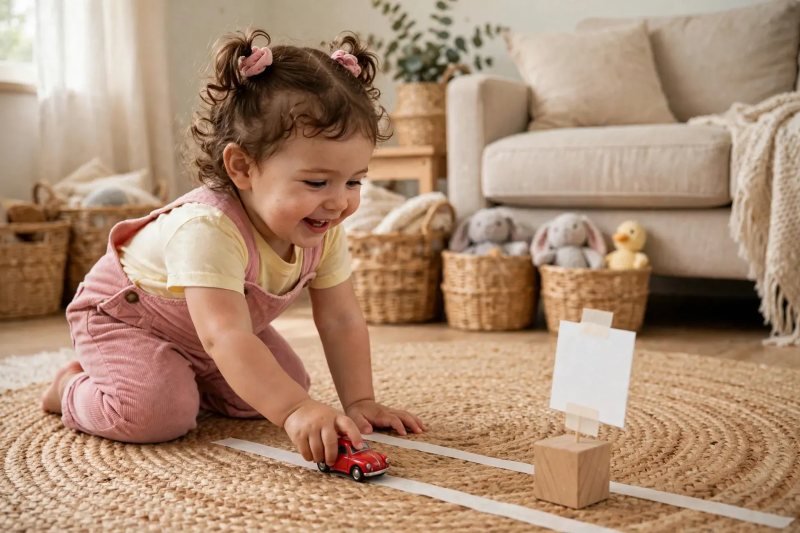
Play "go" with a toy car. Tape the card to a block as a start flag. Push the car and say "goooo!" — then let them hold the card and shout it.
-
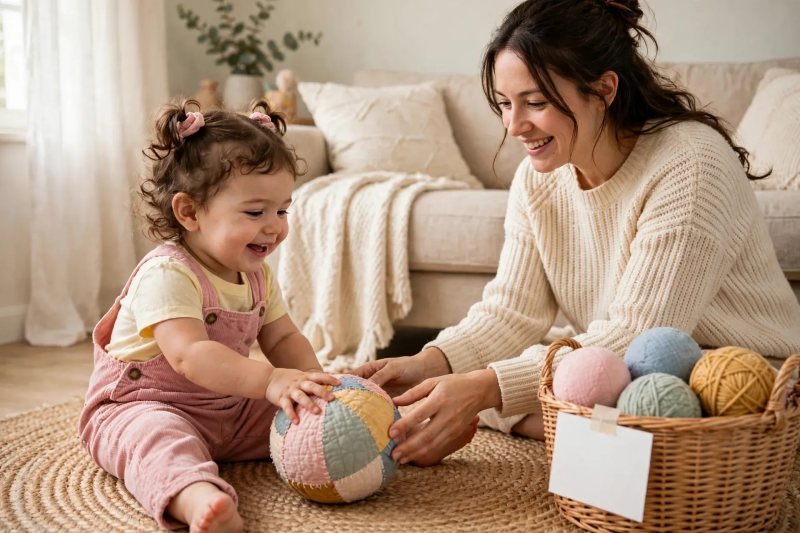
Label the ball. Tape "ball" on their favorite ball or the card on the ball bin. Roll it back and forth, saying the word at every catch. Later, mix the card with two others and let them find it by sight.
-
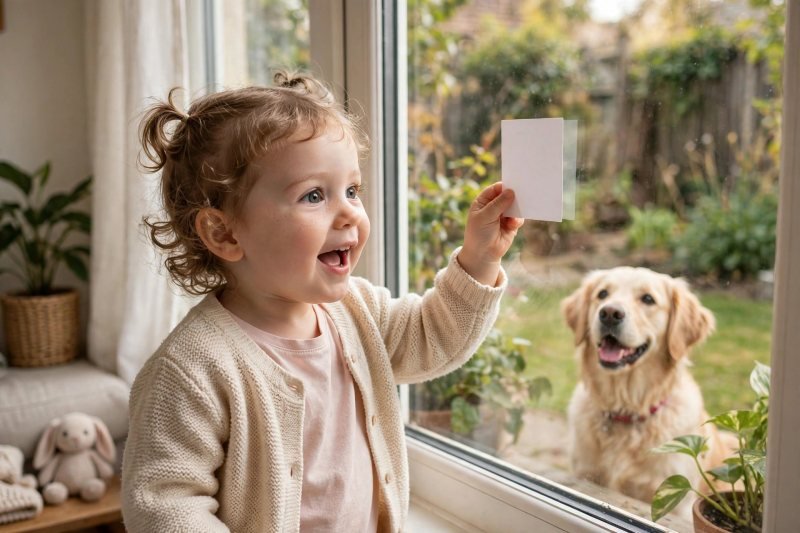
Spot "dog" on walks and in books. Prop the card by the window where the neighbor's dog passes. Hold it up whenever a real dog barks.
-
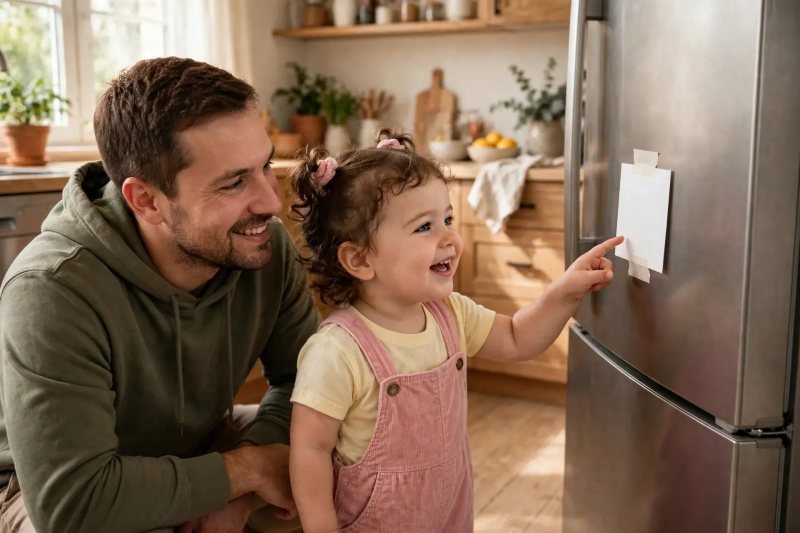
Finish with "milk" at the fridge. Tape it on the fridge door at their eye level. Each morning, walk over together, find the word, and say it before the cup comes out — often the first word they read on their own.


Make it easier
Start with just the name card for a whole week before adding Mom and Dad — three words can be plenty at two.
Make it harder
Ask your child to fetch a card by name: "Can you bring me the card that says 'ball'?" Fetching by sight is the first real recognition step. Letter names come later — alphabet activities for toddlers are the gentle next step once fetching by sight works.
Other ways to play it
- Grandparent edition: make cards for Grandma and Grandpa, and start video calls with your child holding up the right card to say hello.
- Outing edition: bring the dog card in the stroller and hold it up whenever you spot a real dog — the world becomes the label.
- Sing the words too — nursery rhymes for toddlers pair spoken words with the print on the cards.
How it changes by age
- Written for ages 2–3. A younger two-year-old may only be ready for their name plus Mom and Dad — a complete and worthwhile version. A verbal three-year-old can often manage all ten words and the fetch-by-name game. Not-yet-talkative children can join in by pointing and carrying the cards — recognition comes before speech, and both are wins. Honest framing matters: this is about noticing print, not teaching your toddler to read — real reading, connecting letters to sounds and blending them, usually comes around four to six, and phonics activities for preschoolers pick up where these cards leave off; for the longer view, see how to teach your child to read. For the signs that reading readiness is actually emerging, see reading readiness signs for toddlers.
What they're learning
Print awareness: the key early literacy idea — marks on a card carry meaning, before any letter sounds. Whole-word recognition: noticing that a shape of print always says the same word, starting with the words they love most. Sounding out comes later — the CVC words list shows the first words children decode once letter sounds click. Vocabulary in context: connecting spoken words they know to their printed forms, in the rooms where those words matter. Confidence with print: handling cards and "reading" them to a toy teaches that print is friendly and belongs to them.
Clearing up
Peel off the labels together — peeling is a fine-motor bonus — and drop the cards in the basket. The name and milk cards can stay up as long as your child enjoys them.
Questions parents ask
Which word should I teach my toddler first?
Can a 2-year-old really recognize words?
How many sight words should a toddler learn?
Should I teach letters or words first to my toddler?
What if my toddler is not interested in the word cards?
How long until my toddler recognizes their name in print?

save it for later
Pin this for the next rainy afternoon
Keep it on a board so it is there when you need it, rather than when you happened to find it.
Save to PinterestTry this next
-

Fingerplays for Toddlers: 12 Rhymes With Hand Motions That Teach Sounds
Ages 2–3
-
Phonemic Awareness Activities for Toddlers: 10 No-Prep Sound Games
Ages 2–3
-
Reading Readiness in Toddlers: 12 Signs Your 2-Year-Old Is Ready for Words
Ages 2–3
-
How to Read Aloud to a 2-Year-Old: 9 Tricks That Build Future Readers
Ages 2–3


