


Cradle Cap: How to Get Rid of Those Flaky Patches Safely
Cradle cap treatment is gentle, not forceful: soften the flaky patches with oil, loosen them with a soft brush, wash with mild baby shampoo, and repeat a few times a week. This step-by-step guide shows the safe routine — and the signs that mean it's time to call the pediatrician instead.
Treat cradle cap gently: massage a little mineral or coconut oil onto the flaky patches, wait about fifteen minutes, loosen the softened flakes with a soft-bristle brush, then wash with a mild baby shampoo. Repeat two or three times a week. Never pick the flakes off, and see a pediatrician if patches spread, ooze, inflame, or don't improve.

The short version
- Cradle cap is common, harmless, and not caused by poor hygiene — it's linked to overactive oil glands in baby skin.
- The routine is soften, loosen, wash: oil first, then a soft brush, then mild baby shampoo.
- Never pick, pry, or scrub off flakes — forcing them breaks skin and invites infection.
- Most cases improve over a few weeks of gentle care and clear on their own in the first months.
- See a pediatrician if patches spread to the face or body, look red or oozy, seem itchy, or don't improve.
- Prep
- 2 min
- Play time
- 15 min
- Mess
- Low
- Difficulty
- Easy
- Where
- Indoor
Why kids love this
Babies experience cradle cap care as a scalp massage followed by a warm rinse — most lean in and melt. Toddlers who still have lingering patches enjoy the soft brush "tickles" and the mirror moment afterward. Gentle handling is the whole technique, so the routine doubles as calm, skin-to-skin bonding time for both of you.
What you'll need
- A soft-bristle baby brush (the kind from hospital newborn kits is perfect)
- Plain mineral oil, coconut oil, or olive oil — a teaspoon is plenty
- A mild, fragrance-free baby shampoo
- A soft washcloth and lukewarm water (at the bath or a basin)
- A padded changing mat or folded towel on a safe, flat surface
- Patience — the flakes lift over several sessions, not one
Before you start
1. Pick a calm moment — after a feed, before the bath — when your baby is settled and you're unhurried. 2. Lay everything on the mat within arm's reach; you never leave a baby unattended on a raised surface, even for a second. 3. Trim your own nails short and smooth: you'll massage oil in with your fingertips, and short nails keep the touch gentle. 4. If it's your first session, take a phone photo of the scalp — comparing week to week shows progress your eyes miss day to day.
How to do it
-
Recognize what you're looking at. Cradle cap shows up as flaky, crusty patches on a baby's scalp — white or yellowish scales, sometimes slightly greasy, sometimes with mild redness underneath. Say it plainly to yourself: "This is cradle cap — it's common, it's harmless, and it's not caused by dirty hair." It isn't contagious, it usually doesn't bother the baby at all, and most cases clear over weeks to months. Look closely once now — where the patches sit, how thick they are — because this baseline is how you'll spot both progress and the warning signs in the final step. Knowing what normal looks like, you can start the gentle routine.

-
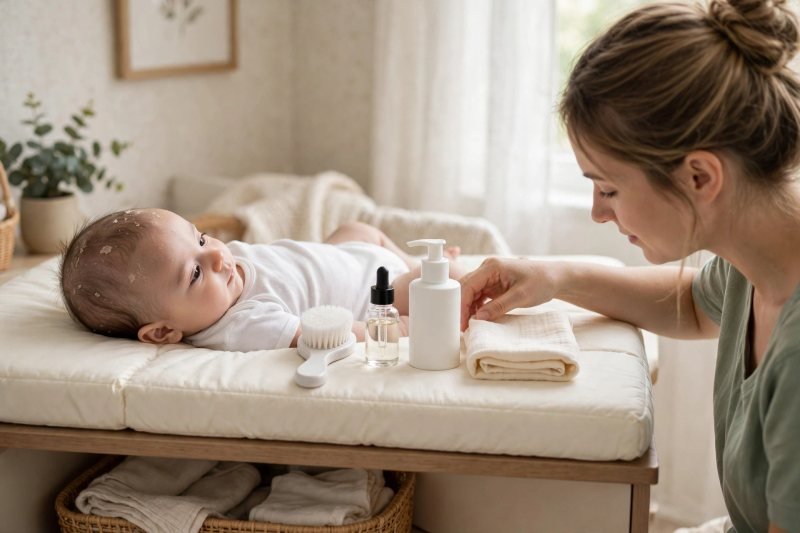
Gather your gentle supplies on the mat. Lay out the soft brush, the oil, the mild baby shampoo, and the cloth, with your baby settled on the mat in just a onesie. Everything about cradle cap treatment is soft — soft brush, mild shampoo, fingertips instead of nails — because the skin under those flakes is young and easily irritated. Say: "Everything here is gentle, just like our hands." Having it all in reach matters: a baby on a mat is never left alone, so the routine has to happen in one comfortable spot. Supplies ready — time to soften the flakes.
-
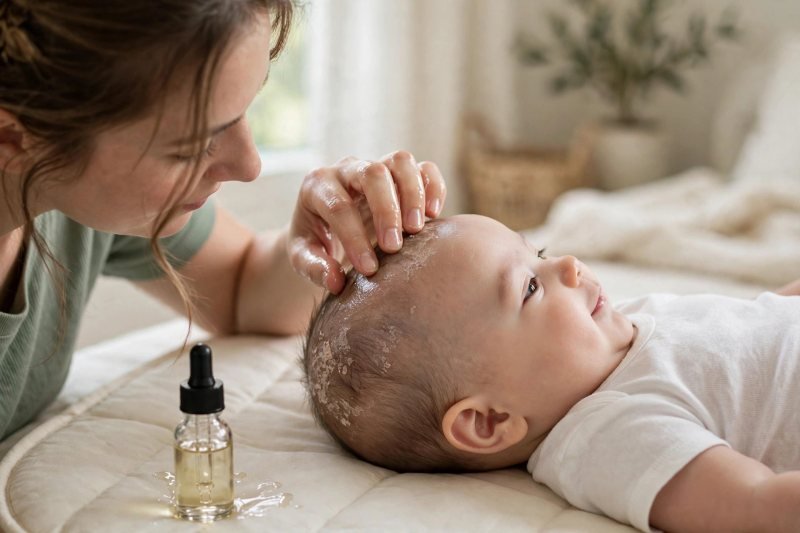
Soften the flakes with a little oil. Pour a teaspoon of mineral or coconut oil into your palm, warm it between your hands, and massage it onto the flaky patches with your fingertips in slow, small circles. Say: "Round and round — the oil does the hard work so we don't have to." Cover every flaky area with a thin film; you don't need much, and dripping oil just makes a wriggly baby slippery. The oil's job is to soften the crust so it releases on its own — this step, not scrubbing, is the engine of the whole treatment. Once the patches are coated, let the oil sit.
-
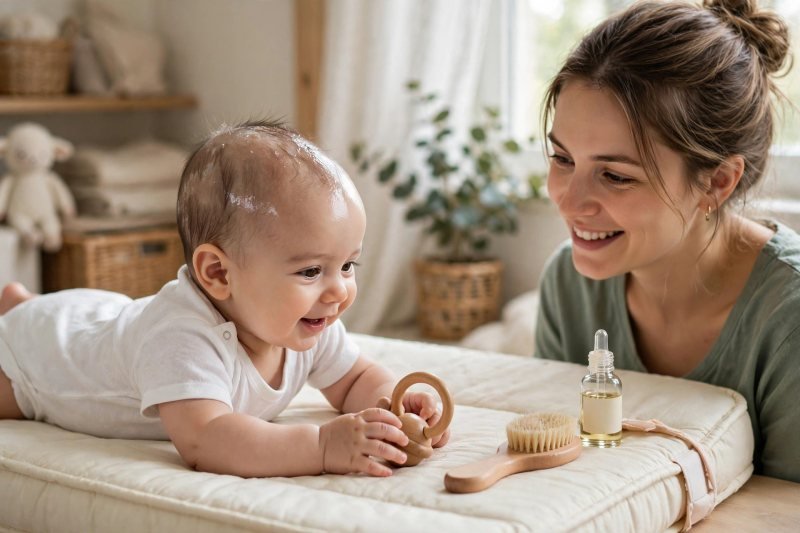
Let the oil sit and do its work. Give the softening about fifteen minutes — tummy time, a song, a little play on the mat while the oil loosens the bond between flake and scalp. For stubborn, thick patches, some parents leave the oil on longer, even under a soft cap during a nap; both are fine. Say: "Now we wait — the oil is melting the flakes loose." Resist the urge to test a flake with a fingernail; if it doesn't lift with the brush in the next step, it isn't ready, and forcing it can break the skin and invite infection. Time up — the gentle brush comes out.
-
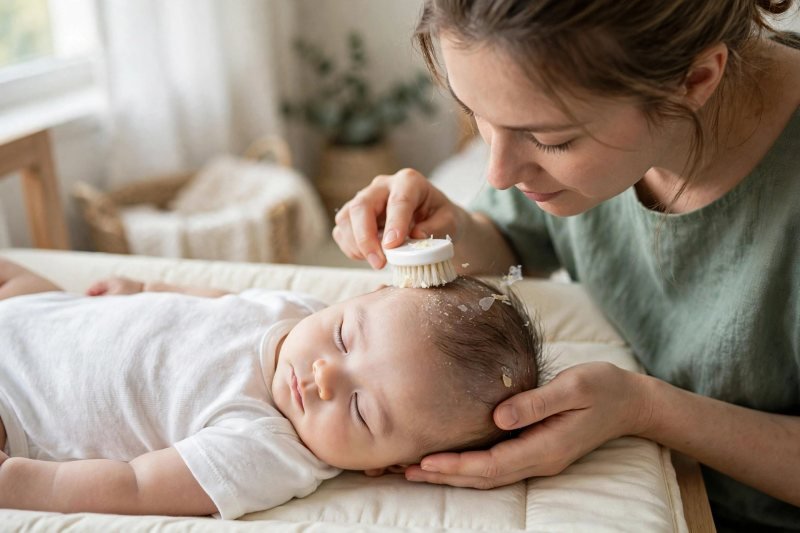
Loosen the flakes with the soft brush. With the oil still on, brush the scalp in gentle, small circles with the soft-bristle brush, working patch by patch. Loosened flakes will lift and catch in the brush and the hair — that is success, so say: "Look, they're letting go." Press no harder than you would to brush a peach without bruising it. Never pick, scratch, or pry at a patch with nails or a comb's teeth: a flake that resists is a flake that stays for the next session. Brush a few minutes, then move on while the scalp is still oiled and calm.
-
Wash with a mild baby shampoo. Move to the bath or use a basin of lukewarm water: wet the hair, work a pea-sized amount of mild, fragrance-free baby shampoo into a gentle lather over the scalp, and let it lift away the oil and the loosened flakes. Say: "Wash day for the flakes — down the drain they go." Rinse thoroughly with clean lukewarm water, supporting your baby's head the whole time. One wash is enough; a second only if the hair still feels very oily. The scalp should now look cleaner, with the remaining patches visibly thinner and softer than when you started.

-
Pat dry and take a good look. Lift your baby out, wrap them warm, and pat — never rub — the scalp dry with the soft cloth. Then look: some flakes always remain after one session, and that is normal progress, not failure. Say: "Softer already — we'll do it again in a few days." The skin underneath should look calm. If any spot looks raw or weepy because a flake came away before it was ready, leave it completely alone in future sessions until it settles — gentle is a rule, not a suggestion. Compare with your first photo in a week; the change is usually obvious.

-
Keep the scalp simple between sessions. On non-treatment days, less is more: no daily heavy oils (which can build up and feed the cycle), no adult shampoos, no fragranced lotions on the scalp. If the scalp looks dry after washing, a tiny amount of plain, fragrance-free moisturizer is fine. Say: "Between our special days, your head just rests." Regular gentle hair washing with the mild shampoo — two or three times a week — is all the maintenance most babies need while the patches fade. Simple days done — the routine settles into a rhythm.

-
Repeat the routine a few times a week. Run the full soften-brush-wash sequence two or three times a week, watching the patches thin a little more each round. Most cradle cap improves steadily over a few weeks and clears on its own over the first months of life, though mild flakiness can linger into the toddler years. Say: "Same gentle steps, same gentle hands — it's working." If weeks of consistent care bring no improvement at all, or the patches keep thickening, that's information to take to the doctor in the next step — not a reason to scrub harder at home.
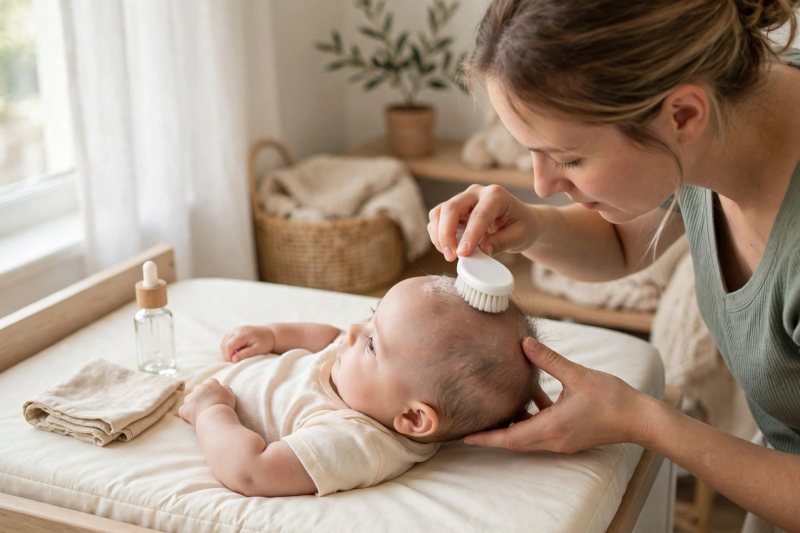
-
Know when to call the pediatrician. Book a visit if the patches spread to the face, behind the ears, the neck folds, or the diaper area; if the skin looks red, swollen, oozes, or crusts yellow; if your baby seems itchy, uncomfortable, or loses hair in patches; or if a few weeks of gentle care change nothing. Say: "When it spreads or looks sore, that's a doctor's job, not ours." A pediatrician can confirm it really is cradle cap and, if needed, suggest a specific medicated shampoo or cream — only use what they recommend for your baby, never leftover creams or adult anti-dandruff products at full strength. Most cases never need this step, but knowing it keeps you calm.



Make it easier
Fold the treatment into bath night: oil on before dinner, brush and wash in the tub — one routine, no extra session to remember. For a wiggly toddler, do the oil massage during a favorite song or story so the fifteen minutes pass happily. Keep the soft brush with the shampoo bottle so the whole kit grabs in one hand.
Make it harder
There is no "harder" version of cradle cap care — harder is how skin gets hurt. Instead, deepen the habit: track sessions and photos on a simple chart so you can show your pediatrician exactly what you've tried. As the patches clear, transition to the gentle everyday approach in our kids' skincare routine guide — the same less-is-more thinking, scaled for older kids.
Other ways to play it
- Bath-time version: oil, wait, then brush and shampoo in the tub where flakes rinse straight away — the lowest-mess option.
- Overnight version (thick patches): oil under a soft cotton cap at bedtime, brush and wash in the morning; use a cap that fits snugly and check it hasn't slipped over the face.
- Eyebrow and behind-ear flakes: the same soften-and-wash logic in miniature — a dab of oil on a cloth, gentle wipe after ten minutes, never brush near the eyes.
How it changes by age
- Newborns to 6 months: peak cradle cap season. Sessions are parent-only, of course — keep them short, warm, and in the bath routine, and support the head carefully at every rinse. For more newborn care, see our guide to life with a 2-month-old.
- 6–12 months: patches often linger in the hairline and behind the ears. Babies this age grab for the brush — let them hold a spare; it keeps the working area calm.
- Toddlers (1–3): true cradle cap usually fades by now; flaky toddler scalps are more often dry skin or early dandruff, and stubborn or spreading toddler patches are worth a pediatrician's look. The gentle routine above still applies, and pairs naturally with the patience tricks in our toddler first haircut guide when salon chairs enter the picture. For toddler days at home, see our activities for toddlers at home.
What they're learning
Comfort with care routines: repeated gentle handling teaches babies that washing and grooming feel safe and calm — the foundation for every routine that follows. Sensory experience: warm water, soft bristles, and fingertip massage are rich, soothing sensory input for newborns and young babies. Toddlers build on this sensory learning in our toddler learning activities at home. Trust: a baby who is never scrubbed or surprised learns that hands near their head mean comfort — which pays off at every haircut and hair wash ahead. Cause and effect (for toddlers): oil softens, brush loosens, water washes away — a first, visible lesson in how patient steps solve a problem.
Clearing up
Rinse the brush in warm soapy water after each session (flakes and oil build up fast), shake it dry bristle-down, and wash the oily cloth with your regular laundry. Wipe the mat down, recap the oil, and store the kit together in the bathroom. Change pillowcases and hats a little more often while patches are active — the flakes shed, and fresh fabric keeps things comfortable.
Questions parents ask
What is cradle cap?
What causes cradle cap?
Can I pick the flakes off my baby's cradle cap?
How long does cradle cap last?
When should I see a doctor about cradle cap?

save it for later
Pin this for the next rainy afternoon
Keep it on a board so it is there when you need it, rather than when you happened to find it.
Save to Pinterest


