


Toddler Snow Outfits: How to Layer for Snow Play
Good toddler snow outfits are built in three layers — a warm base, a cozy middle, and a waterproof shell. This step-by-step layering guide shows the dressing order that keeps 2–3-year-olds warm, dry, and playing longer, with no bulky wrestling match at the door.
Dress a toddler for snow in three layers: a snug non-cotton base layer, a fleece middle layer that traps warm air, and a waterproof shell of snow bibs and a jacket. Put mittens on before the jacket so the cuffs seal over them, cover ears and ankles completely, and finish with insulated boots and a five-point warmth check.

The short version
- Three layers, in order: base (no cotton), fleece middle, waterproof bibs and jacket.
- Mittens go on before the jacket so the jacket cuffs seal snow out at the wrist.
- One pair of wool socks — two pairs squeeze circulation and make feet colder.
- Cover every gap: ears, neck, wrists, ankles; bibs over boot tops, never tucked in.
- Watch the child, not the clock: quiet, still, or shivering means time to warm up inside.
- Age
- Ages 2–3
- Prep
- 5 min
- Play time
- 10 min
- Mess
- Low
- Difficulty
- Easy
- Where
- Both
Why kids love this
Toddlers love a dressing routine with a rhythm — every layer is a job, a countdown, and a silly sound effect away from the door. When the layers go on in the same order every time, your toddler starts "helping": arms up for the fleece, feet out for the boots. And a warm, dry toddler stays outside longer, which means more stomping, scooping, and snow-tasting than a cold one who melts down in ten minutes.
What you'll need
- A base layer set — soft thermal or merino-style long-sleeve top and bottoms (avoid cotton, which stays cold when damp)
- A middle layer — a fleece jacket or thick sweater and fleece pants for very cold days
- One pair of warm wool or wool-blend socks (one pair insulates better than two, which can squeeze circulation)
- Snow bibs or snow pants with adjustable straps
- A waterproof winter jacket with a hood
- Warm mittens (easier than gloves for toddlers) — mitten clips are a bonus
- A warm hat that covers the ears, plus a neck warmer or balaclava
- Insulated winter boots your toddler can stomp into
- A bench or low stool by the door, and a mat for snowy gear afterward
Before you start
1. Lay every layer out on the bench in dressing order the night before — base, fleece, bibs, jacket, hat, mittens, boots. 2. Check the forecast honestly: a mild 35°F afternoon needs less than a windy 10°F morning; adjust the middle layer, not the whole system. 3. Build in a bathroom stop before the first layer goes on — undoing snow bibs for a diaper change is nobody's favorite job. 4. Keep a spare pair of mittens and socks in your pocket; the first pair always gets wet before the second hour.
How to do it
-
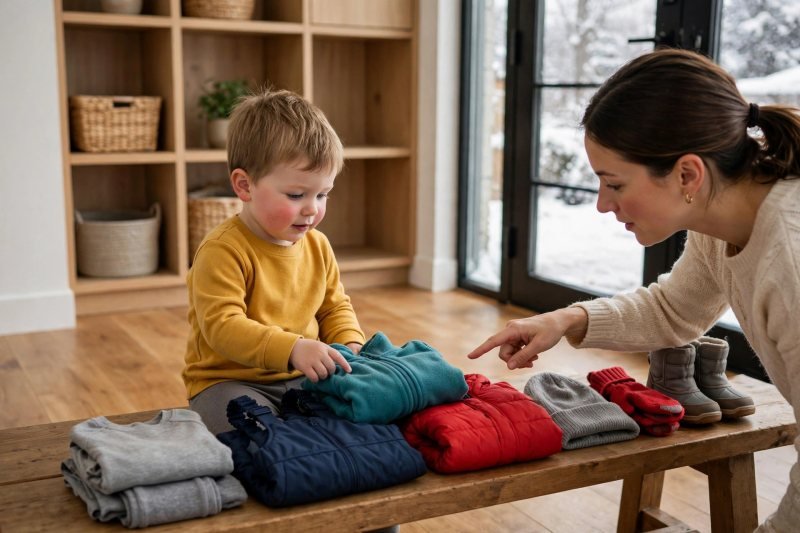
Lay out every layer in order. Sit your toddler on the bench and line the gear up in the order it goes on — base layer, fleece, bibs, jacket, hat, mittens, boots — pointing at each one as you name it. Say: "We build our snow bear from the inside out." Let your toddler hold the hat or hug the fleece while you talk; a two-year-old who has touched every piece fights none of them. Everything within reach means no mid-dressing dash to another room, which is where most snow-day meltdowns begin. Order set — time to build the warm base.
-
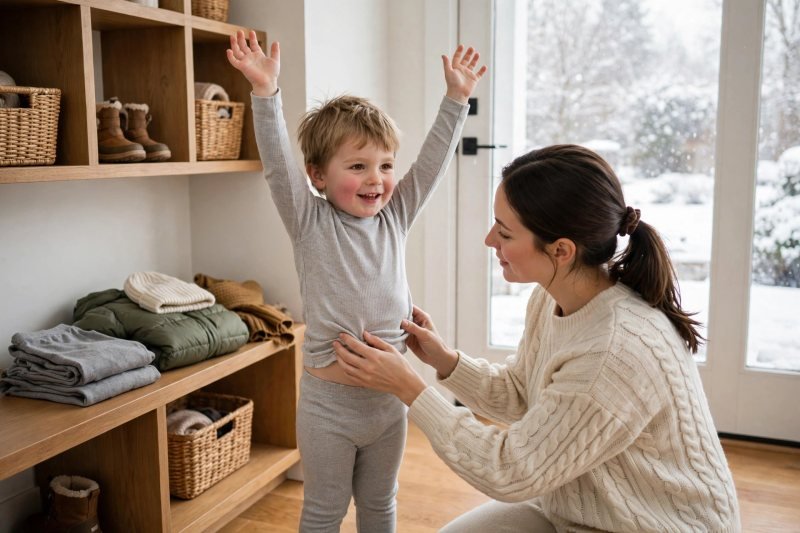
Pull on the base layer first. This thin, snug layer is the warmth foundation, so it goes directly on the skin: long-sleeve thermal top, then thermal bottoms. Say: "This is your warm hug layer — it never comes off outside." Smooth it flat as you go so nothing bunches under the layers above, and let your toddler pull the bottoms up the last inch themselves. Skip cotton here — cotton holds sweat and turns cold against the skin. Base layer smooth and snug, the insulating layer comes next.
-
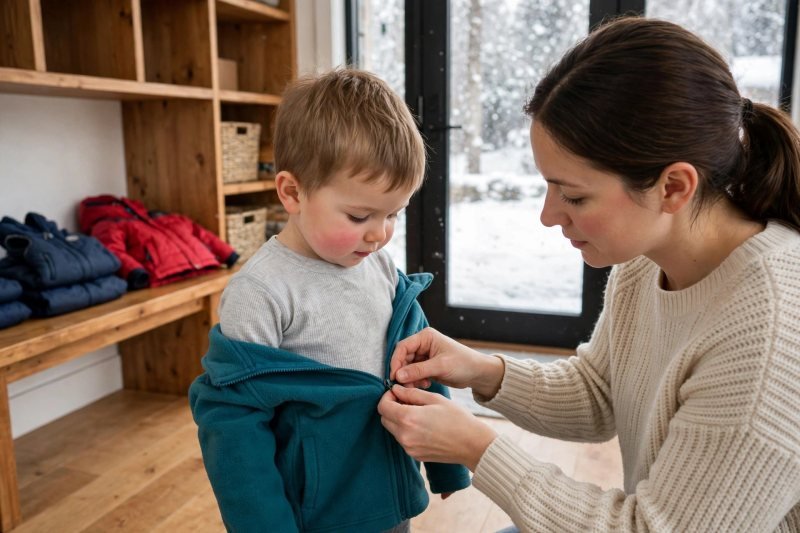
Add the cozy middle layer. The fleece jacket or thick sweater traps warm air over the base layer, and this is the layer you adjust for the weather: a full fleece on a bitter day, a lighter one when it's milder. Say: "This is the fluffy layer that keeps the warm air in." Zip or popper it closed and check that the base layer's cuffs still peek out at the wrists — no skin gaps. On truly frigid days, add fleece pants over the thermal bottoms too. Fluffy layer on — now the feet get their warmth.
-
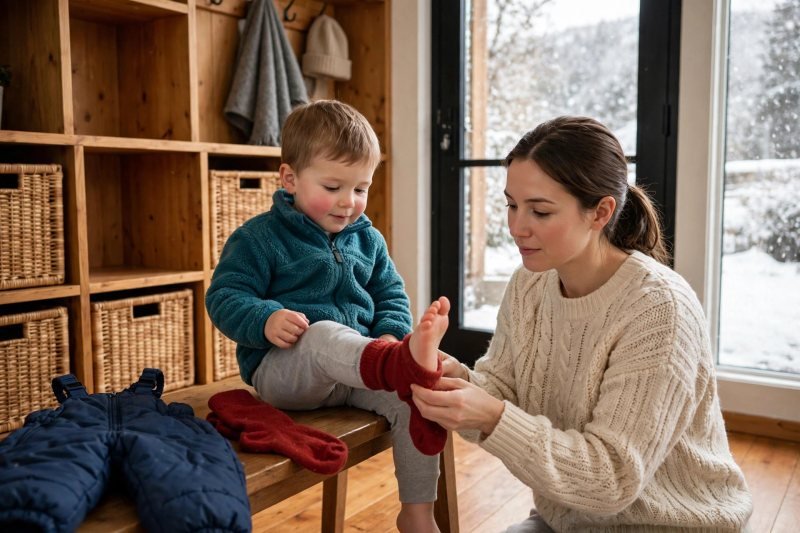
Roll on the warm socks. Sit your toddler back down and roll one pair of wool or wool-blend socks on, smoothing the heel into place so there are no folds to rub. Say: "One pair of warm socks — two pairs would squeeze your toes." Wiggle each toe through the sock to check they're free; squished toes get cold fast because the blood can't circulate. Tuck the thermal bottoms over the top of the socks so no ankle skin shows. Warm feet sorted — the waterproof pants come next.
-
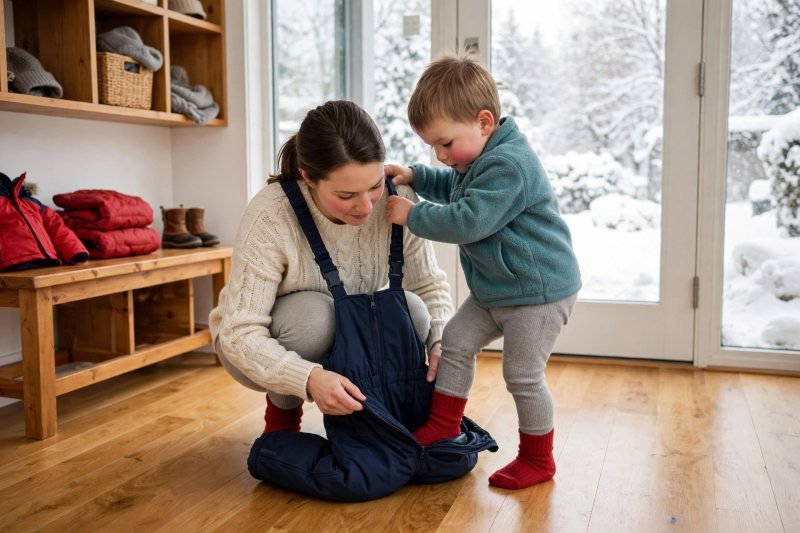
Step into the snow bibs. Hold the snow bibs or snow pants open and let your toddler step in one foot at a time while holding your hands or the bench. Say: "Feet through the tunnels — stomp, stomp." Pull the straps over the shoulders and adjust them so the bib sits high on the chest; that high front is what keeps snow out when your toddler sits down mid-play, which will happen constantly. Give the seat a pat — it should feel roomy enough to squat in. Bibs secure — time for the trick that keeps hands dry.
-
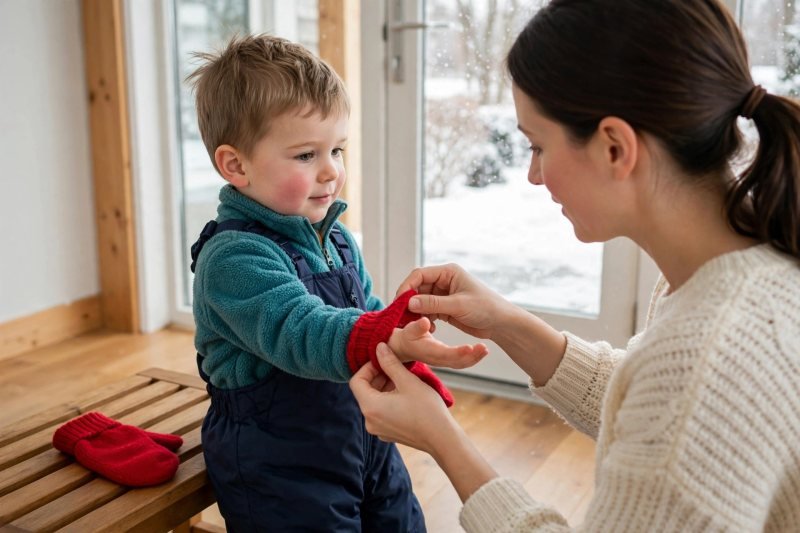
Slide the mittens on before the jacket. Here is the order that surprises everyone: mittens go on now, before the jacket, so the jacket cuffs can seal over the mitten tops. Say: "Mittens first — then the jacket zips the snow out." Push each thumb into its thumb hole, stretch the mitten cuff well up the forearm over the fleece sleeve, and clip the mitten clips to the sleeve if you have them. A toddler who loses a mitten in deep snow has about ninety seconds of warm hand left, so clips earn their keep. Mittens sealed in — the jacket locks everything down.
-
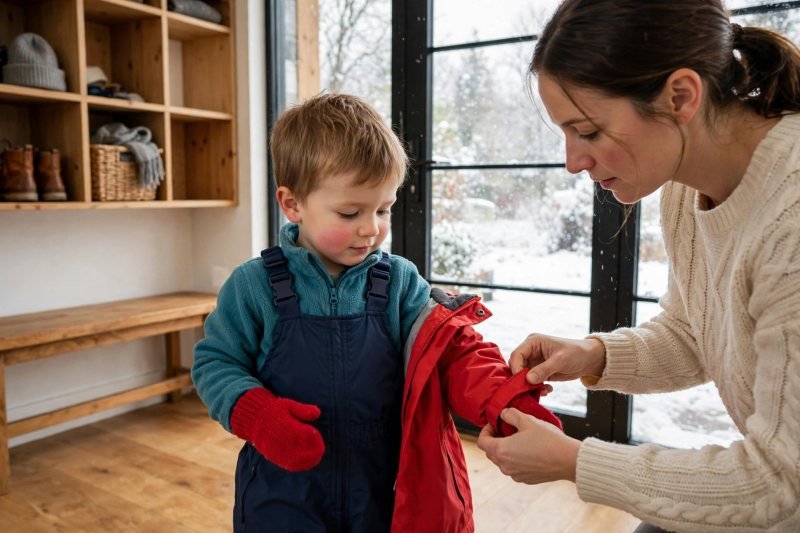
Zip the jacket over the mitten cuffs. Help your toddler push their arms into the jacket sleeves, making sure each sleeve slides over the top of the mitten cuff — fabric over fabric, no skin and no gap. Say: "The jacket hugs the mittens so the snow can't sneak in." Zip all the way to the chin, pull the hood up briefly to check it fits over the coming hat, then push it back down. Run your fingers around the waist hem: it should overlap the bib top with no gap for snow or wind. Shell sealed — just the head and feet left.
-
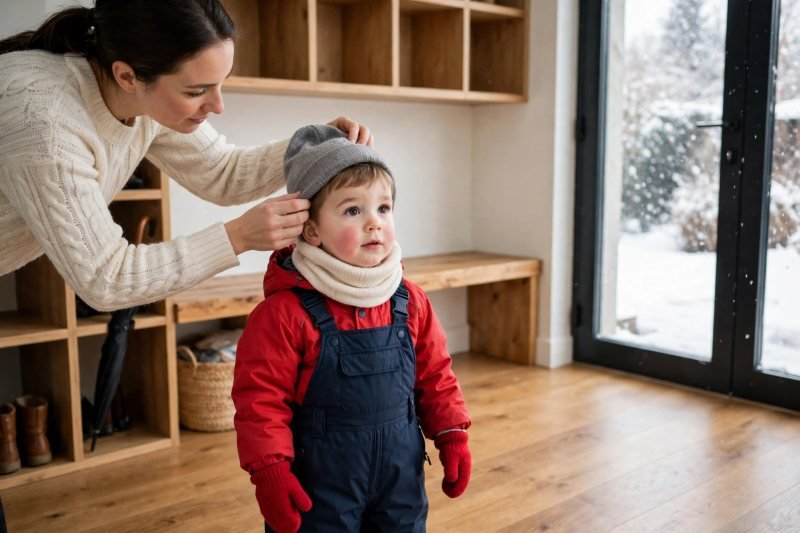
Add the hat and neck warmer. Pull the hat down so it fully covers the ears — ears are where toddlers lose heat and comfort fastest. Say: "Hat on, ears hiding — warm head, happy bear." Slip the neck warmer or balaclava up over the chin and nose if the wind is biting, and tuck its bottom edge under the jacket collar so it can't slide down. Skip scarves at this age; loose ends catch on sleds and climbing frames. Your toddler should still turn their head freely — if not, loosen a layer rather than forcing it. Head covered — boots finish the outfit.
-
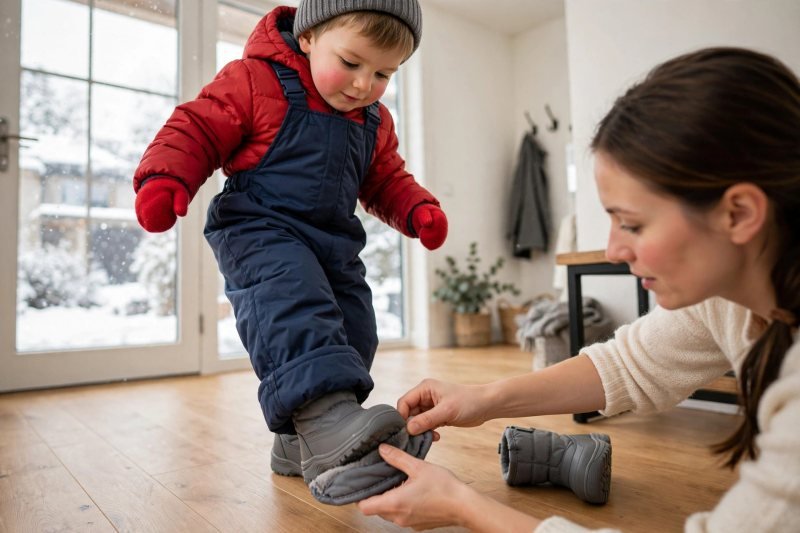
Stomp into the boots. Open each boot wide, hold it steady, and let your toddler stomp down into it — the stomp is the fun part, so make it a game: "Stomp the boot, stomp the snow later." Say: "Push your heel right to the back." Then do the toe check: press the front of the boot and feel for the toes with a thumb's width of room beyond them, and make sure the bib cuff sits over the boot top, never tucked inside, so snow can't pour in. Boots on and sealed — one last check before the door.
-
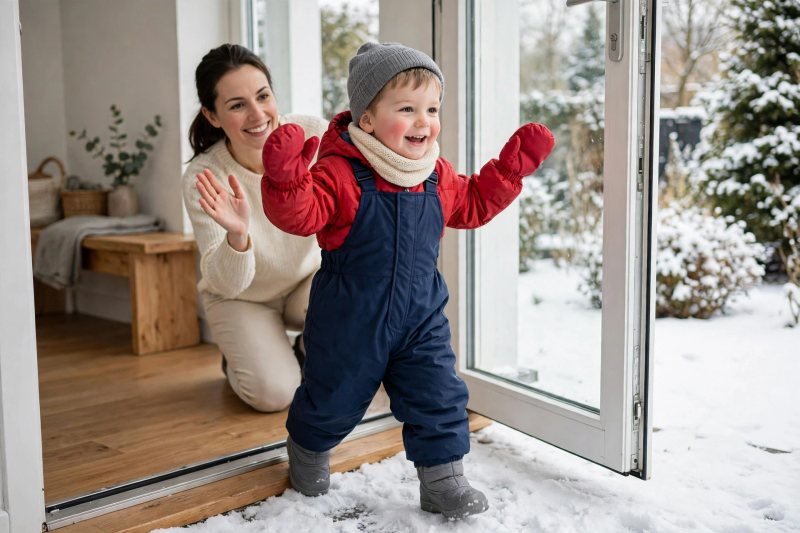
Do the final warmth check and head out. Run through the five cold spots one last time — ears covered; neck tucked; wrists sealed by jacket over mittens; ankles covered by bib over boots; toes wiggling freely. Say: "Five checks — ears, neck, wrists, ankles, toes — all warm!" Then open the door and let your toddler lead the way out. Outside, watch for the real signals: a toddler who is playing, moving, and rosy-cheeked is warm enough; one who goes quiet, still, or whiny-cold needs an indoor break, whatever the clock says. That check-in rhythm keeps snow days long, warm, and fun.


Make it easier
Dress your toddler on your lap if the bench wobbles — your knees make a sturdier dressing station than most furniture. Choose mittens and bibs with big, simple fastenings you can work with cold fingers; tiny clasps defeat everyone at −5°F. In mild snow weather (around freezing), drop the fleece pants and keep just thermals under the bibs — overheated toddlers are as miserable as cold ones.
Make it harder
Start a "dress yourself" race: lay the layers in order and let your toddler attempt each one while you only fix mistakes — the independence practice is gold at this age. Teach the layer names and jobs — base keeps skin warm, fleece traps air, shell blocks snow — the way these toddler learning activities at home turn routines into lessons. Let your toddler pack the spare mittens into your pocket themselves as the final step of the routine.
Other ways to play it
- Deep-freeze version (below 10°F): add the fleece pants, switch to a balaclava, and shorten sessions to 20–30 minutes with warm-up breaks between.
- Mild snow day version (near freezing): skip the middle fleece pants, open the jacket vents if it has them, and expect to strip the hat off mid-play — watch for sweating.
- Indoor practice version: rehearse the full layering order during indoor snow and ice play before the first real snow day, so the routine is familiar when it counts.
- Sibling speed version: dress the toddler first but leave the jacket unzipped until the actual door moment, so they don't overheat while older kids finish gearing up — our preschool winter outfits guide uses the same trick for 3–5-year-olds.
How it changes by age
- Ages 2–3: this guide's home turf. You do most of the work; your toddler contributes stomps, arm-raises, and fierce opinions about which hat. Expect the full routine to take about ten minutes at first and five once it's a habit. Keep sessions outside short and watch behavior, not the thermometer, for warmth cues.
- Under 2: babies and young toddlers chill faster and can't tell you — dress them in one layer more than you're wearing, prefer a carrier or stroller blanket layer you can adjust, and keep outings brief.
- Ages 4–5: most of the system stays identical, but preschoolers can work zips and straps themselves and graduate to their own checklist — see our preschool winter outfits guide for the independence version, and the full head-to-toe looks in toddler winter outfits for ages 2–3 for outfit combinations once layering is old news.
What they're learning
Sequencing: base, middle, shell, hat, boots — a five-beat order they can recite, predict, and eventually run themselves. Body awareness: noticing which body parts feel cold (ears, wrists, toes) builds the vocabulary of self-care. Independence: stomping into boots, pulling up bibs, and pushing arms into sleeves are exactly the dressing skills nursery teachers cheer for. These are core life skills — see our life-skills collection. Cause and effect: mittens under jacket cuffs stay dry; gaps let snow in — physics learned through play, no lecture needed.
Clearing up
Bring a towel to the door before you go out — the return trip is the messy part. Undress in reverse order on the mat: boots off and upended, mittens unclipped and laid over the heat vent, bibs shaken out, layers hung where air can reach them. Check every pocket for the inevitable treasure (today: one stone, wet). Boots stuffed with newspaper dry twice as fast overnight, and a mittens-and-hat basket by the door means tomorrow's layout takes thirty seconds.
Questions parents ask
How many layers should a toddler wear in the snow?
Should mittens go on before or after a toddler's jacket?
Why shouldn't toddlers wear cotton in the snow?
How do I know if my toddler is too cold in the snow?
What should a toddler wear under snow pants?

save it for later
Pin this for the next rainy afternoon
Keep it on a board so it is there when you need it, rather than when you happened to find it.
Save to Pinterest


