


Kids Snow Pants and Jackets: How to Choose the Right Set
Choosing kids snow pants and a winter jacket comes down to fit, not features lists: measure your child first, pick bibs for deep snow, demand boot-covering length, and run the bend-squat-climb test. This step-by-step buying guide shows exactly what to check — with no brand hype, just fit.
Choose kids snow pants and jackets by fit, not labels: measure height, waist, and inseam first; pick bibs for toddlers and deep snow; make sure pant legs cover the boot tops and the jacket overlaps the pants with room for a fleece; then run a bend-squat-climb-sit movement test before you keep anything.

The short version
- Measure your child (height, waist, inseam) — sizes vary too much between makers to trust age labels.
- Bibs stay up and seal the waist gap, making them the toddler default; regular pants suit independent dressers.
- Pant legs must overlap boot tops with an inner snow cuff; jacket must overlap the pants and fit over fleece.
- The movement test — bend, squat, climb, sit, crawl, reach — decides keep-or-return more honestly than any label.
- Buy current fit plus adjustability, not a size up: oversized gear trips, chills, and slides.
- Never buckle a car-seat harness over a bulky winter jacket.
- Age
- Ages 2–3
- Prep
- 5 min
- Play time
- 30 min
- Mess
- None
- Difficulty
- Easy
- Where
- Indoor
Why kids love this
Kids don't care about waterproof ratings; they care that they can bend, climb, sit in snow, and get up again. A set chosen with this guide's movement test means no pinching waistbands, no tripping cuffs, and no jacket riding up mid-snowman — which is to say, longer, happier snow play and fewer mid-play meltdowns.
What you'll need
- A ribbon or length of string and a small clip (a mess-free measuring tool)
- A wall and a washable marker dot, or a sticky note, for height
- Your child's current favorite fleece or sweater (the layering test piece)
- Their winter boots (fit cannot be judged without them)
- The 2–3 candidate sets you're choosing between, tags on
- A chair or bottom step for the sit test
- This guide's movement test: bend, squat, climb, sit, reach
Before you start
1. Do the try-on after a snack, mid-morning — fitting sessions and tired toddlers don't mix. 2. Dress your child in their normal winter base layer and fleece first; gear is judged over the layers it will actually cover. 3. Have the boots out. Snow pants are measured against boot tops, not shoes. 4. Keep receipts and tags until the movement test passes; fit is decided at home, not in the cart.
How to do it
-
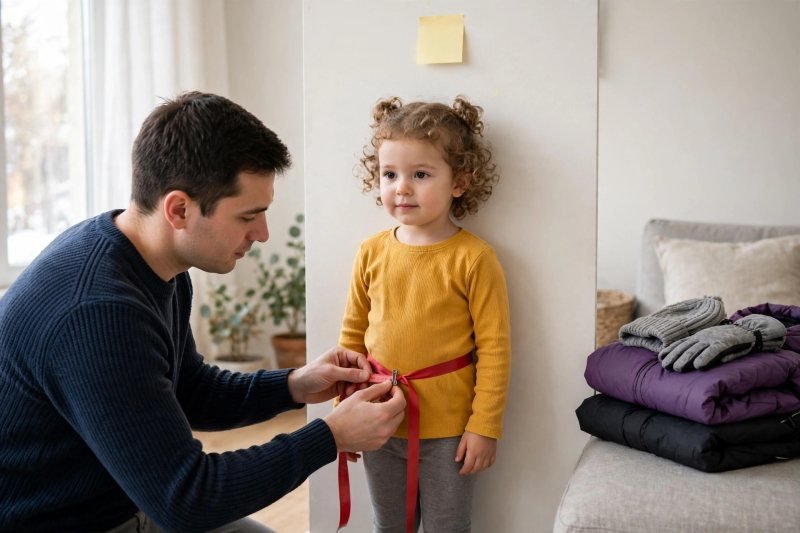
Measure your child before you look at a single size label. Sizes vary wildly between makers, so shop from measurements, not age numbers. Stand your child against a wall for height; use the ribbon to measure waist (at the natural waistline, over a thin shirt) and inseam (inner leg, ankle to crotch), marking each ribbon with the clip. Say: "First we measure the snow player, then we find the gear." Note the three numbers in your phone. A set that matches these measurements fits now, with the strap and cuff adjustments in the later steps handling the growing room. Measurements in hand, the first real choice is shape: bibs or pants?
-
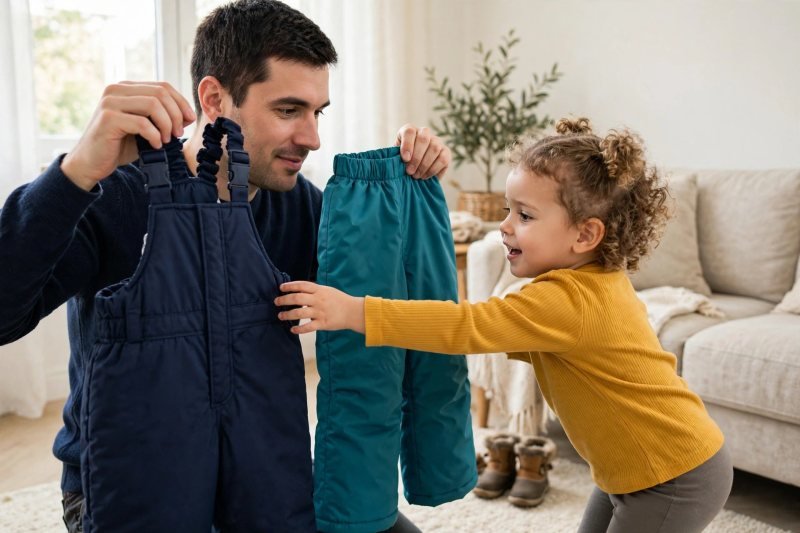
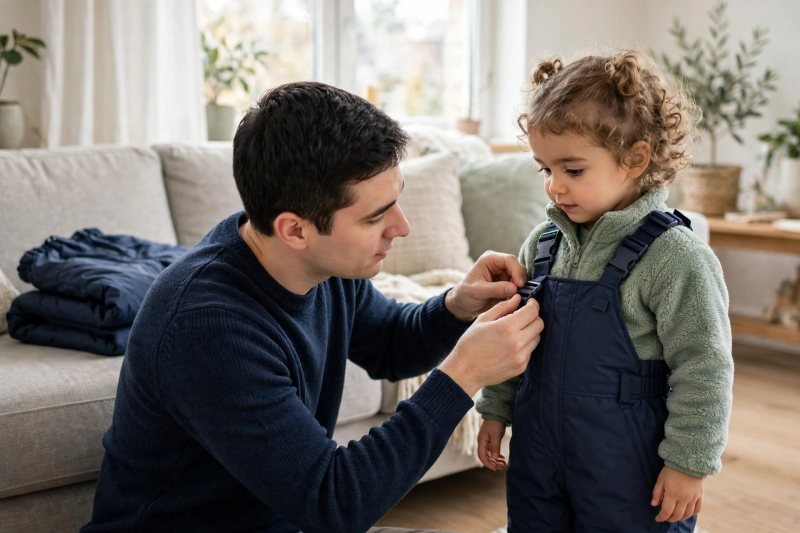
Choose bibs or regular pants by how your child plays. Bibs — overalls-style snow pants with shoulder straps — stay up through falls, keep snow out at the waist, and cover the tummy gap when jackets ride up; they're the usual win for two- and three-year-olds and deep-snow players. Regular snow pants with an elastic or adjustable waist are easier for quick bathroom trips and for children who dress themselves. Say: "Bibs for snow divers, pants for quick changers." Neither is wrong; match the style to the child and to who handles the bathroom runs. Style chosen — now judge the fabric in your hands.
-
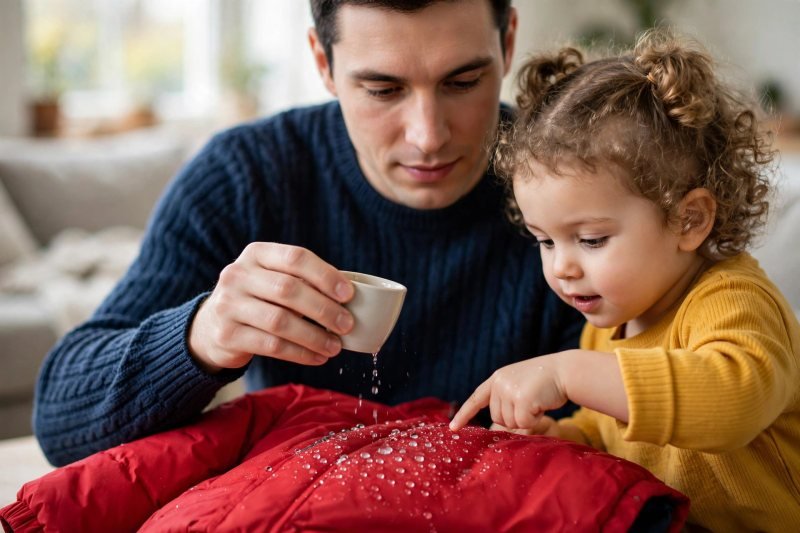
Check the shell, seams, and warmth with your hands. Run your palm over the outer fabric: it should feel tough and tightly woven, and water beaded on a sample (many stores allow a sprinkle test) should roll off rather than soak in. Look inside at the seams — sealed or taped seams at the seat and knees keep meltwater out where toddlers sit most. Say: "Strong outside, cozy inside, nothing scratchy." Feel the insulation: warm sets are light, not bulky; a toddler hauling around heavy gear tires fast and plays less. If the set feels stiff as armor, pass — flexibility is part of warmth, because moving children stay warm.
-
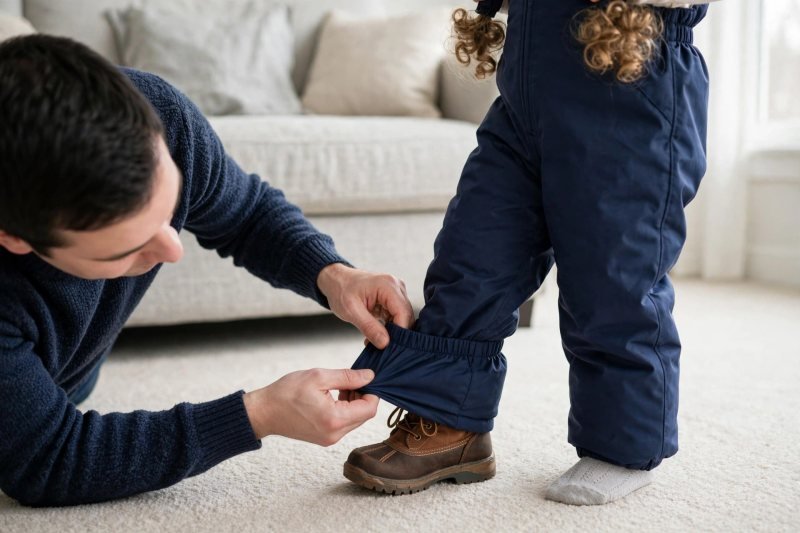
Get the snow pants length and cuffs right. With boots on, the pant legs should reach down over the boot tops — that overlap is what stops snow packing into the boot with every step. Check for an inner snow cuff (an elastic gaiter that hugs the boot) and adjustable hems or straps; "grow" features like extendable hems are genuinely useful at this age. Say: "Pants kiss the boots — no gap, no snow." Too long is as bad as too short: puddling fabric trips small legs. Aim for full boot coverage with the hem off the ground when standing straight. Pants judged, the jacket gets the same treatment.
-
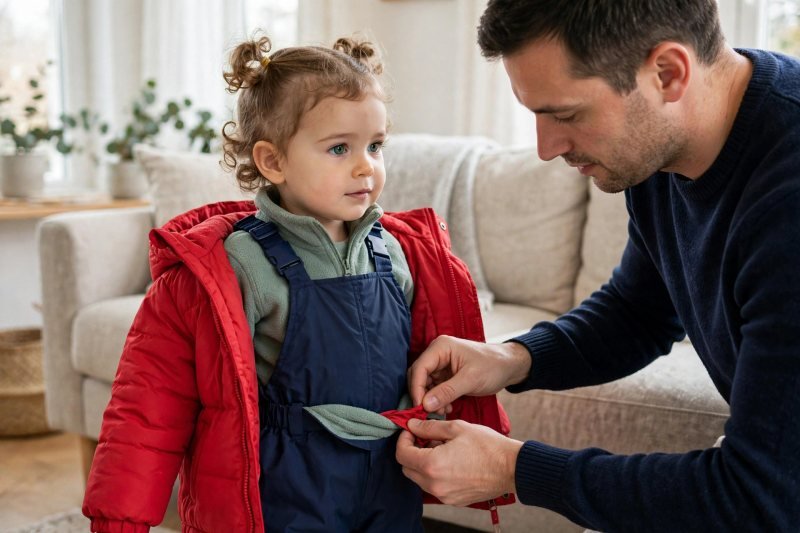
Fit the jacket for overlap and layer room. Zip the jacket over the fleece your child will actually wear. It should cover the hips and overlap the snow pants' waistband or bib top by a good margin, so bending doesn't open a cold gap at the back. Say: "Long enough to hug the pants, roomy enough for the fleece." Reach both arms overhead together: the hem shouldn't climb to the belly button. There should be room to pinch a little fabric at the tummy — skintight means the layering underneath won't fit by February. Jacket length and room pass? Small hardware decides the rest.
-
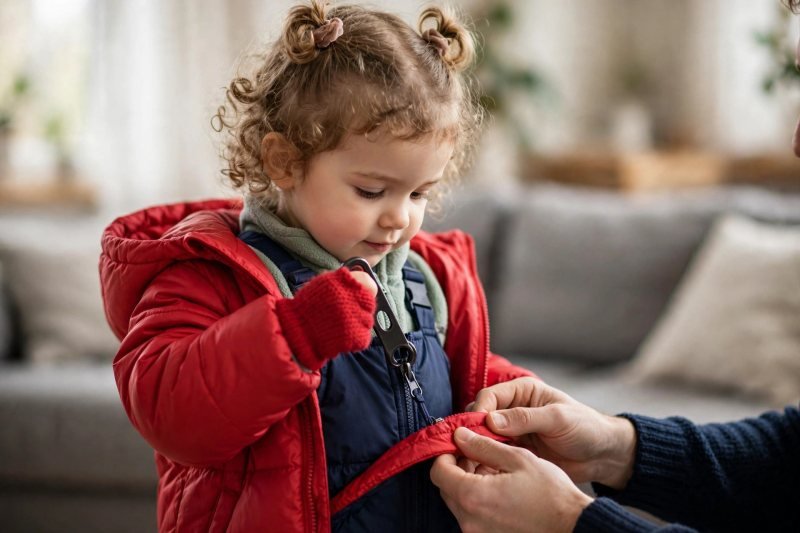
Test the zipper, hood, and cuffs like a toddler will. You work the zipper first: it should run smoothly with a chin guard at the top and a pull big enough for mittened hands to find later. The hood should lie flat when down (a bulky hood bunched behind the neck is uncomfortable under backpacks and car-seat straps) and stay put without covering the eyes when up. Say: "Zip, hood, cuffs — the three helpers." Check wrist cuffs: adjustable or elastic, snug over the mitten line. Then hand the zipper to your child — if they can start it with help, dressing independence is coming. Hardware done — now the set has to survive motion.
-
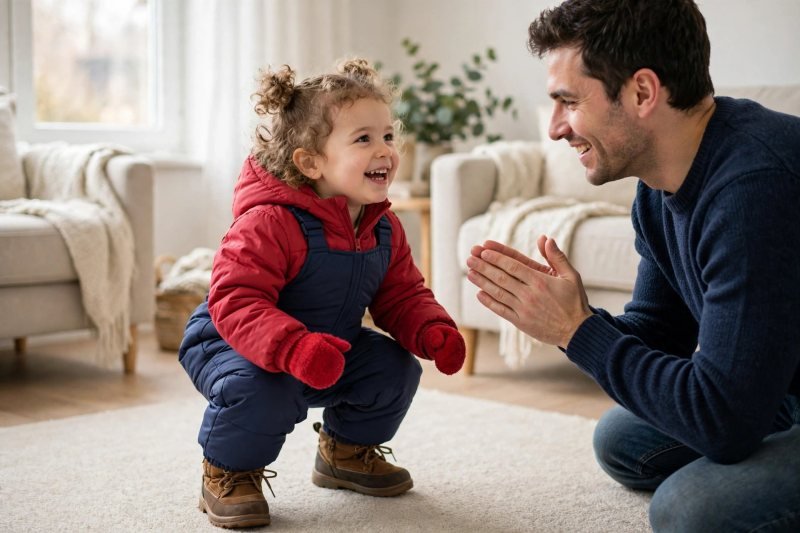
Run the full movement test. This is the step that decides, so make it a game: bend and touch toes; squat like a frog; climb onto the chair or bottom step; sit and cross legs; crawl two steps; stand and reach high. Say: "Show me frog, show me climber, show me snow-sitter!" Watch the truth-tellers: knees should bend without the pants pulling down at the back; the jacket hem should stay overlapped; cuffs shouldn't catch under heels; nothing should pinch, ride, or twist. Any fail here fails in the snow, only colder. If the set passes all six moves, it fits the child — the only opinion that matters. One sizing judgment remains: the growth question.
-
Plan for growth honestly — a little room, not a costume. Toddlers grow fast, and it's tempting to buy a size up "to last two winters." Resist the oversized set: extra length trips, extra bulk chills (cold air circulates inside), and straps at their tightest still sliding means the gear doesn't fit yet. Say: "Room to grow in the straps, not in the swimming." The sweet spot is current fit plus adjustability — tighten-today straps, extendable hems, a waist that adjusts. That set will likely last the season and be perfect hand-me-down or resale condition after. You've chosen — the last step makes the set last.
-
Care for the set so it performs all season. Before the first outing, read the garment's own care label and follow it — most winter sets wash cold and gentle and prefer hanging dry, and heat can damage waterproof coatings. Say: "We wash it the way its label says, so it keeps the snow out." Hang the set to dry fully after every outing (a damp set left in a ball loses its loft and its manners), shake off grit before washing, and close all zippers and fasteners first. Mid-season, sprinkle-test the seat and knees again; if water soaks in instead of beading, the maker's care guidance is the place to check for refreshing the finish. Cared for this way, a good set outlasts the toddler who outgrows it.


Make it easier
Shop the measurements, not the age size: bring the three ribbon lengths (or your phone note) and compare against each set's labeled dimensions. Fewer, better checks: if time is short, never skip the movement test — it's the one that predicts real-world happiness. For a child between styles, bibs are the safer default at two and three: they forgive a lot of fit imperfection.
Make it harder
Let your child score the movement test with thumbs up/down per move — buy-in now means zero dressing battles later. Or set up a masking-tape obstacle course in the new set as the movement test. Practice the full dressing order at home with the new set, the way our toddler winter outfits for ages 2–3 guide sequences it — bibs, mittens, jacket, boots. Set up a drying station together (hooks at child height, a mat for boots) so the care step becomes their job too.
Other ways to play it
- Deep-snow version: bibs + inner boot gaiters + the longest jacket overlap you can find; this is the snow-diving configuration.
- Mild-winter version: skip heavy insulation — a waterproof shell set over warmer fleece layers handles slushy, near-freezing days better than one thick set.
- Independent-dresser version: regular pants with a wide elastic waist, the biggest zipper pull, and no fiddly clasps — slower to master, faster every morning after.
- Indoor test run: try the set during indoor snow and ice play before the first real outing, and run the movement test there.
How it changes by age
- Ages 2–3: this guide's home turf. Prioritize bibs, boot coverage, and the movement test; expect to operate every zipper and strap yourself, and see the car-seat note in Safety before any drive.
- Ages 3–5: children start dressing independently — weight zipper quality and simple closures higher, and pair the set with the outfit combinations in our preschool winter outfits guide.
- Ages 5–6: fit logic stays identical; add your child's opinion on color and style (worn happily beats technically perfect), and compare against the outfit sets in our toddler winter outfits for ages 2–3 guide if you're handing gear down to a younger sibling and want to see the whole wardrobe working together.
What they're learning
Body measurement literacy: height, waist, and inseam introduce the idea that numbers describe their own growing body. Decision-making: movement-test scores and style choices (bibs vs pants) are real, consequential decisions they participate in. These are early life skills. Cause and effect: overlap means no snow in the boot; gaps mean cold — physics they can feel. Care responsibility: drying the set after play is an early, satisfying ownership habit.
Clearing up
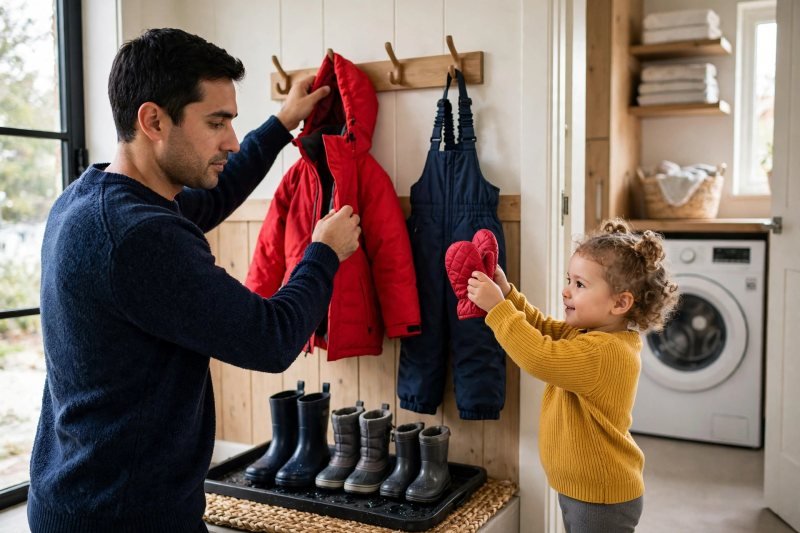
Try-on rejects go straight back into their bag with the receipt before they migrate into the house. The winning set gets its station: hooks for jacket and bibs, boots underneath, mittens clipped to the jacket. Shake the day's snow off outside the door, hang everything open to dry, and put the ribbon measurements in a drawer — you'll want them again next fall, plus a season's growth.
Questions parents ask
Are bibs or regular snow pants better for toddlers?
How should kids' snow pants fit?
How long should a kids' winter jacket be?
Can my child wear their winter jacket in a car seat?
How do I wash kids' snow pants and jackets?

save it for later
Pin this for the next rainy afternoon
Keep it on a board so it is there when you need it, rather than when you happened to find it.
Save to Pinterest


