


Turning a Box Into a Shop
A delivery box, a marker and whatever is in the cupboard. Then step back, because the play runs itself.
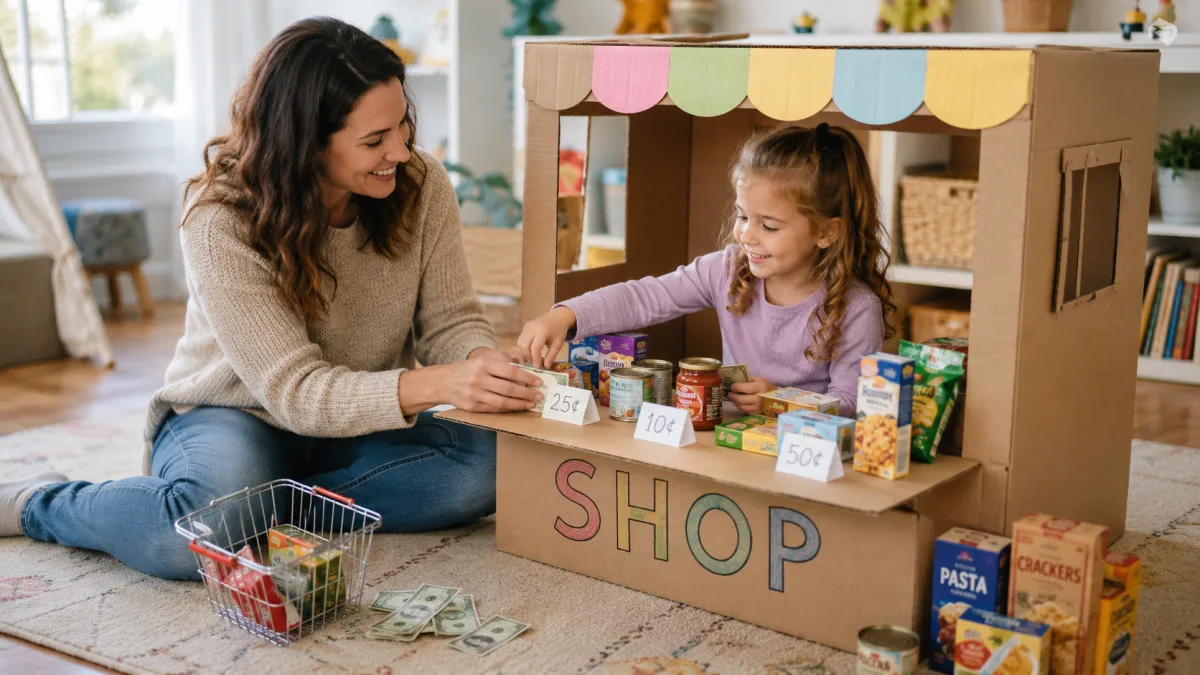
Turn a cardboard box into a shop counter with tins and packets from the cupboard, price labels and paper money. Suits ages 3 to 7, takes ten minutes to set up, and often runs for days.
The short version
- Cut the window, then stop helping.
- Everything costs one coin to begin with.
- Be the customer first — it shows them the script.
- Age
- Ages 3–7
- Prep
- 10 min
- Play time
- 45 min
- Mess
- Low
- Difficulty
- Easy
- Where
- Indoor
Why kids love this
Being the one in charge is the appeal. A shopkeeper decides what things cost, whether you may have a bag, and when the shop is closed — and children take all three of those responsibilities extremely seriously. It also runs without an adult once it is going, which is rarer than it sounds.
What you'll need
- A large cardboard box
- A marker
- Scissors (adult)
- Tins, packets and boxes from the cupboard — anything unopened and not heavy
- Paper for price labels and money
- A bag or basket
- Optional: a calculator, a notepad, a toy till
Before you start
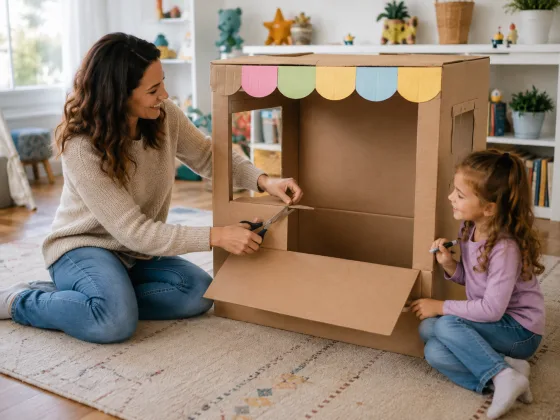
Cut a serving window in one side of the box and fold the flap up as a counter. Ten minutes, and it is the only part that needs you. Raid the cupboard for stock. Avoid glass and anything heavy — tins are fine at floor level, less so at head height.
How to do it
-
Cut a large window in one side of the box and fold the cut piece up or down to make a counter.
-
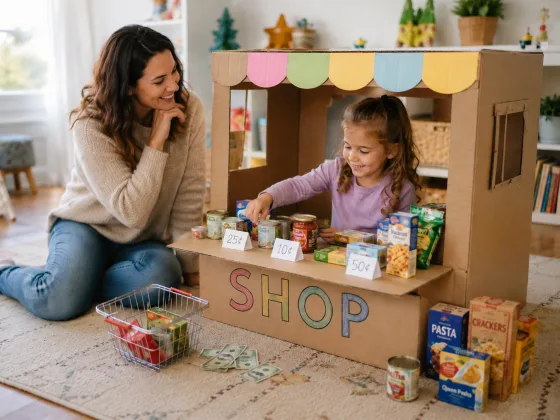
Write SHOP on the front, or let them name it.

-
Set the stock out on the counter and on the floor beside it.

-
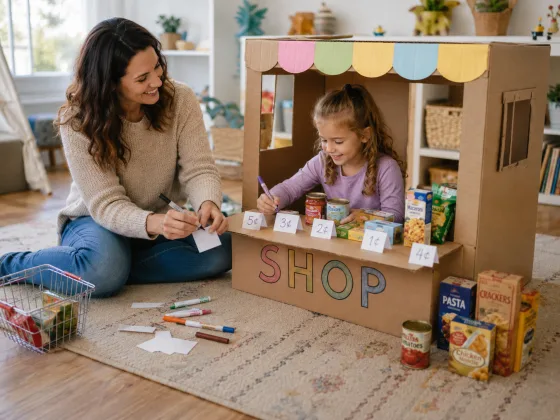
Make price labels together. Small numbers only — everything between 1 and 5.
-
Cut paper money, or use real coins with an older child.

-
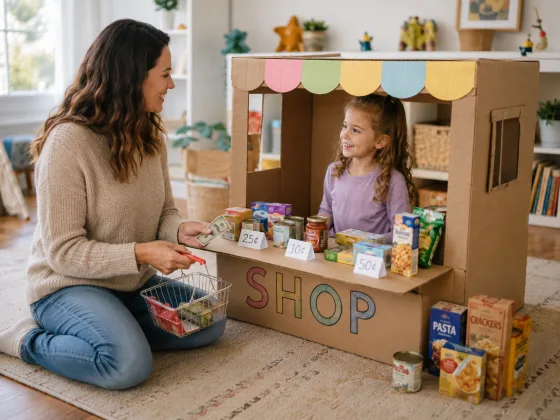
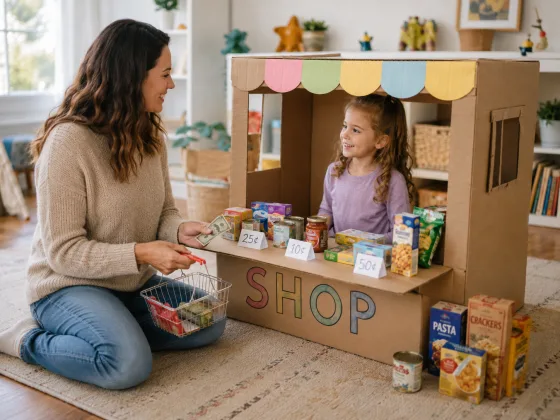
Decide who is shopkeeper first, and be the customer yourself for the first round.
-
Buy something. Ask questions: how much, do you have a bag, is that the last one.
-
Swap over. Then leave them to it.
Make it easier
Everything costs one coin. Pricing at different amounts turns it into a maths lesson, which is not the point for a three-year-old.
Make it harder
Prices between 1 and 10, and the shopkeeper has to work out change. Or give them a budget and a list and see if they can manage both.
Other ways to play it
- Make it a café instead, with a menu and orders written down.
- Make it a vet, a post office or a library — the same box, different stock.
- Add a closed sign and opening hours.
- Give the customer a shopping list to read.
- Use real coins and practise paying with the right ones.
How it changes by age
- Three: handing things over and taking money. No real counting.
- Four to five: prices of one to five, counting coins out one at a time.
- Six and up: change, a written list, and a notebook to keep track of takings.
What they're learning
There is a lot of language in pretend play — greetings, questions, negotiating, explaining. That is the main thing happening here. The money is genuine early maths when they are ready for it, and completely optional when they are not.
Clearing up
The stock goes back in the cupboard; the box folds flat behind a door. Most families find it comes back out within a day or two.