


Paper Plate Animal Masks
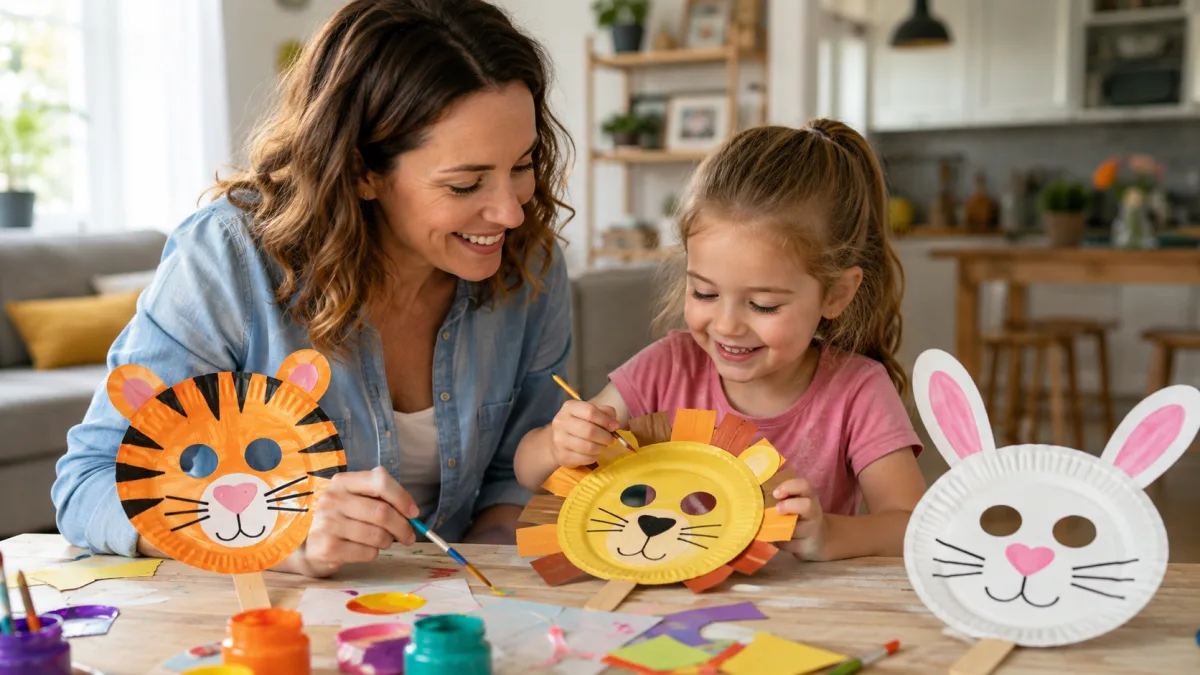
One paper plate, some paint and a lolly stick. Twenty minutes of making and an afternoon of being a tiger.
Turn a paper plate into an animal mask using paint, cut paper ears and a lolly stick handle. Suits ages 3 to 7, takes about 20 minutes plus drying, and needs only paper plates, paint, glue and card.
The short version
- Cut the eye holes yourself before anything else.
- One colour of paint, dried properly, looks far better than four mixed together.
- The mask takes twenty minutes; the pretend play afterwards takes the afternoon.
- Age
- Ages 3–7
- Prep
- 5 min
- Play time
- 25 min
- Mess
- Medium
- Difficulty
- Easy
- Where
- Indoor
Why kids love this
The mask is the point but the being-the-animal afterwards is the real activity. A mask usually turns into an hour of pretend play, which is a far better return than the craft itself. Holding it on a stick rather than wearing it also means it works for children who dislike anything on their face.
What you'll need
- A paper plate per mask
- Paint, or thick felt tips
- Coloured card or paper for ears, noses and manes
- Glue stick or PVA
- Child scissors
- A lolly stick, or a ruler, for the handle
- Sticky tape
Before you start
Cut the eye holes yourself before you start. Cutting a hole in the middle of a plate is genuinely difficult and it is the one step that will not go well. Newspaper down if you are using paint.
How to do it
-
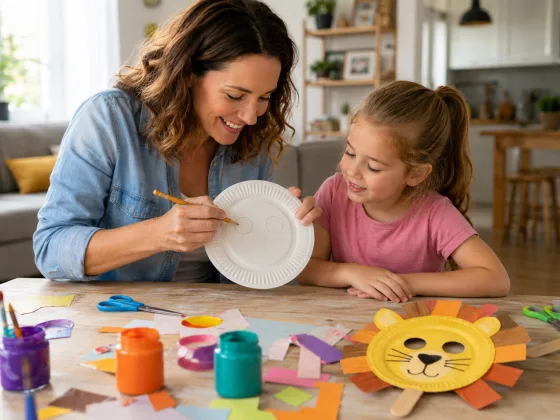
Hold the plate up to your child's face and mark roughly where the eyes go, then cut two holes.
-
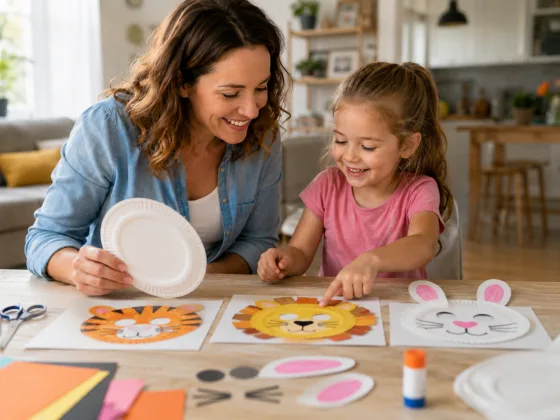
Decide which animal it is. Ask them, do not choose.
-
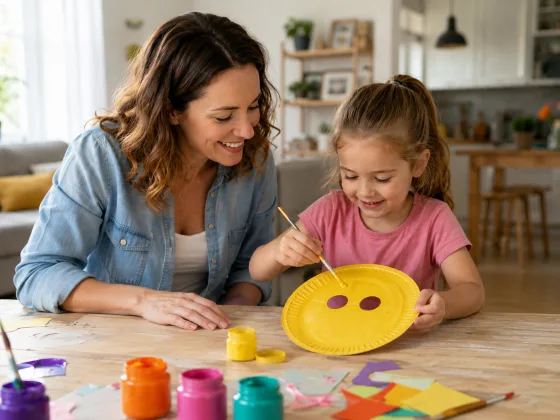
Paint the whole plate one colour and leave it to dry for about twenty minutes.
-
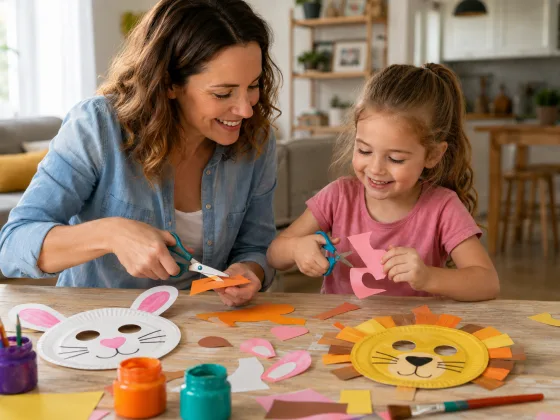
While it dries, cut ears, a nose and any other pieces from card.
-
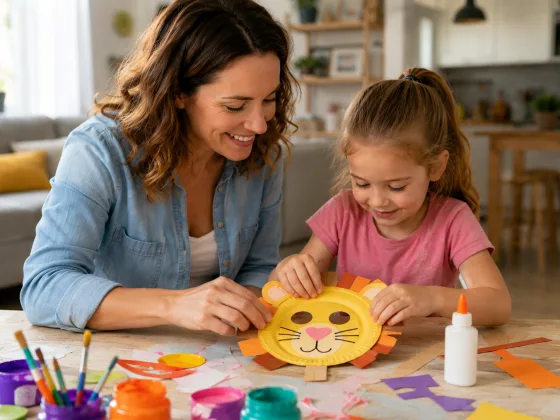
Glue the pieces on once the paint is dry.
-
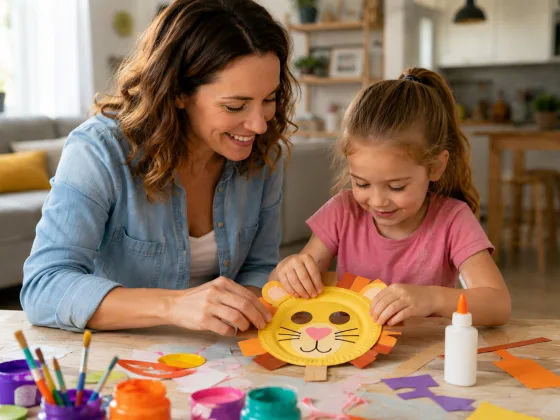
Add stripes, spots or whiskers with a felt tip.
-
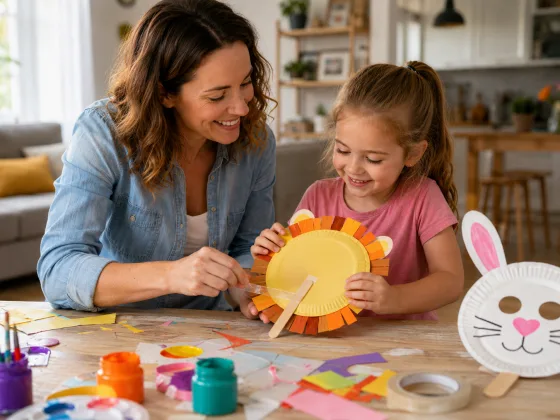
Tape the lolly stick to the bottom edge at the back as a handle.
-
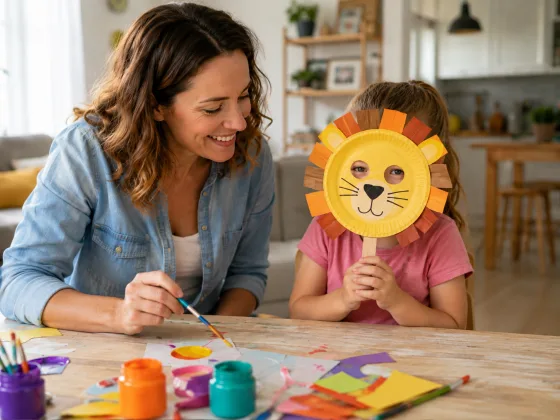
Hold it up and see who they are.
Make it easier
Do the painting in one colour and glue on pre-cut shapes. For a three-year-old, precut everything and let them stick.
Make it harder
Ask them to plan it first with a drawing, then match the mask to the plan. Or make a mask for a made-up animal and name it.
Other ways to play it
- Make a whole set and act out a story.
- Skip the paint and use torn tissue paper glued on instead — no drying time.
- Add a paper mane for a lion by cutting a fringe all round.
- Make matching masks for a sibling or a soft toy.
- Use the same method on a paper bag for a mask that goes over the head.
How it changes by age
- Three: you cut, they paint and stick.
- Four to five: they can cut simple ear shapes with child scissors.
- Six and up: they can plan and cut the whole thing, including the eye holes with supervision.
What they're learning
Cutting, gluing and placing pieces where they are meant to go is real fine motor work, and deciding what an animal needs — ears here, whiskers there — is early planning. The pretend play afterwards is where the language is.
Clearing up
Paint pots rinsed, scraps in the recycling, newspaper folded up. The masks themselves want a shelf for a few days before they quietly disappear.