


An Egg Hunt That Works for Every Age
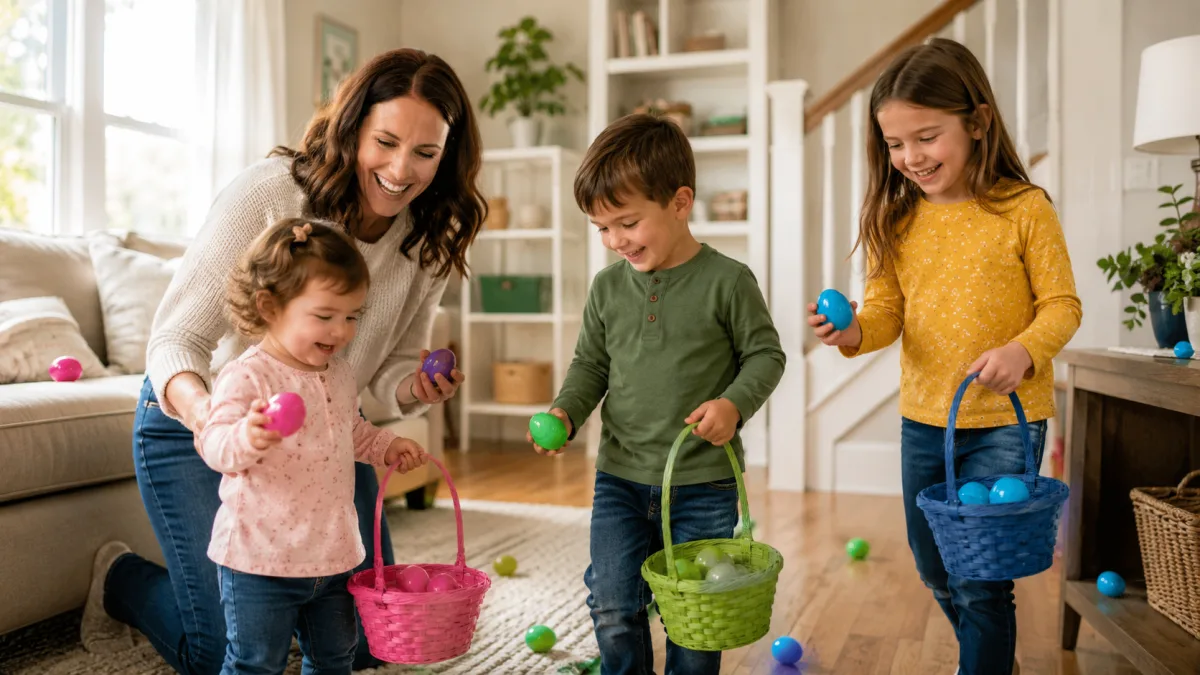
The same hunt, three difficulty levels, so a two-year-old and a seven-year-old can play together without either being bored.
Run one egg hunt at three difficulty levels — visible eggs for toddlers, hidden eggs for preschoolers, clue-based for older children — so mixed ages can play together. Takes 15 minutes to set up.
The short version
- One colour per child removes almost every argument.
- Write down where you hid them.
- Three difficulty levels means one hunt works for a two-year-old and a seven-year-old at once.
- Age
- Ages 2–8
- Prep
- 15 min
- Play time
- 30 min
- Mess
- Low
- Difficulty
- Easy
- Where
- Either
Why kids love this
Hunting is the whole appeal and it never wears out. The reason this version works is that nobody finds everything first — each child is looking for their own colour, so there is no race to lose. Older children generally enjoy the clues more than the chocolate, which is worth knowing.
What you'll need
- Plastic eggs, or foil-wrapped chocolate ones, or paper eggs you cut out
- One colour per child, or a bag each with their name on
- Paper and a pen for clues
- A basket or bag per child
Before you start
Decide the colour or marking for each child first, and tell them clearly. That single rule prevents most of the arguments. Hide them at three levels: youngest in plain sight at floor height, middle age partly hidden, oldest properly hidden with a written clue for each. Write down where you put them. You will not remember, and an egg found in June is not a triumph.
How to do it
-
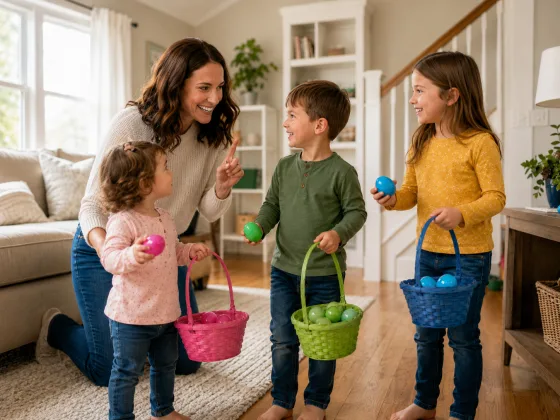
Choose a colour for each child and tell everybody whose is whose.
-
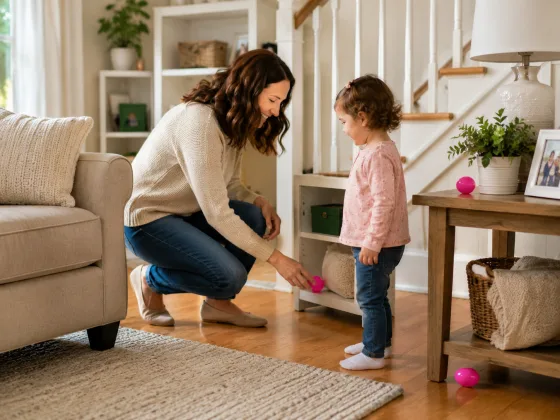
Hide the youngest child's eggs in plain sight, at their eye level.
-
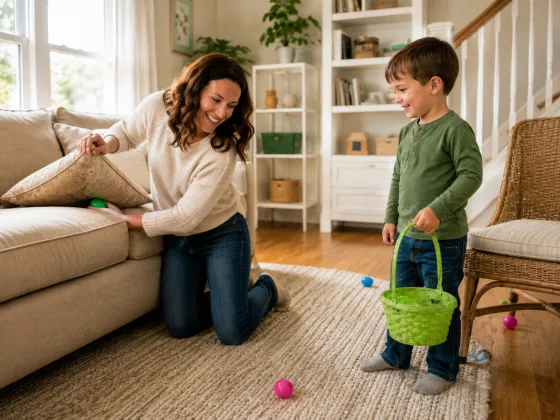
Hide the middle child's eggs partly tucked away — behind a cushion, under a chair.
-
Hide the oldest child's eggs properly, and write a clue for each one.
-
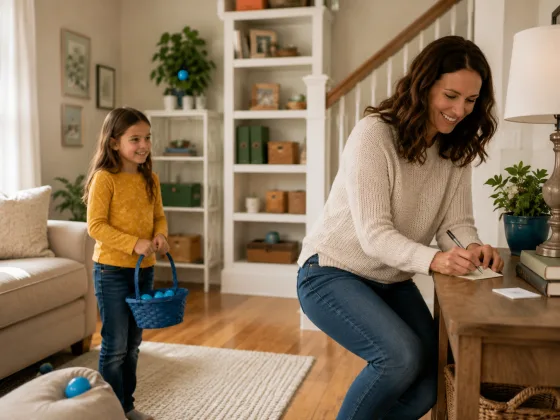
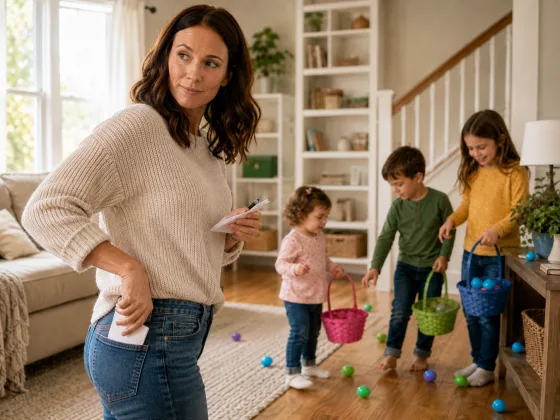
Write a list of every hiding place and keep it in your pocket.
-
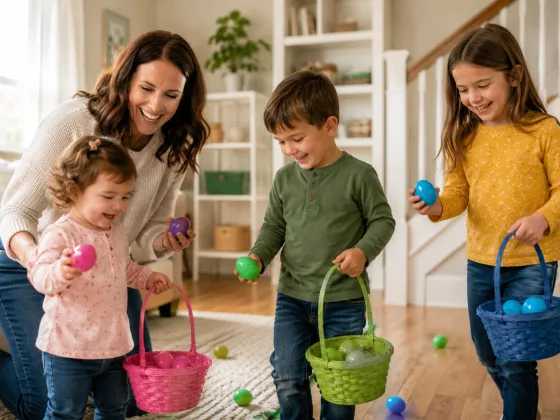
Give each child a basket and remind them which colour is theirs.
-
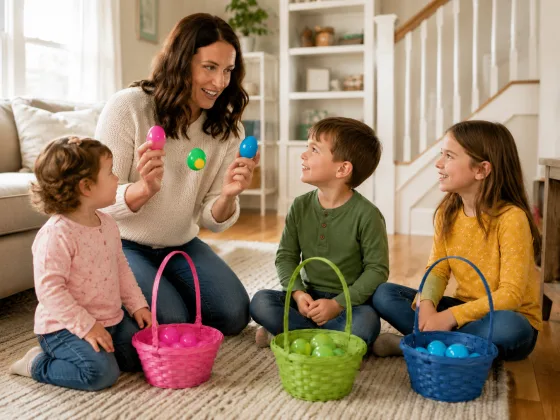
Start. Help the youngest by looking in the right general direction rather than pointing.
-
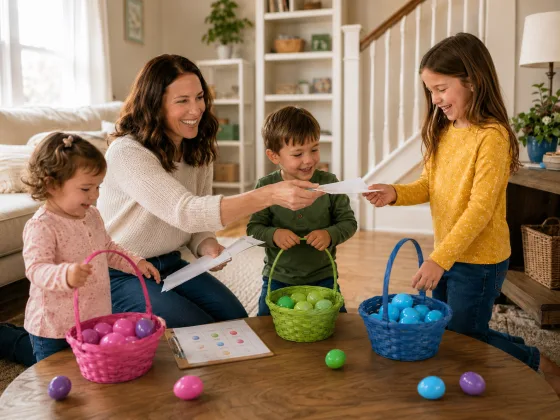
Hand the clues out one at a time to the oldest.
-
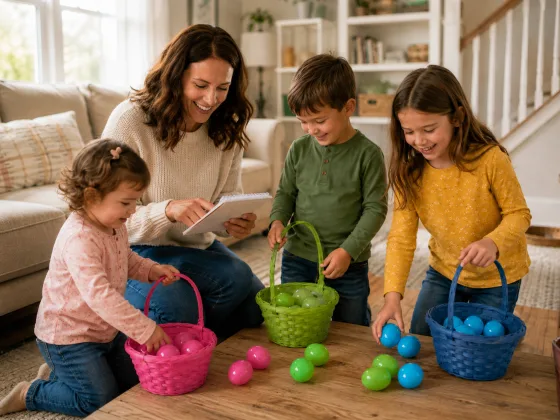
Count up at the end against your list, and go and find any that are missing.
Make it easier
Fewer eggs, all in one room, all visible. Six eggs in plain sight is a triumph for a two-year-old.
Make it harder
Clues that lead to the next clue rather than to an egg, so it becomes a trail. Or riddles rather than directions.
Other ways to play it
- Use paper eggs with a letter on each, which spell a word when collected.
- Hide numbered eggs and have them put them in order.
- Do it in reverse: the children hide, the adults hunt.
- Use it for something other than Easter — a birthday, or the last day of the holidays.
- Fill plastic eggs with a small activity each rather than sweets.
How it changes by age
- Two: six eggs, one room, in plain sight, and expect help to be needed.
- Three to five: partly hidden, whole ground floor, no clues.
- Six and up: written clues, harder hiding places, and let them hide some for you afterwards.
What they're learning
The clue version is real reading with a genuine reason to decode it, which is worth far more than a reading exercise. For younger children, searching systematically — looking behind rather than just at — is a thinking skill that develops with practice.
Clearing up
Collect the plastic eggs back into a bag for next year. Check your list before you declare it finished.