


Toddler Boy Winter Outfits: 20 Warm Looks for Cold Days
Toddler boy winter outfits made easy: 20 warm looks for ages 2–3 built on a base, a cozy middle and a winter coat — with a dressing routine toddlers can help run.
Toddler boy winter outfits are built in three layers: a soft base (thermal top and soft pants), a cozy middle (sweater, hoodie or fleece), and a warm coat or snowsuit — plus socks, insulated boots, a hat covering the ears and mittens. Rotate the middles and pants and one small wardrobe builds 20 warm looks.

The short version
- Every look uses the same system: soft base, cozy middle, warm outer — rotate the pieces, not the order.
- A small rotation (2–3 bases, 3–4 middles, 2–3 pants, one coat) builds all 20 looks.
- Mittens beat gloves at this age: warmer, easier to keep on, with cuffs tucked under coat sleeves.
- Snow days need waterproof everything plus spare dry socks and mittens by the door.
- Never buckle a car seat over a puffy coat — buckle snug, then lay the coat over like a blanket.
- Age
- Ages 2–3
Why kids love this
Toddler boys run hot, move constantly and have strong opinions about exactly one clothing item at a time — and toddler boy winter outfits work with all three truths. The routine turns dressing into a runway game with jobs he can do: pushing arms through tunnels, stomping boots on the mat, zipping the last inch himself. Because the layer order never changes, the daily question shrinks from "will he wear it?" to "which cozy middle today?" — and that is a question a two-year-old loves answering. The 20 looks in this guide all come from one small wardrobe, so his favorites stay in rotation while the combinations keep changing.
What you'll need
- Base layers: thermal or cotton long-sleeve tops, leggings and soft pants
- Middle layers: sweaters, hoodies, fleece pullovers, flannel shirts
- Winter pants: fleece-lined jeans, joggers, corduroys, overalls
- A warm winter coat or snowsuit (one-piece or two-piece with snow bibs)
- Warm socks and insulated waterproof boots
- A knit hat covering the ears (balaclava-style stays on best)
- Waterproof mittens with long cuffs
- Spare socks and mittens for snow days
Before you start
1. Check the weather — snow days, mild days and windy days each get a different build from the same wardrobe. 2. Lay the day's outfit out in dressing order by the door: base, middle, pants, coat — boots, hat and mittens on the boot tray. 3. Rotate the middle layer daily so all 20 looks get worn before anything is outgrown.
How to do it
-
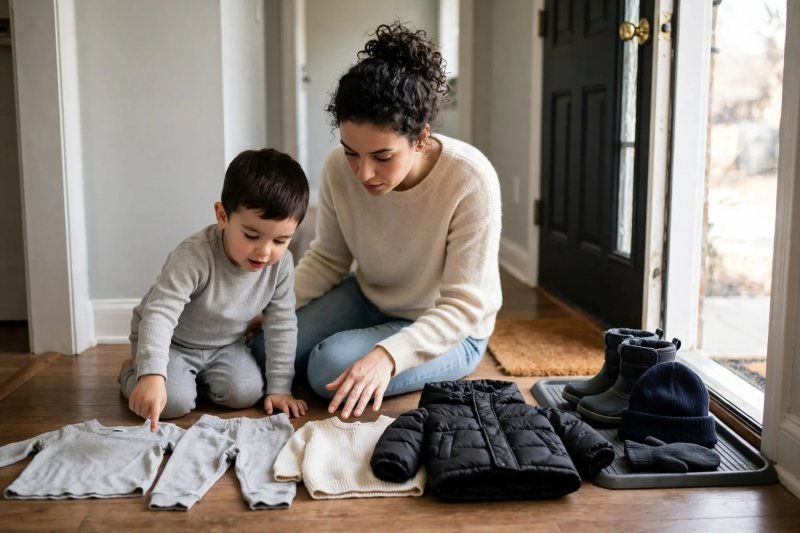
Lay out the runway by the door. Spread today's toddler boy winter outfits on the hallway floor in dressing order — base layer; cozy middle; coat — with boots, hat and mittens waiting on the boot tray. Say, "First soft, then cozy, then zip!" and let him touch and name each piece. Show him the day's three starter looks as you lay them out: a striped thermal top with corduroy overalls and a puffer coat; a navy turtleneck with jeans and a quilted jacket; and a gray tee under a flannel shirt with a fleece vest and waterproof shell. The order never changes — which is why, like the routine in toddler winter outfits for ages 2–3, boys learn it fast and start dressing with you instead of against you.
-
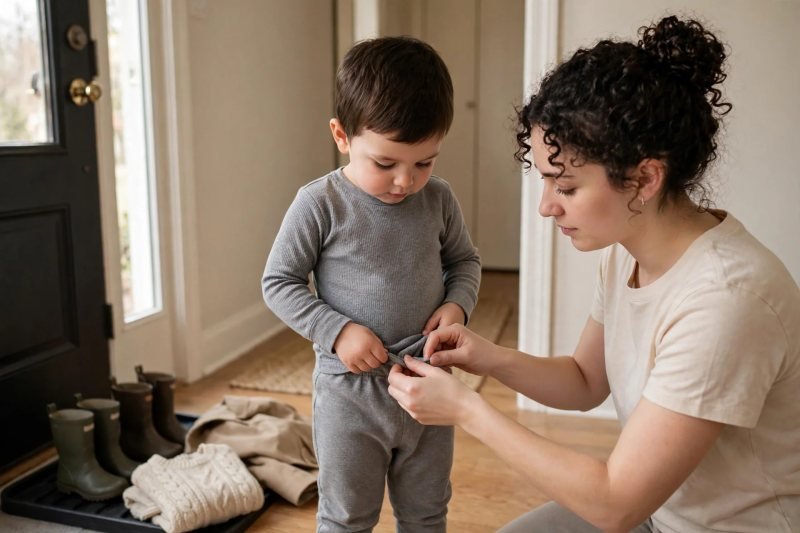
Start with the base layer — soft against the skin. A snug thermal or cotton long-sleeve top with leggings or soft pants goes on first, smooth and tag-free. Say, "Snuggle shirt on! Arms through the tunnels — one, two!" and count each arm as it pops through, then let him pull the top down and smooth it himself. Tuck the top in at the waist so no cold gap opens when he bends for a toy truck. This base is the foundation under every one of the 20 looks in this guide — get it comfortable now and nothing later in the routine becomes a fight about scratchy or bunchy clothes.
-
Add the cozy middle — sweaters and hoodies. This layer traps warm air, and it is where most of the personality lives. Say, "Cozy layer! Arms up like a starfish!" and guide his arms through, then let him pull the sweater down himself. Rotate through the week's favorites: a chunky cable-knit sweater with joggers; a zip-front hoodie over a striped tee with cargo pants; a plain fleece pullover with soft jeans; and a henley top under an open flannel shirt with corduroys. Whatever the combo, the test is the same: he must be able to raise both arms overhead and squat to the floor without anything pulling tight or riding up.

-
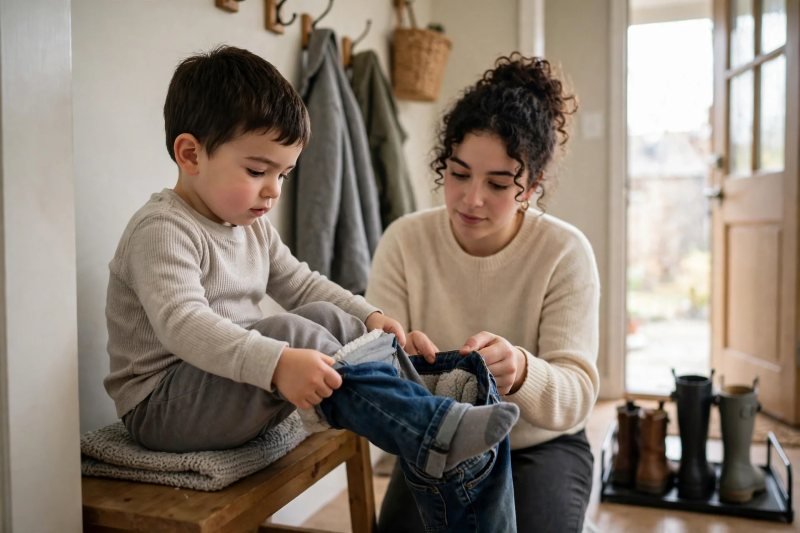
Pick pants that bend — jeans, joggers and overalls. Winter bottoms for toddler boys need to survive squatting, climbing and the occasional hallway slide. Say, "Pants party — feet through the tunnels!" and let him push his own feet through while seated, then stand for the waistband check. Build the rotation from pieces that all mix: fleece-lined jeans with a sweater and puffer; soft joggers with a hoodie and quilted jacket; and corduroy overalls over a thermal top with a fleece vest. Elastic waists beat buttons at this age — he can manage them at the potty without help, and nothing digs in when he sits cross-legged for story time.
-
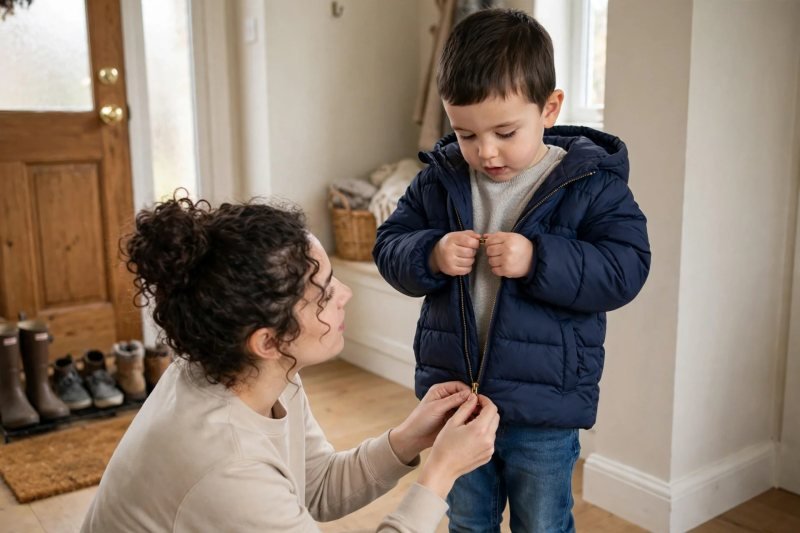
Zip the outer layer — coat or snowsuit. Hold the coat open like a doorway: "Coat door is open! One arm in… now the other — you did it!" Snow pants go on first for two-piece sets; a one-piece snowsuit is simplest on the coldest days. Guide the zipper with your hand over his, and let him pull the last inch alone — boys this age feel enormously proud of that inch, and it is the same independence the routine in preschool winter outfits builds on next. Check the coat covers the waistband when his arms rise. Announce, "Zip layer done!" and move together to the boot tray, where the extras are waiting in their always-the-same-spot.
-
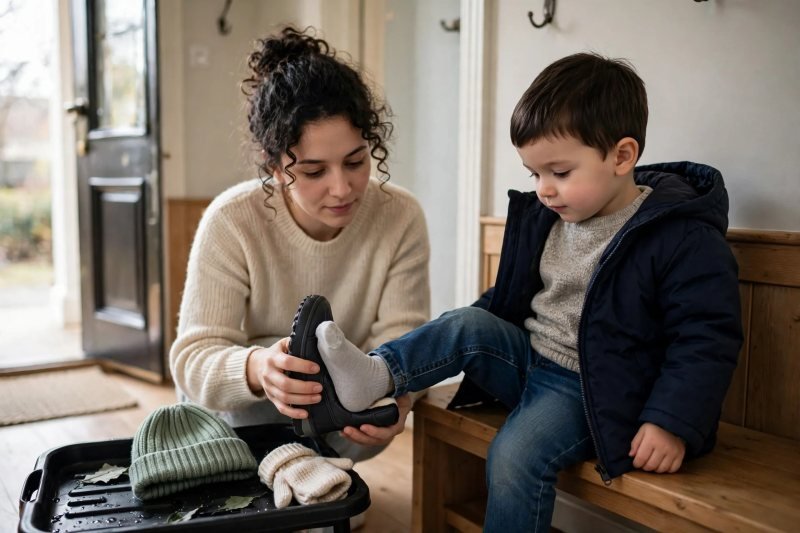
Gear up the extras — boots, hat, mittens. At the boot tray, sit him down: warm (not tight) socks first — "Wiggle those toes, can they dance?" — then insulated boots, pulled up and fastened. A slipping heel needs a thicker sock, not a bigger boot. Pull the hat down over the ears: "Ears tucked in, cozy head!" Hat-tossers do best with a balaclava-style hat that fastens under the chin. Mittens go on last, because mittened hands cannot work zippers: "Mittens are finger-houses — all the fingers live together!" Tuck the cuffs under the coat sleeves. Final check together: "Boots? Hat? Mittens?" His answers make him a partner, not a passenger.
-
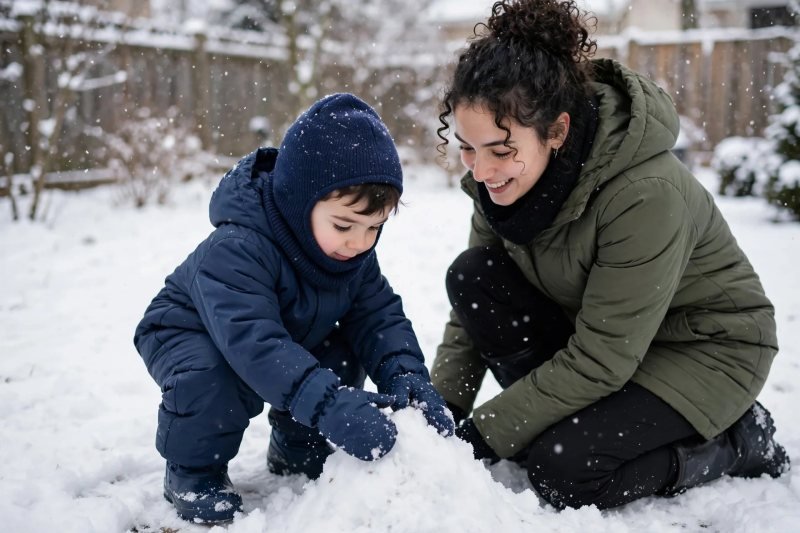
Build the snow-play looks. For sledding, snow forts and backyard snow days, warmth and waterproofing both go up a level. Start from the same base and build: a thermal set under a two-piece snowsuit with waterproof mittens and a balaclava; a fleece mid layer under snow bibs and a long puffer coat; and a merino base with a one-piece snowsuit, double socks and the warmest hat you own. Say, "Snow armor on!" and do a full bend-and-reach check before the door opens. Snow finds every gap — cuffs tucked, gaiter up, bib straps snug. Pack spare dry socks and mittens in a bag by the door; snow play always ends wetter than planned.
-
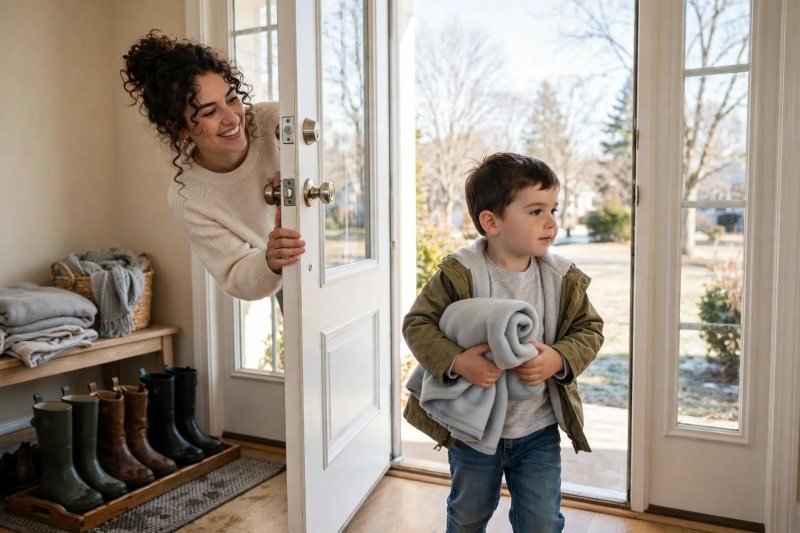
Build the mild-day looks. Not every winter day is a blizzard. Around 45°F, drop the heavy middle and lighten the shell: a long-sleeve tee with a fleece vest and a medium jacket over jeans; a hoodie with joggers and a rain shell for drizzly days; and a turtleneck with corduroys and a quilted vest when the sun is out. Say, "Light layers today — the sun is helping!" and let him carry the just-in-case fleece himself. The rule does not change with the weather: base, a middle of some kind, and protection on top — just thinner versions of each, so he stays comfortable instead of cooking in gear built for a snowstorm.
-
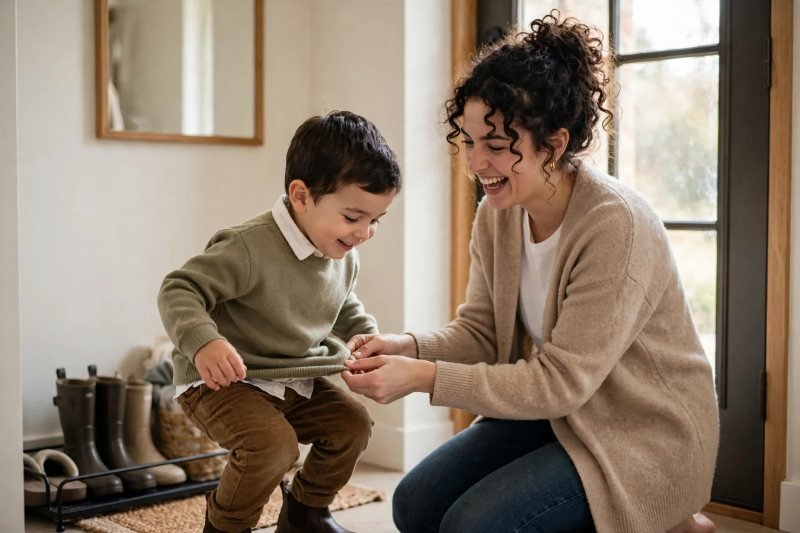
Build the daycare and dressier looks. Some days need outfits that survive teachers, photos and grandparents. For daycare, easy-on wins: a bodysuit-style top with pull-on pants and a zip hoodie he can almost manage himself, plus a one-piece snowsuit for playground time. For dressier days: a soft sweater over a collared shirt with corduroys and his good coat, or a knit sweater set with neat joggers and clean boots. Say, "Looking sharp — now let's check you can still play in it!" and run the squat test even on the fancy outfit. If it cannot survive the playground, it is a photograph outfit, not a winter outfit, and it stays home.
-
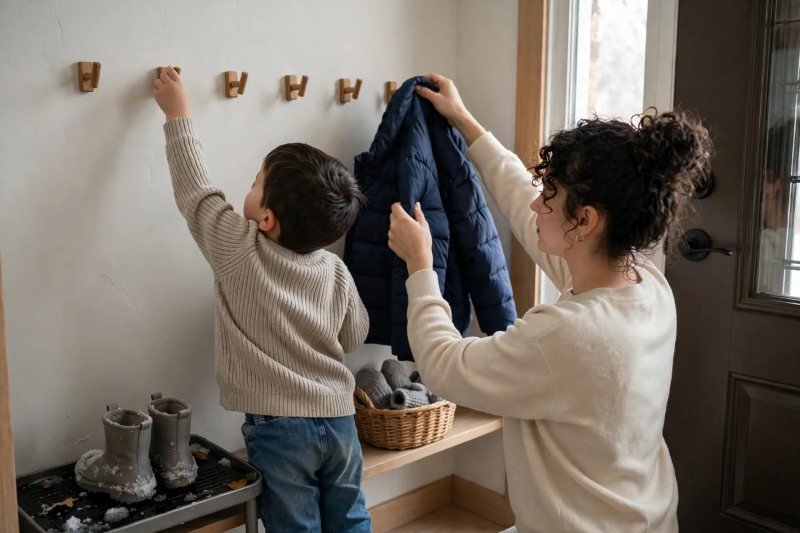
Come home — the cozy undressing routine. Stomp the boots on the mat — "Stomp, stomp, shake the snow off!" — then sit and pull boots off, socks off, and hang the coat on a low hook he can reach. Say, "Unzip practice!" and let him work the zipper down while you steady the coat; going down is easier, so success comes fast. Mittens go into the coat pockets or the basket by the door — always the same spot, so tomorrow starts organized. Hang wet layers where air circulates and swap into dry socks right away. Finish warm: "Winter day, done!" Tomorrow morning, the runway in step 1 is already half built.


Make it easier
Keep a pre-built outfit folded together — base, middle, pants — so grab-and-go mornings take one minute. Use a one-piece snowsuit on the coldest days: sit, legs in, arms in, one zip, done. Put a spare full outfit in the daycare bag so a wet morning never ends the day early.
Make it harder
Let him choose the day's middle layer from two weather-right options — choice kills power struggles. Add weather words — "windy," "frosty," "drizzle" — and let him pick the build the weather needs. Run the routine on a stuffed animal first, then let him "teach" the bear the runway order. A morning routine chart on the wall turns the runway order into pictures he can follow himself.
Other ways to play it
- Windy day: add a thin extra mid layer and a snug hood or balaclava; wind steals warmth fast, so seal every cuff and gap. More cold-weather outing ideas live on the winter hub.
- Very cold day (below freezing): merino base, double mid layer and the full snowsuit, with outside time in shorter stretches.
- Two more looks to complete the set: a striped tee with thermal pants and a quilted jacket for errand days; and a turtleneck under a knit sweater vest with corduroys and a toggle coat for photo days. Together with the 3 runway starters in step 1, the 4 middles in step 3, the 3 pants builds in step 4, the 3 snow builds in step 7, the 3 mild-day builds in step 8 and the 2 daycare and dressier builds in step 9, that makes all 20 warm looks.
How it changes by age
- Age 2: expect wiggles, strong opinions and one beloved sweater worn on repeat. Let him hold pieces, choose between two middles and push his own arms and feet through. Most twos cannot manage zippers or boots alone; your hand over his is the teaching, not a shortcut. Build in five extra minutes.
- Age 3: threes can often pull on their own boots, get arms through sleeves and start zippers with a steadying hand. Hand him the final checklist — "Boots? Hat? Mittens?" If a three-year-old resists every layer, the issue is almost always rushing, a scratchy base or a too-warm room, not the clothes themselves.
What they're learning
Sequencing: base, middle, outer, extras — steps that must happen in order. Independence: each mastered piece — a zipper, a boot, a checklist — is self-care he owns. Body awareness: naming arms, ears, toes and fingers while dressing builds the body map. Vocabulary: clothing, fabric and weather words practiced in real context daily. Cause and effect: layers on, warm outside; mittens off in snow, cold hands fast. Fine motor control: zippers, snaps and boot-pulling strengthen the hand skills writing needs later.
Clearing up
The common mix-up is buying more outfits instead of building a system. Twenty looks do not need twenty wardrobes — they need a handful of pieces that all combine: a few bases, a few middles, a few pants and one good coat. The other mix-up is dressing a very active boy for standing still. Toddler boys generate heat by moving, so a build that feels right in the hallway can overheat him at the park; the mild-day and adjustable builds in steps 8 and 3 exist so you can vent a layer instead of carrying a sweating, stripping toddler home. For looks beyond winter, the boys' outfit ideas hub gathers outfits for every season.
Questions parents ask
What should a toddler boy wear in winter?
How many outfits does a toddler boy need for winter?
Should toddler boys wear mittens or gloves?
How do I dress a toddler boy for snow play?
How do I keep my toddler boy's hat on?
What should a toddler boy wear to daycare in winter?

save it for later
Pin this for the next rainy afternoon
Keep it on a board so it is there when you need it, rather than when you happened to find it.
Save to Pinterest

