


Sorting by Size: Big, Medium, Small Games for Toddlers
Sorting by size is early math in action: your toddler drops big blocks in a big basket, medium ones in a box, and little ones in a bowl — then sorts socks and lines up toys by size.
Sorting by size teaches toddlers big, medium, and small through three simple games: dropping big, medium, and small blocks into matching containers, sorting adult, kid, and baby socks from the laundry, and lining up soft toys from biggest to littlest. Start with big and small only, model each game first, and narrate every piece — comparison skills are the foundation of early math and measurement.

The short version
- Three games: block basket sort, laundry sock sort, soft toy parade.
- Start with big and small; add medium once two-way sorting is easy.
- Model each game, then hand over one piece at a time.
- Narrate while hands are busy: "BIG block!" — hearing the word while touching the size is what sticks.
- Tidy-up is the last game: everything home, naming sizes as it lands.
- Age
- Ages 2–3
- Prep
- 5 min
- Play time
- 25 min
- Mess
- None
- Difficulty
- Easy
- Where
- Indoor
Why kids love this
Sorting by size feels like a superpower a 2-year-old can actually use: pick up a piece, decide where it belongs, and the pile shrinks until everything is home.
What you'll need
- - 12 plain wooden blocks: 4 big, 4 medium, 4 small — each too big to fit through a toilet-paper tube
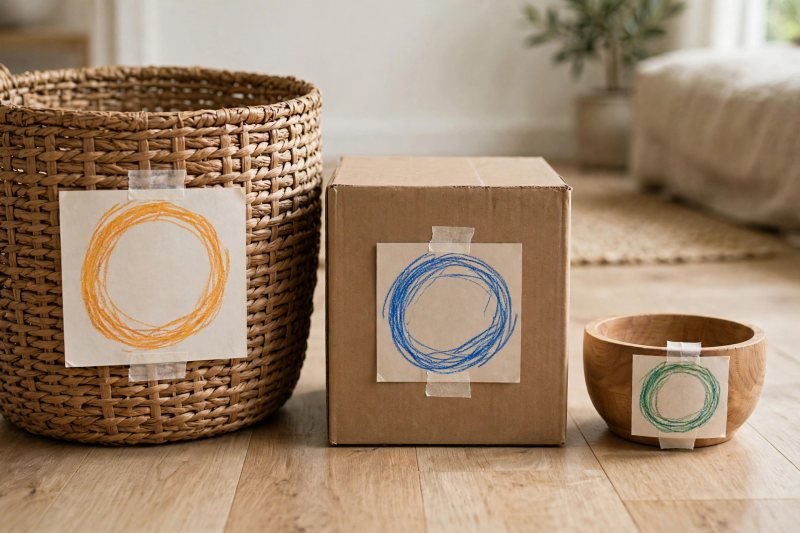
- - 1 big basket, 1 medium box or bin, 1 small bowl
- - Paper and a crayon (for big/medium/small circle picture labels)
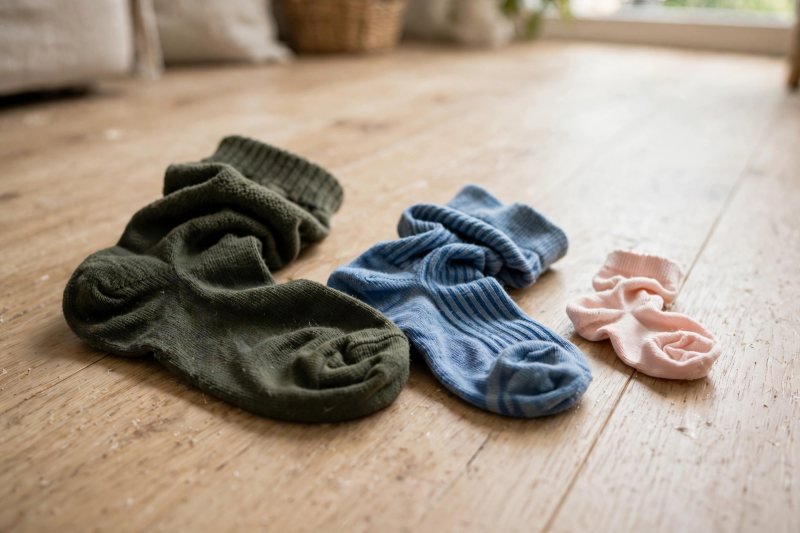
- - 3 socks: one adult sock, one kid sock, one baby sock
- - 5–7 soft toys in clearly different sizes
Before you start
1. Draw big, medium, and small circles on paper; tape one to each container. These picture labels are your toddler's map. 2. Mix the blocks in one basket so the sizes are jumbled. 3. Keep the socks and soft toys nearby; bring each game out as the last one winds down.
How to do it
-
Set out the three containers.
-
Sit on the floor. Line up the big basket, medium box, and small bowl side by side, labels facing your toddler.
-
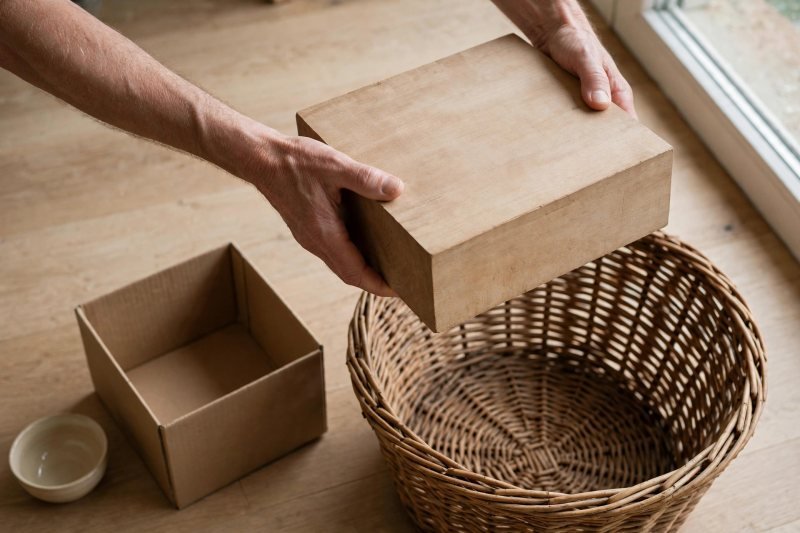
Show the three sizes yourself.
-
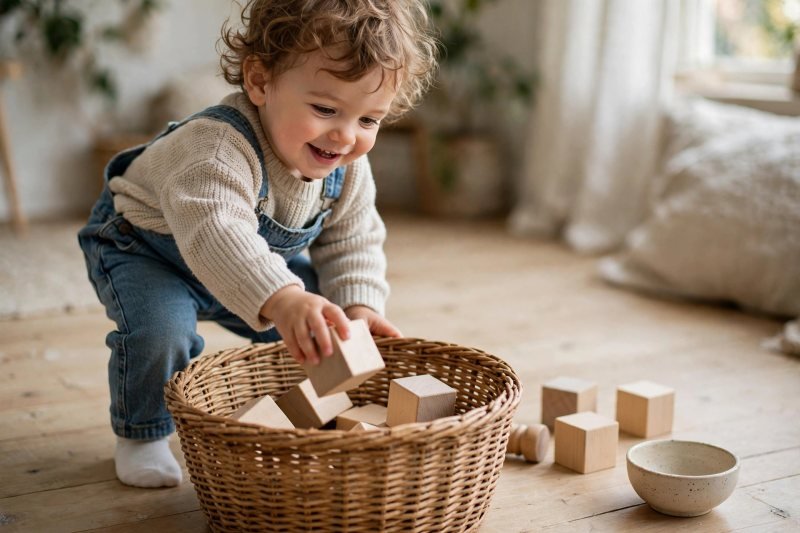
Hold up a big block: "BIG block — BIG basket." Then medium: "Medium block — medium box." Then small: "Small block — small bowl." Arms wide for big, fingers pinched for small.
-
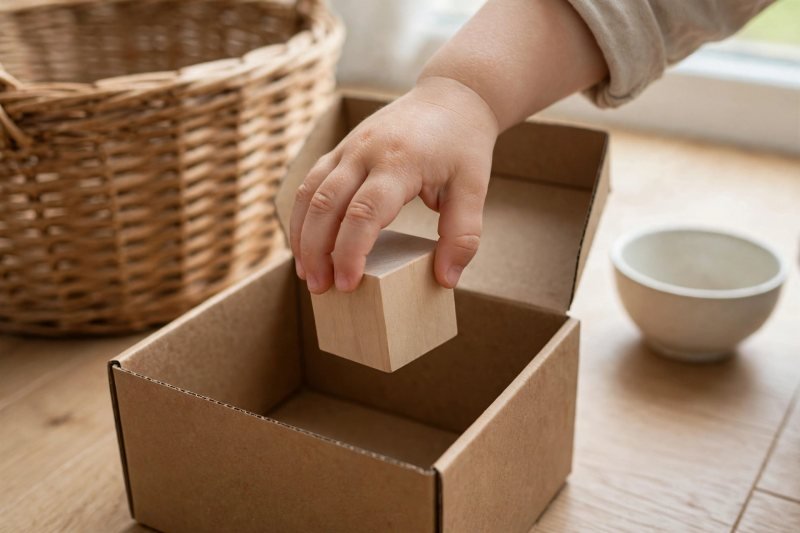
Let your toddler sort the blocks.
-
Hand over blocks one at a time: "Big, medium, or small?" If they hesitate, point to the matching label.
-
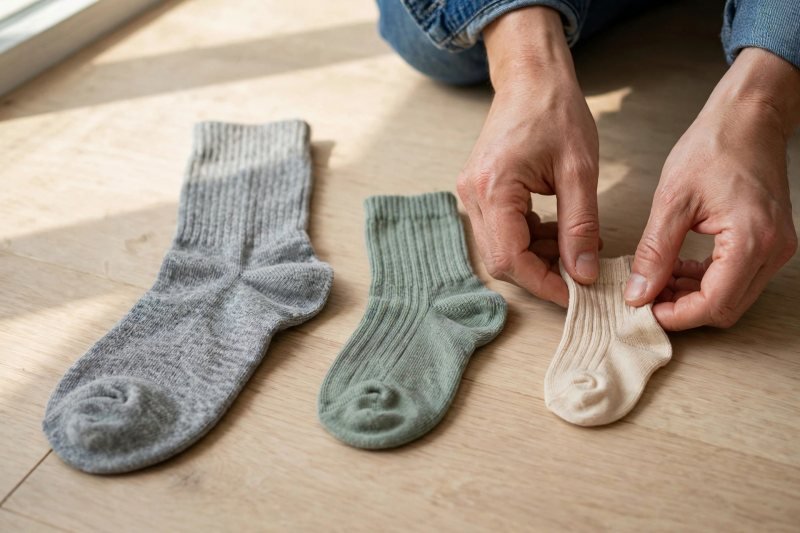
Set up the sock sort.
-
Clear the blocks. Scramble the adult, kid, and baby socks on the floor.
-
Model the sock sort.
-
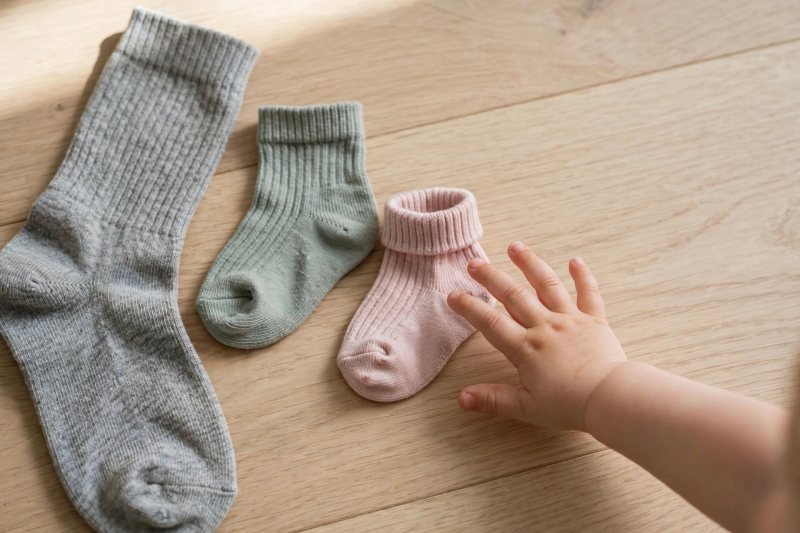
"Daddy's sock is BIG." Lay the adult sock down. "Yours is medium." Lay the kid sock beside it. "The baby's sock is teeny-tiny." Lay the baby sock last — a three-sock size row.
-
Let your toddler sort the socks.
-
Scramble the socks and let your toddler rebuild the size row: "Which one is the little baby sock?" Socks are forgiving — there is no wrong way to grab one.
-
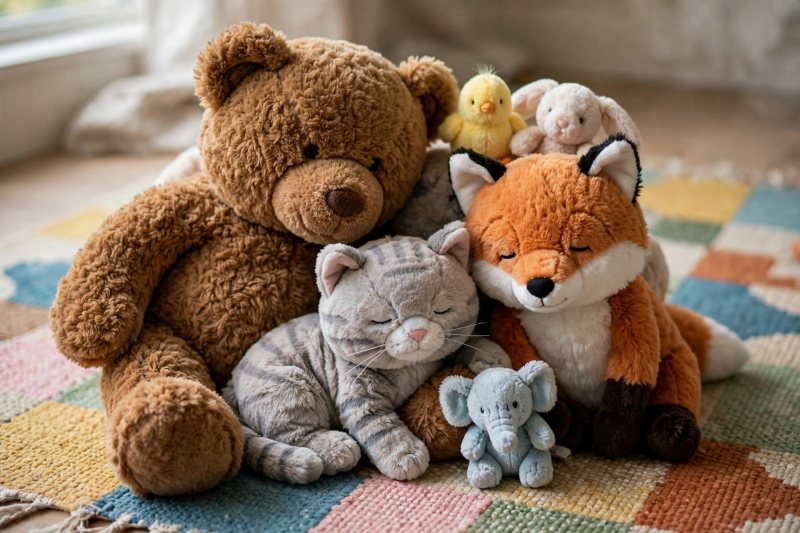
Set out the soft toy parade.
-
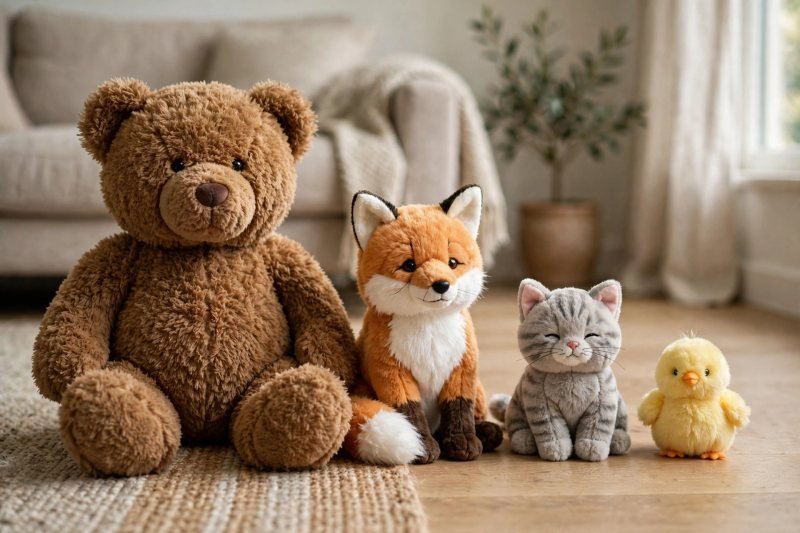
Clear the socks. Pile the soft toys together. Hold up the biggest and the littlest: "Who is the biggest? Who is the littlest?"
-
Line up the parade yourself.
-
Line them from biggest to littlest, drumroll-style: "Biggest... smaller... smaller... littlest!"
-
Let your toddler build their own parade.
-
Scramble the toys: "Can YOU line them up? Who is the biggest?" Accept any order — both are wins at 2.
-
Finish with the tidy-up sort.
-
"Everything home!" Blocks to the big basket, socks to the laundry, toys to the shelf — naming sizes as each one lands.


Make it easier
- Start with TWO sizes only (big and small); add medium once two-way sorting feels easy.
- Hand your toddler one piece at a time so the pile never overwhelms them.
- Watch your first round — imitation counts as practice.
Make it harder
- Order the blocks by size in one long row: biggest to littlest (measurement games).
- Count the pieces in each container when you finish — size sorting meets counting (counting for toddlers).
- Race a song: count the pieces as they land — counting games for preschoolers turns the tidy-up into a race.
Other ways to play it
- 1. Kitchen lid sort. Big pot lid, medium lid, small lid — your toddler matches each lid to its pot.
- 2. Ball sort. A big beach ball and small soft balls roll to two marked spots.
- 3. Big steps, little steps. "Big steps to the door! Little steps back!" — size words they feel in their legs.
- 4. Floor circle sort. Tape big, medium, and small paper circles to the floor; your toddler tosses soft blocks onto the matching circle.
- 5. Snack size sort. Big crackers in the big bowl, small ones in the small bowl — then eat the whole experiment.
- 6. Shape and size. Sort the same blocks by shape first, then by size — shape sorting activities shows the shape-first version.
How it changes by age
- At 2: Two sizes only — big and small. Sorting comes before naming; every piece called "big" is normal. One game per sitting, 10–15 minutes.
- At 3: Three sizes click — big, medium, small — plus extremes: biggest and littlest. Ordering toys smallest-to-biggest is a new superpower. Let them lead and narrate.
What they're learning
- Size vocabulary: big, medium, small — and later biggest, littlest, tiny - Comparison: holding two things and deciding which is bigger - Classification: grouping things that are "the same size" — the seed of early math - Seriation: putting things in order by size, the foundation of measurement - Fine motor control: grasping, carrying, and placing pieces (fine motor activities for preschoolers)
Clearing up
The tidy-up sort (Step 10) folds cleanup into the activity: containers nest, socks go to the laundry, toys back to the shelf.
Questions parents ask
When can toddlers start sorting by size?
How do I teach my toddler big, medium, and small?
My toddler calls everything "big." Is that normal?
What household items are good for size sorting?
Should I correct my toddler when a piece goes in the wrong container?
- Repeat with the same materials — repetition is how a 2-year-old's brain files sizes away.
- More floor games in the same spirit: toddler learning activities at home.
- If your toddler keeps the littlest block as a pet, let them. That is normal too.

save it for later
Pin this for the next rainy afternoon
Keep it on a board so it is there when you need it, rather than when you happened to find it.
Save to Pinterest


