


Preschool Readiness Checklist: 25 Skills Your 3-Year-Old Is Building
A pressure-free preschool readiness checklist: 25 skills your 3-year-old is building right now — language, numbers, motor, social, and self-care — with a simple play-based way to water each one.
A preschool readiness checklist for a 3-year-old should cover language, early math, motor, social, and self-care skills as emerging abilities — not pass/fail tests. Most 3-year-olds are building short sentences, counting to 10, climbing and pedaling, taking turns with help, and dressing with help. Every child develops on their own timeline; this list describes what's typical, never what preschool demands.

The short version
- A preschool readiness checklist for age 3 is about emerging skills, not pass/fail tests — mark each one sprouting, growing, or blooming.
- Most 3-year-olds are building short sentences, counting to 10, climbing and pedaling, taking turns with help, and dressing with help.
- Self-care independence (handwashing, dressing, tidying) is what preschool teachers quietly value most.
- Every skill on the list can be watered through ordinary play — no worksheets, no drilling, no pressure.
- Skills arrive in bursts and plateaus; a skill that's sprouting today can bloom next month.
- Age
- Ages 3–4
- Prep
- 15 min
- Mess
- Low
- Difficulty
- Easy
- Where
- Indoor
Why kids love this
Three-year-olds love showing what they can do — "Look, I poured it myself!" Nothing on this list is a sit-down test; every skill hides inside a game, a job, or a giggle. Because the checklist treats your child like the capable little builder they are, practicing feels like playing, not performing.
Is my 3-year-old ready for preschool? If you're searching for a preschool readiness checklist because applications or open-house nights are looming, here's the reassuring truth: most US preschools expect three-year-olds to arrive as three-year-olds — curious, wiggly, still learning. Nobody expects a finished product. This preschool readiness checklist covers 25 skills your child is likely building right now, grouped into five areas: talking, thinking with numbers, moving, getting along, and taking care of themselves. For each skill you'll find a tiny, play-based way to water it. As you read, mark each one as sprouting (just emerging), growing (practicing), or blooming (doing it confidently). There are no failing grades here — only growth in progress, and every three-year-old's garden looks different.
What language skills do most 3-year-olds show? Talking is the skill parents notice first — and the one with the widest normal range.
Speaks in short sentences of three or four words. "I want blue cup." "Dog is running." Short, but real sentences. Water it: repeat their sentence back with one extra word — "Yes, the dog IS running fast!"
Can say their first name when asked — and many will proudly tell you their age, holding up three fingers (the finger count may be approximate).
Answers simple questions about their day. "What did you do at the park?" might get "Swing!" — one-word answers still count as answers.
Asks "why" and "how" — sometimes on a loop. Exhausting, yes, but each why is a thinking workout. Water it: answer once, then ask "what do YOU think?" and watch them reason.
Follows two-part instructions with a little patience. "Pick up the blocks, then bring your shoes" works best when you're nearby and the steps are familiar.
What early math can a 3-year-old do? At three, math is physical: sorting, counting, comparing — all with real things you can touch.
Counts to 10 — the order may wobble. Hearing "1, 2, 5, 9, 10" is completely normal; the sequence smooths out with repetition. Water it: count stairs, grapes, and steps to the car.
Understands big and little, same and different, more and less. "I want MORE crackers" is early math in action.
Names two or three colors — usually the favorites first. Knowing every color of the rainbow can wait.
Sorts things by color or shape. All the red cars in one pile, all the circles together. Water it: sort the laundry, the blocks, the snack.
Copies a circle. It's the first real drawing shape — and the seed of every letter they'll ever write.
Which motor skills are 3-year-olds building? Big movements first, small ones close behind — three-year-old bodies are gloriously busy.
Climbs confidently — playground ladders, stairs using alternating feet, and yes, the sofa arms.
Pedals a tricycle (or scoots steadily). Steering is still an adventure; straight lines are a bonus.
Jumps with both feet off the ground — and can stand on one foot for a wobbly second or two.
Kicks a ball forward and sometimes catches a big bounced ball. "Sometimes" is doing a lot of work here, and that's fine.
Holds a crayon with fingers instead of a fist — the grip is still developing, so wobbly lines are perfect. Water it: short, chunky crayons encourage fingertips over fists.
What social skills does my 3-year-old need for preschool? Preschool is many children's first society. These skills are all under construction — teachers expect that.
Takes turns with help. True independent turn-taking is still a year away; at three, timers, songs, and a calm narrator ("Sam's turn, then your turn") do the heavy lifting. Water it: practice with one beloved toy and a sand timer.
Plays beside other children and is starting to play with them. Short bursts of real cooperation — building one tower together, chasing the same ball — are the first flowers of friendship.
Uses words when upset — sometimes. "I'm mad!" instead of a shove is a huge developmental win. The "sometimes" is normal.
Notices when another child is upset and might offer a pat, a toy, or just stare with deep concern. All three are empathy in progress.
Separates from you with a trusted adult nearby. Goodbyes may still be tearful — that's attachment working properly, not a readiness failure. Water it: keep goodbyes short, sweet, and identical every time.
What self-care can a 3-year-old do on their own? The quiet category teachers cheer for most — independence with the small stuff.
Washes and dries hands — with a reminder song and help reaching the soap. The full solo routine is still blooming.
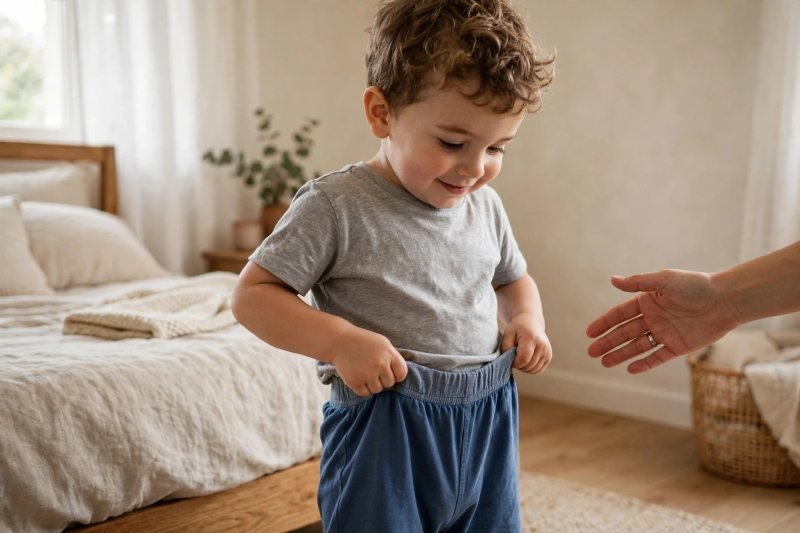
Dresses with help. Pulls up elastic-waist pants, pushes arms through sleeves, steps into shoes. Buttons and zippers are usually a team effort at three.
Uses the toilet with help — many are still in training. Plenty of three-year-olds are mid-potty-training, and most preschools are set up for exactly that. Water it: a consistent routine beats pressure every time.
Eats with a fork and spoon, and pours from a small jug with help nearby. Spills are tuition, not failure.
Puts toys away with a song, a race, or a reminder. Independent tidying is aspirational; joyful-together tidying is the realistic goal.
What if my child isn't doing some of these yet? Then they're a normal three-year-old. Skills at this age arrive in bursts and plateaus — nothing this month, three new things next week. A "sprouting" mark isn't a warning; it's a preview. Keep watering with play, keep the pressure at zero, and trust the timeline: the child who can't quite pedal today is often the one racing past you by spring. One honest note: this checklist is a parent's guide, not a screening tool. If your gut says something might be genuinely off — very little speech, no interest in other children, losing skills they once had — that conversation belongs with your pediatrician, not a checklist. Trust your instincts and ask.
For gentle learning ideas to enjoy together, see our preschool learning activities at home. When kindergarten eventually looms, there's a separate kindergarten readiness checklist for ages 4–5 — and for the hand-strength play behind the fine-motor skills above, try these fine motor activities for preschoolers and phonics activities for preschoolers.
What you'll need
- This checklist (on a screen or printed)
- A crayon or stickers for marking skills as sprouting, growing, or blooming
- Things you already own: picture books, blocks, crayons, playdough, a soft ball, a small mirror, a child-size backpack
Before you start
Read through the 25 skills once by yourself — no child in earshot, no scorekeeping. Pick just three you'd enjoy watching bloom this month and forget the rest for now. Noticing growth is the whole game; quizzing your child on all 25 in one sitting would ruin it.
How to do it
-
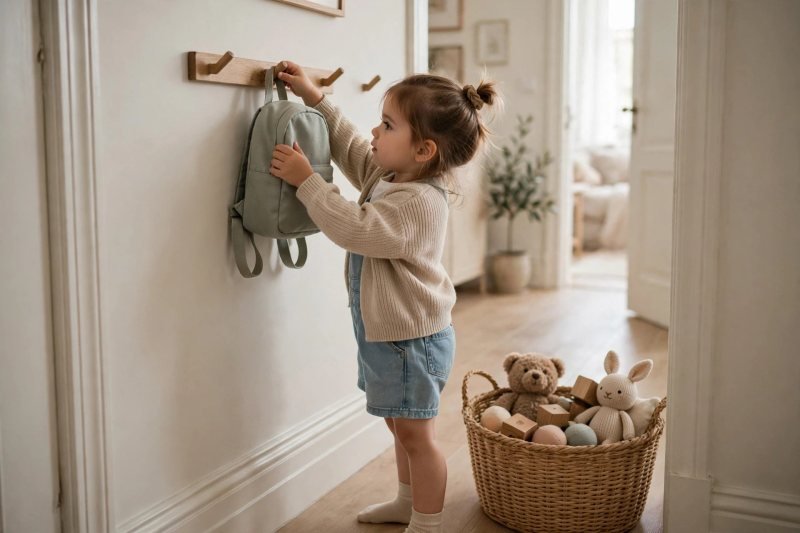
Set up a preschool corner. Give your child one low basket or shelf that holds their backpack, a water bottle they can open themselves, and two or three quiet activities. A place for their own things is the first independence lesson — and it turns "go get your bag" into a game they can win.
-
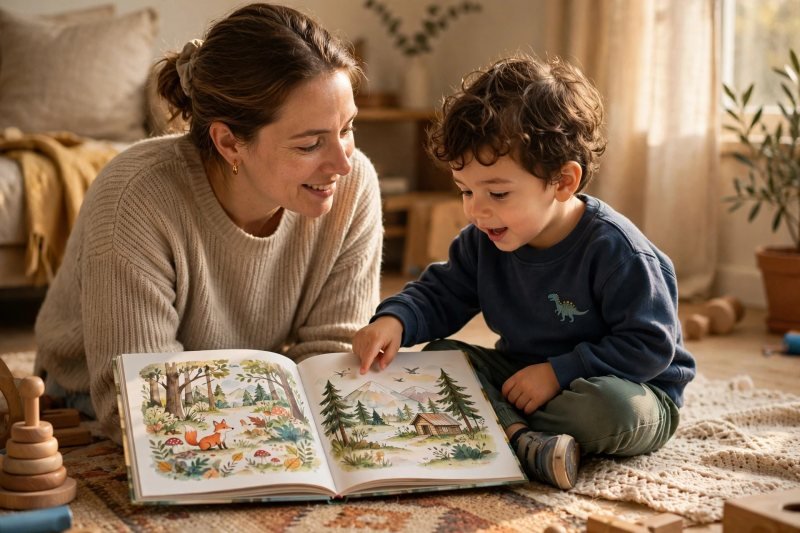
Chat over a picture book. Sit together and let your child do the talking: point, name things, guess what happens next. Ten minutes of back-and-forth about a story builds more language than any flashcard.
-
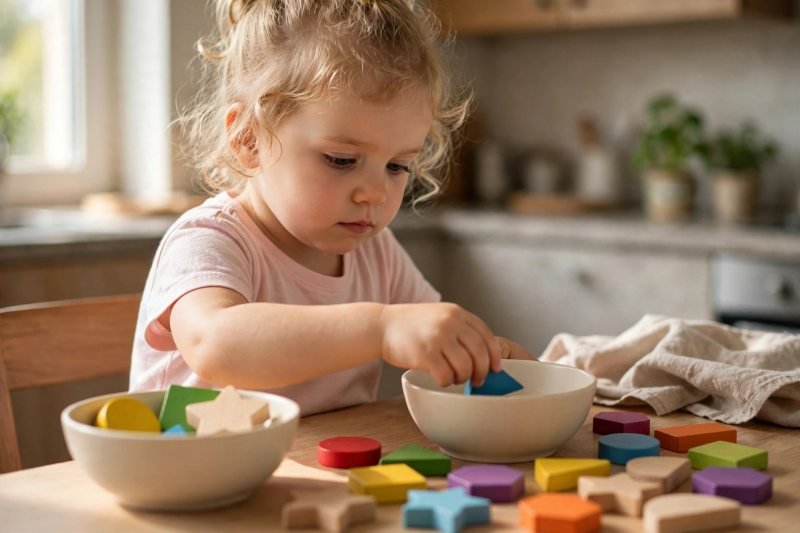
Play a snack-time sorting game. Pour out crackers, grapes, or blocks and sort them together — by color, by shape, by size. Count each piece as it lands. Math at three is mostly sorting, counting, and comparing.
-
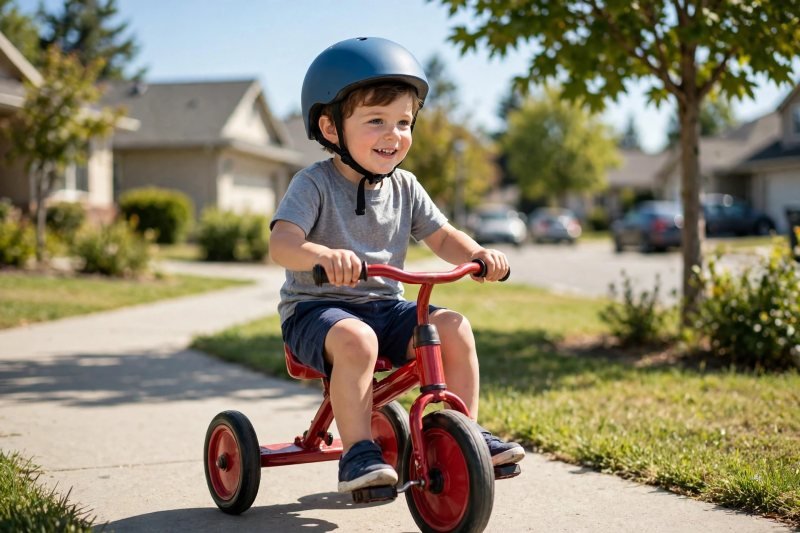
Move big. Head to the playground or build a cushion obstacle course: climb, pedal, kick, jump, balance along a curb. Gross-motor confidence is the engine humming under everything else.
-
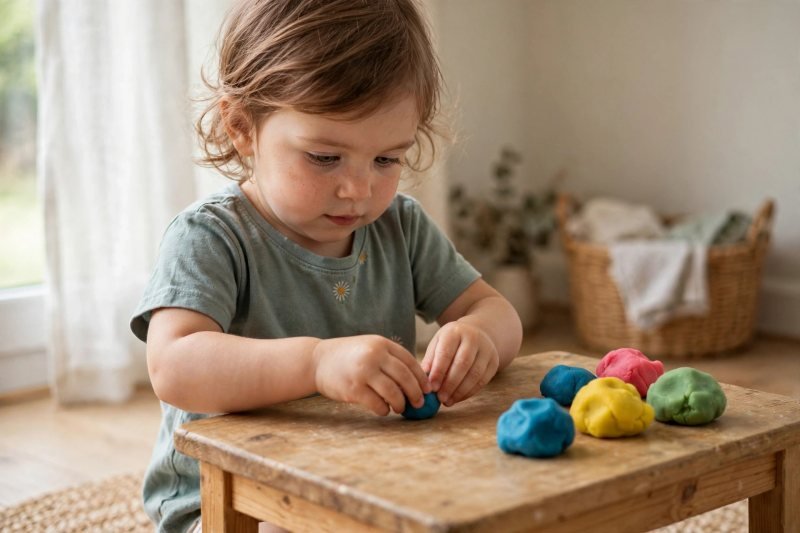
Give little hands a workout. Playdough, tearing paper, threading big beads, peeling stickers — ten minutes of hand play a day builds the grip behind every crayon and zipper.
-
Practice dressing as a game. Lay out two outfit choices and race the "getting dressed" song — elastic waists, big armholes, Velcro shoes. Celebrate every sleeve conquered, even the backwards ones.
-
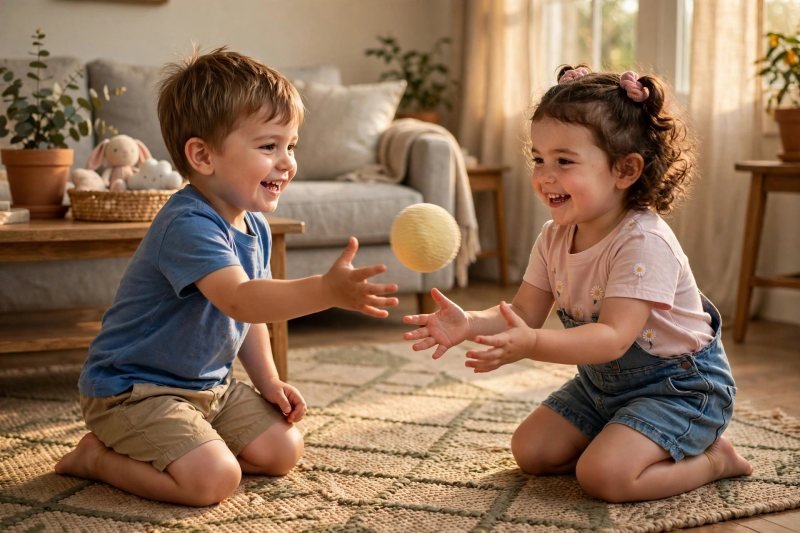
Host a tiny playdate with one turn-taking toy. One ball, one puzzle, two kids: short and sweet. Narrate the turns out loud — "Sam's turn rolling, now your turn!" — and keep goodbyes cheerful.
-
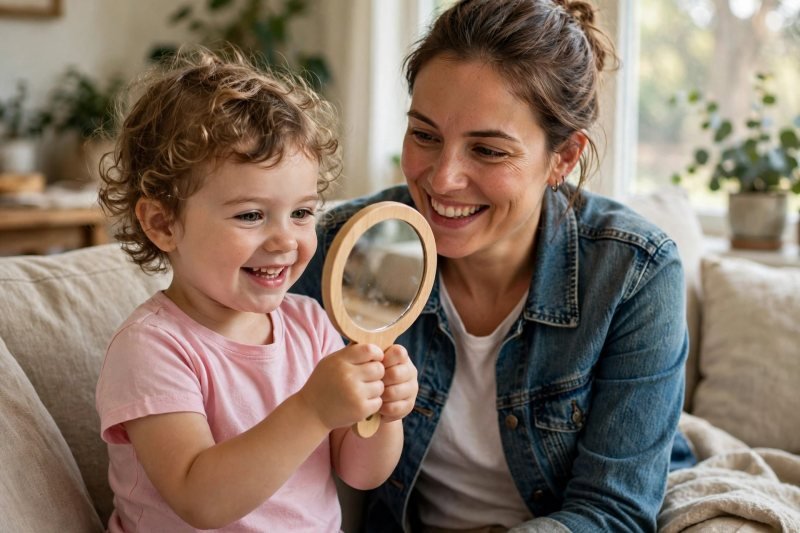
Make faces in the mirror. Happy, sad, surprised, grumpy: copy each other's faces, then name them. Naming a feeling is the first step to handling it, and at three it's still very much under construction.
-
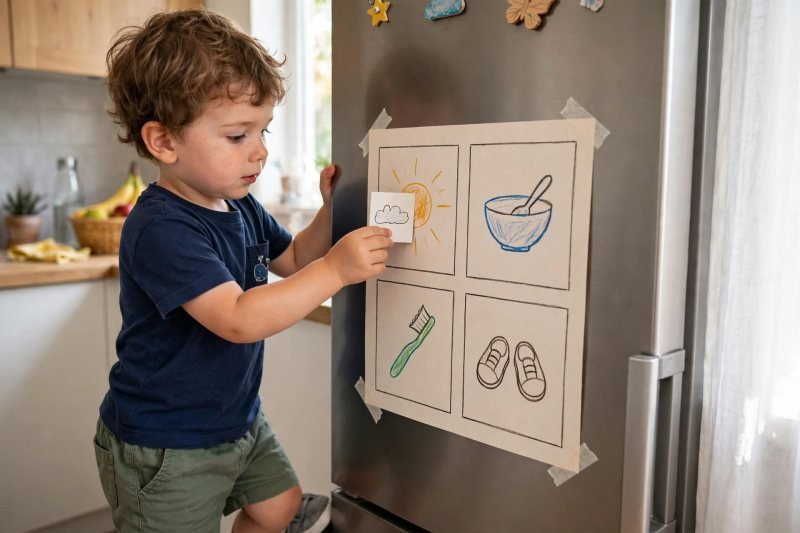
Build a picture morning routine together. Draw simple icons — a sun, a breakfast bowl, a toothbrush, shoes — and stick them on the fridge in order. Point to each one as the morning unfolds; a routine you can see is a routine a three-year-old can follow.
-
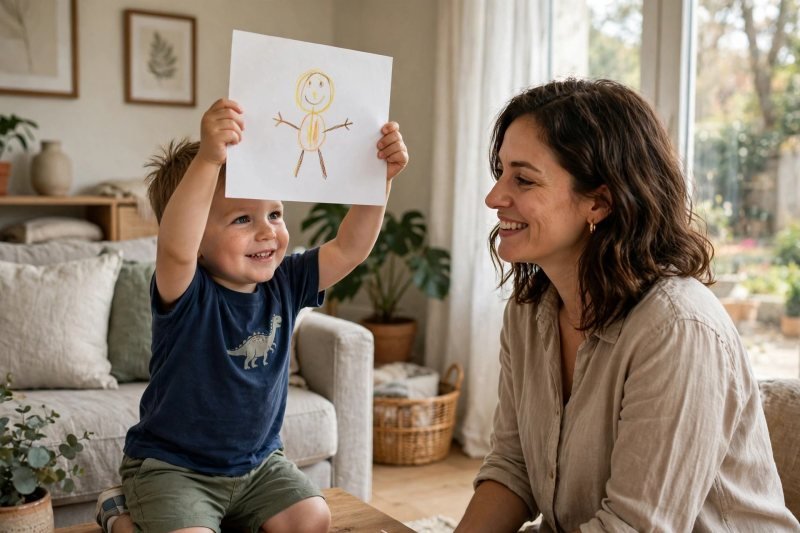
Walk the checklist together and celebrate. Go through the 25 skills with your child and let them show off. Mark each one as sprouting, growing, or blooming — and make a fuss about every single bloom.


Make it easier
If 25 skills feels like a lot, zoom in on just the five self-care skills — handwashing, dressing with help, eating with a fork, putting toys away, and the potty routine. Those are the ones preschool teachers quietly cheer for most.
Make it harder
For a child blooming through most of the list: retell a whole story in order, count to 20, copy a square, write the first letter of their name, or practice waiting two full minutes for a turn with a sand timer. Extend sideways into confidence, not upward into kindergarten work.
Other ways to play it
- Skill of the week: pick one skill and play with it all week — "pouring week," "sharing week."
- Grandparent show-off: let a grandparent admire the blooming skills; children perform beautifully for an audience.
- Sticker garden: draw a flower for each of the five areas and add a petal sticker every time a skill blooms.
How it changes by age
- For ages 3–4, in the year or two before preschool. Three-year-olds develop in bursts and plateaus — a skill that's sprouting today can bloom next month. This checklist describes what's typical around age three, not a list of requirements; preschool teachers expect a wide range and meet every child where they are.
What they're learning
Language and communication (short sentences, questions, listening); early math thinking (counting, sorting, comparing, shapes); gross-motor confidence (climbing, pedaling, balancing); fine-motor control (drawing, building, hand strength); social skills (turn-taking, noticing others' feelings, playing alongside friends); and self-care independence (dressing, eating, washing, tidying). Together these are the roots that preschool grows from. The letter and number play behind them is the same kind of play as these letter recognition activities for preschool and counting to 10 activities.
Clearing up
Low mess — a stray sticker or two, and playdough crumbs if you did step five properly.
Questions parents ask
What should a 3-year-old know before preschool?
Does my child need to be potty trained for preschool?
How do I prepare my 3-year-old for preschool?
What if my 3-year-old isn't talking in sentences yet?
Should I teach my 3-year-old letters before preschool?
How can I help my 3-year-old make friends at preschool?

save it for later
Pin this for the next rainy afternoon
Keep it on a board so it is there when you need it, rather than when you happened to find it.
Save to Pinterest