


Mary Had a Little Lamb Lyrics and the Rhyme Hunt Game
Sing the Mary Had a Little Lamb lyrics with your 3- or 4-year-old, then play the Rhyme Hunt game — a no-mess rhyming scavenger hunt that builds the listening skills behind early reading.
Start by singing the traditional first verse of Mary Had a Little Lamb lyrics with your 3- or 4-year-old, then play the Rhyme Hunt game: hunt around the house for objects that rhyme with lamb, fleece, and snow. The 10-step sing-along builds rhyming awareness — a core early phonics skill — in about 20 minutes with zero mess.

The short version
- Sing the first verse slowly, adding the second verse when your child knows it.
- Hand motions — petting the fleece, wiggling fingers for snow — make the song stick.
- In the Rhyme Hunt, kids find objects rhyming with lamb (jam), fleece (a soft blanket), and snow (toe).
- Rhyming play builds phonological awareness, an early foundation of reading.
- 20–30 minutes, zero mess — end with a silly verse and a lamb parade.
- Age
- Ages 3–4
- Prep
- 5 min
- Mess
- None
- Difficulty
- Easy
- Where
- Indoor
Why kids love this
Preschoolers adore songs they can sing from memory. Add a Rhyme Hunt: your child dashes around the house finding things that sound like lamb, fleece, and snow. For more songs to sing together, see our nursery rhymes for toddlers collection.
The Mary Had a Little Lamb lyrics are short, sweet, and generations old. Sing this traditional first verse together: Mary had a little lamb, Its fleece was white as snow; And everywhere that Mary went, The lamb was sure to go. It followed her to school one day, Which was against the rule; It made the children laugh and play To see a lamb at school.
Cradle an imaginary lamb and rock it for "Mary had a little lamb." Stroke your arms like petting wool, then wiggle fingers down for snow. March two fingers across your palm for "everywhere that Mary went." Cup your hands and lead the lamb for "sure to go."
What you'll need
- A stuffed lamb
- A basket for finds
- Rhyming objects: a toy ram, a jar of jam, a small block, a soft blanket, a round white plate, a pinwheel
Before you start
Plant 3–4 rhyming objects in plain sight around one or two rooms. Put the lamb in the basket; clear the parade path.
How to do it
-
Learn the verse. Sing the first verse slowly; pause after each line so your child echoes the last word: "lamb," "snow," "went," "go."

-
Add the actions. Sing again with the hand motions. Be big and silly — by the third round, your child will do the motions solo.

-
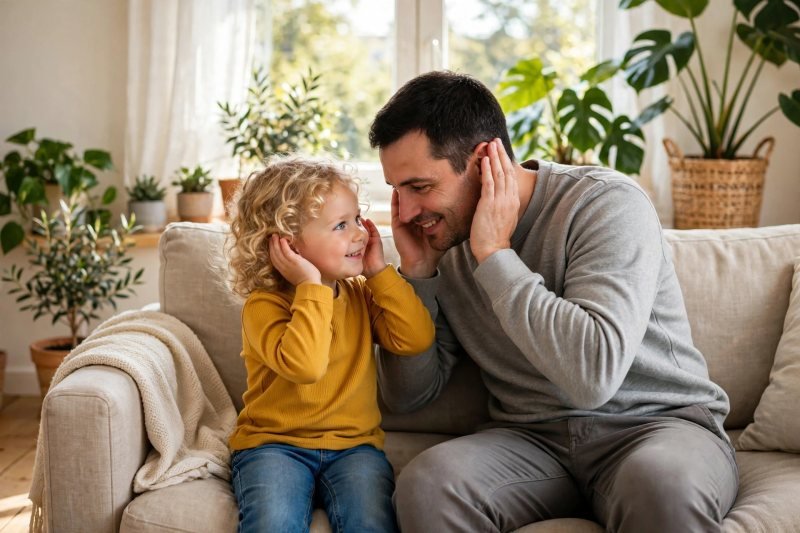
Spot the rhyming pairs. Cup hands around your ears like listening ears and stop before each rhyme: "Its fleece was white as SNOW…" Let your child shout "GO!" Then try "day / play" and "rule / school."
-
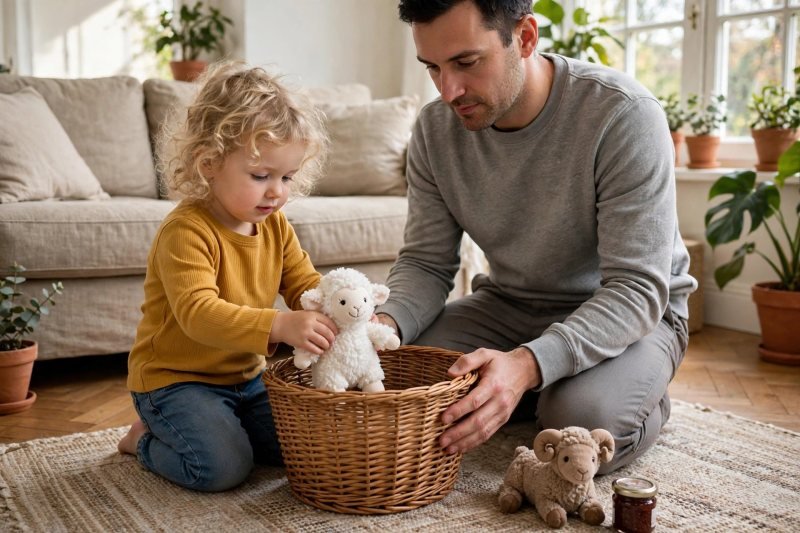
Pack your rhyme basket. Put the lamb in the basket: "We're hunting for things that sound like the words in our song."
-
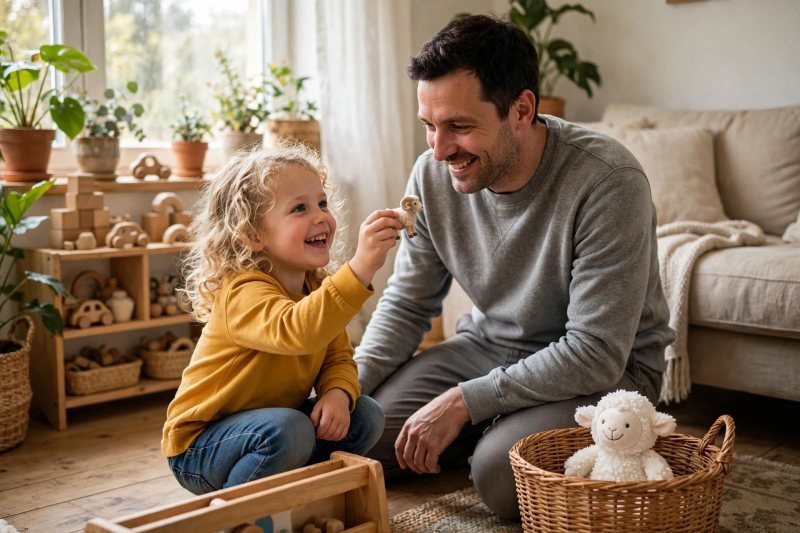
Hunt for rhymes with "lamb." Stretch it — "laaaamb" — and ask what sounds the same. A toy ram, a jar of jam, a block "dam," or a clap for "ham" all count.
-
Hunt for rhymes with "fleece." Stretch it — "fleeeece." The soft white blanket is the star find ("soft like fleece!").

-
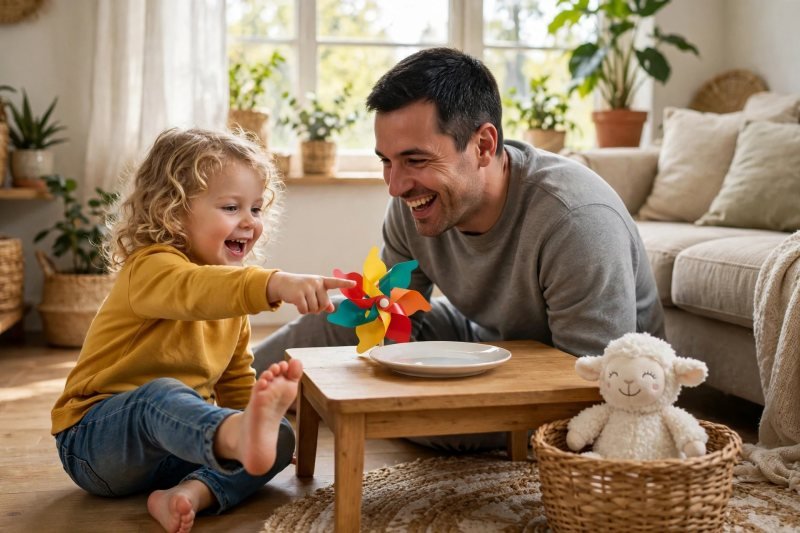
Hunt for rhymes with "snow." "SnOOOw!" The round white plate, a blow on the pinwheel ("blow!"), or a wiggled toe ("toe!") all count.
-
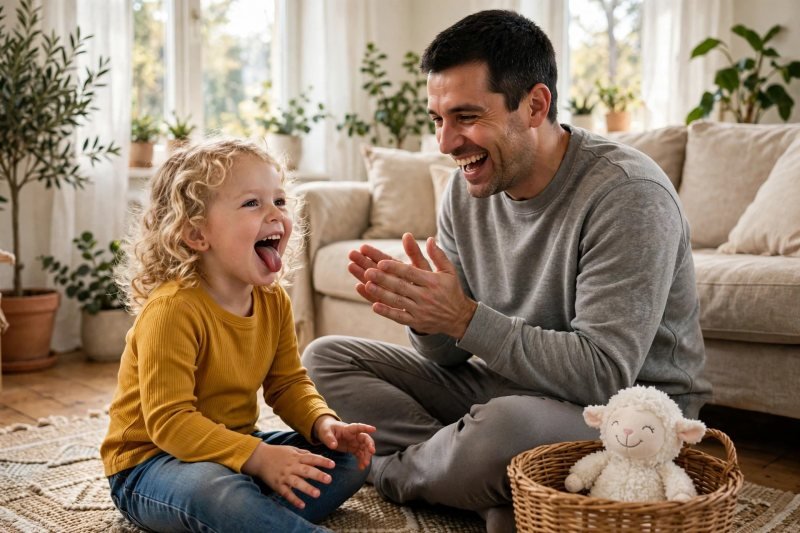
Sing the hunt. March through the house with the basket, singing at parade speed. Stop where each rhyme was found: "Here's where we found JAM — it rhymes with lamb!"

-
Make up your own silly verse. Keep the tune, swap the words: "Mary had a little DOG, his bark was loud as THUNDER…"
-
Finish with the lamb parade. One last march, your child leading with the lamb held high. End with a bow and applause.



Make it easier
Start with just the sing-along and motions. When you add the hunt, hide only two objects in one room.
Make it harder
Let your child hunt with no hints: "What else rhymes with snow?" Try your child's name, or "school" (something cool).
Other ways to play it
- Outdoor rhyme walk. Hunt rhymes for "tree" (bee) or "car" (star).
- Bath-time version. Hunt bath toys rhyming with "duck" (truck).
- Another song to try. Itsy Bitsy Spider lyrics pairs the same hand-motion play with a climbing spider.
- The fuller method. For how to build on this game, see how to teach rhyming to preschoolers.
How it changes by age
- At 3, kids sing along, copy motions, and fetch rhymes you point toward. At 4, many hear "lamb" and offer "jam!" unprompted. Twos enjoy the sing-along and fingerplays for toddlers.
What they're learning
Hearing that "snow" and "go" sound alike is phonological awareness — an early building block of reading. Rhyming play trains kids to notice the sounds inside words. Read more about the benefits of nursery rhymes for reading. Rhyming awareness: matching sounds like snow/go and lamb/jam Vocabulary: fleece, rule, and more, in context Memory: recalling verse order and directions Motor skills: marching, hunting, parading Creativity: inventing a silly verse
Clearing up
End with a "reverse hunt": sing the verse once more while carrying each find back to its spot.
Questions parents ask
What are the lyrics to Mary Had a Little Lamb?
How do you teach a 3-year-old to recognize rhyming words?
What is the Rhyme Hunt game?
What hand motions go with Mary Had a Little Lamb?
Is Mary Had a Little Lamb good for teaching phonics?
What age is best for rhyming games like the Rhyme Hunt?
Replay the hunt next week — each round deepens the rhyming skill. When your child is ready for letter sounds, our phonics activities for preschoolers build on the same listening-first idea.

save it for later
Pin this for the next rainy afternoon
Keep it on a board so it is there when you need it, rather than when you happened to find it.
Save to PinterestTry this next
-
Wheels on the Bus Lyrics: Verses, Actions and Sound Words for 3-Year-Olds
Ages 3–4
-
Rhyming Activities for Preschool: 15 Hands-On Ideas Beyond Worksheets
Ages 3–4
-
First 10 Sight Words for Preschoolers: Where to Start (and What to Skip)
Ages 3–4
-

Preschool Sight Words List: The First 40 Words (Dolch Pre-Primer)
Ages 3–4


