


Syllable Clapping Games: 10 Ways Preschoolers Can Feel the Beats in Words
Ten hands-on syllable activities for preschool that turn the beats in words into whole-body play. Clap names, stomp animal words, drum food words and march syllables — no worksheets, no flashcards, no prep. Just joyful phonics games for ages 3–4 that build the listening skills behind learning to read.
Syllable activities for preschool work best when children feel the beats in their bodies: clap, stomp, tap or march one beat per syllable. Start with your child's name, move to animals, then food words, then harder games. Ten minutes a day of playful syllable clapping builds the sound awareness that makes learning to read much easier later.

The short version
- A syllable is simply one beat in a word — clap it, stomp it, tap it, march it.
- Start with your child's name: the most motivating word they know.
- Say words slowly and stretch them out; one clear movement per beat.
- Move from easy (names, animals) to harder (echo clapping, sorting) — never drill.
- If they get it wrong, just clap it together again slowly; the mistake is the lesson.
- Stop while it's fun — ten happy minutes beat thirty tired ones.
- Age
- Ages 3–4
- Mess
- None
- Difficulty
- Easy
- Where
- Both
Why kids love this
Because it's basically permission to be loud with their whole body. Syllable games turn words into drumming, stomping, robot-walking and whisper-shouting — every game is a movement game first and a learning game second, which is exactly how preschoolers like it. And nothing beats the pride of clapping out your own name correctly: it's the first word they ever owned, and now they can take it apart and put it back together.
Of all the syllable activities for preschool, the best ones share one simple idea: a syllable is just a beat in a word. Say "apple" slowly — ap-ple. Two beats, like two drum taps. "Banana" — ba-na-na. Three beats, like three footsteps. Your preschooler doesn't need the word "syllable" at all.
Try the chin test together. Hand under your chin, say a word slowly: your chin drops once per beat — one drop for "cat", two for "monkey", three for "elephant". Kids love finding the beats hiding in their own jaw. Once they can feel a beat, they can mark it with a clap, a stomp or a drum hit — and that's the whole game. For more listening games, try phonemic awareness activities for toddlers.
Reading starts long before the alphabet: children first have to hear that spoken words are made of smaller sound pieces — phonological awareness, and hearing syllables is its front door. A child who can clap out "but-ter-fly" already grasps that words break into parts, which makes breaking words into letter sounds far easier later.
The physical part matters. When a 3-year-old stomps three times for "el-e-phant", the body gives the ear a counting system. That's why clapping games have lived in childhood forever — "Miss Mary Mack" and "pat-a-cake" are syllable games in disguise. Our phonics activities for preschoolers build on the same listening-first idea once children are ready for letter sounds, and beginning sounds activities for preschool build the same listening skill with first sounds.
What you'll need
- Your hands, feet, shoulders and head (the main instruments)
- A metal pot or pan plus two wooden spoons (game 4)
- Index cards and crayons, or old magazines and scissors (game 10 only)
- A tea towel to put under the pot (your ears will thank you)
- Nothing to buy, nothing to print, no batteries
Before you start
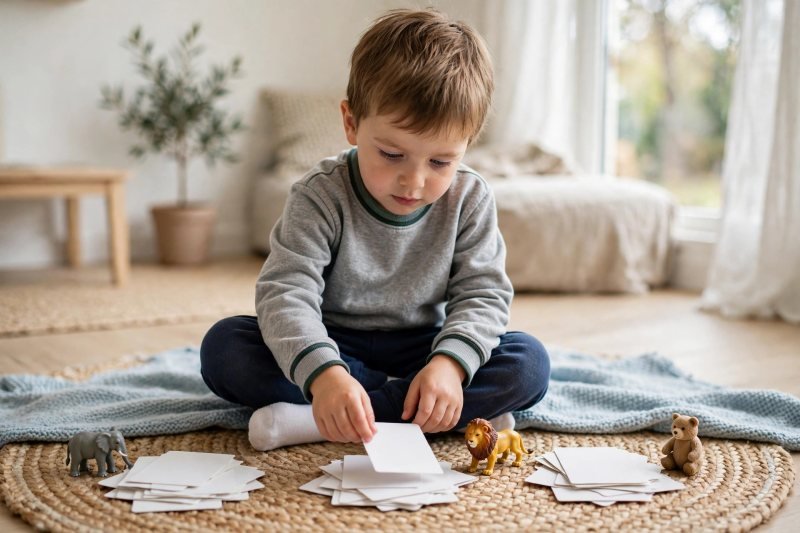
None for games 1–9 — just clear a little floor space. Play the games in order, from names to sorting; each game is complete on its own. For game 10, spend 5 minutes drawing simple pictures of animals and foods on index cards (about 9 cards: three each of 1-, 2- and 3-beat words). Keep the drawings simple and don't write any words on them — this is a listening game, not a reading one.
How to do it
-
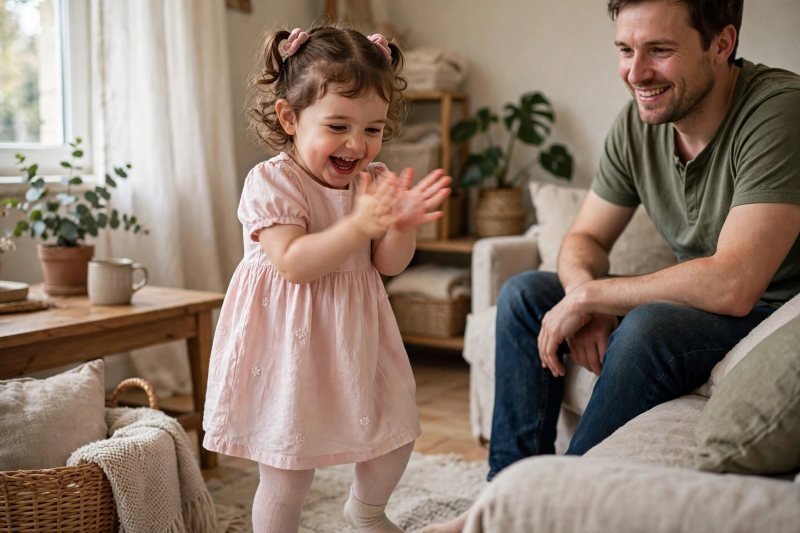
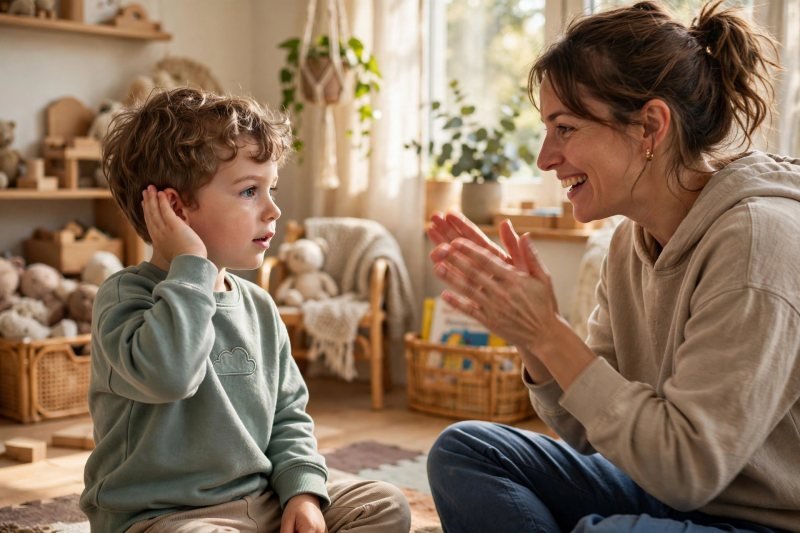
Clap Your Name. Sit facing your child and clap once for each beat of their name: "Em-ma" — clap, clap. Then do yours, then siblings, the dog, grandparents. One-syllable names ("Max") are brilliant confidence builders: one big clap, huge cheer. Let your child lead — they'll demand their name again and again, and every repeat is practice.
-
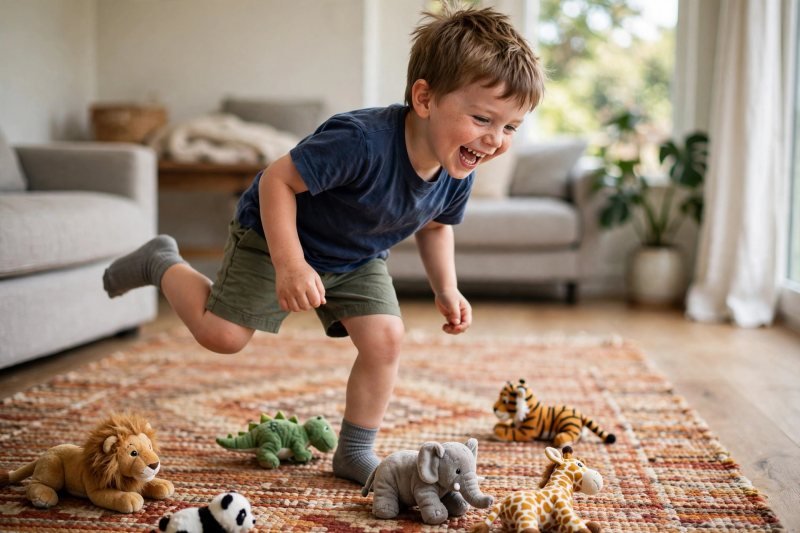
Stomp the Animals. Stomp one foot per beat: "el-e-phant" — stomp, stomp, stomp. Then a short one: "dog" — one mighty stomp. Let your child choose the animal from their toys or a picture book. Try: cat, dog, bear, fish, bird (one stomp); rabbit, monkey, tiger, panda, zebra (two); elephant, giraffe, kangaroo, butterfly (three). Stomp with them — being in sync is half the fun.
-
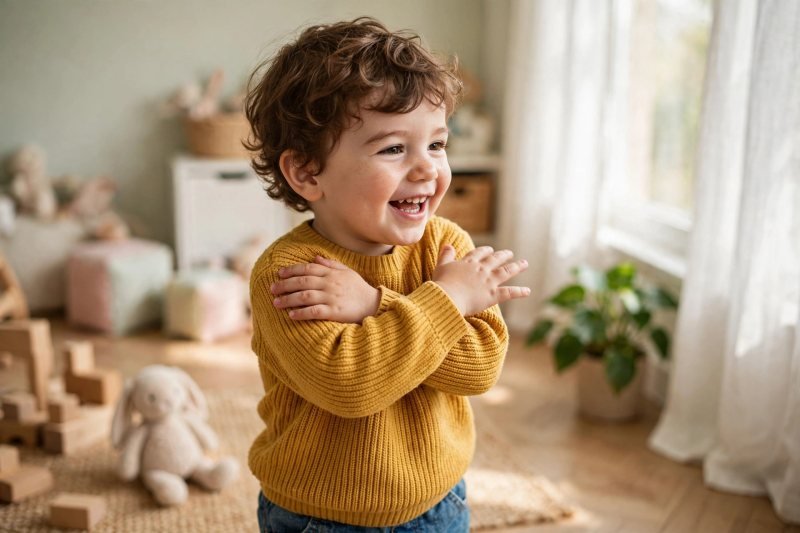
Shoulder Taps. Cross your arms and tap one shoulder per beat: "tur-tle" — tap, tap. Crossing arms is hard for little hands, so expect giggles — the wobble is part of the charm. Start with two-beat animals: kitten, penguin, lion, donkey, hippo. Then three: kangaroo, butterfly, cockatoo. Tap slowly and exaggeratedly so they can copy the rhythm.
-
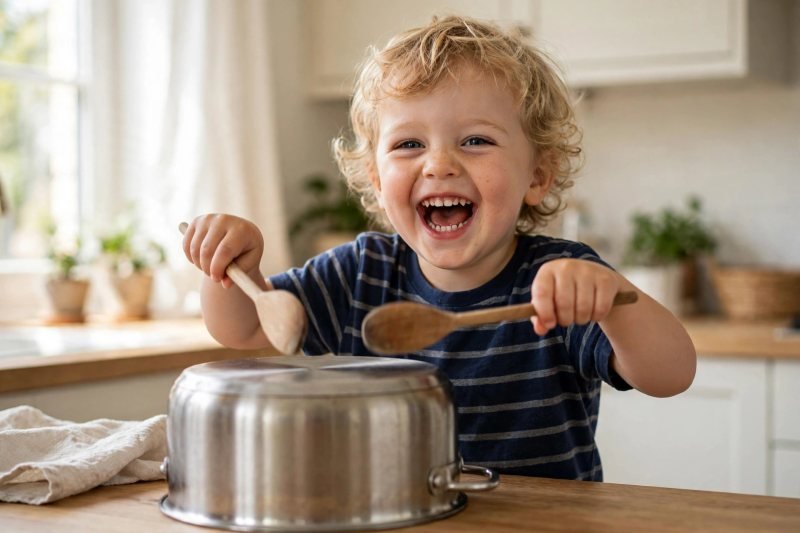
Kitchen Drum. Flip a metal pot upside down, hand over two wooden spoons, and drum one hit per beat: "croc-o-dile" — tap, tap, tap. Louder for longer words is the unofficial rule. Put a tea towel under the pot to protect it and everyone's ears. Reuse animal words from game 2 — a familiar word through a new instrument feels like a brand-new game.
-
March the Foods. March in place — knees high — one step per beat while you name foods: "ba-na-na" — march, march, march. Perfect before snack time, when food words have maximum appeal. Try: bread, cheese, cake, grape, peach (one); apple, carrot, cookie, pizza, lemon, melon (two); banana, potato, broccoli, spaghetti (three). Let them "march" the snack to the table when you arrive.
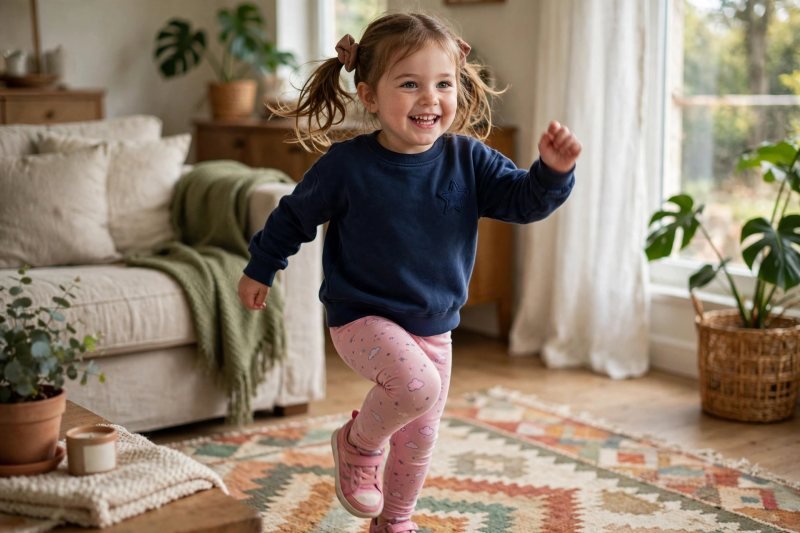
-
Head Taps. Both hands pat the top of the head, one pat per beat: "wa-ter-mel-on" — pat, pat, pat, pat. Automatically silly, and silly is memorable. Reuse food words from game 5: pear, plum, muffin, donut, burger, pasta (two); hamburger (three); avocado (four). Keep pats gentle — the rhythm matters, not the force.
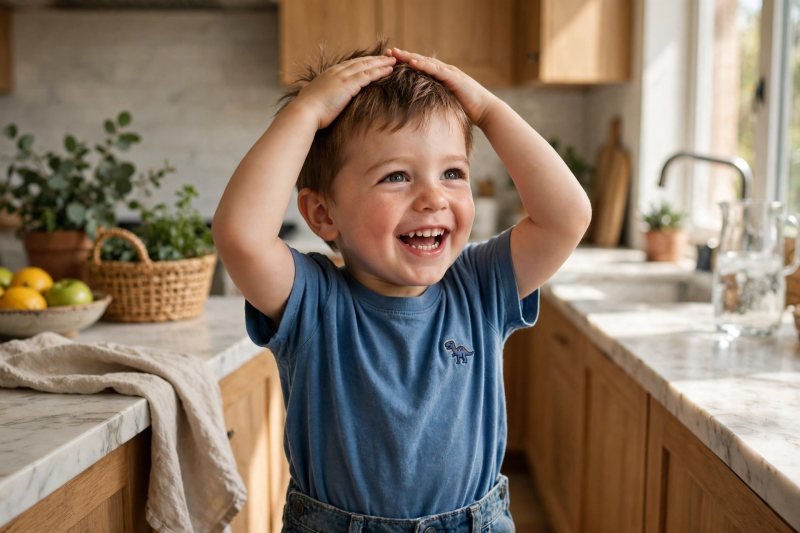
-
Robot Talk. Walk stiff-legged like a robot, saying the word in robot voice, one jerky move per beat: "pan-cake". Use food words: egg, toast, soup (one); pancake, cupcake, hotdog (two); sandwich, cereal (three). Take turns being the robot — when your child "programs" your movements by saying the word, they're doing the listening work without realizing it.
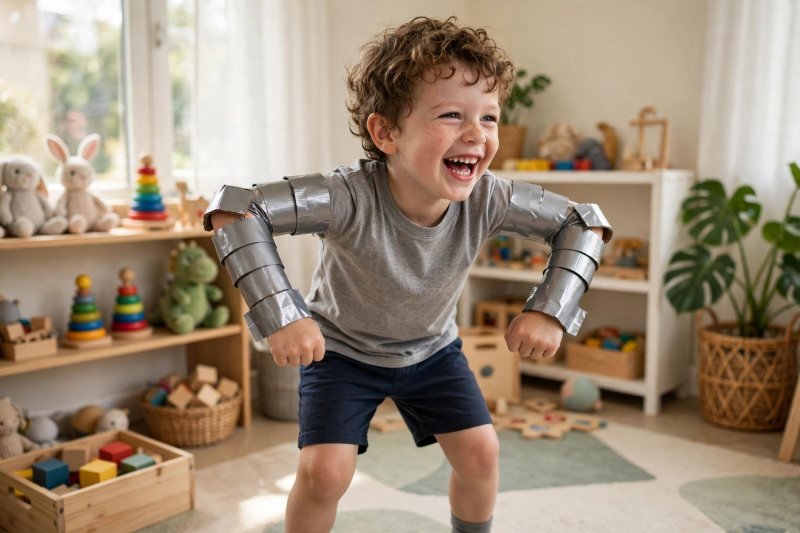
-
Whisper-Shout. Whisper the first beat, shout the last one: "mon-KEY!" Getting the order right — quiet then loud — takes real concentration, and it's thrilling. Use familiar two-beat animals: tiger, zebra, rabbit, dolphin, turtle. Then flip it: shout first, whisper last ("EL-e-phant"). Save full volume for outdoors or a pillow — stage-whisper volume works fine in the living room.
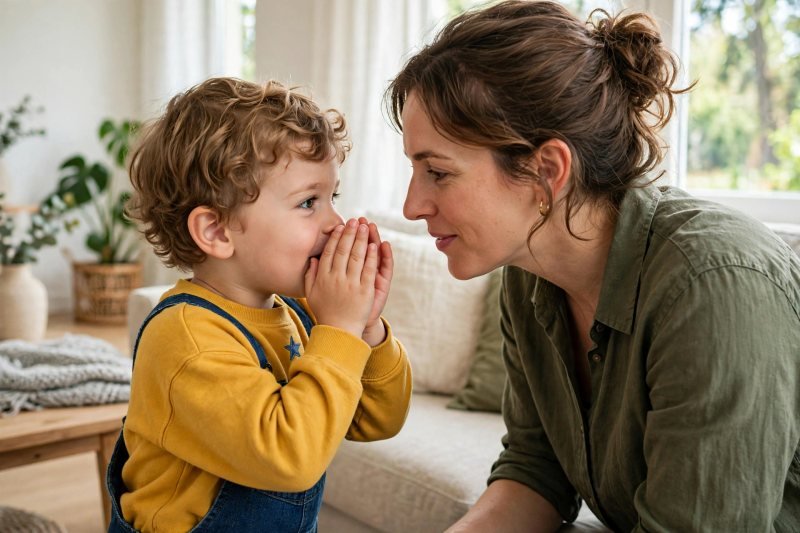
-
Echo Clap. Clap a word without saying it — three claps — and your child guesses which animal has three beats: "el-e-phant? Or gi-raffe?" Then they clap one for you to guess. Start with two choices ("was that 'cat' or 'monkey'?") and add more as they get the hang of it. The beats have to live in memory here, which is why it comes near the end.
-
Syllable Sort. The graduation game — pull it out after a few days of the others. Prep (5 minutes): draw simple animal and food pictures on index cards, or cut pictures from old magazines — no words written on them. Your child picks up a card, says the word, counts its beats on their fingers, then places it in the 1-beat, 2-beat or 3-beat pile. Finish by counting each pile together. Sorting by sound is the hardest skill in the set, so celebrate every correct pile.


Make it easier
Stick to one- and two-beat words (cat, dog, apple, monkey). You do the clapping; your child just watches, listens or copies the movement without the word. Slow right down — one big exaggerated beat at a time, with a pause between. Play just one game per session and repeat it for days; repetition is the teacher. Try more fingerplays for gentle rhythm play that builds the same listening muscles.
Make it harder
Add four-beat words: watermelon, alligator, caterpillar, helicopter. Ask "how many beats was that?" after clapping, and let them hold up fingers for the answer. Clap the beats of a whole short sentence: "I (1) like (1) ba-na-nas (3)" — five beats. Play Echo Clap (game 9) with three or four word choices instead of two. Sort game-10 cards by beat count, then line the piles up from fewest beats to most. Try word families for kindergarten for clapping word sets grouped by ending sound.
Other ways to play it
- Syllable walk: clap the beats in street signs, shop names and friends' names on a walk — the world becomes the word list.
- Bedtime beats: clap out the beats in the title of tonight's bedtime story before you read it.
- Instrument swap: replay any game with shakers, tambourines or tapping two sticks together.
- Family orchestra: each person takes a body part — one claps, one stomps, one drums — and you perform a word together.
- Backwards build: start with a four-beat word and remove one beat at a time until you're left with one ("el-e-phant" → "el-e" → "el").
How it changes by age
- Ages 3–4. Three-year-olds do best with games 1–4: clapping, stomping, tapping and drumming along with you, mostly echoing your rhythm. Four-year-olds can usually count the beats themselves and are ready for games 8–10, where the beats have to be remembered or compared. Let your child set the pace — a 3-year-old who only wants to drum is still learning, and a 4-year-old who finds sorting hard just needs more days of the movement games first.
What they're learning
Phonological awareness: hearing that spoken words break into beat-sized parts — the foundation of sounding out words later. Syllable segmentation: isolating and counting the beats in 1- to 4-syllable words. Rhythm and timing: matching one movement to one sound, in sequence. Listening discrimination: telling apart words by their beat pattern (Echo Clap). Working memory: holding a beat pattern in mind long enough to copy or sort it. Gross motor control: stomping, marching, tapping and drumming in rhythm.
Clearing up
Nothing to clear for nine of the ten games — hands and feet put themselves away. The pot goes back in the cupboard, the spoons in the drawer, and game 10's picture cards live in a zip bag for next time. Two minutes, with your preschooler "helping" by clapping the beats of everything as it goes back.
Questions parents ask
What is a syllable in simple terms?
When should my child start learning about syllables?
How does clapping syllables help my preschooler learn to read?
What if my preschooler can't hear the syllables?
How many syllables should a 4-year-old be able to count?
Are worksheets good for teaching syllables to preschoolers?
The goal was never a preschooler who can recite the word "syllable" — it's a child who hears the music inside words. If your house now rings with stomped-out animal names and robot-voiced foods, it's working. Zero pressure, zero worksheets, zero drilling: just beats, bodies and words, played together. For the bigger picture of what fits this age, our preschool learning activities at home round-up covers the full landscape — this article stays firmly on syllables.

save it for later
Pin this for the next rainy afternoon
Keep it on a board so it is there when you need it, rather than when you happened to find it.
Save to PinterestTry this next
-
Rhyming Books for Preschoolers: 15 Read-Alouds That Make Rhymes Stick
Ages 3–4
-
Wheels on the Bus Lyrics: Verses, Actions and Sound Words for 3-Year-Olds
Ages 3–4
-
Mary Had a Little Lamb Lyrics and the Rhyme Hunt Game
Ages 3–4
-
Rhyming Activities for Preschool: 15 Hands-On Ideas Beyond Worksheets
Ages 3–4


