


Ant Farm Observation for Kids
Set up an ant farm for kids and watch a real colony dig tunnels, carry crumbs, and work together behind glass — five-minute daily observations over two to three weeks.
Set up a sealed, store-bought ant farm, add mail-order or carefully caught harvester ants, and lock the lid. Cover the farm for the first day so the ants settle and dig, then lift the cover for five minutes of eyes-only watching each day. Over 2–3 weeks your child can map the tunnels, spot the colony's jobs, and keep a dated drawing journal.

The short version
- A sealed, locking store-bought ant farm keeps the colony safely behind glass for ages 5–6 — gel farms are simplest.
- Order harvester ants from a supplier that ships to your state, or have an adult catch workers from one colony; never mix colonies.
- The lid opens exactly once (by an adult, to add the ants) — kids observe with eyes only, never handle ants.
- First tunnels appear around day 2 or 3; daily five-minute watches plus weekly dated drawings turn looking into science.
- Age
- Ages 5–6
- Prep
- 20 min
- Mess
- Low
- Difficulty
- Easy
- Where
- Indoor
Why kids love this
An ant farm for kids turns the least-noticed corner of the backyard into a living show. Your child helps choose the farm, the grown-ups add the ants, and then — nothing, for a whole day — until one morning there is a tunnel. Then another. Then a tiny ant appears, hauling a crumb several times its size, and the whole colony is out working. Kids watch digging, hauling, and guarding like a sports broadcast, and the daily five minutes become the morning ritual they refuse to skip.
What you'll need
- 1 sealed, store-bought ant farm kit with a locking lid (gel type is simplest — the gel is food and digging medium in one)
- Harvester ants: order from a supplier that ships to your state, or have an adult catch workers from one local colony (see step 4)
- A folded towel or dark paper large enough to cover the farm
- Magnifying glass (outside of the glass only), notebook, crayons or colored pencils
- A quiet, shaded shelf away from sunny windows and radiators.
Before you start
Order the ants 1–2 weeks ahead — they ship separately from the kit. Pick the farm's permanent spot first: a stable, shaded shelf your child can reach, away from heat and bright sun. Read the kit instructions together so your child knows the grown-up jobs and their own job (observing, drawing, narrating).
How to do it
-
**Choose the farm together.** Let your child compare kits and pick one — but sealed, store-bought, with a locking lid. Gel farms are the easiest start: no feeding to remember.

-
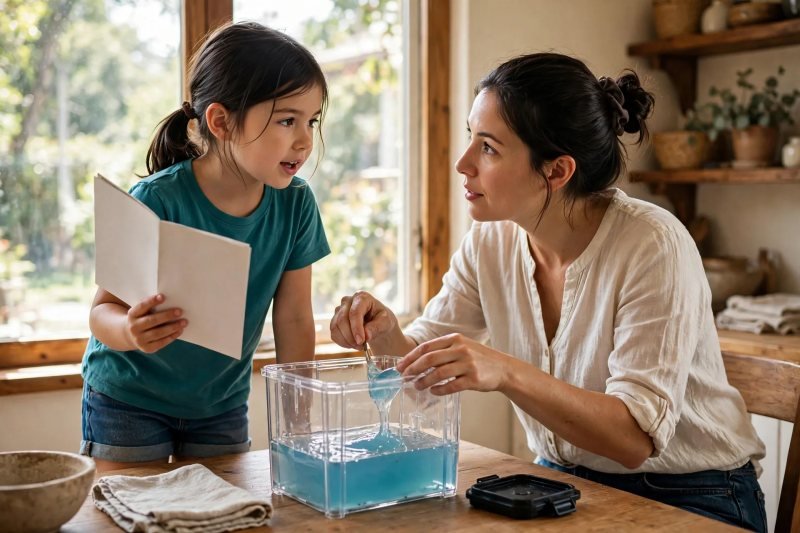
**Set up the farm (grown-up job).** Fill the chamber per the kit, check every edge for gaps, lock the lid. Your child reads each step aloud while you do it — they lead, you handle.
-
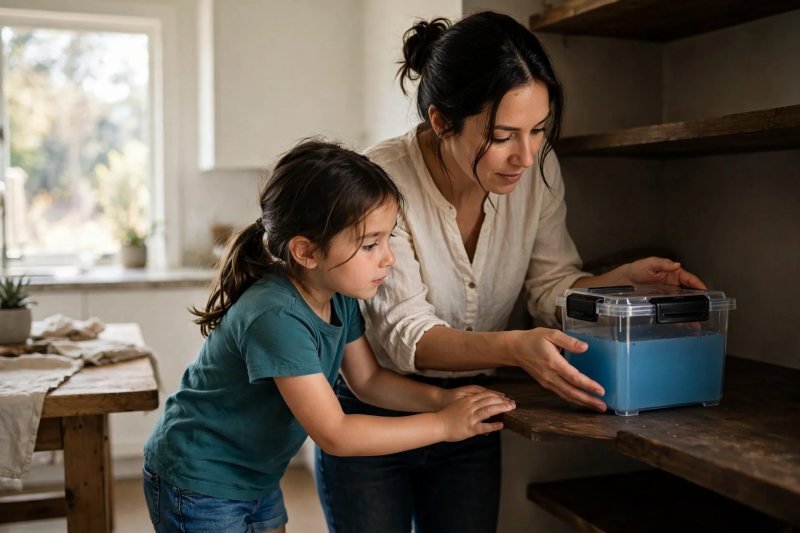
**Park it in its quiet, shaded spot.** Set the farm on the chosen shelf, away from sunny windows and radiators. Bright light and heat stress ants; a calm corner keeps them digging.
-
**Get the ants (grown-up job).** Simplest: order harvester ants from a supplier that ships to your state. Or an adult catches workers from one backyard colony, sealed in the kit's tube at once. Skip red or biting species; never mix colonies — they fight.

-
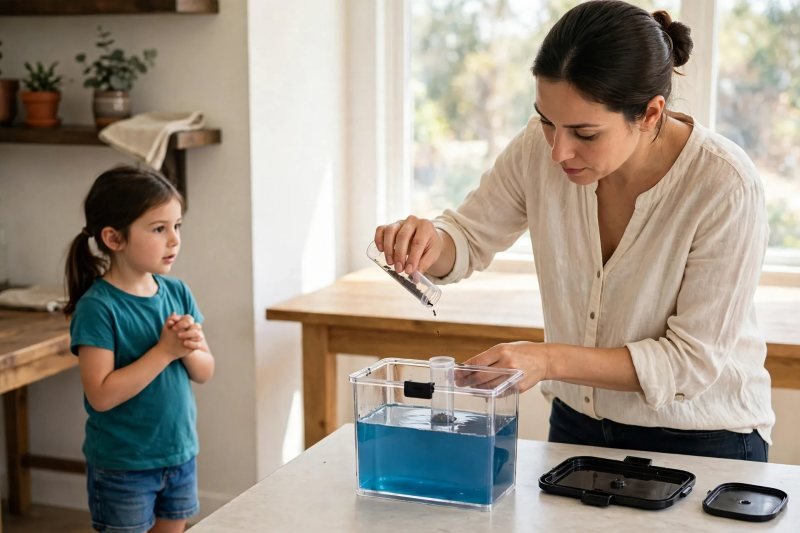
**Move the ants in (grown-up job).** When the tube arrives, let the ants warm to room temperature, tip them into the farm, lock the lid. This is the one and only time the farm opens — at the counter, grown-ups only.
-
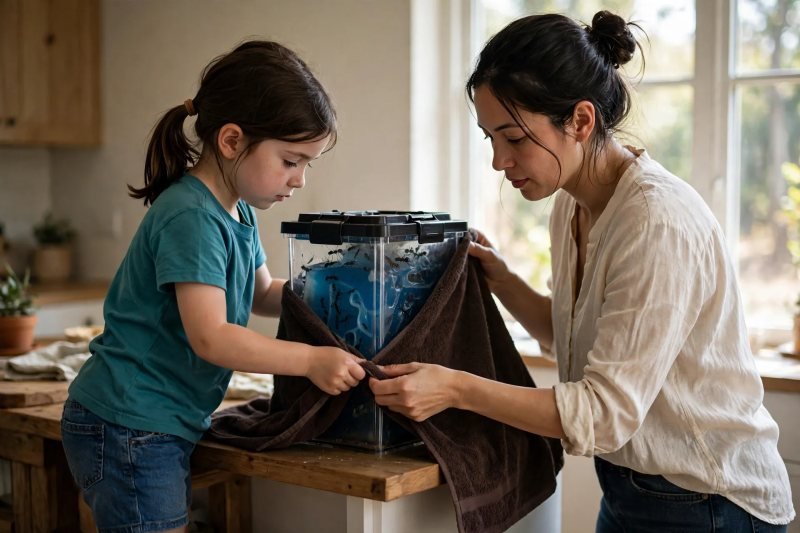
**Give them a dark first day.** Drape the towel over the farm for 24 hours. Darkness says "safe underground," so they dig sooner — and the first look is far more exciting.
-
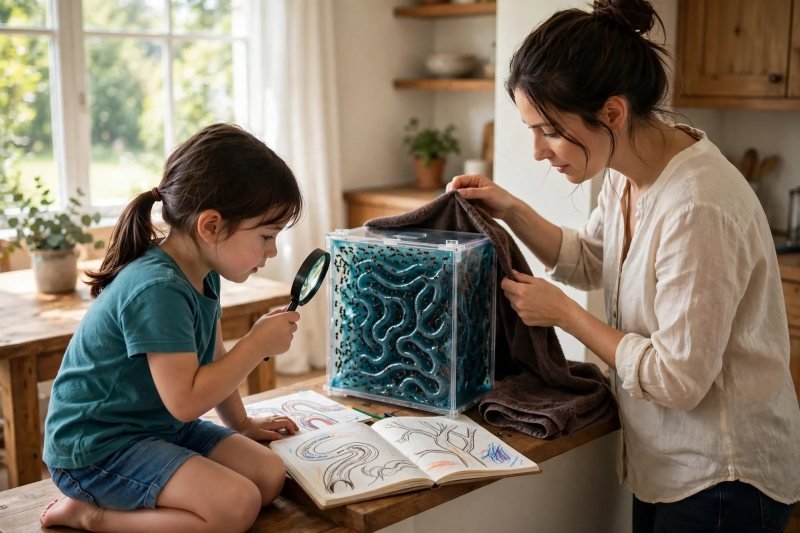
**Start daily watching.** Each morning, lift the cover for five minutes. First tunnels appear around day 2 or 3. Press the magnifier to the glass — legs, antennae, and digging jaws go wonderfully big. Eyes only, no tapping.

-
**Spot the colony's jobs.** Find three workers doing three jobs: a digger tossing grains, a forager carrying a crumb, a guard at the entrance. Workers do every job. If your farm includes a queen — most mail-order harvester ants arrive as workers only — she is the larger ant deep in the nest, laying all the eggs.

-
**Draw the tunnel map.** Weekly, your child draws the farm as it looks: tunnels, crumb piles, ant hotspots. Date each drawing — a real scientist's record.

-
**Keep the routine for 2–3 weeks, then decide.** Five minutes a day: lift, watch, draw, cover. Feed per the kit (gel farms need none). When tunnels stop growing, the colony is done. Wild-caught ants go home — an adult opens the farm outdoors at the original colony, away from the house. Store-bought colonies are never released; the farm stays sealed.


Make it easier
The grown-up does all setup, sealing, and feeding; your child is chief observer — watching, drawing, narrating. Start with a small colony: fewer ants means clearer tunnels. Skip the journal and just talk through one change each morning.
Make it harder
Keep a lab journal: dated drawings, a weekly tunnel count, and a prediction each evening ("which tunnel reaches the bottom first?"), checked next morning. Run the crumb-choice test: on a feeding day, place an oat flake, a breadcrumb, and a tiny apple bit at three spots and watch which the foragers find first.
Other ways to play it
- **Morning and evening shifts.** Watch twice a day — different ants are out, and kids vote on the busier shift.
- **The crumb relay.** On a feeding day, drop one crumb on the surface and time how long foragers take to find it.
- **Ant math.** Count visible ants each morning; tally them in the journal.
How it changes by age
- Built for 5–6s, adult nearby at all times. Five-year-olds love the digging and crumb-carrying: they watch, name the queen, and draw. Six-year-olds can keep the dated journal, count tunnels, run the crumb-choice test with help, and explain the colony's jobs to the family. At both ages the grown-up handles setup, sealing, and feeding — children never open the farm or handle ants.
What they're learning
Real insect science, observed not memorized: an ant's body has three parts, six legs, and antennae; in a colony with a queen she lays the eggs while workers dig, forage, and guard; invisible smell-trails explain the marching lines; tunnels are rooms with purposes — nurseries, food stores, highways. Kids also practice real observation habits: watching daily, recording changes, comparing drawings, testing a prediction.
Clearing up
Almost nothing to clear: the towel folds away, the journal lives on the shelf, the farm stays put. Wild-caught ants are released by an adult at their original colony; the rinsed farm stores away for next time.
Questions parents ask
How long does it take for ants to dig tunnels in an ant farm?
Are ant farms safe for kids?
Can you catch wild ants for an ant farm?
What do ants in an ant farm eat?
What happens to the ants when the experiment is over?
How long do the ants live in an ant farm?
Choose a gel farm for your first colony — no food, less fuss. If tunnels collapse after a bump, leave the farm still for a day: ants rebuild. Never mix colonies or release store-bought ants into the garden. Most mail-order harvester ants arrive as workers without a queen, so the colony naturally quiets down after some weeks — that is normal, not a failure, and the tunnel maps remain a real record of their work.

save it for later
Pin this for the next rainy afternoon
Keep it on a board so it is there when you need it, rather than when you happened to find it.
Save to Pinterest

